Summer Reading: My Beloved World by Sonia Sotomayor

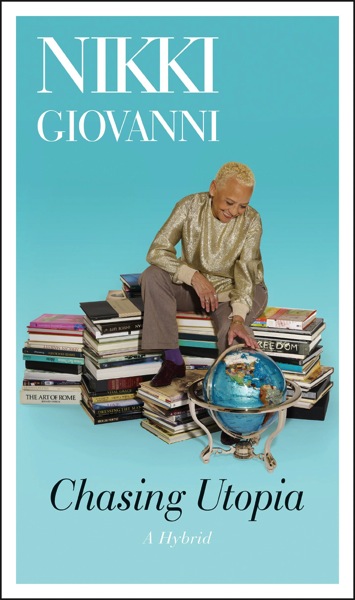
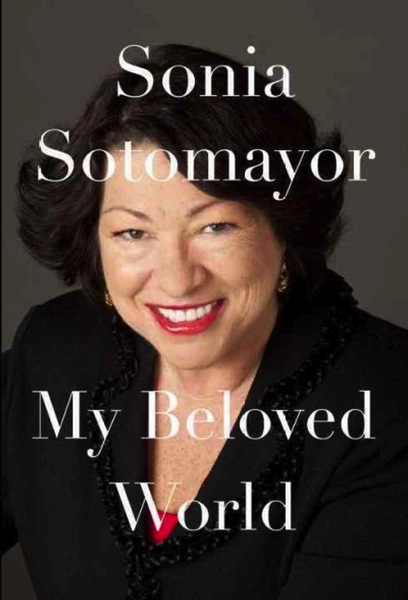
Sonia Sotomayor My Beloved World

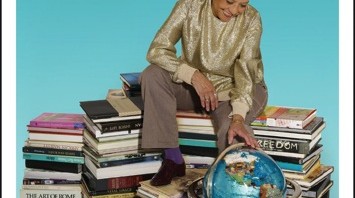
Summer is my reading time, always has been. Whole books get swallowed in a day or two only to be followed by other whole books. Sometimes they are classics I’ve always meant to get to but most often they are books that I find mentioned in articles I read and the mention makes me realize I missed the book the first go round. So I trot on over to my library’s website and put the book on hold. The most current literary gem I’ve discovered is My Beloved World by Supreme Court Justice Sonia Sotomayor. She says she wrote it with the help of a poet friend and the lushness of the language attests to that truth. But what I liked best about the book was her relentless positivity in the face of some sad things that happened to her. Rather than wallow in the sadness, as some memoirs do (Frank McCourt in Angela’s Ashes comes to mind here) Sotomayor uses every sad experience to highlight a lesson she learned and almost immediately put into practice with positive results. The poet’s assistance also shines through on the narrative structure of the individual chapters – they often start with the most interesting piece of dialogue en media res – and then backtrack to explain how she found herself in that moment, making us active participants in the teachable moment.

“What I liked best about the book was her relentless positivity in the face of some sad things that happened to her.”

The other thing I loved about the book is the fact that she vividly recalls the moment she discovered the career she ultimately created – and she credits television for bringing it to her. I’ve often cringed when people told me that old saw about how TV rots our brains. Yeah, sure, I usually say. If you watch a dizzying dose of reality nonsense from capitalistic Kardashians to racist roommates on Big Brother, it rots your brain and wastes hours of your life better spent loving other people (in all ways that word can be understood). But if you actively watch decent stuff studies show you can learn empathy for others as you worry about your favorite characters and wonder how you would behave in similarly difficult situations. But in Sotomayor’s case TV did the other thing it deserves credit for doing. It introduced an impoverished child to the larger world that existed and gave her the goal of achieving entrance into that world through the only doorway offered her – education. Sotomayor discusses watching Perry Mason and realizing that, though the brilliant lawyer was the star of the show, the real power in the courtroom was held in the hands of the judge who told that brilliant lawyer whether or not he won.

The other things Sotomayor does that are refreshing and eye-opening is she frankly discusses the fact that being a single, career-minded, successful woman in the world today can be enough if you nurture a set of deep friends supporting them in their endeavors. Her discussion of how much fun it is to be an aunt brought a smile to my face for all the single women I know. Secondly, she mentioned an assignment given to her in one of her early history classes at Princeton – to do a family history – and how finally asking her mother how she and her father met taught her to see that everyone has difficulties and those should not define a person. Rather, one should be defined by the way they face those difficulties.

Finally, Sotomayor’s memoir puts a face on an experience I read more deeply about in another book I always recommend to my first year college students – Limbo: Blue Collar Roots, White Collar World – the experience of being the first in your family to attend college. The idea that she didn’t know the Ivy League was any more difficult to get into than other colleges so she submitted applications to Harvard and Yale and Princeton, was accepted by all and finally settled on Princeton. Then that her first generation naivete made her originally toss out an invite into Phi Beta Kappa because it sounded like an excuse to sell her a pin for precious money she wasn’t in the habit of wasting. Those are still real experiences for many first generation students and worth seeing come to life in her life.

In many ways her look at the childhood of a Puerto Rican immigrant family in the 1960s was eerily familiar with the Irish immigrant stories from the 1900s from one of my favorite childhood classics – A Tree Grows in Brooklyn. I can’t say when I’ve enjoyed a memoir more.

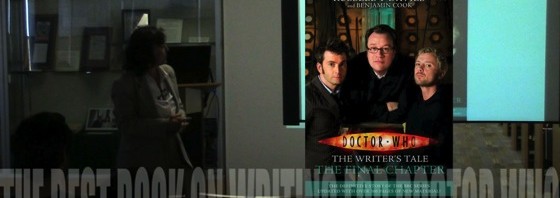
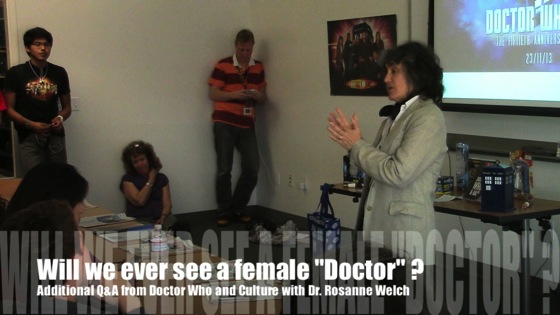
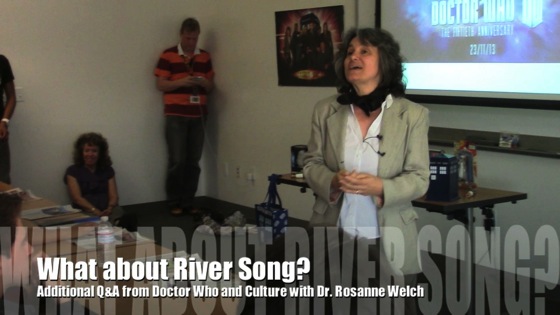
Video: What about River Song? from Doctor Who and Culture with Dr. Rosanne Welch

Additional Q&A clips from the presentation “Doctor Who and Culture: with Dr. Rosanne Welch

View the entire presentation

Video: What about River Song? from Doctor Who and Culture with Dr. Rosanne Welch

Subscribe to Dr. Welch’s YouTube Channel


Transcript:

Uh, River Song. River is fascinating because — I do love River. If I had time to go off in all the feminist aspects of the show. she’s truly a perfectly feminist character and yet she gets that gorgeous, soft, girl hair. It is so interesting that Brits are able to expect that women can be femmie but also strong and the Americans don’t do that that well. She is also, just to me, an example of how brilliant Stephen Moffat’s plotting is. Because he can take this character across so many episodes and give us this backwards story. I think she is an excellent example. She’s also an example of a Brit actor who had come her and worked in American television for a while. Then went back and did Doctor Who. Of course, now she is back here on Arrow. So she’s a — we have more performers who can cross the creek, if you will, across the pond and that is what she is a good example of. And also she appeared on Colin Ferguson’s show, too. (inaudible) River is hard to talk about because if people don’t know, then you’re giving away too much. So, it just nnnnnnnn, let it be. She’s also an excellent example of how Stephen will plant something and it won’t pay off for 10 episodes (laughter) and Russell could never do that, because he was always writing at the last minute like a crazy person. So, you know, each has their strengths and that is what you have think about. That’s why they worked so well together, obviously. 

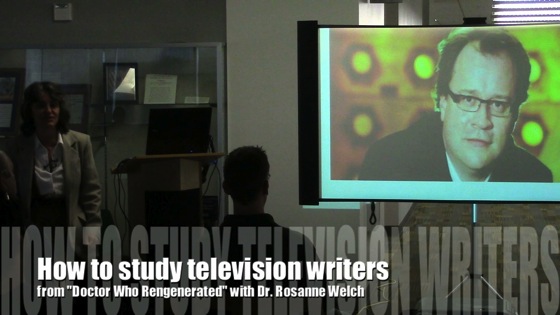
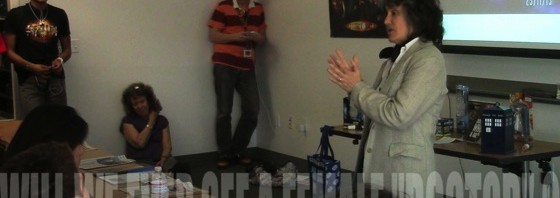
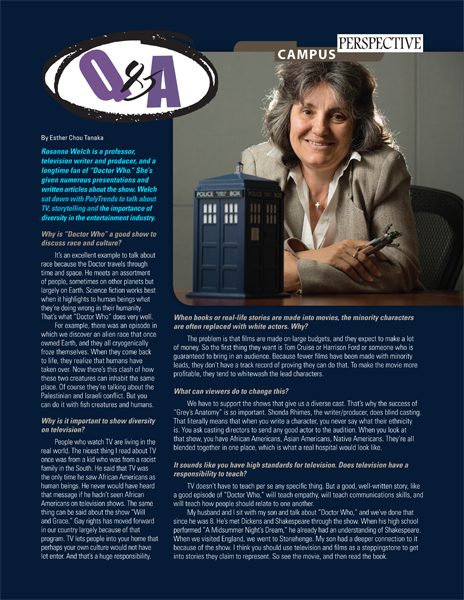
Dr. Rosanne Welch, Cal Poly Pomona Faculty from the Department of Interdisciplinary General Education discusses Doctor Who and how the show has changed television writing. Doctor Welch will further discuss how society looks at culture and gender roles with the use of the Doctor and his companions’ adventures.

“Natalie Lopez at the CalPoly University Library invited me to do a presentation for National Libraries Week on Doctor Who and Culture so that’s why a group of Whovians from both CalPoly and CSUF gathered in the Special Events room on April 16th.  It was wonderful to look out over a sea of t-shirts and other Doctor paraphernalia present among the crowd as I pontificated about what makes Who great – mostly giving me a chance to present a case for the fact that writers make Doctor Who and therefore writers make culture.”

“There seemed to be wagons as far as Mary could see.” from The Promise Chapter 4

“Everything from the giant piano to the tiniest box was being loaded onto the two wagons Master Holmes had purchased for the trip. They were parked at the edge of town, already lined up among 150 other wagons. There seemed to be wagons as far as Mary could see. Cattle were tied to the back of many of them, placidly chewing their cud. Dogs ran freely around their owners, including Master Holmes’ two ugly bloodhounds.

Download a sample and buy The Promise today!

Promise med

Watch a reading of Chapter 1 by co-author, Dawn Comer Jefferson

Watch a school presentation on The Promise and Slavery

Video: Doctor Who — and Writers — Change The World from “Doctor Who and Culture” with Dr. Rosanne Welch

A short clip from the presentation “Doctor Who and Culture: with Dr. Rosanne Welch

View the entire presentation

Doctor Who -- and Writers -- Change The World from

Subscribe to Dr. Welch’s YouTube Channel


Transcript:

It’s not about The Doctor changing the world. It’s about a writer, with a vision and a mission, that has brought so many people together over these stories. That help us talk about empathy. That help us talk about how to behave in society. It’s what writers do. Again, whether they are writing books or movies or TV shows. TV has just recently gotten better reputation. It used to be the place where movie people went when they couldn’t get movie work and now people go to TV first because writers have more power. So I thought that was very important.

So, that’ my chitchat about Doctor Who and how he changed the world.

Dr. Rosanne Welch, Cal Poly Pomona Faculty from the Department of Interdisciplinary General Education discusses Doctor Who and how the show has changed television writing. Doctor Welch will further discuss how society looks at culture and gender roles with the use of the Doctor and his companions’ adventures.

“Natalie Lopez at the CalPoly University Library invited me to do a presentation for National Libraries Week on Doctor Who and Culture so that’s why a group of Whovians from both CalPoly and CSUF gathered in the Special Events room on April 16th.  It was wonderful to look out over a sea of t-shirts and other Doctor paraphernalia present among the crowd as I pontificated about what makes Who great – mostly giving me a chance to present a case for the fact that writers make Doctor Who and therefore writers make culture.”

Doctor Who Changes American TV from “Doctor Who and Culture”

A short clip from the presentation “Doctor Who and Culture: with Dr. Rosanne Welch

View the entire presentation

Doctor who changes tv

Subscribe to Dr. Welch’s YouTube Channel


Transcript:

We were mentioning Merlin before, because this particular actor, Colin Morgan, very interesting. So what else — how else has Doctor Who changed television? Well. No just has Doctor Who come over here, but now Merlin which was created by the Brits actually aired on NBC here for a while. Seems the NBC couldn’t get a good program to save their soul. So, they whipped a little BBC on us and some people didn’t even know that. They thought is was made here. They had no idea where it came from. So, this was an example of one program that was made in England but aired on primetime American broadcast. We never do that. So, we’re opening the window a little to to let us see some cross-cultural things. My joke was, partially it’s because Colin had first appeared in an episode of Doctor Who. So the Doctor Who audience knew who this actor was. This was his first big job. I think he’s like 19. It was like his first big acting job — a whole episode of Doctor Who obviously with David Tennant. So that made the audience more familiar with him to the point where when they were debating who the next Doctor will be after Matt Smith, Colin was one of the top choices. Along with Benedict — who is written by Steven Moffat, who writes Sherlock — the new Sherlock for us, so this is how cultural they’re getting, right? All the way down the line. Notice they had Rupert Grint up there. Some folks thought that Ron might make an interesting Doctor.  He was up on the choice, right? But we go all the way down here before we get the possibility of a Doctor of color — and there’s no women on there, but that’s why Colin was know in this universe. I thought that was very interesting. The other thing that happened recently is this show, The White Queen, is something that was going to broadcast in both places very popularly. Quite a fun show. So slowly, because of Doctor Who’s popularity, American broadcasters starting letting in these other programs. 

Dr. Rosanne Welch, Cal Poly Pomona Faculty from the Department of Interdisciplinary General Education discusses Doctor Who and how the show has changed television writing. Doctor Welch will further discuss how society looks at culture and gender roles with the use of the Doctor and his companions’ adventures.

“Natalie Lopez at the CalPoly University Library invited me to do a presentation for National Libraries Week on Doctor Who and Culture so that’s why a group of Whovians from both CalPoly and CSUF gathered in the Special Events room on April 16th.  It was wonderful to look out over a sea of t-shirts and other Doctor paraphernalia present among the crowd as I pontificated about what makes Who great – mostly giving me a chance to present a case for the fact that writers make Doctor Who and therefore writers make culture.”

“Mary slept on a rug at the foot of Miss Dorthea’s bed” from The Promise Chapter 4

“That night, Mary slept on a rug at the foot of Miss Dorthea’s bed. It was Mary’s first time in a hotel and she marveled at how large the building was. It was bigger than the Holmes’ house, even bigger than the barn where Mary and Buddy used to visit the horses. Her mind was so full of new sights she barely slept.

Download a sample and buy The Promise today!

Promise med

Watch a reading of Chapter 1 by co-author, Dawn Comer Jefferson

Watch a school presentation on The Promise and Slavery

Feminism on Doctor Who from “Doctor Who and Culture” with Dr. Rosanne Welch

A short clip from the presentation “Doctor Who and Culture: with Dr. Rosanne Welch

View the entire presentation

Doctor who feminism

Subscribe to Dr. Welch’s YouTube Channel


Transcript:

The other thing that Russell said that really struck me, as a feminist, was as bad as it is for a gay man or a person of color to watch television, it totally sucks to be chicks. Because chicks on TV are pretty much all about being cute. That’s tough. How do you deal with that? So, when he did Torchwood, he purposely made sure the cop was a female and her husband is the guy who stays home and makes dinner — and worries about whether she’ll get shot at work and come home.

He completely gender switched the situation so that little girls could see a woman saving the world from bad aliens and that was important to him. And I thought that was really interesting because he’s right, right? Even as much as I like The Big Bang Theory, with my little slide there, Amy started out as cool as Sheldon and as weird and now all she wants is to get laid. That is all that character wants. What happened?!? She is like a nuclear physicist. She totally turned into just another girl who wants a boy and without the boy she is not complete. They ruined that character. Right?

So Russell wanted to make sure he created a woman who all the way through is the power source. She’s the one saving the world. So little girls could look up to that. So again, Russell took a step further than Steven took and that shocks me. I wasn’t ready for that.

Dr. Rosanne Welch, Cal Poly Pomona Faculty from the Department of Interdisciplinary General Education discusses Doctor Who and how the show has changed television writing. Doctor Welch will further discuss how society looks at culture and gender roles with the use of the Doctor and his companions’ adventures.

“Natalie Lopez at the CalPoly University Library invited me to do a presentation for National Libraries Week on Doctor Who and Culture so that’s why a group of Whovians from both CalPoly and CSUF gathered in the Special Events room on April 16th.  It was wonderful to look out over a sea of t-shirts and other Doctor paraphernalia present among the crowd as I pontificated about what makes Who great – mostly giving me a chance to present a case for the fact that writers make Doctor Who and therefore writers make culture.”

Reading Tim Conway’s autobiography made me smile…

Spent the first day of my summer vacation (which didn’t start until all grades everywhere were calculated and posted) in my most favorite way to spend a day – reading an entire book in my garden in a series of sittings (interrupted by tea and lunch and hanging laundry and dinner, etc).    What book you ask?  Something deep and dark like War and Peace or Dr. Zhivago?  Nope.  I opted to open my summer with the autobiography of an old friend, though we’ve never met (though why he never appeared as a guest on Touched by an Angel is a mystery to me).  Tim Conway, aka Ensign Parker on McHale’s Navy; aka Barnacleboy on Spongebob Squarepants aka a dozen crazy characters on The Carol Burnett Show

Why did I choose that to begin my summer reading?  Partly because he was raised in Chagrin Falls, Ohio, where my Mom used to take me for ice cream treats during the summer; partly because he graduated from Bowling Green State University (as Doug and I did); and partly because I knew it would be full of fun tidbits about the early days of radio and television both in Cleveland (where he worked with Ernie Anderson before he became Ghoulardi) and in Los Angeles.  Just about as funny as the book Jim Backus (Thurston Howell III) wrote with his wife, Henny, in the 1980s.

Conway’s book is full of funny stories about scrambling to fill time on early radio and television shows and honest discussions of being happy in life even if you’re always the second banana, never the star.  He talks about being raised by his immigrant parents – Dad Daniel from Ireland and Mom Sophia from Romania — and then raising his own 6 kids with their lessons in his mind all the time.  He talks about being bilingual (English and Romanian) and losing that second language as he grew up.  He talks about the joy and honor of meeting and working with the great stars of his childhood movie-viewing including Cary Grant and Ernest Borgnine and his enthusiasm for all the blessings in his life is catchy.

I smiled often until page 70 when I fell on the floor laughing (much as I did while watching all those Carol Burnett shows in elementary school) and pretty much never got back in my chair.  It was too precarious to ponder.  I found myself regaling Doug with several of the stories even as he tried to read something else.  If you’d like to spend some time in happy company I highly recommend What’s so Funny?

See all my favorite book and DVD picks in the WelchWrite Bookstore

Doctor Who Writers change culture from “Doctor Who and Culture” with Dr. Rosanne Welch

A short clip from the presentation “Doctor Who and Culture: with Dr. Rosanne Welch

View the entire presentation

Doctorwho writers change culture

Subscribe to Dr. Welch’s YouTube Channel


Transcript:

I got to interview Russell for a magazine we do for the Writers Guild of America. This is an interview with Russell T Davies when he came to America to do a 4th season of Torchwood. And so, I was talking with him about some of his choices and what not. It was interesting. He said he knew from his childhood that the hardest thing to do was to watch television and not see yourself as one of the people there. That is unfair to a child because that means you don’t belong in the universe. You don’t fit in the world.

There is a character named Captain Jack and Russell, specifically once everyone was comfortable with what he was doing with the Doctor — because, when he first brought the show back, the fear was he would make the Doctor gay — and that would just ruin it. It wouldn’t really ruin it, but the network was scared it would, right? So, he couldn’t do that. He said, “I’m not going to do that. The Doctor’s iconic. I’m not going to change him too much.” That’s probably why he’ll never be a girl and he likely will never be a Doctor of color — which is too bad. But, he can surround him with people that offer visuals to children and Captain Jack was exactly that — both in Doctor Who and in Torchwood, which is the show, then the spinoff, that was created to give Captain Jack his own troop that he would work with, save the world from bad aliens.

We’ve seen Captain Jack kiss men, dance with men at weddings, right, have his heart broken by people, and so full and complete, 3 dimensional same-sex relationships have been opened to children through watching Doctor Who and Torchwood, if you let your kid watch Torchwood. Which I did do, because he liked it. That was really important for Russell, so he truly had a, if you will, a social justice mission, with being a writer. And so, as much as the title of this does say, “The Doctor the Changed the Universe”, I would have to say it is actually the writers, who write the Doctor, who change the universe, because it is writers, whether they are writing books or they are writing television, or they’re writing films, that give us this influence that we live by and that’s why we’re wearing stuff from Doctor Who and we like all the stuff we like.”

Dr. Rosanne Welch, Cal Poly Pomona Faculty from the Department of Interdisciplinary General Education discusses Doctor Who and how the show has changed television writing. Doctor Welch will further discuss how society looks at culture and gender roles with the use of the Doctor and his companions’ adventures.

“Natalie Lopez at the CalPoly University Library invited me to do a presentation for National Libraries Week on Doctor Who and Culture so that’s why a group of Whovians from both CalPoly and CSUF gathered in the Special Events room on April 16th.  It was wonderful to look out over a sea of t-shirts and other Doctor paraphernalia present among the crowd as I pontificated about what makes Who great – mostly giving me a chance to present a case for the fact that writers make Doctor Who and therefore writers make culture.”

Steven Moffat and his Characters from “Doctor Who and Culture” with Dr. Rosanne Welch

A short clip from the presentation “Doctor Who and Culture: with Dr. Rosanne Welch

View the entire presentation

Drwho moffat characters

Subscribe to Dr. Welch’s YouTube Channel


Transcript:

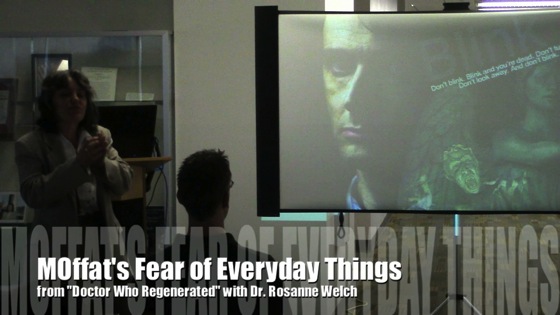
So these 3 characters of color are treated very well and very completely and this impressed me. I like Russell. I’ve always liked Russell. I was glad to find out he was doing that well. I assumed Steven Moffat would do it even better and I was wrong. I was shocked to be wrong. So let’s get with Steven Moffat and who he invented. It starts to look really interesting and then it falls apart. I think that’s so sad.

This is Liz 10. She is the tenth Queen Elizabeth of England. So, Steven is telling us that in so many generations from now, English population is going to be brown. So that’s a pretty cool move. That is a pretty cools statement. However, she pretty much shows up in the episode, saves the Doctor’s life, and disappears. She has no sex life, no love life, no family, no relationships, no job — except being queen. She’s a one dimensional character. That shocked me. I was like, Whoa, Liz 10!” She’s really nothing. She’s a prop — as far as the story goes. That’s your job, making a character — a ful character.

So this shocked me. So, who else did Steven Moffat invent who is a character of color. Well, I know, super-cool Mels. Mels is very cool. If you haven’t seen the show I’ll try not to spoil it, but she is related to another character we really like a lot.

(LAUGHTER)

She only shows up in a short bit, in order to explain a plot situation and she moves on and she never has any real deep association with The Doctor after that. So, she’s used as a gimmick, because if you know who she is later in life, you recognize the gimmick. No one guessed that because she doesn’t look like the person she regenerates into. So, it was a trick. That character is just a trick. She’s not a 3-dimensional complete character and that really bothered me. Steven, dont’t do this to me! Do something good, please, cause I really think he is a smart writer. That’s River Song. We’ll get to her later.

Rita show up in only 1 episode. She’s not just a character of color, She is also a woman with a different religion because she is Islamic. So that was really interesting, exciting and wonderful. She’s only in one episode and guess what happens to her at the end of the episode? She dies. Oh, my god! So he invented this really cool, interesting 3-dimensional person and he killed her. So, as far as I was concerned, Russell did characters of color better and I think that is really interesting. And the scary part is — you probably already know this, as it pretty open and obvious — Russell is one of the first gay — openly gay men in England to get the OBE from the Queen. So, he is known to be an out-of-the-closet gay man. He understands how badly people who are not of what is considered the norm can be created on television. So, his focus was to make sure he took the characters who weren’t given that full coverage by other people and to give it to them.

Dr. Rosanne Welch, Cal Poly Pomona Faculty from the Department of Interdisciplinary General Education discusses Doctor Who and how the show has changed television writing. Doctor Welch will further discuss how society looks at culture and gender roles with the use of the Doctor and his companions’ adventures.

“Natalie Lopez at the CalPoly University Library invited me to do a presentation for National Libraries Week on Doctor Who and Culture so that’s why a group of Whovians from both CalPoly and CSUF gathered in the Special Events room on April 16th.  It was wonderful to look out over a sea of t-shirts and other Doctor paraphernalia present among the crowd as I pontificated about what makes Who great – mostly giving me a chance to present a case for the fact that writers make Doctor Who and therefore writers make culture.”