Finding Diversity in Television History in the David Dortort Archive at the Autry Museum

Today we thank Shonda Rhimes for bringing color blind casting to television when she casts a diverse array of ethnicities in lead roles on her shows.  But she didn’t invent the idea.  On our visit to the Autry Museum of the American West I was reminded of a show I used to watch on television but that disappeared too quickly (I didn’t then know why) and didn’t reappear in reruns as much as the more successful, longer-running program also created by the same writer (Bonanza).
1968-TV-099-TheHighChaparral


The show I only vaguely remembered was The High Chaparral – the story of a Mexican woman married to a man of European descent (then controversially considered an inter-racial marriage) who owned a rancho in the West post the Civil War.  I remembered it for its diverse cast and honest portrayal of the discrimination played out against minorities in the West.

Special Projects Archivist Mallory Furnier wrote the blog post, “Casting Actors as People” highlighting the archives of The High Chaparral in the David Dortort Archive, where she noted:

“Though The High Chaparral faced untimely cancellation, its four seasons embodied a step away from tired, inaccurate stereotypes and a movement toward greater respect for actors and characters, regardless of race. As a June 16, 1970 NBC memo instructed, “let’s cast actors to play people and, in so doing, give the ‘minorities’ a break.”
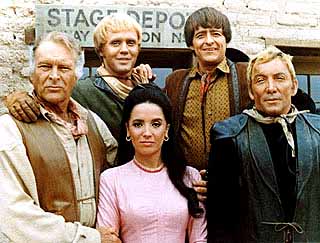
hc-cast

In a second blog post, “Finding Aids and Places”,  Furnier discussed her trip to the Old Tuscon Studios in Arizona, site of some of the exterior filming of the show.

As always, I found it fascinating to wander around in the papers (old, handwritten first drafts of scripts, typed rewrites ready for production meetings, cast lists, shooting schedules, etc) and see the inside ideas of a show I had only seen from the outside all those years ago.

One of the papers was even a 1971 letter to Dortort from then U.N. Representative George H. W. Bush saying he sympathized with the producer over the cancellation of such a quality show and would do what he could to communicate that to those who had made that decision.  Fascinating.

Listen to the High Chapparal Theme Song.

High Chapparel script cover

High Chaparral Script Cover


Some of my favorite things #tomato #vegetables #produce #garden #rmwblog #food #foodie #yummy #eat

Women in American History: Jemima Boone Learn more about her in Women in American History

So many books. So little time. Saturday books browsing in #vannuys #rmwblog #books #reading #losangeles

New growth in the garden #garden #rmwblog #wisteria #leaves #nature #vine #grow #outdoors

Rosanne (R) performs in The Vagina Monologues at @calpolypomona #theater #performance #vaginamonologues #fun #rmwblog

Last minute prep before The Vagina Monologues at @calpolypomona tonight #vaginamonologues #theater #reading #performance #acting #actor #rmwblog

View from my office at @calpolypomona #sky #tree #college #university #outdoors #sycamore #rmwblog

Camellias at Descanso Gardens @descansogardens #flowers #garden #rmwblog #plants #nature #descanso #people

Rosanne speaks in Cal Poly article, “Vagina Monologues’ Seeks to Empower Women and Inform Campus”

Come one!  Come all – (if you live near Cal Poly Pomona) and see my colleague Peg Lamphier and I perform in this year’s Vagina Monologues tomorrow (Tuesday the 16th) at 7pm on campus.  Tickets are $10.

Click below for an article about the event – and our participation – with quotes.  Support a student journalist and give it a read!  And, yes, some video will be posted after the show is over..

“Auditions were open not only to students, but to staff and faculty as well. After noticing that on a poster, Professor Rosanne Welch, who holds a doctorate degree in American social history of the 21st century, was inspired to audition.

“Peg Lampher and I are really big feminists and we talk a lot about it with our students,” she says. “I went over to her and said, ‘We should put our money where our mouth is.’ ”

After auditioning, the pair was cast in one of the last monologues of the show. Welch says it is perfect for them because the topic is childbirth, and they are both mothers.

Throughout the experience, Welch’s favorite part has been watching the students take control.

“I was proud to watch them, but I was also a little bit sad because a certain number of them have had things happen to them in their past which brought them to work with the Women’s Resource Center,” she says. “The fact that they are able to put on this presentation and take control of the night is a beautiful gesture.””

Read the entire article, Vagina Monologues’ Seeks to Empower Women and Inform Campus