A History of Screenwriting 48 – The Engagement Ring – Mabel Normand – 1912

A History of Screenwriting 48 – The Engagement Ring – Mabel Normand – 1912

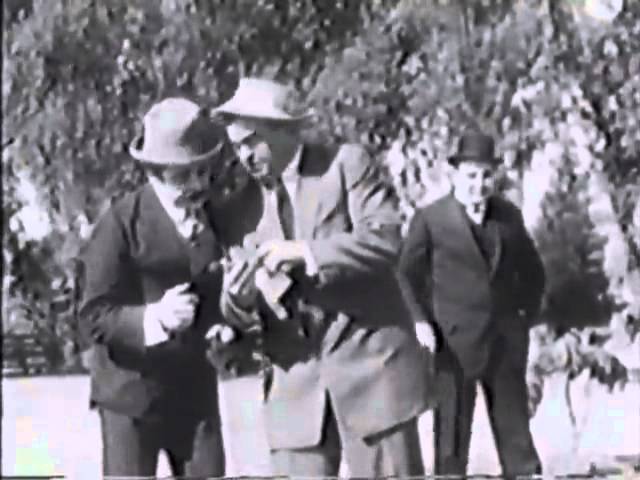
Alice has two persistent suitors, one rich, one poor. Each buys her an engagement ring; the rich man pays cash, but the poor man must pay on installments. He has trouble making the payments, but then he’s injured in an auto accident and the settlement allows him to pay off the ring and propose to Alice.


Learn More About Mabel Normand with these books †

* A portion of each sale from Amazon.com directly supports our blogs ** Many of these books may be available from your local library. Check it out! † Available at the LA Public Library

From The Research Vault: Blacks and White TV: African Americans in Television Since 1948 by Fred J. MacDonald

 
†
 

* A portion of each sale from Amazon.com directly supports our blogs
** Many of these books may be available from your local library. Check it out!
† Available from the LA Public Library

The second edition of this powerful analysis of African-Americans in the television insudtry since 1948 is completely updated. The increased visibility of blacks in television, the success of the Cosby Show and other sitcoms featuring black actors, and the impact of cable TV on programming are described in detail. Professor MacDonald traces the stereotyping, tokenism, and unfair treatment of blacks from the early days of the indsutry, but expresses his hope and belief that a new video order is materializing that will finally fulfill the bright promise of television. — Amazon


Why The Monkees Matter: Teenagers, Television and American Pop Culture


Order Your Copy Now!

More On Women in Early Filmmaking from Giving Voice to Silent Films and the Far From Silent Women Who Wrote Them with Dr. Rosanne Welch

Watch this entire presentation

Women in Early Filmmaking from Giving Voice to Silent Films and the Far From Silent Women Who Wrote Them with Dr. Rosanne Welch

More On Women in Early Filmmaking from Giving Voice to Silent Films and the Far From Silent Women Who Wrote Them with Dr. Rosanne Welch


A recording of my presentation at this year’s University Film and Video Association (UFVA) 2017 conference.

Transcript:

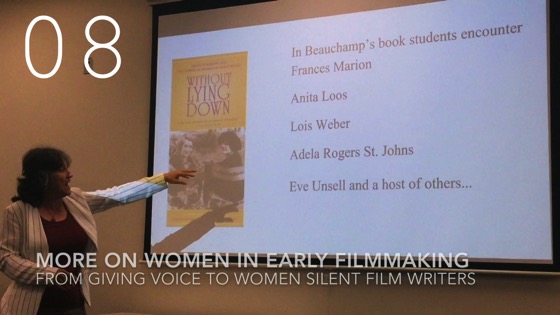
 In Beauchamp’s book, you’ll see all these famous women. My great joy is that one of my students, who teaches directing, found Lois Weber in my class who wrote and directed her films back in the day and now incorporates her into the set of directors that he teaches as examples because she had that kind of career back in the day. Eve Unsell ran her own production company for Universal for 10 years. Made a ton of movies that are very very successful in the day. She also allows us to go into the place where we discuss the problems with films whether it is back them or today because she was involved in what, back then, were yellow race films which were anti-Asian-American films and so that’s something students should understand about. So, again that goes back to to the title of what we are talking about and I talk fast because I’m Sicilian. I also don’t want to eat up all the time.

Books Mentioned In This Presentation

Follow Dr. Rosanne Welch

Twitter: https://twitter.com/rosannewelch
Instagram: https://www.instagram.com/drrosannewelch/

From The Research Vault: “When Four Nice Boys Go Ape!” – The Saturday Evening Post

Why The Monkees Matter: Teenagers, Television and American Pop Culture


Order Your Copy Now!

Women in Early Filmmaking from Giving Voice to Silent Films and the Far From Silent Women Who Wrote Them with Dr. Rosanne Welch

Watch this entire presentation

Women in Early Filmmaking from Giving Voice to Silent Films and the Far From Silent Women Who Wrote Them with Dr. Rosanne Welch

Women in Early Filmmaking from Giving Voice to Silent Films and the Far From Silent Women Who Wrote Them with Dr. Rosanne Welch


A recording of my presentation at this year’s University Film and Video Association (UFVA) 2017 conference.

Transcript:

So I teach history and I start in the silent film world, so I disagree with Warren. I go chronologically. This is a period they have never heard of and all the movies are free on YouTube. Nothing like telling them they can watch whatever they have to watch for free. That works, right? And so here they meet Anita Loos, Gene Gauntier — the first women — the first person to do filming on location. She went to Jerusalem to film the story of Jesus Christ — the first time it was put on film and it’s a really beautiful film you can see, for free, on YouTube. Then Jeanie MacPherson who wrote all of Cecil B. DeMille’s early movies that were successes. When she stopped working for him all his stuff failed. Nobody knows her name and she’s quite brilliant. So I thinks it’s important for women students today to know that women once ran Hollywood so all this discussion about “I don’t know if women should direct a movie” is not worth having, because they did and they were. They were the highest paid people in this town, so I think that’s important an important think for them to remember. 

Books Mentioned In This Presentation

Follow Dr. Rosanne Welch

Twitter: https://twitter.com/rosannewelch
Instagram: https://www.instagram.com/drrosannewelch/

Sense and Sensibility: The Screenplay and Diaries | Gifts for the Screenwriter #3

Sense and Sensibility: The Screenplay and Diaries | Gifts for the Screenwriter #3

Sense and Sensibility: The Screenplay and Diaries | Gifts for the Screenwriter #3

For me this on set diary by a writer who also starred in the film and had to make script changes in the evenings after a full day of filming is a wonderful look at the real life of working writer/performer. The bonus fact iis that it is written by Emma Thompson about her work on Sense and Sensibility – a most marvelous movie to view and study.


* A portion of each sale from Amazon.com directly supports our blogs

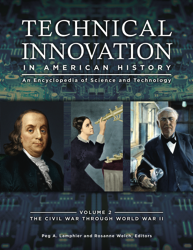
First Look at our next book – Technical Innovation in American History: An Encyclopedia of Science and Technology

A3788C Wayne v1 REV

A3788C Wayne v2 REV

A3788C Wayne v3 REV

My co-editor Peg Lamphier and I were happy to see the newly designed covers for our next 3 Volume encyclopedia – Technical Innovation in American History. Thanks to all the wonderful contributors who came over from our encylcopedia on Women in American History

Look for it in 2019!

From ABC-CLIO…

Technical Innovation in American History: An Encyclopedia of Science and Technology surveys the history of technology, documenting the chronological and thematic connections between specific inventions, technological systems, individuals, and events that have contributed to the history of science and technology in the United States. Covering eras from colonial times to the present day in three chronological volumes, the entries include innovations in fields such as architecture, civil engineering, transportation, energy, mining and oil industries, chemical industries, electronics, computer and information technology, communications (television, radio, and print), agriculture and food technology, and military technology.

The A–Z entries address key individuals, events, organizations, and legislation related to themes such as industry, consumer and medical technology, military technology, computer technology, and space science, among others, enabling readers to understand how specific inventions, technological systems, individuals, and events influenced the history, cultural development, and even self-identity of the United States and its people. The information also spotlights how American culture, the U.S. government, and American society have specifically influenced technological development.
 

Final Draft 10 Software | Gifts for the Screenwriter #2

Final Draft 10 Software | Gifts for the Screenwriter #2

Whether your are a screenwriter, or know an aspiring one, Final Draft is one of the standard pieces of software for planning, writing and formatting your script properly. Make the best impression possible.

Know a screenwriting student? You might be able to save a significant amount using the Educational version.

* A portion of each sale from Amazon.com directly supports our blogs

From The Research Vault: The Politics of Ecstasy by Timothy Leary


Writings that sparkle with the psychedelic revolution. The Politics of Ecstasy is Timothy Leary’s most provocative and influential exploration of human consciousness, written during the period from his Harvard days to the Summer of Love. Includes his early pronouncements on the psychedelic movement and his views on social and political ramifications of psychedelic and mystical experience.
Here is the outspoken Playboy interview revealing the sexual power of LSD-a statement that many believe played a key role in provoking Leary’s incarceration by the authorities; an early outline of the neurological theory that became Leary’s classic eight-circuit model of the human nervous system; an insightful exploration of the life and work of novelist Hermann Hesse; an effervescent dialogue with humorist Paul Krassner; and an impassioned defense of what Leary called “The Fifth Freedom”-the right to get high. — Amazon

Why The Monkees Matter: Teenagers, Television and American Pop Culture


Order Your Copy Now!

Let’s Kill Off The Auteur Theory from Giving Voice to Silent Films and the Far From Silent Women Who Wrote Them with Dr. Rosanne Welch

Watch this entire presentation

Let’s Kill Off The Auteur Theory from Giving Voice to Silent Films and the Far From Silent Women Who Wrote Them with Dr. Rosanne Welch

Let's Kill Off The Auteur Theory  from Giving Voice to Silent Films and the Far From Silent Women Who Wrote Them with Dr. Rosanne Welch


A recording of my presentation at this year’s University Film and Video Association (UFVA) 2017 conference.

Transcript:

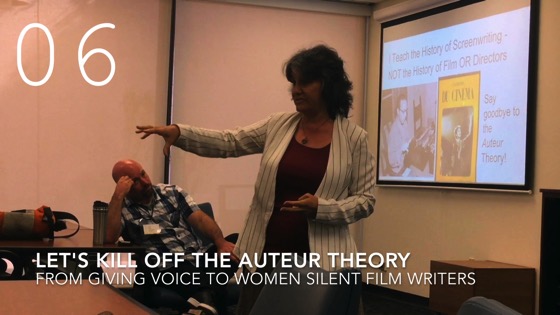
You got to the next question which is my first exercise in class — Name the writer. Lucky if they can. If it’s a writer/director, they can. Otherwise, they can’t and they suddenly are embarrassed because they adore the words of a person whose name they can’t tell you. If they have a favorite book they can tell you who wrote it, but they don’t know who wrote their favorite film. So it’s my goal to make them know that. I can’t stand the Auteur Theory because I think it’s bullshit. Directors aren’t the authors of their film. I don’t want to insult any directors in the class but you can’t direct something that doesn’t exist on the page first. It’s a collaborative thing and directors have lovely, but they’ve been given all the credit for far too long because, as we know, it goes back to all the book reviews in Cahiers and they came up with that theory. It’s nonsense.

Books Mentioned In This Presentation

Follow Dr. Rosanne Welch

Twitter: https://twitter.com/rosannewelch
Instagram: https://www.instagram.com/drrosannewelch/