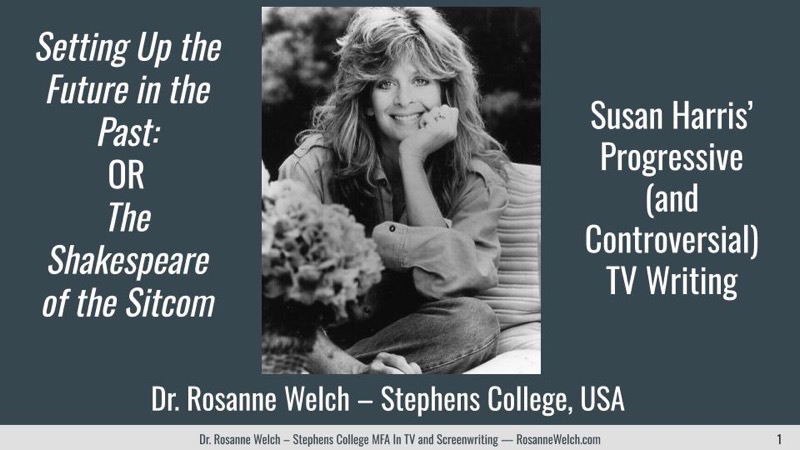
I walked the audience through her career from freelancing for All in the Family to Maude, where she wrote the still timeless 2 parter where the 43-year-old Maude decided to have an abortion. Then I covered her groundbreaking storytelling on SOAP and, of course, The Golden Girls.
There is so much more to say – so you can watch this video from the conference and then keep an eye out for the book!
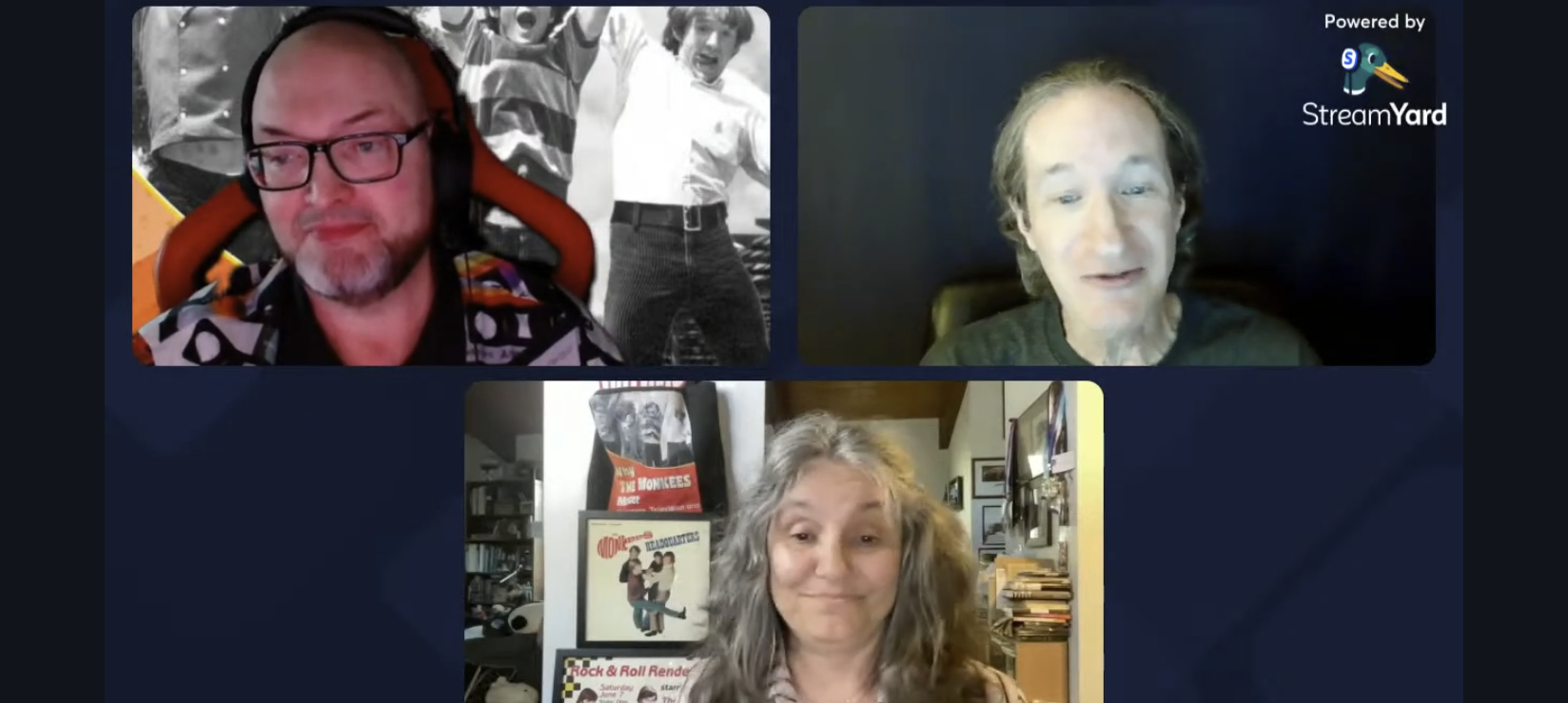
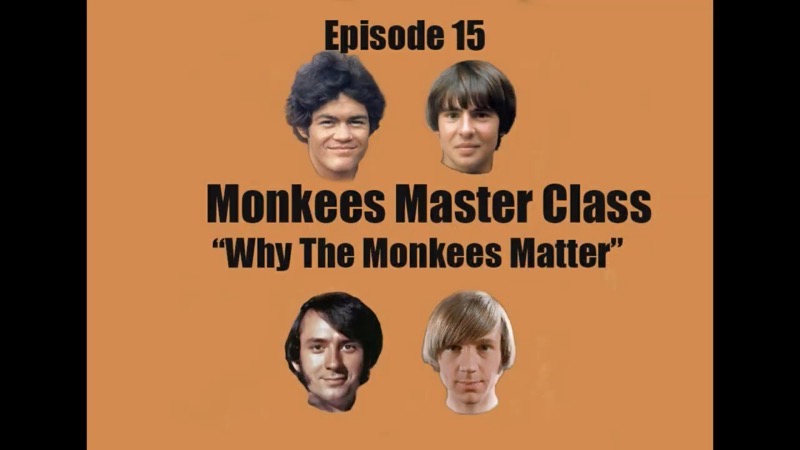
I had a great conversation about Why The Monkees Matter with the two hosts of “Johnny D’s Rock n Roll PhD”. Often, I speak with people who know the music more than the show – or the show more than the music. Here, both hosts had strong knowledge about both, and then we found out he shared the same top 1 songs as our favs.
Watch the video to learn about the many things the TV show taught us about friendship, going against authority and the patriarchy, and living a life full of passion for art above all things commerce – with lots of hidden nods toward the counter culture of the day (like rescuing a giant marijuana plant from misuse by supervillains who would corrupt its powerful fumes for evil). Yeah, they did a whole show about that!
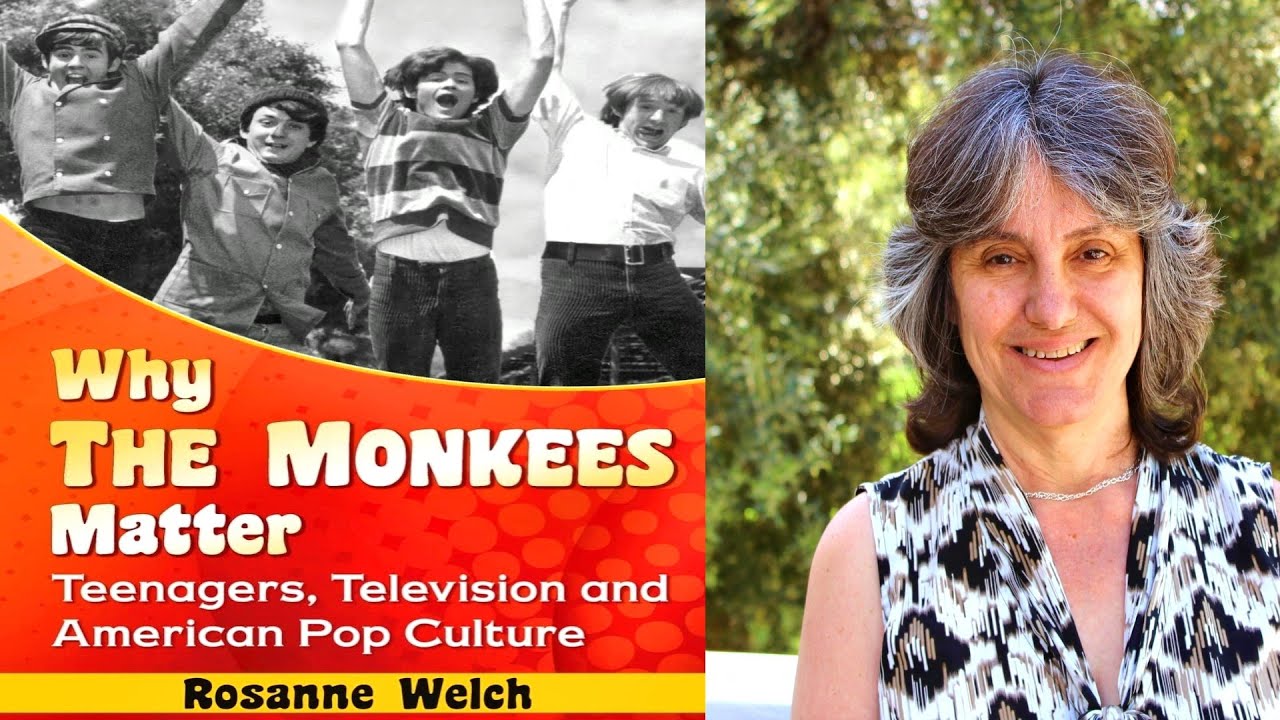
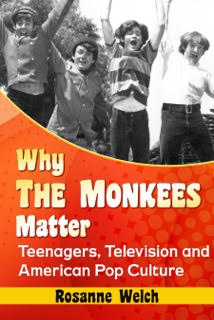
I enjoyed discussing the phenomenon and possible importance of Teen Idols across the generations with Dan Schneider for his Cosmoetica YouTube channel. Of course, he found me thanks to my book on The Monkees ( whose subtitle is “Teenagers, Television, and American Pop Culture”) and I was happy to report on the research I had done for the book about the rise of the term “teen ager” (post WWII when high school became mandatory), those who came before the Monkees (from Sinatra to James Dean to Bobby Sherman), and those who’ve come after (from the Jackson Five to Leonardo DiCaprio to Miley Cyrus).
I shared the panel with Fred Velez who has written about Monkees fandom and together we all delved into what participating in such fandom offers the audience, how streaming and the internet have changed such fandom, and who will be the most remembered teen idols of the century.
At San Diego Who Con 2024 (https://www.sdwhocon.com/), I enjoyed lecturing on “From Shakespeare to Shelley or Dante to Dickens: The Literary References Who Has Introduced You To!”.
I first thought of it while watching an episode with my favorite classic Doctor Peter Davison. I heard a line that was so specific I thought that it had to come from some book I didn’t know. It did. So then I researched what other famous authors had been quoted by the various Doctors and deeply enjoyed finding lots of Shakespeare and Dylan Thomas and of course, Byron and Shelley were in that mix. It was a reminder that writers READ. They read a lot to fuel their work.
The lecture also allowed me to highlight some great English actors who’ve starred in Shakespeare’s works like Patrick Stewart, Derek Jacobi, and Alex Kingston – some of whom also (of course) guested on Doctor Who.
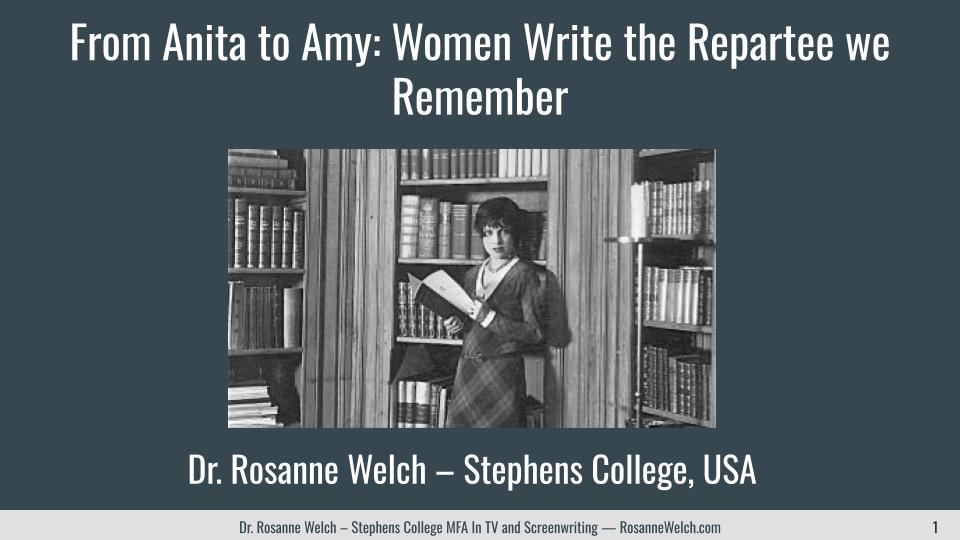
With the conference theme “A Conversation Beyond Script,” I decided to use my presentation time to “Celebrate the Daring Dialogue of Women Writers,” which allowed me to introduce the audience to the work of famous female screenwriters, from Anita Loos to Mae West to Lillian Hellman.
Then I delved into some names lesser-known to our international SRN members because they came from the TV world before the great sharing that streaming has offered us. From Gertrude Berg of The Goldbergs in the 1950s to Susan Harris (Soap, Golden Girls) and Linda Bloodworth Thomason (Designing Women) we covered the progressive (and often controversial) topics they brought to mainstream Americans.
I always say I could talk about The Monkees all day – or at least for an hour, which is what I just had the privilege of doing with Joe Russo of The Monkees Pad on YouTube.
It’s especially fun to talk with folks like Joe, who know The Monkees so well – both the music and the TV show, which is more my specialty. We covered how the show got on the air (thanks to a young Grant Tinker), how so many of their counter-culture jokes made it past the censor, and why the fandom keeps growing across the generations.
If you love The Monkees individually or as a group, and if you love the TV of the 1960s, I hope you enjoy the listen.
Many thanks to SRN member Romana Turina for inviting me to give an online seminar on the benefits of Flipping Your Classroom for the Working Group on Comparative Screenwriting in the Screenwriting Research Network that she leads.
Every month she presents and records a guest lecture for our membership that is then open to the public once she posts it on YouTube.
This month she asked me to speak about the pedagogy of flipping your classroom to enhance learning which, while created with K-12 students in mind is equally effective – and I would add necessary – in the world of MFA candidates. I use this practice in the teaching of screenwriting in our low residency Stephens College MFA in TV and Screenwriting.
It involves the professor providing less “Sage on the stage” performance and more student-focused opportunities. I’ve also come to describe it as not teaching (as defined by dumping all my info into their heads) but as curating an experience from which they glean the knowledge they need.
In the lecture I give examples of the kinds of activities I curate, keeping in mind the different learning styles each MFA candidate presents.
Though she never wrote a horror film, to celebrate Halloween this month’s focus is screenwriter, poet, and Pulitzer Prize-winning author, Zoe Akins, born on October 30, 1886. In 1935 Akins would become the third woman to win the Pulitzer Prize for Drama, the highest honor for a Broadway play in the United States, after Zona Gale (1921) and Susan Glaspell (1931). Akins’ win came from her dramatization of Edith Wharton’s The Old Maid. Four years later the play was adapted by Casey Robinson into a film starring Bette Davis, even though Akins had begun adapting plays and turning out her own screenplays in the early 1930s. Throughout her career, she collaborated with some of the most important women both behind and in front of the cameras which has kept her work in the public eye.
In this presentation given at the 2023 San Diego WhoCon I talked about what really happened at Pompeii on volcano day; the agricultural knowledge of the Aztecs; when Robin Hood began appearing in literature, and the bravery of Noor Inayat Khan and Rosa Parks.
Transcript:
What we’re talking about today is the real history behind the history behind Doctor Who. We know from the beginning the show was meant to teach history. It was a children’s program and I think that’s a really lovely idea and so they began with two teachers as companions. That was so intentional and it worked. It was a great way to warm people up and you had to have people who knew something about where they were going. Who had something to say and of course we had a student. You have to have someone you can talk to right? So it was a really lovely blend of characters.The very — one of the earliest ones they did went into the world of the Romans. Everyone’s always fascinated by the Romans and I think what’s really interesting is, sadly, just a little bit later, Highlanders was the last historical one they produced in that early period. They decided it wasn’t what the audience wanted. What did the audience want? Audience:Gimmicks and Robots? Duh, Daleks, right? The Daleks showed up and that was it they were like oh no no this is what the audience is coming for. Forget that history. Forget that study. Don’t learn anything.It’s okay. Also we know that once we get to John Pertwee and he’s trapped on Earth he can’t travel. So there’s no way he’s going to go into the past. So we lose a chunk of time where there was this moment to do something about history and then new Who showed up and we gained it back. What we’re talking about today is the real history behind the history behind Doctor Who. We know from the beginning the show was meant to teach history. It was a children’s program and I think that’s a really lovely idea and so they began with two teachers as companions. That was so intentional and it worked. It was a great way to warm people up and you had to have people who knew something about where they were going. Who had something to say and of course we had a student. You have to have someone you can talk to right? So it was a really lovely blend of characters.The very — one of the earliest ones they did went into the world of the Romans. Everyone’s always fascinated by the Romans and I think what’s really interesting is, sadly, just a little bit later, Highlanders was the last historical one they produced in that early period. They decided it wasn’t what the audience wanted. What did the audience want? Audience:Gimmicks and Robots? Duh, Daleks, right? The Daleks showed up and that was it they were like oh no no this is what the audience is coming for. Forget that history. Forget that study. Don’t learn anything.It’s okay. Also we know that once we get to John Pertwee and he’s trapped on Earth he can’t travel. So there’s no way he’s going to go into the past. So we lose a chunk of time where there was this moment to do something about history and then new Who showed up and we gained it back.