06 From Book To Movie from How Gidget Got Into the Girl Ghetto – Dr. Rosanne Welch – SRN Conference

06 From Book To Movie from How Gidget Got Into the Girl Ghetto – Dr. Rosanne Welch – SRN Conference

06 From Book To Movie from How Gidget Got Into the Girl Ghetto - Dr. Rosanne Welch - SRN Conference

Watch this entire presentation


Transcript:

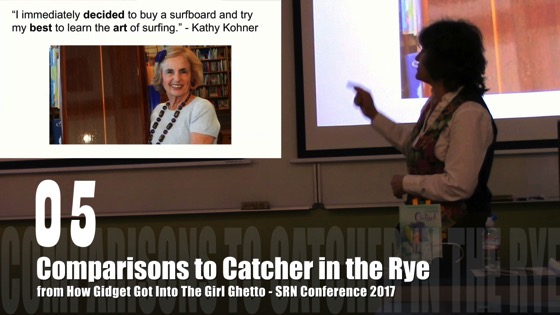
…and yet we don’t read books about a girl’s coming of age and Gidget turns out to be just such a thing. About a woman who goes to the beach to learn a skill. Yes, she meets some boys along the way and, of course, she finds one or two of them handsome, but she also makes choices about whether or not to have sex and that is a huge moment in the coming of age of a girl. Nobody takes advantage of her which tends to be the way the story goes. She makes the choices and the men respect her for it and thought that was fascinating when I read this book. So, Hollywood gets a hand of this book and they have to do something with it. They have to make it silly. So, in the real world, this is what she has to say. This book is all about how much she loves surfing and that’s a picture of the real Kathy Kohner back in the day with her surfboard. That is how she identified herself. We get to the movies and this is some typical dialogue. Yeah, the cringing can start at any time.

At this year’s 10th Annual Screenwriting Research Network Conference at Otago University in Dunedin, New Zealand I presented…

“How Gidget Got Into the Girl Ghetto by Accident (and How We Can Get Her Out of it): Demoting Gidget: The Little Girl with Big Ideas from Edgy Coming of Age Novel to Babe on the Beach Genre Film via Choices made in the Adaptation Process.”

It’ a long title, as I joke up front, but covers the process of adapting the true life story of Kathy Kohner (nicknamed ‘Gidget’ by the group of male surfers who she spent the summers with in Malibu in the 1950s) into the film and television series that are better remembered than the novel. The novel had been well-received upon publication, even compared to A Catcher in the Rye, but has mistakenly been relegated to the ‘girl ghetto’ of films. Some of the adaptations turned the focus away from the coming of age story of a young woman who gained respect for her talent at a male craft – surfing – and instead turned the focus far too much on Kathy being boy crazy.

Along the way I found interesting comparisons between how female writers treated the main character while adapting the novel and how male writers treated the character.

Gidget


Dr. Rosanne Welch

Dr. Rosanne Welch teaches the History of Screenwriting and One-Hour Drama for the Stephens College MFA in Screenwriting.

Writing/producing credits include Beverly Hills 90210, Picket Fences, ABCNEWS: Nightline and Touched by an Angel. In 2016 she published the book Why The Monkees Matter: Teenagers, Television and American Pop; co-edited Women in American History: A Social, Political, and Cultural Encyclopedia; and placed “Transmitting Culture Transnationally Via the Characterization of Parents in Police Procedurals” in the New Review of Film and Television Studies. Essays appear in Torchwood Declassified: Investigating Mainstream Cult Television and Doctor Who and Race: An Anthology. Welch serves as Book Reviews editor for Journal of Screenwriting and on the Editorial Advisory Board for Written By magazine, the magazine of the Writers Guild.

Watch Dr. Welch’s talk “The Importance of Having a Female Voice in the Room” at the 2016 TEDxCPP.


SRN logo red

The Screenwriting Research Network is a research group consisting of scholars, reflective practitioners and practice-based researchers interested in research on screenwriting. The aim is to rethink the screenplay in relation to its histories, theories, values and creative practices.

Film Is A Collaborative Effort from Giving Voice to Silent Films and the Far From Silent Women Who Wrote Them with Dr. Rosanne Welch [Video]

Watch this entire presentation

Film Is A Collaborative Effort from Giving Voice to Silent Films and the Far From Silent Women Who Wrote Them with Dr. Rosanne Welch [Video]

Film Is A Collaborative Effort from Giving Voice to Silent Films and the Far From Silent Women Who Wrote Them with Dr. Rosanne Welch [Video]


A recording of my presentation at this year’s University Film and Video Association (UFVA) 2017 conference.

Transcript:

This is from the very beginning with D. W. Griffith. It’s not his movie. Right? He shouldn’t get the credit. Then again, it’s a terrible movie and I hope nobody ever teaches this movie. I always tell my students, we’ll never touch this movie. It’s all awful and everything that someone says you’re supposed to learn from about it close-ups and tracking shots are in all the movies by all these women that I’m telling you about. So watch one of their movies that show those things. Don’t watch his movies.

I love John Carpenter because he’s the one who said…Let’s be fair. It’s a collaboration. Be honest about it. I do this. They do that. We blend together and that is what makes a product really good.

Books Mentioned In This Presentation

Follow Dr. Rosanne Welch

Twitter: https://twitter.com/rosannewelch
Instagram: https://www.instagram.com/drrosannewelch/

05 Comparisons to Catcher in the Rye from How Gidget Got Into the Girl Ghetto – Dr. Rosanne Welch – SRN Conference

05 Comparisons to Catcher in the Rye from How Gidget Got Into the Girl Ghetto – Dr. Rosanne Welch – SRN Conference

05 Comparisons to Catcher in the Rye from How Gidget Got Into the Girl Ghetto - Dr. Rosanne Welch - SRN Conference

Watch this entire presentation


Transcript:

So, we’ll start with the real woman. This is the real woman in the modern day. She’s still alive. She works in — she works as a Maitre D of a restaurant in Malibu and she’s still known as the “Real Gidget.” That’s kind of her — everyone in Hollywood is a bit of a celebrity so you can go that restaurant and meet the “Real Gidget” and have dinner. It is pretty funny. She also did a documentary a few years ago about her life that traveled the festival circuit. She’s trying to bring back the real story out of all the Hollywood glitz and glamour. So that’s Kathy Kohner and this was said about the book in the introduction and which I found very interesting. This is what connected me to it, that when it came out there was a thought that this was essentially a female Catcher in the Rye. Catcher in the Rye being the JD Salinger book that every high school student in America is still made to read and I don’t understand. It’s about a kid who decided whether or not to go to a hooker and I’m not really sure why that’s the most important book for teenagers to read.

At this year’s 10th Annual Screenwriting Research Network Conference at Otago University in Dunedin, New Zealand I presented…

“How Gidget Got Into the Girl Ghetto by Accident (and How We Can Get Her Out of it): Demoting Gidget: The Little Girl with Big Ideas from Edgy Coming of Age Novel to Babe on the Beach Genre Film via Choices made in the Adaptation Process.”

It’ a long title, as I joke up front, but covers the process of adapting the true life story of Kathy Kohner (nicknamed ‘Gidget’ by the group of male surfers who she spent the summers with in Malibu in the 1950s) into the film and television series that are better remembered than the novel. The novel had been well-received upon publication, even compared to A Catcher in the Rye, but has mistakenly been relegated to the ‘girl ghetto’ of films. Some of the adaptations turned the focus away from the coming of age story of a young woman who gained respect for her talent at a male craft – surfing – and instead turned the focus far too much on Kathy being boy crazy.

Along the way I found interesting comparisons between how female writers treated the main character while adapting the novel and how male writers treated the character.

Gidget


Dr. Rosanne Welch

Dr. Rosanne Welch teaches the History of Screenwriting and One-Hour Drama for the Stephens College MFA in Screenwriting.

Writing/producing credits include Beverly Hills 90210, Picket Fences, ABCNEWS: Nightline and Touched by an Angel. In 2016 she published the book Why The Monkees Matter: Teenagers, Television and American Pop; co-edited Women in American History: A Social, Political, and Cultural Encyclopedia; and placed “Transmitting Culture Transnationally Via the Characterization of Parents in Police Procedurals” in the New Review of Film and Television Studies. Essays appear in Torchwood Declassified: Investigating Mainstream Cult Television and Doctor Who and Race: An Anthology. Welch serves as Book Reviews editor for Journal of Screenwriting and on the Editorial Advisory Board for Written By magazine, the magazine of the Writers Guild.

Watch Dr. Welch’s talk “The Importance of Having a Female Voice in the Room” at the 2016 TEDxCPP.


SRN logo red

The Screenwriting Research Network is a research group consisting of scholars, reflective practitioners and practice-based researchers interested in research on screenwriting. The aim is to rethink the screenplay in relation to its histories, theories, values and creative practices.

The “A Film By” Credit and Writers from Giving Voice to Silent Films and the Far From Silent Women Who Wrote Them with Dr. Rosanne Welch [Video]

Watch this entire presentation

The “A Film By” Credit and Writers from Giving Voice to Silent Films and the Far From Silent Women Who Wrote Them with Dr. Rosanne Welch [Video]

The


A recording of my presentation at this year’s University Film and Video Association (UFVA) 2017 conference.

Transcript:

The other thing we argue about at the Writers Guild all the time is that we have this business where we have a credit that’s always “A Film By” the director. If he is a writer/director, fine. Ok, but if there’s nothing of that than why does he get this credit and why don’t the writers get that credit and we can’t get rid of that because the Director Guild will not get rid of it. Makes me nuts. Makes me nuts. Makes me nuts. But it’s true.

So this perpetually puts it in the audience’s and the student’s mind that this is the person to credit for that movie and it is not true. Same thing, obviously we know all these wonderful movies by Spike Lee. In the beginning, yes, he did write and direct “She’s Gotta Have It” but he did Malcolm X with Arnold Pearl. We don’t remember Arnold Pearl and he did Chi-Raq with Kevin Willmott and of course, he adapted that from Aristophanes and Lysistrata. So, let’s remember that there were other writers involve but they’re still only A Spike Lee Joint. That’s the only credit that’s given above the title and that’s something that we’re fighting against in our classes.

Books Mentioned In This Presentation

Follow Dr. Rosanne Welch

Twitter: https://twitter.com/rosannewelch
Instagram: https://www.instagram.com/drrosannewelch/

Dr. Rosanne Welch presents Opening Remarks at The Industry in Our Backyard: Television Production in Los Angeles 1940s-1980s [Video]

Dr. Rosanne Welch presents Opening Remarks at The Industry in Our Backyard: Television Production in Los Angeles 1940s-1980s [Video]

Dr. Rosanne Welch presents Opening Remarks at The Industry in Our Backyard: : Television Production in Los Angeles 1940s-1980s [Video]


Dr. Rosanne Welch presents her opening remarks for the photo exhibition…

The Industry in Our Backyard: Television Production in Los Angeles 1940s-1980s

Runs Thursday, January 18, 2018 to Sunday, July 15, 2018 Central Library, History and Genealogy Department, LL4

From Lucy to ALF, from game shows to talk shows, from local news to the made-for-TV movie, The Industry In Our Backyard: Television Production In Los Angeles 1940s-1980s showcases four decades in the life of the medium that dominated American culture, yet for Angelenos, was just another part of daily life. The images displayed in the exhibit were largely taken by photographers from the Herald Examiner and the Valley Times newspapers, who were granted exclusive access to back lots, sound stages and location shoots around town for their TV sections. These photos, which have not been seen in as many as sixty-five years when they first ran in the papers, provide rare glimpses of the earliest L.A. stations, the crews at work and the stars in action.

The exhibit runs from January 18 through July 15, 2018, along with a series of presentations given by television industry professionals and archivists.

Exhibit sponsored by Photo Friends, a nonprofit organization that supports the Los Angeles Public Library’s Photo Collection/History & Genealogy Department at Central Library.

04 The Real Gidget from How Gidget Got Into the Girl Ghetto – Dr. Rosanne Welch – SRN Conference 2017

04 The Real Gidget from How Gidget Got Into the Girl Ghetto – Dr. Rosanne Welch – SRN Conference 2017

04 The Real Gidget from How Gidget Got Into the Girl Ghetto - Dr. Rosanne Welch - SRN Conference 2017

Watch this entire presentation


Transcript:

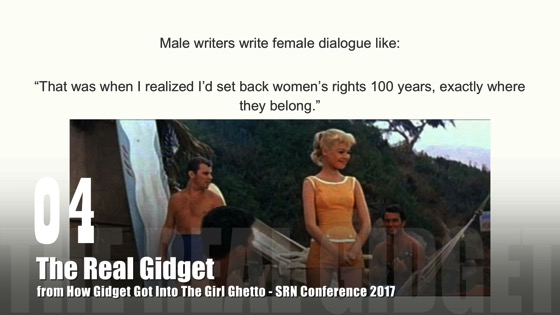
Now, this piece of dialog really made me really made me cringe. Oooh, why would a girl ever say that about her own life and yet this is the line given to Gidget by the male writers. So this is something that I found along the way.

As far as the adaptation of Gidget, it all started again with an actual real girl and her real words. Kathy Kohner was a Jewish young girl and her father was a television writer. She lived in Beverly Hills and one summer in her year between 16 and 17 she went to the beach every day and discovered this community of surfing males — no girls allowed — and she didn’t fall in love with the boys. She fell in love with the sport and what really bothered me was that is what her book is about. How hard she tried to be such a good surfer the men would take her seriously.

At this year’s 10th Annual Screenwriting Research Network Conference at Otago University in Dunedin, New Zealand I presented…

“How Gidget Got Into the Girl Ghetto by Accident (and How We Can Get Her Out of it): Demoting Gidget: The Little Girl with Big Ideas from Edgy Coming of Age Novel to Babe on the Beach Genre Film via Choices made in the Adaptation Process.”

It’ a long title, as I joke up front, but covers the process of adapting the true life story of Kathy Kohner (nicknamed ‘Gidget’ by the group of male surfers who she spent the summers with in Malibu in the 1950s) into the film and television series that are better remembered than the novel. The novel had been well-received upon publication, even compared to A Catcher in the Rye, but has mistakenly been relegated to the ‘girl ghetto’ of films. Some of the adaptations turned the focus away from the coming of age story of a young woman who gained respect for her talent at a male craft – surfing – and instead turned the focus far too much on Kathy being boy crazy.

Along the way I found interesting comparisons between how female writers treated the main character while adapting the novel and how male writers treated the character.

Gidget


Dr. Rosanne Welch

Dr. Rosanne Welch teaches the History of Screenwriting and One-Hour Drama for the Stephens College MFA in Screenwriting.

Writing/producing credits include Beverly Hills 90210, Picket Fences, ABCNEWS: Nightline and Touched by an Angel. In 2016 she published the book Why The Monkees Matter: Teenagers, Television and American Pop; co-edited Women in American History: A Social, Political, and Cultural Encyclopedia; and placed “Transmitting Culture Transnationally Via the Characterization of Parents in Police Procedurals” in the New Review of Film and Television Studies. Essays appear in Torchwood Declassified: Investigating Mainstream Cult Television and Doctor Who and Race: An Anthology. Welch serves as Book Reviews editor for Journal of Screenwriting and on the Editorial Advisory Board for Written By magazine, the magazine of the Writers Guild.

Watch Dr. Welch’s talk “The Importance of Having a Female Voice in the Room” at the 2016 TEDxCPP.


SRN logo red

The Screenwriting Research Network is a research group consisting of scholars, reflective practitioners and practice-based researchers interested in research on screenwriting. The aim is to rethink the screenplay in relation to its histories, theories, values and creative practices.

More on Goodrich and Hackett from Giving Voice to Silent Films and the Far From Silent Women Who Wrote Them with Dr. Rosanne Welch [Video]

Watch this entire presentation

More on Goodrich and Hackett from Giving Voice to Silent Films and the Far From Silent Women Who Wrote Them with Dr. Rosanne Welch [Video]

More on Goodrich and Hackett from Giving Voice to Silent Films and the Far From Silent Women Who Wrote Them with Dr. Rosanne Welch [Video]


A recording of my presentation at this year’s University Film and Video Association (UFVA) 2017 conference.

Transcript:

Also, if you look at the differences between the novel and the movie, in the novel, they’re kind of flighty and silly. In the movie, they love each other. They’re adorable to each other. This is the marriage of Frances and Albert Hackett. This is not Dashiell Hammett and Lillian Hellman because they were never actually married, because, as we know, Hammett never left his wife. So that wasn’t a marriage and that wasn’t two people who understood a marriage. They had a relationship that was entirely different than the one that appears on the screen. That comes from the writers who adapted the movie who don’t get any credit which makes me nuts. So, why do we study screenwriting history? Because we need to know these stories and we need to pass those stories on to our students so they pay attention to who wrote the movie because that’s the person who’s message you’re accepting into your life when you see that movie.

Books Mentioned In This Presentation

Follow Dr. Rosanne Welch

Twitter: https://twitter.com/rosannewelch
Instagram: https://www.instagram.com/drrosannewelch/

03 Ruth Brooks Flippen from How Gidget Got Into the Girl Ghetto – Dr. Rosanne Welch – SRN Conference 2017

03 Ruth Brooks Flippen from How Gidget Got Into the Girl Ghetto – Dr. Rosanne Welch – SRN Conference 2017

03 Ruth Brooks Flippen from How Gidget Got Into the Girl Ghetto - Dr. Rosanne Welch - SRN Conference 2017

Watch this entire presentation


Transcript:

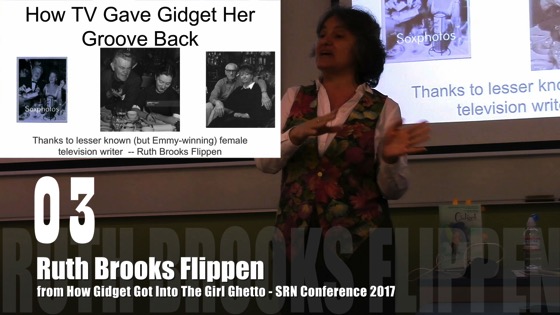
…and it’s because of this woman, Ruth Brooks Flippen, who was the television writer who did the adaptation for television and frankly I had never heard of her. There are a lot of female writers in Hollywood that never get exposure and so this shocked me. Theses are photographs, more likely I was to find her online with her husband because he was an actor in the period. So she is more known as Jay Flippen’s wife than she is as an executive producer for television in her own right and after she got through with Gidget she’s going to do a lot of interesting things. Along the way we’re going to talk about gendered writing and how scripts became different when a man wrote an episode of Gidget versus when a female did, which I did not think would happen and yet it is exactly what I discovered along the way. Sadly, when women write women they give them jobs and make the educated and smart and when men write woman they often don’t give them jobs and they have them shop a lot, which doesn’t seem to suit me as a definition as I really don’t like shopping.

At this year’s 10th Annual Screenwriting Research Network Conference at Otago University in Dunedin, New Zealand I presented…

“How Gidget Got Into the Girl Ghetto by Accident (and How We Can Get Her Out of it): Demoting Gidget: The Little Girl with Big Ideas from Edgy Coming of Age Novel to Babe on the Beach Genre Film via Choices made in the Adaptation Process.”

It’ a long title, as I joke up front, but covers the process of adapting the true life story of Kathy Kohner (nicknamed ‘Gidget’ by the group of male surfers who she spent the summers with in Malibu in the 1950s) into the film and television series that are better remembered than the novel. The novel had been well-received upon publication, even compared to A Catcher in the Rye, but has mistakenly been relegated to the ‘girl ghetto’ of films. Some of the adaptations turned the focus away from the coming of age story of a young woman who gained respect for her talent at a male craft – surfing – and instead turned the focus far too much on Kathy being boy crazy.

Along the way I found interesting comparisons between how female writers treated the main character while adapting the novel and how male writers treated the character.


Gidget


Dr. Rosanne Welch

Dr. Rosanne Welch teaches the History of Screenwriting and One-Hour Drama for the Stephens College MFA in Screenwriting.

Writing/producing credits include Beverly Hills 90210, Picket Fences, ABCNEWS: Nightline and Touched by an Angel. In 2016 she published the book Why The Monkees Matter: Teenagers, Television and American Pop; co-edited Women in American History: A Social, Political, and Cultural Encyclopedia; and placed “Transmitting Culture Transnationally Via the Characterization of Parents in Police Procedurals” in the New Review of Film and Television Studies. Essays appear in Torchwood Declassified: Investigating Mainstream Cult Television and Doctor Who and Race: An Anthology. Welch serves as Book Reviews editor for Journal of Screenwriting and on the Editorial Advisory Board for Written By magazine, the magazine of the Writers Guild.

Watch Dr. Welch’s talk “The Importance of Having a Female Voice in the Room” at the 2016 TEDxCPP.


SRN logo red

The Screenwriting Research Network is a research group consisting of scholars, reflective practitioners and practice-based researchers interested in research on screenwriting. The aim is to rethink the screenplay in relation to its histories, theories, values and creative practices.

Frances Goodrich and Albert Hackett from Giving Voice to Silent Films and the Far From Silent Women Who Wrote Them with Dr. Rosanne Welch [Video]

Watch this entire presentation

Frances Goodrich and Albert Hackett from Giving Voice to Silent Films and the Far From Silent Women Who Wrote Them with Dr. Rosanne Welch [Video]

Frances Goodrich and Albert Hackett from Giving Voice to Silent Films and the Far From Silent Women Who Wrote Them with Dr. Rosanne Welch [Video]


A recording of my presentation at this year’s University Film and Video Association (UFVA) 2017 conference.

Transcript:

They’re the people behind Nick and Nora Charles. Dashiell Hammet wrote the novel. If you read the novel, Nora is nothing. She’s just his wife. She drinks a lot and she’s pretty. In the movie, she has agency and she helps solve the case because Frances Hackett was a female writer on the movie adaptation and she made sure that the woman had something to do. She has a great quote where she says, “I was always the only woman in the room when the stories were being discussed and it was my job to protect the women in the program — in the film and in the story or nobody else would” and if you look at that — it’s so interesting — they did 6 Thin Man movies. The Hacketts only wrote the first 3 and when you come to the fourth one Nora becomes a dumb chick. Doesn’t understand what the cops are doing or what the laws are and she does funny jokes and falls on her face. They entirely lost the believability of that character when the woman who was protecting her left the writing part of it.

Books Mentioned In This Presentation

Follow Dr. Rosanne Welch

Twitter: https://twitter.com/rosannewelch
Instagram: https://www.instagram.com/drrosannewelch/

The “Capra Touch” and Writers from Giving Voice to Silent Films and the Far From Silent Women Who Wrote Them with Dr. Rosanne Welch [Video]

Watch this entire presentation

The “Capra Touch” and Writers from Giving Voice to Silent Films and the Far From Silent Women Who Wrote Them with Dr. Rosanne Welch

The


A recording of my presentation at this year’s University Film and Video Association (UFVA) 2017 conference.

Transcript:

Frank Capra, who — you all know the Robert Riskin anecdote? He turned in 200 blank — he was the screenwriter behind much of Capra’s work and Capra had a famous “Capra Touch” and he would run around town discussing “well, that movie has the ‘Capra touch.’ That’s why it’s successful.”So Robert Riskin had a deadline for this screenplay for Capra and he handed in 200 pages of blank nothing and he said: “Put your fucking touch on that!” Because you cannot direct what does not exist and that’s and important — now it may be an anecdote. We’re not sure, but (unknown) it’s a reminder of the truth. So here we have this Pulitzer Prize-winning set of writers who students have never heard of. You have to look at the book that their nephew wrote about them. You only get the story if someone “puts you in the story.” Luckily their nephew did and it is a really fun little book about their life in Hollywood and New York.

Books Mentioned In This Presentation

Follow Dr. Rosanne Welch

Twitter: https://twitter.com/rosannewelch
Instagram: https://www.instagram.com/drrosannewelch/