I teach several classes for the Stephens College Low-Residency MFA in Screenwriting, including History of Screenwriting. In fact, I created the curriculum for that course from scratch and customized it to this particular MFA in that it covers ‘Screenwriting’ (not directors) and even more specifically, the class has a female-centric focus. As part History of Screenwriting I, the first course in the four-class series, we focus on the early women screenwriters of the silent film era who male historians have, for the most part, quietly forgotten in their books. In this series, I share with you some of the screenwriters and films that should be part of any screenwriters education. I believe that in order to become a great screenwriter, you need to understand the deep history of screenwriting and the amazing people who created the career. — Dr. Rosanne Welch
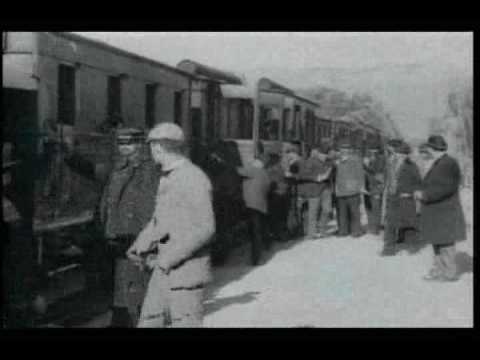
‘Arrival of a Train at La Ciotat’ is considered to be the first motion picture in modern history (altough more an experiment from the Lumière-brothers to use their ‘invention’ of film, it shows a train arriving at a passenger station). Popular legend has it that, when this film was shown, the first-night audience fled the cafe in terror, fearing being run over by the “approaching” train.
Learn more about the Lumiere Brothers with these books
* A portion of each sale from Amazon.com directly supports our blogs ** Many of these books may be available from your local library. Check it out!
“1960s TV Censorship and The Monkees” gives a brief overview of where censorship standards were in the era – and how The Monkees pushed the envelope with its mentions of the Vietnam War – and Sunset Strip riots – and even with the outrageous storytelling behind “Frodis Caper”, the episode that celebrated the saving of an alien plant that very closely resembled a marijuana plant…
Writer Treva Silverman said the staff got away with such jokes because the network executives were just old enough not to understand any of the references. Presented at Stephens College MFA in Screenwriting classes on Friday, August 5, 2016
Transcript:
Another episode that they have, that I like a lot is called “The Devil and Peter Tork.” It’s written by Gardener, Caruso and Kaufman. This is the Devil and Dr. Faustus and all those other versions of that story. Peter Tork wants the talent of playing the harp, because he is in love with the harp and so he sells his soul to the Devil to get that talent, but he doesn’t even understand who the devil is because he loves everybody and he’s all about peace. But eventually, the Devil shows up to take that soul and the boys won’t let him. They have a little dance sequence where they imagine what Hell might be like and theirs a lot of girls who look like Playboy bunnies. I’m not sure how we get away with that. And the whole point of it is, there’s a lovely little scene I’ll show you a clip of — they start talking about “Maybe Hell won’t be that bad.” but they bleep them every time they say the word “Hell” and eventually — well, I’ll show you that in a minute, Micky Dolenz looks at the audience and says something very funny – “You know what’s even more scary? You can’t say <cuckoo> on television.”
Dr. Rosanne Welch is a professor in the Low Residency MFA in Screenwriting Program from Stephens College, California State University, Fullerton, Mount San Antonio Community College and Cal Poly Pomona. In 2007, she graduated with her Ph.D. in 20th Century U.S./Film History from Claremont Graduate University. She graduated with her M.A. in 20th Century United States History from California State University, Northridge in 2004.
Welch is also a television writer/producer with credits for Beverly Hills 90210 , CBS’s Emmy winning Picket Fences and Touched By An Angel . She also writes and hosts her own podcasts on 3rdPass.media, her first one titled “Mindful(I) Media with Dr. Rosanne Welch.”
You Can Please Some of the People Some of the Time… None of the People All of the Time: A History of the Art of Adaptation in Movies like Dune, The Godfather, Harry Potter and More!
Dr. Rosanne Welch speaks on A History of the Art of Adaptation in Movies like Dune, The Godfather, Harry Potter and More! at the California State University, Fullerton Library
Part of the program series for Dune by Frank Herbert: A 50th Anniversary Celebration.
So that was one change and that change happens all the time in movies and that’s regrettable because people need to be represented. We need to understand that we’re in a multi-cultural, diverse, country and every time we take a character that has some ethnic background — I mean imagine Vito Corelone — actually, when they went to make The Godfather, one of the people up for playing Michael Corelone was Robert Redford. As an Italian? How was that going to work? Right? But he was a big name. He was young. Whatever. So. that was one change that Affleck was forced to make or the movie wouldn’t have been made at all, which I think is interesting. He thought the story was worth getting out there.
About this talk
Dr. Rosanne Welch (RTVF) speaks on the craft of history of film adaptations from the controversy of the silent film Birth of a Nation (protested by the National Association for the Advancement of Colored People in 1915) to Breakfast at Tiffany’s (to which author Truman Capote famously said, “The only thing left from the book is the title”) to The Godfather . Naturally, the behemoth in adaptation – Harry Potter (which depended on the relationship created by adapter Steve Kloves and author J.K. Rowling) will be discussed, as will the subject of this month’s celebration: Dune.
Date: Wednesday, October 14, 2015 Time: 1:00pm – 2:00pm
About Dr. Rosanne Welch
Dr. Rosanne Welch is a professor in the Low Residency MFA in Screenwriting Program from Stephens College, California State University, Fullerton, Mount San Antonio Community College and Cal Poly Pomona. In 2007, she graduated with her Ph.D. in 20th Century U.S./Film History from Claremont Graduate University. She graduated with her M.A. in 20th Century United States History from California State University, Northridge in 2004.
Welch is also a television writer/producer with credits for Beverly Hills 90210 , CBS’s Emmy winning Picket Fences and Touched By An Angel . She also writes and hosts her own podcasts on 3rdPass.media, her first one titled “Mindful(I) Media with Dr. Rosanne Welch.”
JB: What were some of your earlier influences musically?
RS: My first favorite song was “Daydream Believer,” the Monkees’ version. How’s that for guilty pleasure? I loved that song when I was 8 or 9 years old and I still love it. Of course, there was Dylan, we always had Dylan in the house all the time. We had Gilbert and Sullivan. We had the Beatles. Kingston Trio, Pete Seeger. For me, it was mostly the Monkees and the Beatles. Shortly thereafter, the Allman Brothers, and then shortly thereafter Genesis and then shortly thereafter Bruce Springsteen, which caused a horrible riff between me and my ‘art rock-prog’ friends. They couldn’t understand Springsteen. The early stuff really is probably Dylan and the Beatles.
JB: When did you know that music could really be your career?
RS: It was in Hartford, Conn., right after my first record came out. I still had some doubts if this could happen as an actual career. I went to a gig at WWUH and afterwards I sold $325 worth of CDs, which to me at that time was a ridiculous amount of money. After the gig they said this is the money for your CDs. I just not could believe that they’d give me $325 for 22 CDs. I thought it was the greatest thing that ever happened. Right then and there, a little switch went off in my head, “aha. I like this.”
JB: If you weren’t a singer-songwriter, what would you be?
I teach several classes for the Stephens College Low-Residency MFA in Screenwriting, including History of Screenwriting. In fact, I created the curriculum for that course from scratch and customized it to this particular MFA in that it covers ‘Screenwriting’ (not directors) and even more specifically, the class has a female-centric focus. As part History of Screenwriting I, the first course in the four-class series, we focus on the early women screenwriters of the silent film era who male historians have, for the most part, quietly forgotten in their books. In this series, I share with you some of the screenwriters and films that should be part of any screenwriters education. I believe that in order to become a great screenwriter, you need to understand the deep history of screenwriting and the amazing people who created the career. — Dr. Rosanne Welch
Repas de Bébé (also known as Baby’s Meal and Feeding the Baby) is directed and produced by Louis Lumière and stars Andrée Lumière. The film consists of one shot of Auguste Lumière, his wife and baby daughter having breakfast in the countryside.
Learn more about the Lumiere Brothers with these books
* A portion of each sale from Amazon.com directly supports our blogs ** Many of these books may be available from your local library. Check it out!
You Can Please Some of the People Some of the Time… None of the People All of the Time: A History of the Art of Adaptation in Movies like Dune, The Godfather, Harry Potter and More!
Dr. Rosanne Welch speaks on A History of the Art of Adaptation in Movies like Dune, The Godfather, Harry Potter and More! at the California State University, Fullerton Library
Part of the program series for Dune by Frank Herbert: A 50th Anniversary Celebration.
Argo which, of course, won the Oscar just a couple of years ago is an example of some changes that were made that are regrettable and yet the movie holds up and it’s not Ben Affleck’s fault. When Ben Affleck went to make the movie, which won an Oscar for him, he knew that in the story, which is a true story, the actual CIA gentleman is named Tony Mendez. Tony Mendez and Affleck doesn’t look like a Tony Mendez. He wanted a Latino actor to be the lead in the film. he looked for someone that the studio would approve. The only Latino actor one considers to open a movie is Antonio Banderas and he’s booked, booked, booked. Because he’s the only Latino actor who can open a movie. So, the studio said to Affleck, “Look, why don’t you play the part?”
“But I’m not Latino. It’s going to erase the ethnic feeling of this movie.”
And they said, Ok, then we just won’t make the movie.”
He said, “Ok, as long as we keep the guy’s name. Maybe people will realize” and of course, if they look at the book they will understand that we’re talking about a Hispanic actor.
About this talk
Dr. Rosanne Welch (RTVF) speaks on the craft of history of film adaptations from the controversy of the silent film Birth of a Nation (protested by the National Association for the Advancement of Colored People in 1915) to Breakfast at Tiffany’s (to which author Truman Capote famously said, “The only thing left from the book is the title”) to The Godfather . Naturally, the behemoth in adaptation – Harry Potter (which depended on the relationship created by adapter Steve Kloves and author J.K. Rowling) will be discussed, as will the subject of this month’s celebration: Dune.
Date: Wednesday, October 14, 2015 Time: 1:00pm – 2:00pm
About Dr. Rosanne Welch
Dr. Rosanne Welch is a professor in the Low Residency MFA in Screenwriting Program from Stephens College, California State University, Fullerton, Mount San Antonio Community College and Cal Poly Pomona. In 2007, she graduated with her Ph.D. in 20th Century U.S./Film History from Claremont Graduate University. She graduated with her M.A. in 20th Century United States History from California State University, Northridge in 2004.
Welch is also a television writer/producer with credits for Beverly Hills 90210 , CBS’s Emmy winning Picket Fences and Touched By An Angel . She also writes and hosts her own podcasts on 3rdPass.media, her first one titled “Mindful(I) Media with Dr. Rosanne Welch.”
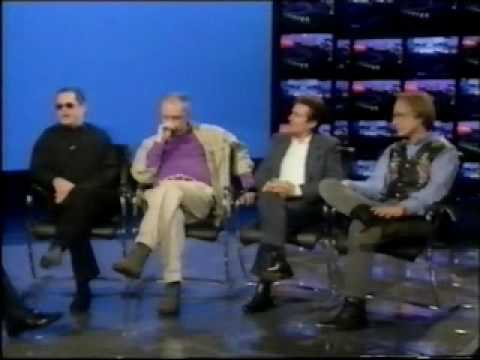
This 1997 interview clip involves all four actor/musicians on the Clive James program out of the UK. They discuss the Justus tour, their history, and the 30th anniversary special that aired that year. James (or his editors) are good at giving each their individual moment during the interview. James defines the show as “their old but always new” series – which is a compliment and shows how James understood the show and its importance. It’s always interesting to compare the questions asked by American interviewers and those from other countries. — Rosanne
I teach several classes for the Stephens College Low-Residency MFA in Screenwriting, including History of Screenwriting. In fact, I created the curriculum for that course from scratch and customized it to this particular MFA in that it covers ‘Screenwriting’ (not directors) and even more specifically, the class has a female-centric focus. As part History of Screenwriting I, the first course in the four-class series, we focus on the early women screenwriters of the silent film era who male historians have, for the most part, quietly forgotten in their books. In this series, I share with you some of the screenwriters and films that should be part of any screenwriters education. I believe that in order to become a great screenwriter, you need to understand the deep history of screenwriting and the amazing people who created the career. — Dr. Rosanne Welch
The world’s 1st comedy, The Sprinkler Sprinkled (also known as L’Arroseur Arrosé and The Waterer Watered) was shot in Lyon in the spring of 1895. The film portrays a simple practical joke in which a gardener is tormented by a boy who steps on the hose that the gardener is using to water his plants, cutting off the water flow. When the gardener tilts the nozzle up to inspect it, the boy releases the hose, causing the water to spray him. The gardener is stunned and his hat is knocked off, but he soon catches on. A chase ensues, both on and off-screen (the camera never moves from its original position) until the gardener catches the boy and administers a spanking. Louis Lumière used his own gardener, François Clerc, to portray the gardener.
The first public screening of films at which admission was charged was held on December 28, 1895, at Salon Indien du Grand Café in Paris. This presentation by the Lumière brothers featured ten short movies, including L’arroseur arrosé, which played sixth. — Change Before Going Produtions
Learn more about the Lumiere Brothers with these books
* A portion of each sale from Amazon.com directly supports our blogs ** Many of these books may be available from your local library. Check it out!
“1960s TV Censorship and The Monkees” gives a brief overview of where censorship standards were in the era – and how The Monkees pushed the envelope with its mentions of the Vietnam War – and Sunset Strip riots – and even with the outrageous storytelling behind “Frodis Caper”, the episode that celebrated the saving of an alien plant that very closely resembled a marijuana plant…
Writer Treva Silverman said the staff got away with such jokes because the network executives were just old enough not to understand any of the references. Presented at Stephens College MFA in Screenwriting classes on Friday, August 5, 2016
Transcript:
In the course of this episode they do this song, which is hugely anti-war, if you look at it. Zoor and Zam.
“The king of Zor, he called for war And the king of Zam, he answered.
Two little kings playing a game. They gave a war and nobody came.”
That’s a hugely anti-war song to be in the middle of the still, fussing around kind of program. They got away with it. They got away with it. I’m not — I just find that fascinating. At the very end of the episode, they get to the bad plant. They’re going to kill it unti the plant says, “No, no, it’s not my fault. The other guy used me. I want to help the world. If I reenergize my Frodis power, more people will be happier. It will be a lovely thing.” This is the bad Wizard Glick and once he gets near the plant this is how he starts to feel. It’s an entire episode dedicated the love of marijuana. In 1967 in American television. I just love that.
Dr. Rosanne Welch is a professor in the Low Residency MFA in Screenwriting Program from Stephens College, California State University, Fullerton, Mount San Antonio Community College and Cal Poly Pomona. In 2007, she graduated with her Ph.D. in 20th Century U.S./Film History from Claremont Graduate University. She graduated with her M.A. in 20th Century United States History from California State University, Northridge in 2004.
Welch is also a television writer/producer with credits for Beverly Hills 90210 , CBS’s Emmy winning Picket Fences and Touched By An Angel . She also writes and hosts her own podcasts on 3rdPass.media, her first one titled “Mindful(I) Media with Dr. Rosanne Welch.”
You Can Please Some of the People Some of the Time… None of the People All of the Time: A History of the Art of Adaptation in Movies like Dune, The Godfather, Harry Potter and More!
Dr. Rosanne Welch speaks on A History of the Art of Adaptation in Movies like Dune, The Godfather, Harry Potter and More! at the California State University, Fullerton Library
Part of the program series for Dune by Frank Herbert: A 50th Anniversary Celebration.
We all know that recently there’s been a whole run of Jane Austen. Suddenly the whole world loves Jane Austen again, which is fun. Recently — well not that recently — Sense and Sensibility ws turned into a movies. Hugely Successful. The best of this particular story ever. It was written by Emma Thompson, who some people forget is also a writer, not just an actress. She was hired because they wanted a writer who would retain the humor on Jane Austen. Many people don’t think she has humor. And in fact she does. So, Emma Thompson was a famous comedian at the time. It was long before she did any work in America with Kenneth Branaugh, so she was just know as a comedian in England. She took on the job — it took them about 5-6 years to get it made. What’s really interesting is that she kept a diary of the process of adapting it and the process of filming the adaptation, wherein continued changes were made on a daily basis on the set. So she documents changes — why they were made — who asked for them — whether she agreed of not — how that discussion took place. It’s a really excellent look at the full process of adapting something and it became quite a financial success. So, it was a pretty big adaption to note.
About this talk
Dr. Rosanne Welch (RTVF) speaks on the craft of history of film adaptations from the controversy of the silent film Birth of a Nation (protested by the National Association for the Advancement of Colored People in 1915) to Breakfast at Tiffany’s (to which author Truman Capote famously said, “The only thing left from the book is the title”) to The Godfather . Naturally, the behemoth in adaptation – Harry Potter (which depended on the relationship created by adapter Steve Kloves and author J.K. Rowling) will be discussed, as will the subject of this month’s celebration: Dune.
Date: Wednesday, October 14, 2015 Time: 1:00pm – 2:00pm
About Dr. Rosanne Welch
Dr. Rosanne Welch is a professor in the Low Residency MFA in Screenwriting Program from Stephens College, California State University, Fullerton, Mount San Antonio Community College and Cal Poly Pomona. In 2007, she graduated with her Ph.D. in 20th Century U.S./Film History from Claremont Graduate University. She graduated with her M.A. in 20th Century United States History from California State University, Northridge in 2004.
Welch is also a television writer/producer with credits for Beverly Hills 90210 , CBS’s Emmy winning Picket Fences and Touched By An Angel . She also writes and hosts her own podcasts on 3rdPass.media, her first one titled “Mindful(I) Media with Dr. Rosanne Welch.”


![The Devil, Peter Tork and The Monkees from 1960’s TV Censorship and The Monkees [Video] (0:53)](https://rosannewelch.com/wp-content/uploads/2017/02/monkees-censorship-19-devil-peter-tork.jpeg)

![More on Adapting Argo from A History of the Art of Adaptation [Video] (0:37)](https://rosannewelch.com/wp-content/uploads/2017/02/adapt-35-argo-2.jpeg)

![Adapting Argo from A History of the Art of Adaptation [Video] (1:06)](https://rosannewelch.com/wp-content/uploads/2017/01/adapt-34-argo.jpeg)

![Zor and Zam and The Monkees from 1960’s TV Censorship and The Monkees [Video] (1:00)](https://rosannewelch.com/wp-content/uploads/2017/01/monkees-censorship-18-zor-zam.jpeg)
![Adapting Sense and Sensibility from A History of the Art of Adaptation [Video] (1:10)](https://rosannewelch.com/wp-content/uploads/2017/01/adapt-33-sense-sensibility.jpeg)