The Trespasser is a 1929 American pre-Code film directed and written by Edmund Goulding, starring Gloria Swanson, Robert Ames, Purnell Pratt, Henry B. Walthall, and Wally Albright. The film was released by United Artists in both silent and talkie versions.
A humble woman (Swanson) marries a wealthy man (Ames). Their marriage is annulled by the man’s father (Holden), who considers her a fortune-hunter, and she is left alone to raise her child. She later becomes a “kept woman” for an older, married man. When the man dies, leaving Swanson a $500,000 inheritance, the press is quick to cast doubts upon the paternity of Swanson’s child. Her ex-husband has since remarried, and now comes back into Swanson’s life. For the sake of her child, she sends the boy to live with her ex and his wife. The wife dies and the film ends happily (if improbably) with Swanson reunited with her ex-husband.
The Trespasser was produced as both a silent and sound version for a total negative cost of $725,000.[1] The film earned an Academy Award nomination for (Gloria Swanson) in her talkie debut. It was written and directed by Edmund Goulding and was first filmed as a silent film. A talkie version was quickly made and was a smash hit for its star, Gloria Swanson. Goulding remade the film as That Certain Woman (1937) with Bette Davis and Henry Fonda. .- Wikipedia
Learn More About Gloria Swanson with these books
††
* A portion of each sale from Amazon.com directly supports our blogs ** Many of these books may be available from your local library. Check it out! † Available at the LA Public Library
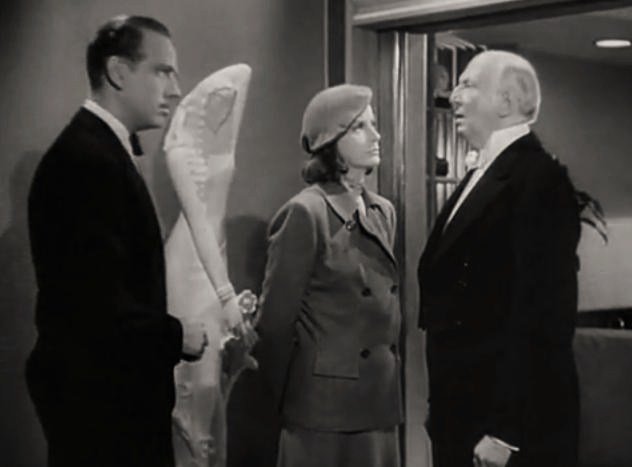
Ninotchka is a 1939 American film made for Metro-Goldwyn-Mayer by producer and director Ernst Lubitsch and starring Greta Garbo and Melvyn Douglas.[1] It is written by Billy Wilder, Charles Brackett, and Walter Reisch,[1] based on a screen story by Melchior Lengyel. Ninotchka is Greta Garbo’s first full comedy, and her penultimate film. It is one of the first American movies which, under the cover of a satirical, light romance, depicted the Soviet Union under Joseph Stalin as being rigid and gray, in this instance comparing it with the free and sunny Parisian society of pre-war years.- Wikipedia
Learn More About Greta Garbo with these books
††
* A portion of each sale from Amazon.com directly supports our blogs ** Many of these books may be available from your local library. Check it out! † Available at the LA Public Library
This is from the very beginning with D. W. Griffith. It’s not his movie. Right? He shouldn’t get the credit. Then again, it’s a terrible movie and I hope nobody ever teaches this movie. I always tell my students, we’ll never touch this movie. It’s all awful and everything that someone says you’re supposed to learn from about it close-ups and tracking shots are in all the movies by all these women that I’m telling you about. So watch one of their movies that show those things. Don’t watch his movies.
I love John Carpenter because he’s the one who said…Let’s be fair. It’s a collaboration. Be honest about it. I do this. They do that. We blend together and that is what makes a product really good.
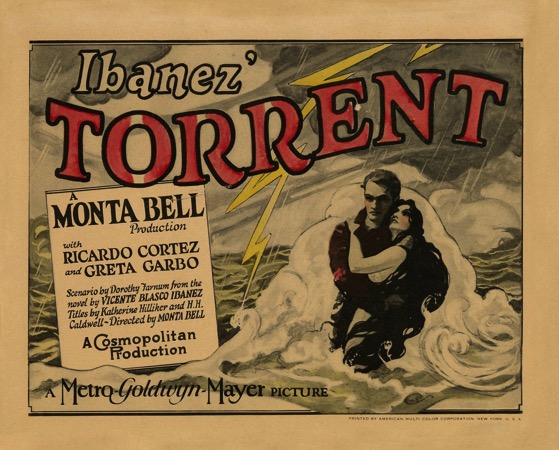
Torrent was the first American film starring Swedish actress Greta Garbo.[6] The film also starred Ricardo Cortez as the son of a domineering mother, played by Martha Mattox.
The title refers to a flood that occurs in the small town where most of the action takes place, which draws the two romantic leading characters closer together. — Wikipedia
Learn More About Greta Garbo with these books
††
* A portion of each sale from Amazon.com directly supports our blogs ** Many of these books may be available from your local library. Check it out! † Available at the LA Public Library
The other thing we argue about at the Writers Guild all the time is that we have this business where we have a credit that’s always “A Film By” the director. If he is a writer/director, fine. Ok, but if there’s nothing of that than why does he get this credit and why don’t the writers get that credit and we can’t get rid of that because the Director Guild will not get rid of it. Makes me nuts. Makes me nuts. Makes me nuts. But it’s true.
So this perpetually puts it in the audience’s and the student’s mind that this is the person to credit for that movie and it is not true. Same thing, obviously we know all these wonderful movies by Spike Lee. In the beginning, yes, he did write and direct “She’s Gotta Have It” but he did Malcolm X with Arnold Pearl. We don’t remember Arnold Pearl and he did Chi-Raq with Kevin Willmott and of course, he adapted that from Aristophanes and Lysistrata. So, let’s remember that there were other writers involve but they’re still only A Spike Lee Joint. That’s the only credit that’s given above the title and that’s something that we’re fighting against in our classes.
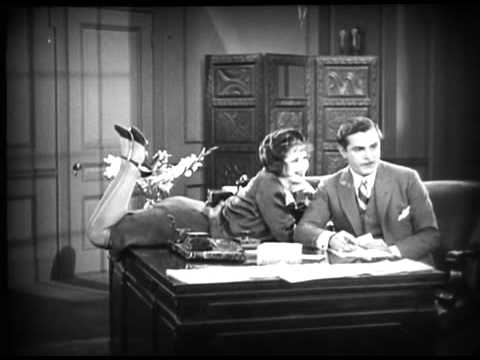
“It” is a 1927 silentromantic comedy film that tells the story of a shop girl who sets her sights on the handsome, wealthy boss of the department store where she works. It is based on a novella by Elinor Glyn that was originally serialized in Cosmopolitan magazine.
This film turned actress Clara Bow into a major star, and led people to label her the It girl.
The film had its world premiere in Los Angeles on January 14, 1927, followed by a New York showing on February 5, 1927. “It” was released to the general public on February 19, 1927.
The picture was consideredlostfor many years, but aNitrate-copy was found inPraguein the 1960s.[1]In 2001,“It”was selected for preservation in the United StatesNational Film Registryby theLibrary of Congressas being “culturally, historically, or aesthetically significant”. — Wikipedia
Learn More About Clara Bow with these books
†††
* A portion of each sale from Amazon.com directly supports our blogs ** Many of these books may be available from your local library. Check it out! † Available at the LA Public Library
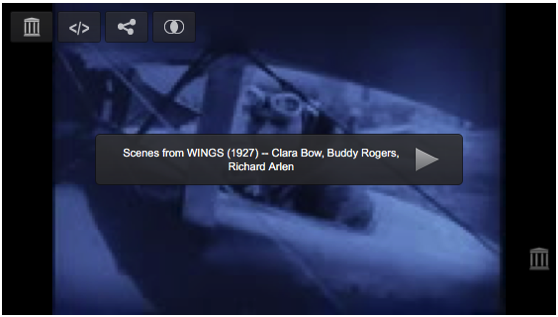
The film, a romantic action-war picture, was rewritten by scriptwriters Hope Loring and Louis D. Lighton from a story by John Monk Saunders to accommodate Bow, Paramount’s biggest star at the time. Wellman was hired as he was the only director in Hollywood at the time who had World War I combat pilot experience, although Richard Arlen and John Monk Saunders had also served in the war as military aviators. The film was shot on location on a budget of $2 million at Kelly Field in San Antonio, Texas between September 7, 1926 and April 7, 1927. Hundreds of extras and some 300 pilots were involved in the filming, including pilots and planes of the United States Army Air Corps which were brought in for the filming and to provide assistance and supervision. Wellman extensively rehearsed the scenes for the Battle of Saint-Mihiel over ten days with some 3500 infantrymen on a battlefield made for the production on location. Although the cast and crew had much spare time during the filming because of weather delays, shooting conditions were intense, and Wellman frequently conflicted with the military officers brought in to supervise the picture.
Acclaimed for its technical prowess and realism upon release, the film became the yardstick against which future aviation films were measured, mainly because of its realistic air-combat sequences. It went on to win the firstAcademy Award for Best Pictureat the first annualAcademy of Motion Picture Arts and Sciencesaward ceremony in 1929,[5]the only fully silent film to do so.[b]It also won theAcademy Award for Best Engineering Effects(Roy Pomeroy).Wingswas one of the first to show two men kissing, and also one of the first widely released films to shownudity. In 1997,Wingswas selected for preservation in the United StatesNational Film Registryby theLibrary of Congressas being “culturally, historically, or aesthetically significant”, and the film was re-released toCinemarktheaters to coincide with the 85th Anniversary for a limited run in May 2012. The film was rereleased again for it’s 90th anniversary in 2017. TheAcademy Film ArchivepreservedWingsin 2002.[6] — Wikipedia
Learn More About Clara Bow with these books
†††
* A portion of each sale from Amazon.com directly supports our blogs ** Many of these books may be available from your local library. Check it out! † Available at the LA Public Library
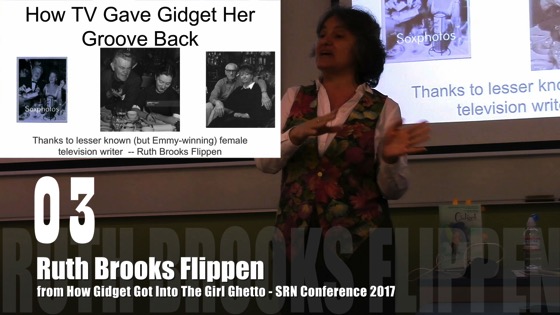
…and it’s because of this woman, Ruth Brooks Flippen, who was the television writer who did the adaptation for television and frankly I had never heard of her. There are a lot of female writers in Hollywood that never get exposure and so this shocked me. Theses are photographs, more likely I was to find her online with her husband because he was an actor in the period. So she is more known as Jay Flippen’s wife than she is as an executive producer for television in her own right and after she got through with Gidget she’s going to do a lot of interesting things. Along the way we’re going to talk about gendered writing and how scripts became different when a man wrote an episode of Gidget versus when a female did, which I did not think would happen and yet it is exactly what I discovered along the way. Sadly, when women write women they give them jobs and make the educated and smart and when men write woman they often don’t give them jobs and they have them shop a lot, which doesn’t seem to suit me as a definition as I really don’t like shopping.
“How Gidget Got Into the Girl Ghetto by Accident (and How We Can Get Her Out of it): Demoting Gidget: The Little Girl with Big Ideas from Edgy Coming of Age Novel to Babe on the Beach Genre Film via Choices made in the Adaptation Process.”
It’ a long title, as I joke up front, but covers the process of adapting the true life story of Kathy Kohner (nicknamed ‘Gidget’ by the group of male surfers who she spent the summers with in Malibu in the 1950s) into the film and television series that are better remembered than the novel. The novel had been well-received upon publication, even compared to A Catcher in the Rye, but has mistakenly been relegated to the ‘girl ghetto’ of films. Some of the adaptations turned the focus away from the coming of age story of a young woman who gained respect for her talent at a male craft – surfing – and instead turned the focus far too much on Kathy being boy crazy.
Along the way I found interesting comparisons between how female writers treated the main character while adapting the novel and how male writers treated the character.
Dr. Rosanne Welch teaches the History of Screenwriting and One-Hour Drama for the Stephens College MFA in Screenwriting.
Writing/producing credits include Beverly Hills 90210, Picket Fences, ABCNEWS: Nightline and Touched by an Angel. In 2016 she published the book Why The Monkees Matter: Teenagers, Television and American Pop; co-edited Women in American History: A Social, Political, and Cultural Encyclopedia; and placed “Transmitting Culture Transnationally Via the Characterization of Parents in Police Procedurals” in the New Review of Film and Television Studies. Essays appear in Torchwood Declassified: Investigating Mainstream Cult Television and Doctor Who and Race: An Anthology. Welch serves as Book Reviews editor for Journal of Screenwriting and on the Editorial Advisory Board for Written By magazine, the magazine of the Writers Guild.
The Screenwriting Research Network is a research group consisting of scholars, reflective practitioners and practice-based researchers interested in research on screenwriting. The aim is to rethink the screenplay in relation to its histories, theories, values and creative practices.
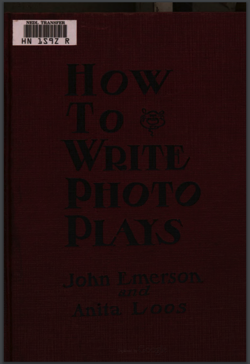
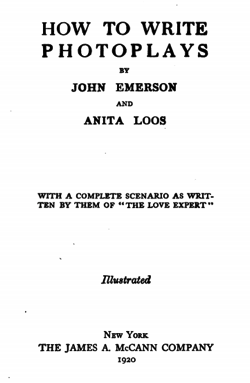
Maybe the first book written about screenwriting, How To Write Photoplays is co-written by one of the most important screenwriters of the silent era, Anita Loos. She wrote the novel “Gentlemen Prefer Blondes” and much much more.
* A portion of each sale from Amazon.com directly supports our blogs ** Many of these books may be available from your local library. Check it out! † Available at the LA Public Library
So I am talking about Gidget. So we’re at the SRN Conference and we’re very excited about that and because we’re talking about fact and fiction, that’s why I cam to this. My title is very long. I laugh about that. So, it’s “How Gidget Got Into the Girl Ghetto” and I’m sorry to use that word, but it is a negative word in the United States, but I like the alliteration of the words and I think it is a real problem because you’ll see, of course, the film began — the adaptation began as a film starring Sandra Dee and as far as Americans are concerned, Sandra Dee is kind of a bubble gum, cutesy pie, blonde WITH NO real serious — nothing but the superficiality of her being cute and a babe on the beach, right and so that is what I was thinking about when I thought about doing this and it came to me that it’s TV that gave Gidget her her groove back so I should have shrunk the title but it was too late for the publication.
“How Gidget Got Into the Girl Ghetto by Accident (and How We Can Get Her Out of it): Demoting Gidget: The Little Girl with Big Ideas from Edgy Coming of Age Novel to Babe on the Beach Genre Film via Choices made in the Adaptation Process.”
It’ a long title, as I joke up front, but covers the process of adapting the true life story of Kathy Kohner (nicknamed ‘Gidget’ by the group of male surfers who she spent the summers with in Malibu in the 1950s) into the film and television series that are better remembered than the novel. The novel had been well-received upon publication, even compared to A Catcher in the Rye, but has mistakenly been relegated to the ‘girl ghetto’ of films. Some of the adaptations turned the focus away from the coming of age story of a young woman who gained respect for her talent at a male craft – surfing – and instead turned the focus far too much on Kathy being boy crazy.
Along the way I found interesting comparisons between how female writers treated the main character while adapting the novel and how male writers treated the character.
Dr. Rosanne Welch teaches the History of Screenwriting and One-Hour Drama for the Stephens College MFA in Screenwriting.
Writing/producing credits include Beverly Hills 90210, Picket Fences, ABCNEWS: Nightline and Touched by an Angel. In 2016 she published the book Why The Monkees Matter: Teenagers, Television and American Pop; co-edited Women in American History: A Social, Political, and Cultural Encyclopedia; and placed “Transmitting Culture Transnationally Via the Characterization of Parents in Police Procedurals” in the New Review of Film and Television Studies. Essays appear in Torchwood Declassified: Investigating Mainstream Cult Television and Doctor Who and Race: An Anthology. Welch serves as Book Reviews editor for Journal of Screenwriting and on the Editorial Advisory Board for Written By magazine, the magazine of the Writers Guild.
The Screenwriting Research Network is a research group consisting of scholars, reflective practitioners and practice-based researchers interested in research on screenwriting. The aim is to rethink the screenplay in relation to its histories, theories, values and creative practices.



 †
†


 †
†![Film Is A Collaborative Effort from Giving Voice to Silent Films and the Far From Silent Women Who Wrote Them with Dr. Rosanne Welch [Video]](https://rosannewelch.com/wp-content/uploads/2018/01/ufva-17-collaborative-effort.jpeg)


![The “A Film By” Credit and Writers from Giving Voice to Silent Films and the Far From Silent Women Who Wrote Them with Dr. Rosanne Welch [Video]](https://rosannewelch.com/wp-content/uploads/2018/01/ufva-16-film-by.jpeg)

 †
†
 †
†
 †
†


 †
†


 †
† ![02 How TV Gave Gidget Her Groove Back from How Gidget Got Into the Girl Ghetto – Dr. Rosanne Welch – SRN Conference 2017 [Video]](https://rosannewelch.com/wp-content/uploads/2017/12/gidget-srn-02.jpeg)