08 : TV vs. Movies : “Why The Monkees Matter” Interview with Jean Power [Video] (1:03)

Rosanne Welch talks about “Why The Monkees Matter” with Jean Hopkins Power

Watch this entire presentation (45 mins)

Jean Powergirl takes the host reigns and welcomes her guest Rosanne Welch, PhD to the show! They’ll be discussing Roseanne’s book, “Why The Monkees Matter: Teenagers, Television and American Pop Culture.”

08 : TV vs. Movies : “Why The Monkees Matter” Interview with Jean Power [Video] (1:03)


Transcript:

Jean: So here we finally have television trying to deal with these difficult issues, but in a way that made a difference to people.

Rosanne: I think so. It made people start talking about those things in their own lives and that’s what TV’s always done. We credit Will & Grace with giving us a weekly gay character who came into people’s homes and it made people start talking about issues like gay marriage and gay adoption and things like that. So it’s really — people don’t realize — we think movies are influential, but you choose what movies you’re going to go see. You choose with your money to pay for those messages. So, often movies are preaching to a choir. TV comes into your home uninvited. You don’t know what you’re going to stumble upon when you change the channel and so there’s more of an ability to find things you didn’t think you wanted to know about.

Jean: Right, because it was there and it was free. So everyone’s going to sit down that evening — you’re not going out to a movie to watch something controversial and go “Let’s start flipping the channels. Oh look at these kids running around. That’s pretty funny”

Rosanne: Exactly. It attracted — the energetic feel of the show and that they were cute young boys made them pay attention.
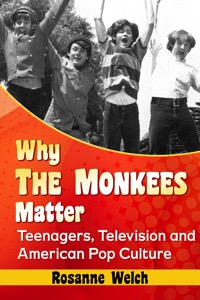
Get your copy today!

A hit television show about a fictitious rock band, The Monkees (1966-1968) earned two Emmys–Outstanding Comedy Series and Outstanding Directorial Achievement in Comedy. Capitalizing on the show’s success, the actual band formed by the actors, at their peak, sold more albums than The Beatles and The Rolling Stones combined and set the stage for other musical TV characters from The Partridge Family to Hannah Montana. In the late 1980s, the Monkees began a series of reunion tours that continued into their 50th anniversary.

This book tells the story of The Monkees and how the show changed television, introducing a new generation to the fourth-wall-breaking slapstick created by Laurel and Hardy and the Marx Brothers. Its creators contributed to the innovative film and television of 1970s with projects like Bob & Carol & Ted & Alice, The Mary Tyler Moore Show, Laugh-In and Welcome Back, Kotter. Immense profits from the show, its music and its merchandising funded the producers’ move into films such as Head, Easy Rider and Five Easy Pieces.

Rosanne Welch, PhD has written for television (Touched by an Angel, Picket Fences) and print (Three Ring Circus: How Real Couples Balance Marriage, Work and Kids and The Encyclopedia of Women in Aviation and Space). In the documentary world she has written and produced Bill Clinton and the Boys Nation Class of 1963 for ABC NEWS/Nightline and consulted on PBS’s A Prince Among Slaves, the story of a prince from West Africa who was enslaved in the 1780s, freed by order of President John Quincy Adams in the 1820s and returned to his homeland.

A History of Screenwriting – 27 in a series – The Mermaid , Georges Méliès (1904)

A History of Screenwriting – 27 in a series – The Mermaid , Georges Méliès (1904)

A History of Screenwriting - 27 in a series - The Mermaid , Georges Méliès (1904)

In this silent film a man catches fish in his hat and then pulls a rabbit out. A mermaid appears and changes into a lady and joins the man. This early silent film was released in France in 1904 under the title, “Georges Mélièsand was directed by Georges Méliès.


* A portion of each sale from Amazon.com directly supports our blogs
** Many of these books may be available from your local library. Check it out! 


I teach several classes for the Stephens College Low-Residency MFA in Screenwriting, including History of Screenwriting. In fact, I created the curriculum for that course from scratch and customized it to this particular MFA in that it covers ‘Screenwriting’ (not directors) and even more specifically, the class has a female-centric focus.  As part History of Screenwriting I, the first course in the four-class series, we focus on the early women screenwriters of the silent film era  who male historians have, for the most part, quietly forgotten in their books. In this series, I share with you some of the screenwriters and films that should be part of any screenwriters education. I believe that in order  to become a great screenwriter, you need to understand the deep history of screenwriting and the amazing people who created the career. — Dr. Rosanne Welch

“Honey, You Know I Can’t Hear You When You Aren’t in the Room: Now free online from Gender and the Screenplay Journal

“Honey, You Know I Can’t Hear You When You Aren’t in the Room: Now free online from Gender and the Screenplay Journal

My article “Honey, You Know I Can’t Hear You When You Aren’t in the Room: Key Female Filmmakers Prove the Importance of Having a Female in the Writing Room” published today in a special issue called Gender and the Screenplay: Processes, Practices, Perspectives in the journal: Networking Knowledge: Journal of the MeCCSA Postgraduate Network (Vol 10 No 2 (2017). 

“Honey, You Know I Can’t Hear You When You Aren’t in the Room PDF Version

The article provides a quick historical survey of the work of several prominent female screenwriters across the first century of filmmaking, including Anita Loos, Dorothy Parker, Frances Goodrich and Joan Didion. In all of their memoirs and other writings about working on screenplays, each mentioned the importance of (often) being the lone woman in the room during pitches and during the development of a screenplay. Goodrich summarized all their experiences concisely when she wrote, ‘I’m always the only woman working on the picture and I hold the fate of the women [characters] in my hand… I’ll fight for what the gal will or will not do, and I can be completely unfeminine about it.’ Also, the rise of female directors, such as Barbra Streisand or female production executives, such as Kathleen Kennedy, prove that one of the greatest assets to having a female voice in the room is the ability to invite other women inside. Therefore, this paper contributes to the scholarship on women in film and to authorship studies.

The title is a riff on a series of one-act plays I worked on in college called “Honey, You Know I Can’t Hear You When the Water’s Running” written by Robert Anderson (author of the plays Tea and Sympathy and was Oscar-nominated for the screenplays A Nun’s Story and I Never Sang for my Father.)

You can read and download the entire journal, edited by Louise Sawtell, Stayci Taylor, which includes other fine articles have a global reach, covering questions of gender in screenwriting practice; reflections on the Irish film industry; Female Screenwriters and Street Films in Weimar Republic; Narrative and Masculinity in The Long Goodbye; How Hollywood Screenplays Inscribe Gender.

The editors had also asked all contributors to create video abstracts for each piece. Thanks to Doug’s help, mine came out pretty good:


Treva Silverman and Women Characters from Why The Monkees Matter Book Signing [Video] (0:28)

This book signing at Book Soup was wonderful – good people, good conversation (before and after the signing). Just another example of the kind of quality positive people who have been drawn to The Monkees across generations – I even met a former head of publicity for ScreenGems who had some fun stories to tell. — Rosanne

Watch this entire presentation

Treva Silverman and Women Characters from Why The Monkees Matter Book Signing


Transcript:

And she won Emmys for writing the episode where Lou Grant wife asks him for a divorce, which was huge in the early 70’s. That was a crazy idea and James Burrows, who was the producer of The Mary Tyler More Show in several book son the show has said that Treva was the feminist heart of that show. So, she had that idea on Mary Tyler More or course she had that on The Monkees, too. So in those rooms when they talked about the girl friends, she made sure they were 3-dimensional, interesting women.

Buy “Why The Monkees Matter” Today!

Why The Monkees Matter: Teenagers, Television and American Pop Culture

McFarland (Direct from Publisher) | Amazon | Kindle Edition | Nook Edition


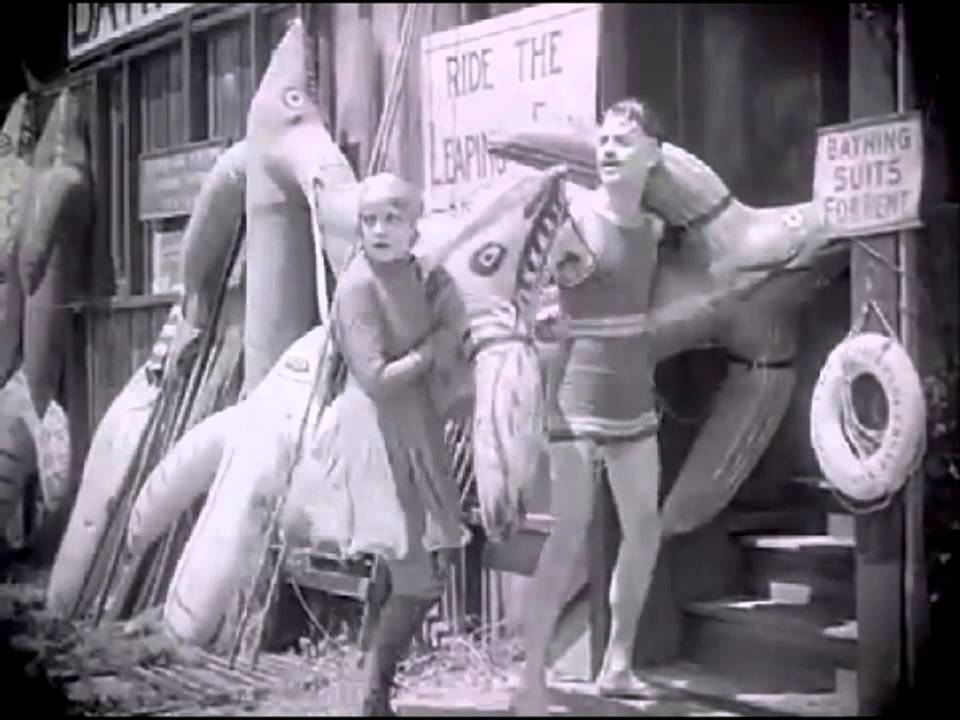
A History of Screenwriting – 23 in a series – The Mystery of the Leaping Fish (1916)

A History of Screenwriting – 23 in a series – The Mystery of the Leaping Fish (1916)

This movie is insane, and I love it. Coke Ennyday, a cocaine-shooting detective parody of Sherlock Holmes injects himself with opium from a bandolier of syringes worn across his chest and liberally helps himself to the contents of a hatbox-sized round container of white powder labeled “COCAINE” on his desk. A clock-like sign on the wall divides time between EAT, DRINK, SLEEP, and DOPE. He observes visitors at his door on what appears to be a closed-circuit television called a “scientific periscope”. The super-sleuth helps the police and discovers a contraband of opium (which he eagerly tastes) transported with “Leaping Fishes”, and the blackmail of a mysterious man who wants to marry the “fish blower” girl.

It stars the acrobatic Douglas Fairbanks as the odd action hero and Bessie Love as The Little Fish Blower, was directed by Christy Cabanne and John Emerson, and was written by Anita Loos, Tod Browning, and D. W. Griffith. — Change Before Going Productions


* A portion of each sale from Amazon.com directly supports our blogs
** Many of these books may be available from your local library. Check it out! 


I teach several classes for the Stephens College Low-Residency MFA in Screenwriting, including History of Screenwriting. In fact, I created the curriculum for that course from scratch and customized it to this particular MFA in that it covers ‘Screenwriting’ (not directors) and even more specifically, the class has a female-centric focus.  As part History of Screenwriting I, the first course in the four-class series, we focus on the early women screenwriters of the silent film era  who male historians have, for the most part, quietly forgotten in their books. In this series, I share with you some of the screenwriters and films that should be part of any screenwriters education. I believe that in order  to become a great screenwriter, you need to understand the deep history of screenwriting and the amazing people who created the career. — Dr. Rosanne Welch

Women Writers and The Monkees from Why The Monkees Matter Book Signing [Video] (0:54)

This book signing at Book Soup was wonderful – good people, good conversation (before and after the signing). Just another example of the kind of quality positive people who have been drawn to The Monkees across generations – I even met a former head of publicity for ScreenGems who had some fun stories to tell. — Rosanne

Watch this entire presentation

Women Writers and The Monkees from Why The Monkees Matter Book Signing


Transcript:

And my theory is, watching those women as a child made me want to grow up to be somebody of value because that’s how you caught yourself a Monkee, not by being a dizzy-headed cheerleader. All right? But who knows if that what’s your looking at when your six, seven or eight, that’s when you’re deciding who you want to be. So, I think that’s a really important message that the show carried and might not have known they were carrying it except if you credit writers, which is what Ido a lot of in the book. I interviewed all the writers on the show and to me, that was really interesting. One of them is Treva Silverman. She was the first female writer in television to write alone on a comedy. Other women had male partners. So the fact that she came onto the show and had these ideas about being a feminist. She was from New York. She had come out to LA to be a TV writer. That’s a crazy idea even back then and it’s a crazy idea today and she left The Monkees when the show went off the air. She joined The Mary Tyler Moore Show.

Buy “Why The Monkees Matter” Today!

Why The Monkees Matter: Teenagers, Television and American Pop Culture

McFarland (Direct from Publisher) | Amazon | Kindle Edition | Nook Edition


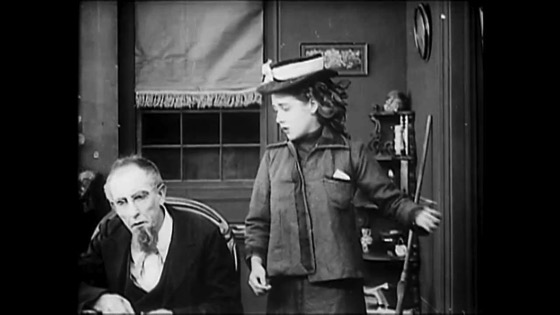
A History of Screenwriting – 22 in a series – The New York Hat – 1912 – Anita Loos

A History of Screenwriting – 22 in a series – The New York Hat – 1912 – Anita Loos

A History of Screenwriting - 22 in a series - The New York Hat - 1912 - Anita Loos

Short directed by D. W. Griffith, written by Anita Loos, starring Mary Pickford (in her final role for Biograph Studios) and Lionel Barrymore, with an appearance by Lillian Gish.

From Wikipedia…

The New York Hat is one of the most notable of the Biograph Studios short films and is perhaps the best known example of Pickford’s early work, and an example of Anita Loos‘s witty writing. The film was made by Biograph when it and many other early U.S. movie studios were based in Fort Lee, New Jersey at the beginning of the 20th century.[1][2][3]

Mollie Goodhue leads a cheerless, impoverished life, largely because of her stern, miserly father. Mrs. Goodhue is mortally ill, but before dying, she gives the minister, Preacher Bolton, some money with which to buy her daughter the “finery” her father always forbade her.

Mollie is delighted when the minister presents her with a fashionable New York hat she has been longing for, but village gossips misinterpret the minister’s intentions and spread malicious rumors. Mollie becomes a social pariah, and her father tears up the beloved hat in a rage.

All ends well, however, after the minister produces a letter from Mollie’s mother about the money she left the minister to spend on Mollie. Soon afterwards, he proposes to Mollie, who accepts his offer of marriage.


* A portion of each sale from Amazon.com directly supports our blogs
** Many of these books may be available from your local library. Check it out! 


I teach several classes for the Stephens College Low-Residency MFA in Screenwriting, including History of Screenwriting. In fact, I created the curriculum for that course from scratch and customized it to this particular MFA in that it covers ‘Screenwriting’ (not directors) and even more specifically, the class has a female-centric focus.  As part History of Screenwriting I, the first course in the four-class series, we focus on the early women screenwriters of the silent film era  who male historians have, for the most part, quietly forgotten in their books. In this series, I share with you some of the screenwriters and films that should be part of any screenwriters education. I believe that in order  to become a great screenwriter, you need to understand the deep history of screenwriting and the amazing people who created the career. — Dr. Rosanne Welch

Women of Purpose and The Monkees from Why The Monkees Matter Book Signing [Video] (1:00)

This book signing at Book Soup was wonderful – good people, good conversation (before and after the signing). Just another example of the kind of quality positive people who have been drawn to The Monkees across generations – I even met a former head of publicity for ScreenGems who had some fun stories to tell. — Rosanne

Watch this entire presentation

Women of Purpose and The Monkees from Why The Monkees Matter Book Signing


Transcript:

I would like to get more people to focus on The Monkees because when I look at textbooks about this time, they don’t talk about them at all. People thought they were this bubble gum group and they think only about that aspect and they don’t think about the messages that came from the program. When I think about that I think about episodes that had to do with feminism and that sounds odd for a show about 4 kids who were playing rock and roll, but in fact if you look at all 58 episodes — which I obviously did, you will find that never do they date the girl who didn’t have her own job and was taking care of herself in the world. She was either a student who was worried about her grades or she was a woman with a job. They were journalists. They were girls that worked at record companies or record stores. Yes, they were princesses, but the princesses rather than them wanting to wear pretty dresses and marry Davy Jones — which everyone in the audience wanted to do — the princesses gave that up in order to go back to their countries and life out there obligations to their people. They were women of purpose.

Buy “Why The Monkees Matter” Today!

Why The Monkees Matter: Teenagers, Television and American Pop Culture

McFarland (Direct from Publisher) | Amazon | Kindle Edition | Nook Edition


03 – Monkee Emmys and “Romps”: “Why The Monkees Matter” Interview with Jean Hopkins Power [Video] (0:55)

Rosanne Welch talks about “Why The Monkees Matter” with Jean Hopkins Power

Watch this entire presentation (45 mins)

Jean Powergirl takes the host reigns and welcomes her guest Rosanne Welch, PhD to the show! They’ll be discussing Roseanne’s book, “Why The Monkees Matter: Teenagers, Television and American Pop Culture.”

03 - Monkee Emmys and


Transcript:

Rosanne: The adults that did take it seriously are the adults who were in the business because they won an Emmy for best Comedy Series in their first season.

Jean: They won 2 Emmys, right?

Rosanne: Yes. They won one for Best Directing as well, And James Frawley who won that had begun his directing career on The Monkees and he grew up to direct The Muppet Movie.

Jean: Awesome. And we love our Muppets. So, in terms of the production and everything The Monkees did some interesting things that — and these are the things that I remember. I remember a lot of little chase scenes that were so cute. Kind of zany. Kind of Groucho Marx-y kind of things, but also they employed the use of what, flashbacks and things like that. Let’s talk about the tools that they used.

Rosanne: They used flashbacks. They would use a lot of old footage whenever they would say something funny, they’d cut to — if I’d say, “The Sky’s falling” they’d cut to a building being dynamited down and that sort of thing and that helps because it saved them money, because they’re using old footage, but it also gave a very frenetic, energetic feel to the show.

Get your copy today!

A hit television show about a fictitious rock band, The Monkees (1966-1968) earned two Emmys–Outstanding Comedy Series and Outstanding Directorial Achievement in Comedy. Capitalizing on the show’s success, the actual band formed by the actors, at their peak, sold more albums than The Beatles and The Rolling Stones combined and set the stage for other musical TV characters from The Partridge Family to Hannah Montana. In the late 1980s, the Monkees began a series of reunion tours that continued into their 50th anniversary.

This book tells the story of The Monkees and how the show changed television, introducing a new generation to the fourth-wall-breaking slapstick created by Laurel and Hardy and the Marx Brothers. Its creators contributed to the innovative film and television of 1970s with projects like Bob & Carol & Ted & Alice, The Mary Tyler Moore Show, Laugh-In and Welcome Back, Kotter. Immense profits from the show, its music and its merchandising funded the producers’ move into films such as Head, Easy Rider and Five Easy Pieces.

Rosanne Welch, PhD has written for television (Touched by an Angel, Picket Fences) and print (Three Ring Circus: How Real Couples Balance Marriage, Work and Kids and The Encyclopedia of Women in Aviation and Space). In the documentary world she has written and produced Bill Clinton and the Boys Nation Class of 1963 for ABC NEWS/Nightline and consulted on PBS’s A Prince Among Slaves, the story of a prince from West Africa who was enslaved in the 1780s, freed by order of President John Quincy Adams in the 1820s and returned to his homeland.

Why Study The Television We Watch? from Why The Monkees Matter Book Signing [Video] (0:58)

This book signing at Book Soup was wonderful – good people, good conversation (before and after the signing). Just another example of the kind of quality positive people who have been drawn to The Monkees across generations – I even met a former head of publicity for ScreenGems who had some fun stories to tell. — Rosanne

Watch this entire presentation

Why Study The Television We Watch? from Why The Monkees Matter Book Signing


Transcript:

I think when we think about the intimacy of what we get from television we learn a lot about why isn’t important and why we should pay attention to the kind of television we’re watching and supporting. For me, obviously, that’s going backward to The Monkees and showing that to students today, so that they can think about what ideas were prevalent in the 60s. I think all the things that we credit to All in the Family and the whole Norman Lear empire, those things appeared on The Monkees long before it happened on those programs. Studying The Monkees, for me, illustrates the history and the evolution of the medium of television and it provides a time capsule of American society at that moment when youth culture was becoming everything and if you think about it, we still look at it that way. Everyone’s still trying to pretend with the botox and whatever that they are still 22. It’s an interesting point. But it was the beginning of teenagers in America in many ways and the films and the television were showing us what teenagers were all about.

Buy “Why The Monkees Matter” Today!

Why The Monkees Matter: Teenagers, Television and American Pop Culture

McFarland (Direct from Publisher) | Amazon | Kindle Edition | Nook Edition