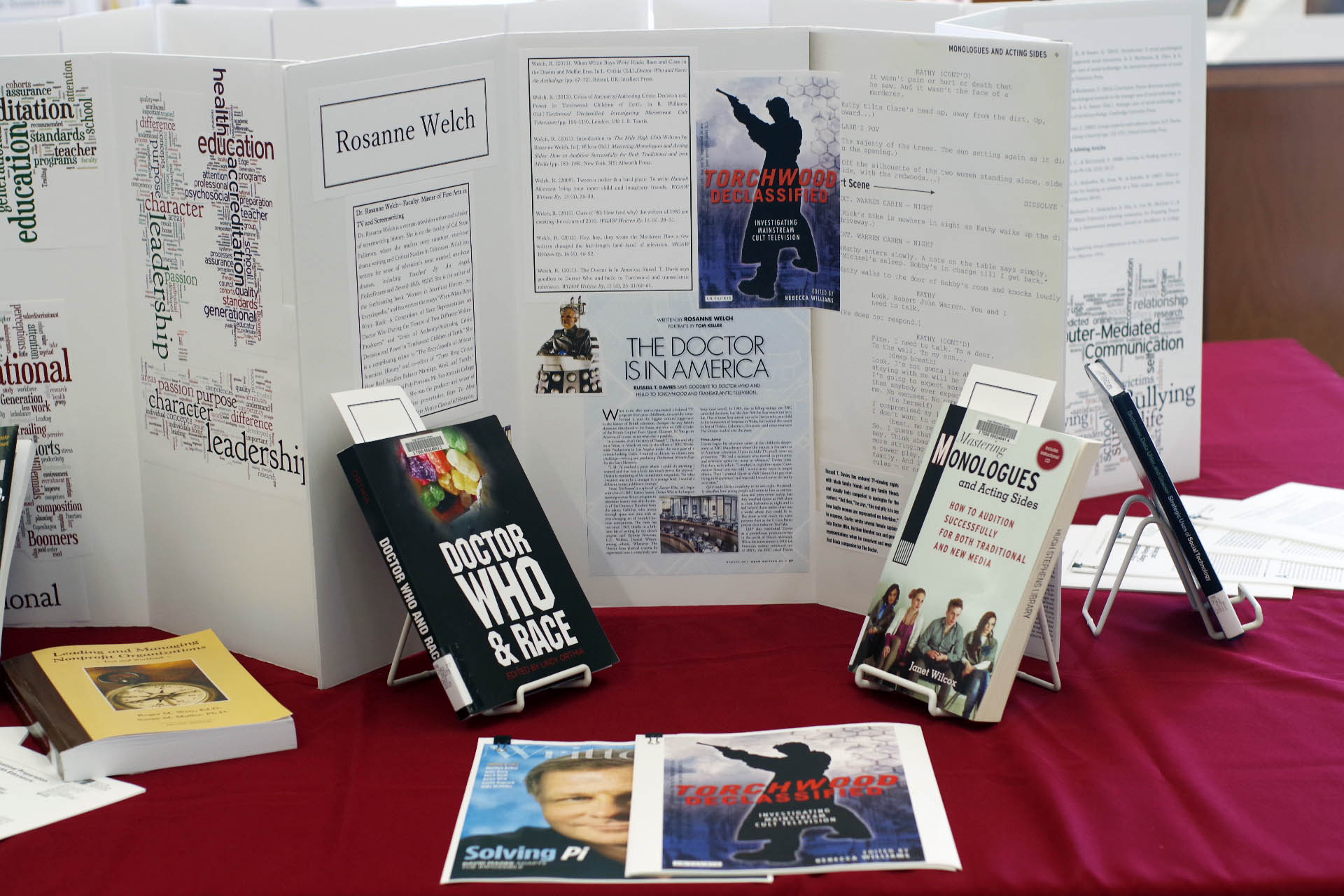
Thanks to Dan Kammer, the Library Director at Stephens College, for including a display of my publications in an exhibition of work by various faculty members this month. It looks great – and hopefully the students will be intrigued enough to stop by and read some of the books – or use them for research in their own academic adventures!
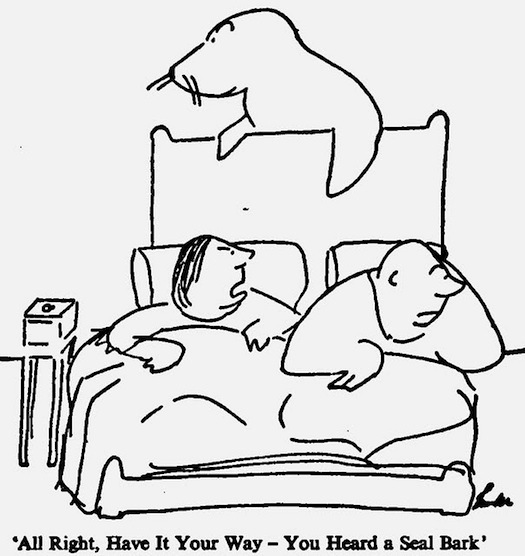
Though I teach One-Hour Drama I thought it would be cool to highlight the fact that for the first time ever the 3 finalists for the Thurber Prize for Humor Writing are all female. The prize is named after James Thurber of Ohio who wrote The Secret Life of Walter Mitty and years of New Yorker cartoons (even after he went blind!).
We should be reading these women:
Roz Chast, Can’t We Talk About Something More Pleasant?
Annabelle Gurwitch, I See You Made an Effort: Compliments, Indignities, and Survival Stories from the Edge of 50
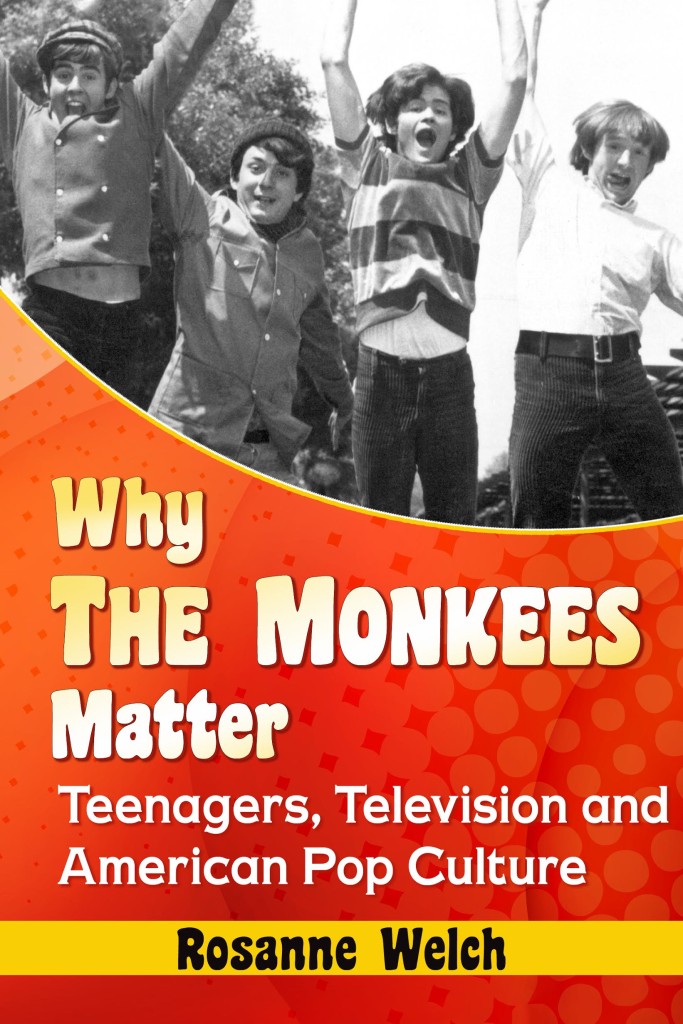
From 1966-1968 NBC aired The Monkees on Mondays at 7:30pm, opposite Gilligan’s Island on CBS and Iron Horse on ABC. During that time Raybert Productions, headed by Bert Schneider and Bob Rafelson, produced 58 half-hours of what Time Magazine contributor James Poniewozik recently described as “far better TV than it had to be.
During an era of formulaic domestic sitcoms and wacky comedies, it was a stylistically ambitious show, with a distinctive visual style, absurdist sense of humor, and unusual story structure that was commercial, wholesome, and yet impressively weird.”
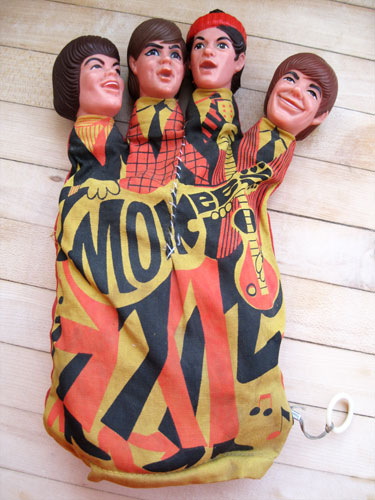
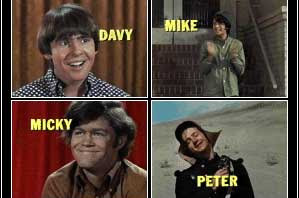
Originally, the producers conceived The Monkees as a response to the youth and music movement of the early 60s, a time when every young person seemed to be slinging a guitar on their back and hoping to change the world. In the shadow of Hard Day’s Night the producers cast four relative unknowns who could act, sing and play instruments – Davy Jones, Micky Dolenz, Peter Tork and Mike Nesmith – and hired Jim Frawley to teach them improvisation and become their in-house director. Beyond mere fame, The Monkees deserves ranking as a TV Cultural and Comedy Classic because, according to Micky Dolenz, “It brought long hair into the living room and changed the way teenagers were portrayed on television. It made it okay to have long hair in the same way Henry Winkler as the Fonz late made it okay to wear a black leather jacket and Will Smith in Fresh Prince of Bel Air made it okay to be to be young, black and like rap.”
From an artistic standpoint the show introduced a new generation of viewers to the kind of fourth-wall-breaking, slapstick comedy created by Laurel and Hardy and the Marx Brothers as well as to the idea of friends in their late teens living on their own without adult advice or supervision, a powerful idea at the height of the Vietnam war.
While there is continued controversy over the fact that the musical group has yet to be inducted into the Rock and Roll Hall of Fame, time has shown that the television show deserves the accolades it earned. Now it deserves a deeper reading and that is exactly what The Metatexual Menagerie That Was The Monkees will provide.
Go beyond the fandom and delve deeply into what The Monkees meant to “the young generation” and to our current world.
Chapters will include:
Introduction: I’m (Still) a Believer
Sweet Young Thing: Contextualizing The Monkees with a Short History of Teenagers on Television
Authorship on The Monkees: Who Wrote The Monkees and what was that Something They Had to Say?
Look Out, Here Comes Tomorrow: Counter-Culture Comes to Television and Middle America via The Monkees
The Kind of Girl I Could Love: Feminism, Gender and Sexuality in The Monkees
Shades of Grey: An Ethnic Studies look at Minority Representation on The Monkees
We Were Made for Each Other: The Monkees Menagerie of Metatextuality
We Were Made for Each Other: The Sequel: Nascent Television Aesthetic Techniques on The Monkees
A Little Bit Me, A Little Bit You Identity Construction and Confusion on The Monkees
9 Theme(s) from The Monkees: Narrative Structure, Literary References and Themes on The Monkees
Salesman / What am I Doing Hangin’ Round? The Cultural Collateral of The Monkees
Music Innovation and the seeds of MTV
I’ll Be True To You: Fandom and The Monkees
Dr. Rosanne Welch teaches screenwriting in the RTVF Department at California State University, Fullerton and for the Stephens College MFA in Screenwriting. As a television writer/producer her credits include Beverly Hills 90210, Picket Fences and Touched by an Angel. She has been published a chapter in Torchwood Declassified: Investigating Mainstream Cult Television (I.B.Tauris); and an essay in Doctor Who and Race: An Anthology and co-edited The Encyclopedia of Women in American History (ABC-CLIO). Her fondness for The Monkees began while sitting in front of a small, black-and-white kitchen television at the age of five.
Why Monkees Matter: The Writing Staff of The Monkees Brought the 1960s Counter Culture to Pre-Teens
Presented at the Cal Poly Pomona President’s Symposium
Dr. Welch is available for interviewa on Why The Monkees Mattered and The Monkees in general. She is a long-time fan of The Monkees and extremely knowledgeable on both The Monkees television show and their music. She has given several presentations on The Monkees in college classrooms across Southern California at the Cal Poly Pomona President’s Symposium.
Update (July 3, 2016): Why The Monkees Matter Now Available on Kindle Reader, Smartphones and Tablets! –
Checking Amazon.com just now, I see that “Why The Monkees Matter” is available for purchase in Kindle format.
You can read the book immediately on your Kindle device OR on your smartphone, tablet or personal computer using the free Kindle App or web site.
(The print edition is still marked “Pre-Order” on Amazon, but I expect that to change after the July 4th holiday).
You can buy your copy of “Why The Monkees Matter” and start reading in seconds — perhaps while you enjoy some holiday hammock time on your own “Pleasant Valley Sunday”!
Update (June 30, 2016): I have received reports that people who pre-ordered directly from the publishers have started to receive their books. Yea! The book is also currently available as an Amazon Kindle Editon for your immediate purchase and download. Amazon still shows the Print Edition as Pre-Order but I expect that to change any minute.
Update (April 8, 2016): Our first level of pre-orders are open today! You can pre-order “Why The Monkees Matter” directly from the publishers, MacFarland, on their web site. — Pre-Order “Why The Monkees Matter” today!
Update (March 7,2016): The “final” title has been approved and, unfortunately, the publication date has been moved back to Fall 2016. That said, this still allows you to make it a great Holiday gift for all your Monkee Fan friends and family — Rosanne
“When I co-wrote The Friends theme song, “I’ll Be There For You”, we were told to write something Monkees-ish. The Last Train To Clarksville definitely pulled into the station during those sessions.”
I’m hard at work completing my upcoming book on The Monkees, The Monkees – A Made for TV Metatexual Menagerie for McFarland Publishing. The book is scheduled for release in Spring 2016.
You can join my Monkees mailing list to receive future updates and notification of the books release.
Here are the current chapter titles, although this may change in the final publication. I hope you’ll check it out when it hits the stores!
Introduction: I’m (Still) a Believer1. Sweet Young Thing: Contextualizing The Monkees with a Short History of Teenagers on Television,2. Authorship on The Monkees: Who Wrote The Monkees and what was that Something They Had to Say?3. Look Out, Here Comes Tomorrow: Counter-Culture Comes to Television and Middle America via The Monkees4. The Kind of Girl I Could Love: Feminism, Gender and Sexuality in The Monkees5. Shades of Grey LAn Ethnic Studies look at Minority Representation on The Monkees6. We Were Made for Each Other: The Monkees Menagerie of Metatextuality7. We Were Made for Each Other: The Sequel: Nascent Television Aesthetic Techniques on The Monkee8. A Little Bit Me, A Little Bit You Identity Construction and Confusion on The Monkees9 Theme(s) from The Monkees Narrative Structure, Literary References and Themes on The Monkees10. Salesman / What am I Doing Hangin’ Round? The Cultural Collateral of The Monkees11. Music Innovation and the seeds of MTV
Fun fact of the day: I’m reading It’s the Pictures That Got Small — the diaries of Charles Brackett who co-wrote “Sunset Boulevard” and “Titanic” in the 1950s and I found him noting,
“It’s so dangerous to give a name to a gangster (the liability of lawsuit is so great) that they use the names of employees in the Research Department over and over…”
Too funny! I’d love to do research comparing the MGM employee roles to the gangster characters in their films!
You can get the book at Amazon.com or perhaps from your local library.
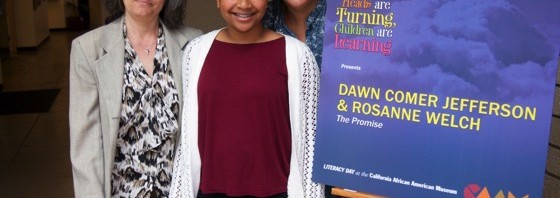
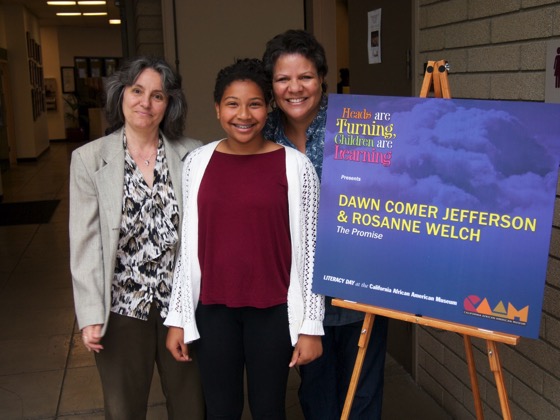
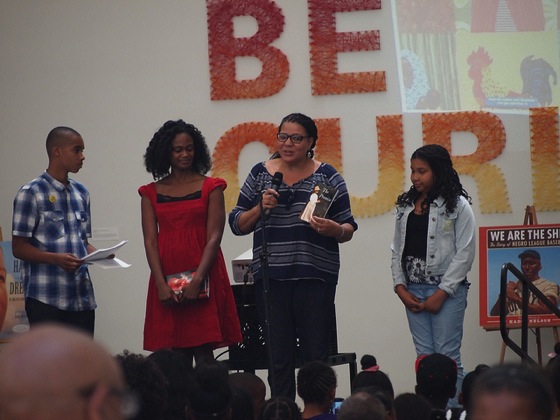
One Saturday March 23rd my co-author Dawn Comer Jefferson and I were invited to the California African American Museum (CAAM) for their annual literacy day, this year titled “Heads are Turning, Children are Learning”. We presented a workshop on African American on the Oregon Trail, based on the research we did for the story in our children’s book The Promise which involves an enslaved family taken on the Oregon Trail with the promise of freedom if they survive. Sadly, when they all arrive in Oregon, the owner frees the parents but not the children since he had never mentioned the children in their original deal.
About 20 children and parents attended the workshop and participated in an exercise where they wrote a letter back to family and friends about their experience on the Oregon Trail. It was fun to hear what parts of the presentation they remembered enough to include in their letters and to see them enjoy a chance to be creative.
Please join Dr. Rosanne Welch and Dawn Comer Jefferson for Literacy Day at the California African American Museum. We will be doing a workshop for kids as well as readings from our book, The Promise. Signed copies of The Promise will also be available for purchase.
The day includes several local authors offering writing workshops and book signings, celebrities reading books, art and crafts, book giveaways and music. And there will be a lunch truck on the premises.
Since 2004, in celebration of National Children’s Book Week, we present local Los Angelels authors and celebrity readers in CAAM’s galleries. The activities of the day also include an arts and crafts workshop, literacy workshops, face-painting, and book giveaways for families in attendance.
The Promise Co-Author, Dawn Comer Jefferson, presents at 2014 CAAM Literacy Day Event
Saturday, May 23, 2015
11am – 4 pm
Free and open to the public. Parking: $10.
The California African American Museum is easily accessible from the Metro Expo line using the Exposition Park/USC Station. (See map below)
RSVP preferred: 213.744.2024
California African American Museum
600 State Drive Exposition Park
Los Angeles, CA 90037
[MAP]
![Women in American History: A Social, Political, and Cultural Encyclopedia and Document Collection [Book]](https://rosannewelch.com/wp-content/uploads/2016/01/Women-in-History-Cover-Image-201x198.jpg)
 I’m excited to announce that the 4-volume encyclopedia I’ve been working on with my friend and colleague Peg Lamphier for the last two years — Women in American History: A Social, Political, and Cultural Encyclopedia and Document Collection has now appeared in the ABC-CLIO Spring Catalog.