Josh Greenfield: A Writer’s Life

A beautifully written remembrance from one writer to another – a good read to understand the breadth and depth of a writer’s full life – Josh Greenfield wrote ‘Harry and Tonto’ (with Paul Mazursky, who was one of the co-writers of The Monkees pilot -small world indeed!).  Harry and Tonto is a worthwhile character study film to watch over the summer. Art Carney won an Oscar for it and if you don’t know who Art Carney is…….  🙁 But as you’ll learn when you read this, Greenfield also wrote reviews and books about his autistic son — and was friends with other writers we should already know – from Joan Didion to Mario Puzo to Arthur Miller.

Oddly enough, I have a novel based on the movie in my bookshelf – but nowhere does it say it is based on a movie – and nowhere does the movie identify itself as an adaptation. That makes me wonder if, in 1974, it was still thought that a novel based on a movie wouldn’t be worth reading…  I’ll have to do more research on that! The one (sadly bad) review of the book on Amazon says it is written like a bad dictation from the film. The movie was released August 12th 1974; the book came out earlier, in January of that year. Again, an odd way of doing things. Maybe the film was held up in post production???  

Either way, the movie is GREAT!  And Greenfield seems to have lived a fascinating life as a writer – and as a human.

Rosanne Welch


Film critic Kenneth Turan remembers Josh Greenfeld, a screenwriter who taught him about life

Film critic Kenneth Turan remembers Josh Greenfeld, a screenwriter who taught him about life

I always knew I’d write about my friend Josh Greenfeld. I even started to take notes, long lost, about the piercingly acute things he’d say about Hollywood and the movie business, but I never thought it would be this hard.
Best known in the business as the Oscar-nominated screenwriter of “Harry and Tonto,” the film that won a best acting Oscar for Art Carney in 1974, Josh (who died last month at age 90) was an under-the-radar insider and consummate professional, deft, gifted and successful in a wide range of writing disciplines.

Read the entire article – Film critic Kenneth Turan remembers Josh Greenfeld, a screenwriter who taught him about life


Join the Rosanne Welch Mailing List for future book and event announcements!
 

More On The Monkees: Scenes from “The Frodis Caper” via Tapioca Tumblr

More On The Monkees: Scenes from “The Frodis Caper” via Tapioca Tumblr

Frodis 1

Frodis 2

Frodis 3

Frodis 4

Frodis 5

Discovered via Tapioca Tumblr


 Why The Monkees Matter: Teenagers, Television and American Pop Culture


McFarland (Direct from Publisher) | Amazon | Kindle Edition | Nook Edition

Want to use “Why The Monkees Matter” in your classroom?

Order Examination Copies, Library and Campus Bookstore orders directly from McFarland

From The Research Vault: My Beloved World by Sonia Sotomayor

From The Research Vault: My Beloved World by Sonia Sotomayor

From The Research Vault: My Beloved World by Sonia Sotomayor

 The first Hispanic and third woman appointed to the United States Supreme Court, Sonia Sotomayor has become an instant American icon. Now, with a candor and intimacy never undertaken by a sitting Justice, she recounts her life from a Bronx housing project to the federal bench, a journey that offers an inspiring testament to her own extraordinary determination and the power of believing in oneself.

Here is the story of a precarious childhood, with an alcoholic father (who would die when she was nine) and a devoted but overburdened mother, and of the refuge a little girl took from the turmoil at home with her passionately spirited paternal grandmother. But it was when she was diagnosed with juvenile diabetes that the precocious Sonia recognized she must ultimately depend on herself.  She would learn to give herself the insulin shots she needed to survive and soon imagined a path to a different life. With only television characters for her professional role models, and little understanding of what was involved, she determined to become a lawyer, a dream that would sustain her on an unlikely course, from valedictorian of her high school class to the highest honors at Princeton, Yale Law School, the New York County District Attorney’s office, private practice, and appointment to the Federal District Court before the age of forty. Along the way we see how she was shaped by her invaluable mentors, a failed marriage, and the modern version of extended family she has created from cherished friends and their children. Through her still-astonished eyes, America’s infinite possibilities are envisioned anew in this warm and honest book.  — Amazon.com


Why The Monkees Matter: Teenagers, Television and American Pop Culture

Order Your Copy Now!

* A portion of each sale from Amazon.com directly supports our blogs
** Many of these books may be available from your local library. Check it out!
† Available from the LA Public Library

Mad Man-Made Monkees, TV Magazine, Boston Herald, Jan. 1-7, 1967 via Smart Chicks Commune [Photo]

The Monkees, TV Magazine, Boston Herald, Jan. 1-7, 1967 via Smart Chicks Commune

The Monkees, TV Magazine, Boston Herald, Jan. 1-7, 1967 via Smart Chicks Commune

Discovered via Smart Chicks Commune on Tumblr


 Why The Monkees Matter: Teenagers, Television and American Pop Culture


McFarland (Direct from Publisher) | Amazon | Kindle Edition | Nook Edition

When Women Wrote Hollywood – 3 in a series – The Ten Commandments (1923), Wr: Jeanie Macpherson, Dirs: Cecil B. DeMille, USA 136 mins

To highlight the wonderful yet largely forgotten work of a collection of female screenwriters from the early years of Hollywood (and as a companion to the book, When Women Wrote Hollywood) we will be posting quick bits about the many films they wrote along with links to further information and clips from their works which are still accessible online. Take a few moments once or twice a week to become familiar with their names and their stories. I think you’ll be surprised at how much bold material these writers tackled at the birth of this new medium. — Rosanne Welch
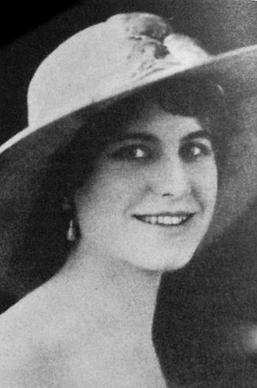

Jeanie MacPherson
Jeanie Macpherson

The Ten Commandments (1923), Wr: Jeanie Macpherson, Dirs: Cecil B. DeMille, USA 136 mins

Segments from The Ten Commandments (1923)

Original Poster Art

When Women Wrote Hollywood  - 3 in a series - The Ten Commandments (1923), Wr: Jeanie Macpherson, Dirs: Cecil B. DeMille, USA 136 minsWhen Women Wrote Hollywood  - 3 in a series - The Ten Commandments (1923), Wr: Jeanie Macpherson, Dirs: Cecil B. DeMille, USA 136 mins

The Ten Commandments is a 1923 American silent religious, epic film and produced and directed by Cecil B. DeMille. Written by Jeanie MacPherson, the film is divided into two parts: a prologue recreating the biblical story of the Exodus and a modern story concerning two brothers and their respective views of the Ten Commandments.

Lauded for its “immense and stupendous” scenes, use of Technicolor process 2, and parting of the Red Sea sequence,[3] the expensive film proved to be a box-office hit upon release.[4] It is the first in DeMille’s biblical trilogy, followed by The King of Kings (1927) and The Sign of the Cross (1932).

Despite its epic scale, the Moses story takes up only about the first third of the film. After that, the story changes to a modern setting involving living by the lessons of the commandments. Two brothers make opposite decisions, one, John, to follow his mother’s teaching of the Ten Commandments and become a poor carpenter, and the other, Danny, to break every one of them and rise to the top. The film shows his unchecked immorality to be momentarily gainful, but ultimately disastrous. Wikipedia

More information on The Ten Commandments (1923)

* A portion of each sale from Amazon.com directly supports our blogs
** Many of these books may be available from your local library. Check it out!
† Available from the LA Public Library

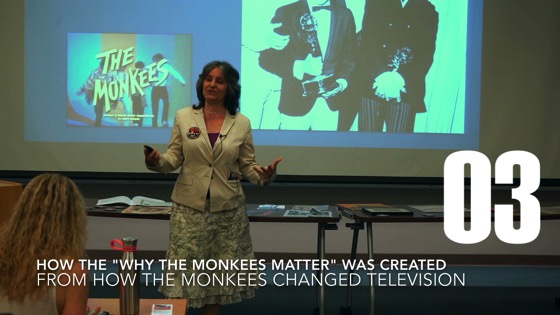
03 How The “Why The Monkees Matter” Book Was Created from How The Monkees Changed Television with Rosanne Welch PhD

What this entire presentation — How The Monkees Changed Television with Rosanne Welch, PhD (Complete Presentation and Q&A) [Video] (45:06)

03 How

Rosanne Welch, PhD, Author of Why The Monkees Matter, presents “How The Monkees Changed Television” at a Cal State Fullerton Lunch Lecture on May 8, 2018.

In this talk, she shows how The Monkees, and specifically their presence on television, set the stage for large changes to come in the late 1960s.


Transcript

Meeting all those folks was really interesting and I realized I had much more material than just for that article. So then I started looking around and I realized there were critical studies books explaining Gilligans Island and The Brady Bunch and Hogan’s Heros and there wasn’t a book about The Monkees, which shocked me and I also knew at that time that their 50th anniversary was coming up so that’s a great time to get some free publicity so I put the book together and was able to put it out that same year so that was really a lot of fun. So we’ll talk about how The Monkees Changed Television. First of all, you’ll notice in this picture — the show on 2 Emmys in its first year. So this isn’t some piece of fluff that’s just for little children. They won for Best New Comedy Series which ranks them right up there with Seinfeld and The Big Bang Theory and all the major shows.


 Why The Monkees Matter: Teenagers, Television and American Pop Culture


McFarland (Direct from Publisher) | Amazon | Kindle Edition | Nook Edition


About Rosanne Welch, PhD

Rosanne Welch, PhD is a writer, producer and university professor with credits that include Beverly Hills 90210, Picket Fences, Touched by an Angel and ABC NEWS/Nightline. Other books include Why The Monkees Matter: Teenagers, Television and American Pop Culture (McFarland, 2017) and Women in American History: A Social, Political, and Cultural Encyclopedia and Document Collection (ABC-CLIO, 2017), named to the 2018 Outstanding References Sources List, by the Reference and User Services Association (RUSA), a division of the American Library Association. Welch has also published chapters in Torchwood Declassified: Investigating Mainstream Cult Television (I.B.Tauris) and The American Civil War on Film and TV: Blue and Gray in Black and White and Color (Lexington Books, 2018) and essays in Doctor Who and Race: An Anthology and Outside In Makes it So, and Outside in Boldly Goes (both edited by Robert Smith). By day she teaches courses on the history of screenwriting and on television writing for the Stephens College MFA in Screenwriting programs. Her talk “The Importance of Having a Female Voice in the Room” at the 2016 TEDxCPP is available on YouTube.

Quote from “America’s Forgotten Founding Father” by Dr. Rosanne Welch – 14 in a series – Learning English

Mazzei quote 014

In the daytime Filippo worked on selling the products he had transported from Tuscany and with the help of Chamier, he made more money than he had hoped. At night, Filippo worked on learning the English language through a method he invented. He would take a book written in English on a subject he knew well, usually medicine or literature, and copy out one whole chapter over and over.

 From America’s Forgotten Founding Father — Get Your Copy Today!


Join the Rosanne Welch Mailing List for future book and event announcements!
 

Print Edition | Kindle Edition | Apple iBooks Edition | Nook Edition

When Women Wrote Hollywood – 2 in a series – Adela Rogers St. Johns

To highlight the wonderful yet largely forgotten work of a collection of female screenwriters from the early years of Hollywood (and as a companion to the book, When Women Wrote Hollywood) we will be posting quick bits about the many films they wrote along with links to further information and clips from their works which are still accessible online. Take a few moments once or twice a week to become familiar with their names and their stories. I think you’ll be surprised at how much bold material these writers tackled at the birth of this new medium. — Rosanne Welch


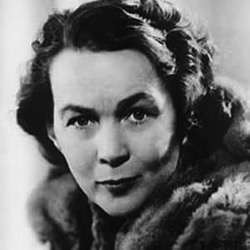
When Women Wrote Hollywood – 2 in a series – Adela Rogers St. Johns

Adela rogers st johnsAdela rogers st john 9469593 1 402

When Women Wrote Hollywood  - 2 in a series - Adela Rogers St. Johns

Adela Nora Rogers St. Johns (May 20, 1894 – August 10, 1988) was an American journalist, novelist, and screenwriter. She wrote a number of screenplays for silent movies but is best remembered for her groundbreaking exploits as “The World’s Greatest Girl Reporter” during the 1920s and 1930s and her celebrity interviews for Photoplay magazine.

She obtained her first job in 1912 working as a reporter for Hearst’s San Francisco Examiner. She reported on crime, politics, society, and sports news before transferring to the Los Angeles Herald in 1913.[1]

 After seeing her work for that newspaper, James R. Quirk offered her a job writing for his new fan magazine  Photoplay. St. Johns accepted the job so she could spend more time with her husband and children. Her celebrity interviews helped the magazine become a success through her numerous revealing interviews with Hollywood film stars.[3]

She also wrote short stories for CosmopolitanThe Saturday Evening Post, and other magazines and finished nine of her thirteen screenplays before returning to reporting for Hearst newspapers. Wikipedia

More information on Adela Rogers St. Johns

* A portion of each sale from Amazon.com directly supports our blogs
** Many of these books may be available from your local library. Check it out!
† Available from the LA Public Library

02 The Writers of The Monkees from How The Monkees Changed Television with Rosanne Welch, PhD [Video] (1:06)

What this entire presentation — How The Monkees Changed Television with Rosanne Welch, PhD (Complete Presentation and Q&A) [Video] (45:06)

02 The Writers of The Monkees from How The Monkees Changed Television with Rosanne Welch, PhD

Rosanne Welch, PhD, Author of Why The Monkees Matter, presents “How The Monkees Changed Television” at a Cal State Fullerton Lunch Lecture on May 8, 2018.

In this talk, she shows how The Monkees, and specifically their presence on television, set the stage for large changes to come in the late 1960s.


Transcript

As a kid, all I wanted was to meet Micky Dolenz — who’s the guy on the far right in case you don’t know that because you’re too young to know who I’m talking about right now, but that was really funnny to me and the kids reacted well to the show and that taught me that it did have something to say to a newer generation so I thoguht, “Hmm”and then ended up writing an article — I’m on the editorial board of Written BY magazine which is the magazine of the Writers Guild of America and I wrote an article about the show, because we write about writers so I thought to myself, “Hmmm, how many of the writers are still alive?” and there were about 7 of the orignal 15 and they were welcome to chat about their time on the show. So, I met with them at their various homes in Beverly Hills, because they made a lot of money in television way back in the day and found that many of them grew up — “grew up” — they were young when they wrote on this show. They were all newcomers and many of them went on to win Emmy Awards including Treva Silverman who was the first female to be on a comedy show without a male partner. So she was solo writing on the show and we’re talking about 1966 so that was a big deal not to have a “boy” help you.


 Why The Monkees Matter: Teenagers, Television and American Pop Culture


McFarland (Direct from Publisher) | Amazon | Kindle Edition | Nook Edition


About Rosanne Welch, PhD

Rosanne Welch, PhD is a writer, producer and university professor with credits that include Beverly Hills 90210, Picket Fences, Touched by an Angel and ABC NEWS/Nightline. Other books include Why The Monkees Matter: Teenagers, Television and American Pop Culture (McFarland, 2017) and Women in American History: A Social, Political, and Cultural Encyclopedia and Document Collection (ABC-CLIO, 2017), named to the 2018 Outstanding References Sources List, by the Reference and User Services Association (RUSA), a division of the American Library Association. Welch has also published chapters in Torchwood Declassified: Investigating Mainstream Cult Television (I.B.Tauris) and The American Civil War on Film and TV: Blue and Gray in Black and White and Color (Lexington Books, 2018) and essays in Doctor Who and Race: An Anthology and Outside In Makes it So, and Outside in Boldly Goes (both edited by Robert Smith). By day she teaches courses on the history of screenwriting and on television writing for the Stephens College MFA in Screenwriting programs. Her talk “The Importance of Having a Female Voice in the Room” at the 2016 TEDxCPP is available on YouTube.

When Women Wrote Hollywood – 1 in a series – “The Red Kimono” – Story by Adela Rogers St. Johns, Directed and Starring Dorothy Davenport

To highlight the wonderful yet largely forgotten work of a collection of female screenwriters from the early years of Hollywood (and as a companion to the book, When Women Wrote Hollywood) we will be posting quick bits about the many films they wrote along with links to further information and clips from their works which are still accessible online. Take a few moments once or twice a week to become familiar with their names and their stories. I think you’ll be surprised at how much bold material these writers tackled at the birth of this new medium. — Rosanne Welch


“The Red Kimono” – Story by Adela Rogers St. Johns, Directed and Starring Dorothy Davenport

A clip from The Red Kimono

Original Poster Art

When Women Wrote Hollywood -

The Red Kimono is a 1925 American silent film drama about prostitution produced by Dorothy Davenport (billed as Mrs. Wallace Reid) and starring Priscilla Bonner.

The film is notable today for being one of the few independent productions produced and written by women. This is the third of Davenport’s “social conscience” releases, preceded by Human Wreckage (1923) on the topic of drug addiction (released five months after Wallace Reid‘s death from morphine), and Broken Laws (1924) about excessive mother-love.

The film is based on a real case of prostitution that took place in New Orleans in 1917. This film, billing itself as a true story, used the real name of the woman played by Priscilla Bonner who as a consequence sued producer Dorothy Davenport for a hefty sum in court and won.[1] The case, Melvin v Reid has been cited recently in the emerging “right to be forgotten” cases around the world as an early example of one’s right to leave a past one wishes to forget. In the ruling of the California Appellate Court (Melvin v. Reid, 112 Cal.App. 285, 297 P. 91 (1931)) the Court stated, “any person living a life of rectitude has that right to happiness which includes a freedom from unnecessary attacks on his character, social standing or reputation.”[citation needed]

As with Davenport’s earlier Human Wreckage in 1924, this film was banned in the United Kingdom by the British Board of Film Censors in 1926.[2] In the 1920s, the film was also banned in the city of Chicago[3][4]. — Wikipedia

More information on Red Kimono

* A portion of each sale from Amazon.com directly supports our blogs
** Many of these books may be available from your local library. Check it out!
† Available from the LA Public Library