Silent Films Are Important from Giving Voice to Silent Films and the Far From Silent Women Who Wrote Them with Dr. Rosanne Welch

Watch this entire presentation

Silent Films Are Important from Giving Voice to Silent Films and the Far From Silent Women Who Wrote Them with Dr. Rosanne Welch

Silent Films Are Important from Giving Voice to Silent Films and the Far From Silent Women Who Wrote Them with Dr. Rosanne Welch


A recording of my presentation at this year’s University Film and Video Association (UFVA) 2017 conference.

Transcript:

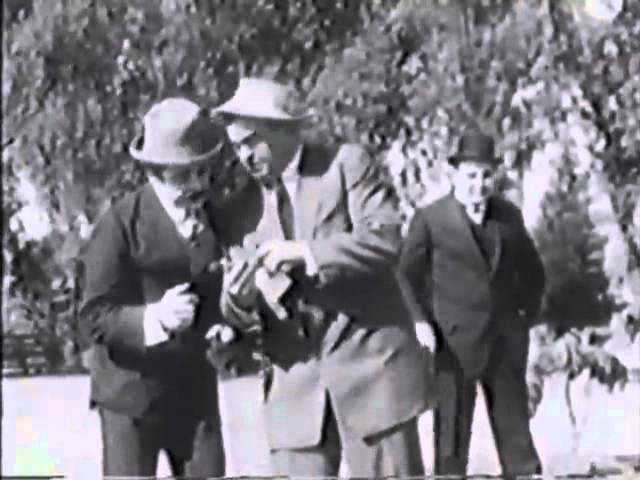
So, I think it’s really important to teach silent films because we’re teaching the screenwriters that the visual is important. Much as I love the words more, you do have to think about how they’re shown and, of course, these are visuals that show is the emotion of the moment and I think that they are really beautiful. So, it’s fun for the students — I totally agree with Warren — to have this heritage in their life, to understand that this all came before them. That’s very, very important.

Books Mentioned In This Presentation

Follow Dr. Rosanne Welch

Twitter: https://twitter.com/rosannewelch
Instagram: https://www.instagram.com/drrosannewelch/

A History of Screenwriting 48 – The Engagement Ring – Mabel Normand – 1912

A History of Screenwriting 48 – The Engagement Ring – Mabel Normand – 1912

Alice has two persistent suitors, one rich, one poor. Each buys her an engagement ring; the rich man pays cash, but the poor man must pay on installments. He has trouble making the payments, but then he’s injured in an auto accident and the settlement allows him to pay off the ring and propose to Alice.


Learn More About Mabel Normand with these books

* A portion of each sale from Amazon.com directly supports our blogs ** Many of these books may be available from your local library. Check it out! † Available at the LA Public Library

From The Research Vault: Blacks and White TV: African Americans in Television Since 1948 by Fred J. MacDonald


* A portion of each sale from Amazon.com directly supports our blogs
** Many of these books may be available from your local library. Check it out!
† Available from the LA Public Library

The second edition of this powerful analysis of African-Americans in the television insudtry since 1948 is completely updated. The increased visibility of blacks in television, the success of the Cosby Show and other sitcoms featuring black actors, and the impact of cable TV on programming are described in detail. Professor MacDonald traces the stereotyping, tokenism, and unfair treatment of blacks from the early days of the indsutry, but expresses his hope and belief that a new video order is materializing that will finally fulfill the bright promise of television. — Amazon


Why The Monkees Matter: Teenagers, Television and American Pop Culture


Order Your Copy Now!

More On Women in Early Filmmaking from Giving Voice to Silent Films and the Far From Silent Women Who Wrote Them with Dr. Rosanne Welch

Watch this entire presentation

Women in Early Filmmaking from Giving Voice to Silent Films and the Far From Silent Women Who Wrote Them with Dr. Rosanne Welch

More On Women in Early Filmmaking from Giving Voice to Silent Films and the Far From Silent Women Who Wrote Them with Dr. Rosanne Welch


A recording of my presentation at this year’s University Film and Video Association (UFVA) 2017 conference.

Transcript:

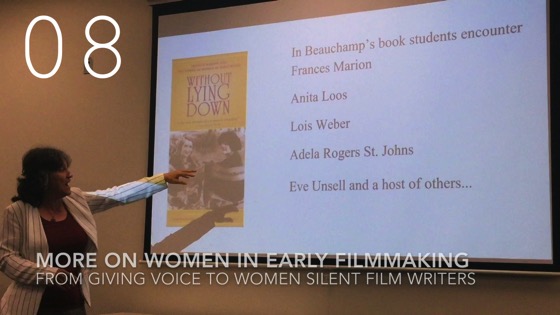
 In Beauchamp’s book, you’ll see all these famous women. My great joy is that one of my students, who teaches directing, found Lois Weber in my class who wrote and directed her films back in the day and now incorporates her into the set of directors that he teaches as examples because she had that kind of career back in the day. Eve Unsell ran her own production company for Universal for 10 years. Made a ton of movies that are very very successful in the day. She also allows us to go into the place where we discuss the problems with films whether it is back them or today because she was involved in what, back then, were yellow race films which were anti-Asian-American films and so that’s something students should understand about. So, again that goes back to to the title of what we are talking about and I talk fast because I’m Sicilian. I also don’t want to eat up all the time.

Books Mentioned In This Presentation

Follow Dr. Rosanne Welch

Twitter: https://twitter.com/rosannewelch
Instagram: https://www.instagram.com/drrosannewelch/

Quotes from “Why The Monkees Matter” by Dr. Rosanne Welch – 82 in a series – Davy Remembered

** Buy “Why The Monkees Matter” Today **

Quotes from

A measure of Jones’ standing also comes from considering the massive amount of international news outlets, from Australia to Japan that covered his death in 2012. The evening news on all three American broadcast channels covered the story, with Diane Sawyer announcing that a “startling bulletin came across in the newsroom”.  She then proclaimed “He is still that forever young and sunny singer from The Monkees who made more than one generation want to sing along.”  

from Why The Monkees Matter by Dr. Rosanne Welch —  Buy your Copy today!

 Why The Monkees Matter: Teenagers, Television and American Pop Culture


McFarland (Direct from Publisher) | Amazon | Kindle Edition | Nook Edition

A History of Screenwriting – 47 in a series – City Lights – Charlie Chaplin (1931)

A History of Screenwriting – 47 in a series – City Lights – Charlie Chaplin (1931)

A History of Screenwriting - 47 in a series - City Lights - Charlie Chaplin (1931)

City Lights film.jpg
Link

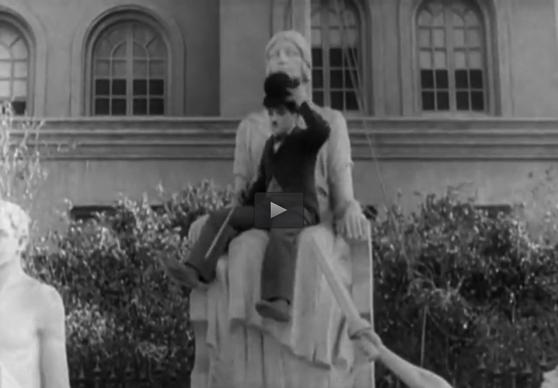
City Lights is a 1931 American pre-Code silent romantic comedy film written, produced, directed by and starring Charlie Chaplin. The story follows the misadventures of Chaplin’s Tramp as he falls in love with a blind girl (Virginia Cherrill) and develops a turbulent friendship with an alcoholic millionaire (Harry Myers).

Although sound films were on the rise when Chaplin started developing the script in 1928, he decided to continue working with silent productions. Filming started in December 1928 and ended in September 1930. City Lights marked the first time Chaplin composed the film score to one of his productions and it was written in six weeks with Arthur Johnston. The main theme, used as a leitmotif for the blind flower girl, is the song “La Violetera” (“Who’ll Buy my Violets”) from Spanish composer José Padilla. Chaplin lost a lawsuit to Padilla for not crediting him.

City Lights was immediately successful upon release on January 30, 1931 with positive reviews and box office receipts of $5 million. Today, many critics consider it not only the highest accomplishment of Chaplin’s career, but one of the greatest films of all time. In 1991, the Library of Congress selected City Lights for preservation in the United States National Film Registry as being “culturally, historically, or aesthetically significant”. In 2007, the American Film Institute ranked it 11th on its list of the best American films ever made. In 1949, the critic James Agee called the film’s final scene “the greatest single piece of acting ever committed to celluloid”.[2] — Wikipedia


Learn More About Charlie Chaplin with these books


* A portion of each sale from Amazon.com directly supports our blogs
** Many of these books may be available from your local library. Check it out!
† Available at the LA Public Library

From The Research Vault: “When Four Nice Boys Go Ape!” – The Saturday Evening Post

Why The Monkees Matter: Teenagers, Television and American Pop Culture


Order Your Copy Now!

Women in Early Filmmaking from Giving Voice to Silent Films and the Far From Silent Women Who Wrote Them with Dr. Rosanne Welch

Watch this entire presentation

Women in Early Filmmaking from Giving Voice to Silent Films and the Far From Silent Women Who Wrote Them with Dr. Rosanne Welch

Women in Early Filmmaking from Giving Voice to Silent Films and the Far From Silent Women Who Wrote Them with Dr. Rosanne Welch


A recording of my presentation at this year’s University Film and Video Association (UFVA) 2017 conference.

Transcript:

So I teach history and I start in the silent film world, so I disagree with Warren. I go chronologically. This is a period they have never heard of and all the movies are free on YouTube. Nothing like telling them they can watch whatever they have to watch for free. That works, right? And so here they meet Anita Loos, Gene Gauntier — the first women — the first person to do filming on location. She went to Jerusalem to film the story of Jesus Christ — the first time it was put on film and it’s a really beautiful film you can see, for free, on YouTube. Then Jeanie MacPherson who wrote all of Cecil B. DeMille’s early movies that were successes. When she stopped working for him all his stuff failed. Nobody knows her name and she’s quite brilliant. So I thinks it’s important for women students today to know that women once ran Hollywood so all this discussion about “I don’t know if women should direct a movie” is not worth having, because they did and they were. They were the highest paid people in this town, so I think that’s important an important think for them to remember. 

Books Mentioned In This Presentation

Follow Dr. Rosanne Welch

Twitter: https://twitter.com/rosannewelch
Instagram: https://www.instagram.com/drrosannewelch/

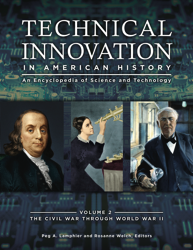
First Look at our next book – Technical Innovation in American History: An Encyclopedia of Science and Technology

A3788C Wayne v1 REV

A3788C Wayne v2 REV

A3788C Wayne v3 REV

My co-editor Peg Lamphier and I were happy to see the newly designed covers for our next 3 Volume encyclopedia – Technical Innovation in American History. Thanks to all the wonderful contributors who came over from our encylcopedia on Women in American History

Look for it in 2019!

From ABC-CLIO…

Technical Innovation in American History: An Encyclopedia of Science and Technology surveys the history of technology, documenting the chronological and thematic connections between specific inventions, technological systems, individuals, and events that have contributed to the history of science and technology in the United States. Covering eras from colonial times to the present day in three chronological volumes, the entries include innovations in fields such as architecture, civil engineering, transportation, energy, mining and oil industries, chemical industries, electronics, computer and information technology, communications (television, radio, and print), agriculture and food technology, and military technology.

The A–Z entries address key individuals, events, organizations, and legislation related to themes such as industry, consumer and medical technology, military technology, computer technology, and space science, among others, enabling readers to understand how specific inventions, technological systems, individuals, and events influenced the history, cultural development, and even self-identity of the United States and its people. The information also spotlights how American culture, the U.S. government, and American society have specifically influenced technological development.


Without Lying Down by Cari Beauchamp | Gifts for the Screenwriter #1

Without Lying Down by Cari Beauchamp | Gifts for the Screenwriter #1

Without Lying Down by Cari Beauchamp | Gifts for Screenwriters #1

One of the best biographies of a writer – and a female writer at that – Without Lying Down tells the story of Frances Marion, the highest paid screenwriter and a double Oscar winner whose career spanned the Silent Era and transformed into Talkies quite well (judging by the Oscars). Since she surrounded herself with a cadre of other female screenwriters at the time, the book is a marvelous introduction to a time when women ran Hollywood. — Rosanne

* A portion of each sale from Amazon.com directly supports our blogs
** Many of these books may be available from your local library. Check it out!