15 Analyzing Episodes of Gidget from How Gidget Got Into the Girl Ghetto with Dr. Rosanne Welch – SRN Conference 2017

15 Analyzing Episodes of Gidget from How Gidget Got Into the Girl Ghetto with Dr. Rosanne Welch – SRN Conference 2017

15 Analyzing Episodes of Gidget from How Gidget Got Into the Girl Ghetto with Dr. Rosanne Welch - SRN Conference 2017

Watch this entire presentation


Transcript:

Also in the episode, she talks about surfing — she eats, drinks and sleeps it. She says to her Dad, you do the same thing. Why should it be wrong that I have something I’m obsessed with being better at and he agrees with her. So, she’s able to debate with her father and they have this very equal relationship which makes me interested. In this particular episode, she brought her Dad to the beach to see what was so good about surfing. he met a girlfriend who is a research chemist. A woman writing the episode makes the woman not only a widow, not some little girly job. She’s a research chemist that he is going to go out with. His last girlfriend was the Dean of Female Students at UCLA. Every woman you meet on this show if the episode is written by a woman is a woman with a substantial career and an interesting person. That fascinates me.

At this year’s 10th Annual Screenwriting Research Network Conference at Otago University in Dunedin, New Zealand I presented…

“How Gidget Got Into the Girl Ghetto by Accident (and How We Can Get Her Out of it): Demoting Gidget: The Little Girl with Big Ideas from Edgy Coming of Age Novel to Babe on the Beach Genre Film via Choices made in the Adaptation Process.”

It’ a long title, as I joke up front, but covers the process of adapting the true life story of Kathy Kohner (nicknamed ‘Gidget’ by the group of male surfers who she spent the summers with in Malibu in the 1950s) into the film and television series that are better remembered than the novel. The novel had been well-received upon publication, even compared to A Catcher in the Rye, but has mistakenly been relegated to the ‘girl ghetto’ of films. Some of the adaptations turned the focus away from the coming of age story of a young woman who gained respect for her talent at a male craft – surfing – and instead turned the focus far too much on Kathy being boy crazy.

Along the way I found interesting comparisons between how female writers treated the main character while adapting the novel and how male writers treated the character.

Gidget


Dr. Rosanne Welch

Dr. Rosanne Welch teaches the History of Screenwriting and One-Hour Drama for the Stephens College MFA in Screenwriting.

Writing/producing credits include Beverly Hills 90210, Picket Fences, ABCNEWS: Nightline and Touched by an Angel. In 2016 she published the book Why The Monkees Matter: Teenagers, Television and American Pop; co-edited Women in American History: A Social, Political, and Cultural Encyclopedia; and placed “Transmitting Culture Transnationally Via the Characterization of Parents in Police Procedurals” in the New Review of Film and Television Studies. Essays appear in Torchwood Declassified: Investigating Mainstream Cult Television and Doctor Who and Race: An Anthology. Welch serves as Book Reviews editor for Journal of Screenwriting and on the Editorial Advisory Board for Written By magazine, the magazine of the Writers Guild.

Watch Dr. Welch’s talk “The Importance of Having a Female Voice in the Room” at the 2016 TEDxCPP.


SRN logo red

The Screenwriting Research Network is a research group consisting of scholars, reflective practitioners and practice-based researchers interested in research on screenwriting. The aim is to rethink the screenplay in relation to its histories, theories, values and creative practices.

05 The Origins of Doctor Who from Gender Diversity in the Who-niverse [Video] (0:51)

Watch this entire presentation: Gender Diversity in the Who-niverse: Paving the Way for a Lady Doctor with Dr. Rosanne Welch [Video] (36:58)

05 The Origins of Doctor Who from Gender Diversity in the Who-niverse [Video] (0:51)

For her 5th Doctor Who lecture to the CPP community, Dr. Rosanne Welch discusses how society – and the show’s writing staff – prepared the audience for a major change in this 50-year franchise – the creation of the first Lady Doctor!

Transcript:

Sydney Newman and Verity, like I said, were the producers who concocted an idea of a show that was meant for children and it as meant to teach children history. So, they invented a character who traveled through time and space — go to various historical events and experience them and it was meant to be a children’s show which is why, if you know old Who, you know that it’s a lot of plastic dinosaurs and goofy, funny-looking creatures and it’s not very scary. it’s much funnier than it is scary and that’s fine. That was the style of program that it was. Right? So these guys came up with it. William Hartnell was the first Doctor. He was meant to be a grandfatherly type. A wise gentleman who travels through space and time with this granddaughter, Susan, and then Barbara and Ian are her teachers who accidentally wander into the spaceship one day and ended up going on these adventures.

Follow Dr. Welch on Twitter and Instagram
https://twitter.com/rosannewelchhttp://instagram.com/drrosannewelch


Dr. Rosanne Welch

Dr. Rosanne Welch teaches the History of Screenwriting and One-Hour Drama for the Stephens College MFA in Screenwriting.

Writing/producing credits include Beverly Hills 90210, Picket Fences, ABCNEWS: Nightline and Touched by an Angel. In 2016 she published the book Why The Monkees Matter: Teenagers, Television and American Pop; co-edited Women in American History: A Social, Political, and Cultural Encyclopedia; and placed “Transmitting Culture Transnationally Via the Characterization of Parents in Police Procedurals” in the New Review of Film and Television Studies. Essays appear in Torchwood Declassified: Investigating Mainstream Cult Television and Doctor Who and Race: An Anthology. Welch serves as Book Reviews editor for Journal of Screenwriting and on the Editorial Advisory Board for Written By magazine, the magazine of the Writers Guild.

Watch Dr. Welch’s talk “The Importance of Having a Female Voice in the Room” at the 2016 TEDxCPP.

Why The Monkees Matter Book discussed on Zilch Podcast #113 A Trip To The Monkees Library!

Why The Monkees Matter Book discussed on Zilch Podcast #113 A Trip To The Monkees Library!

Why The Monkees Matter Book discussed on Zilch Podcast #113 A Trip To The Monkees Library!

Listen to the podcast

Why The Monkees Matter Discussion starts at 18:48 in the audio podcast.

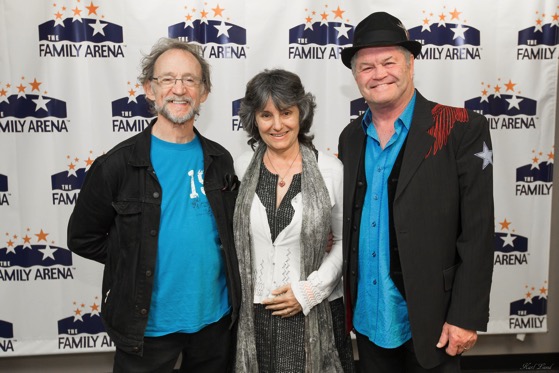
Many thanks to my friends at Zilch who posted a new episode called “A TRIP TO THE MONKEES LIBRARY!” where they ranked their favorite books about the Monkees and spent a few fun minutes talking about what they liked about “Why the Monkees Matter” – it was especially fun to hear Sarah recount the fabulous time we spent at the 50th anniversary show in St. Louis, our chance to do a photo op with Micky and Peter afterwards, though she forgot to mention our midnight munch out at the Cracker Barrel next to our hotel.

Why The Monkees Matter Book discussed on Zilch Podcast #113 A Trip To The Monkees Library!


 Why The Monkees Matter: Teenagers, Television and American Pop Culture


McFarland (Direct from Publisher) | Amazon | Kindle Edition | Nook Edition

14 Gendered Writing and Gidget from How Gidget Got Into the Girl Ghetto with Dr. Rosanne Welch – SRN Conference 2017

14 Gendered Writing and Gidget from How Gidget Got Into the Girl Ghetto with Dr. Rosanne Welch – SRN Conference 2017

14 Gendered Writing and Gidget from How Gidget Got Into the Girl Ghetto with Dr. Rosanne Welch - SRN Conference 2017

Watch this entire presentation


Transcript:

Now we think about the gendered writing that happened. In this case, an episode written by Irma Kalish who is very famous and Auston who was her husband at the time. This whole thing focuses on her having to a write a paper. She’s not doing well until she writes about what she knows, which is surfing and when she does that she actually gets the A she needs in the class. She’s very interested in her grades. She’s not a fluffy, superficial girl. She wants good grades. She wants to go to college. She takes her work seriously and that impressed me. I also think there is a little genre I want to do some studies on eventually — How many movies actually are the story of writers finding their own voice. The Little Women stories are really not about little girls playing in their house in New England. It’s about one woman discovering her voice with the successful telling of her family’s stories. I think there are a million films and stories that end up being about writers finding their voice so, you know, we are writing about what we know all the time.

At this year’s 10th Annual Screenwriting Research Network Conference at Otago University in Dunedin, New Zealand I presented…

“How Gidget Got Into the Girl Ghetto by Accident (and How We Can Get Her Out of it): Demoting Gidget: The Little Girl with Big Ideas from Edgy Coming of Age Novel to Babe on the Beach Genre Film via Choices made in the Adaptation Process.”

It’ a long title, as I joke up front, but covers the process of adapting the true life story of Kathy Kohner (nicknamed ‘Gidget’ by the group of male surfers who she spent the summers with in Malibu in the 1950s) into the film and television series that are better remembered than the novel. The novel had been well-received upon publication, even compared to A Catcher in the Rye, but has mistakenly been relegated to the ‘girl ghetto’ of films. Some of the adaptations turned the focus away from the coming of age story of a young woman who gained respect for her talent at a male craft – surfing – and instead turned the focus far too much on Kathy being boy crazy.

Along the way I found interesting comparisons between how female writers treated the main character while adapting the novel and how male writers treated the character.

Gidget


Dr. Rosanne Welch

Dr. Rosanne Welch teaches the History of Screenwriting and One-Hour Drama for the Stephens College MFA in Screenwriting.

Writing/producing credits include Beverly Hills 90210, Picket Fences, ABCNEWS: Nightline and Touched by an Angel. In 2016 she published the book Why The Monkees Matter: Teenagers, Television and American Pop; co-edited Women in American History: A Social, Political, and Cultural Encyclopedia; and placed “Transmitting Culture Transnationally Via the Characterization of Parents in Police Procedurals” in the New Review of Film and Television Studies. Essays appear in Torchwood Declassified: Investigating Mainstream Cult Television and Doctor Who and Race: An Anthology. Welch serves as Book Reviews editor for Journal of Screenwriting and on the Editorial Advisory Board for Written By magazine, the magazine of the Writers Guild.

Watch Dr. Welch’s talk “The Importance of Having a Female Voice in the Room” at the 2016 TEDxCPP.


SRN logo red

The Screenwriting Research Network is a research group consisting of scholars, reflective practitioners and practice-based researchers interested in research on screenwriting. The aim is to rethink the screenplay in relation to its histories, theories, values and creative practices.

04 The Importance of Writers to Doctor Who from Gender Diversity in the Who-niverse [Video] (1:04)

Watch this entire presentation: Gender Diversity in the Who-niverse: Paving the Way for a Lady Doctor with Dr. Rosanne Welch [Video] (36:58)

04 The Importance of Writers to Doctor Who from Gender Diversity in the Who-niverse [Video] (1:04)

For her 5th Doctor Who lecture to the CPP community, Dr. Rosanne Welch discusses how society – and the show’s writing staff – prepared the audience for a major change in this 50-year franchise – the creation of the first Lady Doctor!

Transcript:

I come from a writing background, so as far as I am concerned, it’s all down to the writing. Writing Matters. People who are writers, who are the people in our culture who tell us stories, it matters who they are and it matters that we open the doors to people who tell stories from lots of different backgrounds because that’s how we get a plethora of multi-cultural stories that we can share. We should all see ourselves at some point in our lives as heroes because you are the hero in your own life. Unless you take charge and do things, nothing really will happen to you and if you don’t see that media you start to think that somebody else is supposed to take charge. So, I think writing matters. That’s always a theme behind what I do so I am going to start by looking at some of the writers of Doctor Who across the years. It’s always important who invented a thing and our first people are Sydney Newman and Verity Lambert, a woman, a producer not a writer helped to invent the show of Doctor Who. It Anthony Coburn who wrote the first episode and then we’ll go down through the years and see all these guys and what their effect on the show has been leading up to the modern day.

Follow Dr. Welch on Twitter and Instagram
https://twitter.com/rosannewelchhttp://instagram.com/drrosannewelch


Dr. Rosanne Welch

Dr. Rosanne Welch teaches the History of Screenwriting and One-Hour Drama for the Stephens College MFA in Screenwriting.

Writing/producing credits include Beverly Hills 90210, Picket Fences, ABCNEWS: Nightline and Touched by an Angel. In 2016 she published the book Why The Monkees Matter: Teenagers, Television and American Pop; co-edited Women in American History: A Social, Political, and Cultural Encyclopedia; and placed “Transmitting Culture Transnationally Via the Characterization of Parents in Police Procedurals” in the New Review of Film and Television Studies. Essays appear in Torchwood Declassified: Investigating Mainstream Cult Television and Doctor Who and Race: An Anthology. Welch serves as Book Reviews editor for Journal of Screenwriting and on the Editorial Advisory Board for Written By magazine, the magazine of the Writers Guild.

Watch Dr. Welch’s talk “The Importance of Having a Female Voice in the Room” at the 2016 TEDxCPP.

13 Gidget On Television from How Gidget Got Into the Girl Ghetto with Dr. Rosanne Welch – SRN Conference 2017

13 Gidget On Television from How Gidget Got Into the Girl Ghetto with Dr. Rosanne Welch – SRN Conference 2017

13 Gidget On Television from How Gidget Got Into the Girl Ghetto with Dr. Rosanne Welch - SRN Conference 2017

Watch this entire presentation


Transcript:

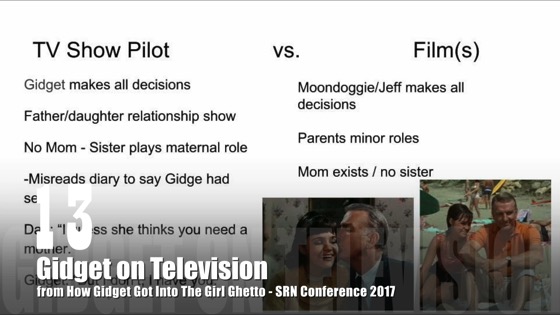
So that’s the story of the pilot whereas in the films you didn’t have the sister, the parents were just goofballs and, as I said before, Moondoggie, the boy, made all the decision. So right away in the pilot, we get a Gidget who has power and is moving forward in her life. So, Ruth is bringing back the real character from the book. I think Ruth is a pretty funny writer. I didn’t realize this until I watched all her episodes. She names some of Gidget’s friends and she gets away with a double entendre in American television. I’m not sure how she got away with that in the 60’s and her sister, in one episode, calls all Gidget’s friends “sexteen” year olds. So it was kind of amazing that she got away with it if you ask me and I can see that she is being ironic and kind of sliding into what people think. So the other important thing about the TV show is that surfing is ever-present. She is almost always going to the beach to surf with the men and get better and better at surfing. Even here, I love, doing her homework at the beach on her surfboard. We do not forget that that is the definition of Gidget.

At this year’s 10th Annual Screenwriting Research Network Conference at Otago University in Dunedin, New Zealand I presented…

“How Gidget Got Into the Girl Ghetto by Accident (and How We Can Get Her Out of it): Demoting Gidget: The Little Girl with Big Ideas from Edgy Coming of Age Novel to Babe on the Beach Genre Film via Choices made in the Adaptation Process.”

It’ a long title, as I joke up front, but covers the process of adapting the true life story of Kathy Kohner (nicknamed ‘Gidget’ by the group of male surfers who she spent the summers with in Malibu in the 1950s) into the film and television series that are better remembered than the novel. The novel had been well-received upon publication, even compared to A Catcher in the Rye, but has mistakenly been relegated to the ‘girl ghetto’ of films. Some of the adaptations turned the focus away from the coming of age story of a young woman who gained respect for her talent at a male craft – surfing – and instead turned the focus far too much on Kathy being boy crazy.

Along the way I found interesting comparisons between how female writers treated the main character while adapting the novel and how male writers treated the character.

Gidget


Dr. Rosanne Welch

Dr. Rosanne Welch teaches the History of Screenwriting and One-Hour Drama for the Stephens College MFA in Screenwriting.

Writing/producing credits include Beverly Hills 90210, Picket Fences, ABCNEWS: Nightline and Touched by an Angel. In 2016 she published the book Why The Monkees Matter: Teenagers, Television and American Pop; co-edited Women in American History: A Social, Political, and Cultural Encyclopedia; and placed “Transmitting Culture Transnationally Via the Characterization of Parents in Police Procedurals” in the New Review of Film and Television Studies. Essays appear in Torchwood Declassified: Investigating Mainstream Cult Television and Doctor Who and Race: An Anthology. Welch serves as Book Reviews editor for Journal of Screenwriting and on the Editorial Advisory Board for Written By magazine, the magazine of the Writers Guild.

Watch Dr. Welch’s talk “The Importance of Having a Female Voice in the Room” at the 2016 TEDxCPP.


SRN logo red

The Screenwriting Research Network is a research group consisting of scholars, reflective practitioners and practice-based researchers interested in research on screenwriting. The aim is to rethink the screenplay in relation to its histories, theories, values and creative practices.

03 Stereotypes and How Representation Matters from Gender Diversity in the Who-niverse [Video] (0:56)

Watch this entire presentation: Gender Diversity in the Who-niverse: Paving the Way for a Lady Doctor with Dr. Rosanne Welch [Video] (36:58)

03  Stereotypes and How Representation Matters from Gender Diversity in the Who-niverse

For her 5th Doctor Who lecture to the CPP community, Dr. Rosanne Welch discusses how society – and the show’s writing staff – prepared the audience for a major change in this 50-year franchise – the creation of the first Lady Doctor!

Transcript:

So the silliest stereotype — the silliest gender stereotype — is that men must be strong and women must be sensitive and these are boring and untrue because, in fact, humans must be strong and humans must be sensitive and that’s the truth of it. Right? But we get wrapped up in these stereotypes and I think that that is a waste of time. So we’re going to look at them. I also want to talk about — or stress the idea — that representation does matter. You hear a lot of people saying that right now and what do they mean by that, but if you don’t see yourself in the narrative of the place that you from, you don’t feel that you belong and this is a problem. It’s been a problem through media through literature. We talk a lot about what kind of books that you read as children. Who were your faces in your books? What does it take to get that? And it’s a slow process but we are beginning to see how important it is for children to see themselves in stories.

Follow Dr. Welch on Twitter and Instagram
https://twitter.com/rosannewelchhttp://instagram.com/drrosannewelch


Dr. Rosanne Welch

Dr. Rosanne Welch teaches the History of Screenwriting and One-Hour Drama for the Stephens College MFA in Screenwriting.

Writing/producing credits include Beverly Hills 90210, Picket Fences, ABCNEWS: Nightline and Touched by an Angel. In 2016 she published the book Why The Monkees Matter: Teenagers, Television and American Pop; co-edited Women in American History: A Social, Political, and Cultural Encyclopedia; and placed “Transmitting Culture Transnationally Via the Characterization of Parents in Police Procedurals” in the New Review of Film and Television Studies. Essays appear in Torchwood Declassified: Investigating Mainstream Cult Television and Doctor Who and Race: An Anthology. Welch serves as Book Reviews editor for Journal of Screenwriting and on the Editorial Advisory Board for Written By magazine, the magazine of the Writers Guild.

Watch Dr. Welch’s talk “The Importance of Having a Female Voice in the Room” at the 2016 TEDxCPP.

12 Gidget Television and Films Compared from How Gidget Got Into the Girl Ghetto [Video] (1:07)

12 Gidget Television and Films Compared from How Gidget Got Into the Girl Ghetto – Dr. Rosanne Welch – SRN Conference 2017

12 Gidget Television and Films Compared from How Gidget Got Into the Girl Ghetto [Video] (1:07)

Watch this entire presentation


Transcript:

So some differences right away. We see a TV show in the pilot that Ruth wrote, Gidget makes all the decisions. The show is built around the father/daughter relationship. So it’s a much more — the father takes his daughter seriously and they speak as equals in terms of education and making choices in her life. Nothing and that didn’t happen at all in the films. She has a sister in the film, where she has a mother — in the TV show she has a sister. The sister makes the mistake of reading Gidget’s diary and when Gidget describes the beautifulness in which “melted into the sand” the sister assumes it means she had sex at the beach and she tells the Dad and the Dad yells at the older sister for stepping into her younger sister’s privacy. That she didn’t have a right to read he diary. Those are her private words. The Dad is not worried that she had sex. He’s worried that he privacy has been invaded and that’s such a respectful stand between a father and a daughter. They come later to realize the “melting into the sand” is a description of surfing. So it all turns around.

At this year’s 10th Annual Screenwriting Research Network Conference at Otago University in Dunedin, New Zealand I presented…

“How Gidget Got Into the Girl Ghetto by Accident (and How We Can Get Her Out of it): Demoting Gidget: The Little Girl with Big Ideas from Edgy Coming of Age Novel to Babe on the Beach Genre Film via Choices made in the Adaptation Process.”

It’ a long title, as I joke up front, but covers the process of adapting the true life story of Kathy Kohner (nicknamed ‘Gidget’ by the group of male surfers who she spent the summers with in Malibu in the 1950s) into the film and television series that are better remembered than the novel. The novel had been well-received upon publication, even compared to A Catcher in the Rye, but has mistakenly been relegated to the ‘girl ghetto’ of films. Some of the adaptations turned the focus away from the coming of age story of a young woman who gained respect for her talent at a male craft – surfing – and instead turned the focus far too much on Kathy being boy crazy.

Along the way I found interesting comparisons between how female writers treated the main character while adapting the novel and how male writers treated the character.

Gidget


Dr. Rosanne Welch

Dr. Rosanne Welch teaches the History of Screenwriting and One-Hour Drama for the Stephens College MFA in Screenwriting.

Writing/producing credits include Beverly Hills 90210, Picket Fences, ABCNEWS: Nightline and Touched by an Angel. In 2016 she published the book Why The Monkees Matter: Teenagers, Television and American Pop; co-edited Women in American History: A Social, Political, and Cultural Encyclopedia; and placed “Transmitting Culture Transnationally Via the Characterization of Parents in Police Procedurals” in the New Review of Film and Television Studies. Essays appear in Torchwood Declassified: Investigating Mainstream Cult Television and Doctor Who and Race: An Anthology. Welch serves as Book Reviews editor for Journal of Screenwriting and on the Editorial Advisory Board for Written By magazine, the magazine of the Writers Guild.

Watch Dr. Welch’s talk “The Importance of Having a Female Voice in the Room” at the 2016 TEDxCPP.


SRN logo red

The Screenwriting Research Network is a research group consisting of scholars, reflective practitioners and practice-based researchers interested in research on screenwriting. The aim is to rethink the screenplay in relation to its histories, theories, values and creative practices.

02 How Did We Get To A Woman As The Doctor? from Gender Diversity in the Who-niverse [Video] (0:47)

Watch this entire presentation: Gender Diversity in the Who-niverse: Paving the Way for a Lady Doctor with Dr. Rosanne Welch [Video] (36:58)

02 How Did We Get To A Woman As The Doctor? from Gender Diversity in the Who-niverse

For her 5th Doctor Who lecture to the CPP community, Dr. Rosanne Welch discusses how society – and the show’s writing staff – prepared the audience for a major change in this 50-year franchise – the creation of the first Lady Doctor!

Transcript:

So this is really what allowed the show to make this change. Which is the big, radical, crazy, progressive change which is to have a lady Doctor. That is a big thing that has been in discussion for a little bit so we’re going to kind of trace that to see how males and females have been portrayed across time in the show and then just kind of wrap it out with what Jody represents and where they might take that character. Right? So, hopefully, we’ll all enjoy ourselves. Are we ready? Are we ready? Alright. So we’re talking about this and I couldn’t resist this when I saw it online because we’re thankful;y in a generation where you all are much less wrapped up in these old stereotypes and that’s a beautiful thing. I can’t say as much for my generation. So, I’m happy to see that in yours. So we’re going to see what are some of these things over the years.

Follow Dr. Welch on Twitter and Instagram
https://twitter.com/rosannewelchhttp://instagram.com/drrosannewelch


Dr. Rosanne Welch

Dr. Rosanne Welch teaches the History of Screenwriting and One-Hour Drama for the Stephens College MFA in Screenwriting.

Writing/producing credits include Beverly Hills 90210, Picket Fences, ABCNEWS: Nightline and Touched by an Angel. In 2016 she published the book Why The Monkees Matter: Teenagers, Television and American Pop; co-edited Women in American History: A Social, Political, and Cultural Encyclopedia; and placed “Transmitting Culture Transnationally Via the Characterization of Parents in Police Procedurals” in the New Review of Film and Television Studies. Essays appear in Torchwood Declassified: Investigating Mainstream Cult Television and Doctor Who and Race: An Anthology. Welch serves as Book Reviews editor for Journal of Screenwriting and on the Editorial Advisory Board for Written By magazine, the magazine of the Writers Guild.

Watch Dr. Welch’s talk “The Importance of Having a Female Voice in the Room” at the 2016 TEDxCPP.

11 Gidget On Television from How Gidget Got Into the Girl Ghetto [Video] (0:58) – Dr. Rosanne Welch – SRN Conference 2017

11 Gidget On Television from How Gidget Got Into the Girl Ghetto [Video] (0:58) – Dr. Rosanne Welch – SRN Conference 2017

11 Gidget On Television from How Gidget Got Into the Girl Ghetto [Video] (0:58) - Dr. Rosanne Welch - SRN Conference 2017

Watch this entire presentation


Transcript:

So then we come to the television show, which stars Sally Field. This was her first major job. She’d never done a film or anything large before, so she is the active character in every episode which is the thing that we do in television so maybe that helped Ruth bring the story back to being about Gidget’s decisions. I don’t know, but I am sure that contributed to it and later in her career Flippen is going to write these other “plucky” women. That Girl being the first single woman on television to live without her parents and have a career. We always think about Mary Tyler Moore who did that but it was That Girl who did it first and her career was acting so that wasn’t taken quite seriously but she lived on her own. She supported herself, right? And Bewitched who, of course, had the power of magic and always ended up saving the day for her husband and I would say maybe see the Brady girls had some power in their lives — they brought Davy Jones into their world, so that’s a big deal. So I think it’s interesting that she always wrote female characters that are well remembered.

At this year’s 10th Annual Screenwriting Research Network Conference at Otago University in Dunedin, New Zealand I presented…

“How Gidget Got Into the Girl Ghetto by Accident (and How We Can Get Her Out of it): Demoting Gidget: The Little Girl with Big Ideas from Edgy Coming of Age Novel to Babe on the Beach Genre Film via Choices made in the Adaptation Process.”

It’ a long title, as I joke up front, but covers the process of adapting the true life story of Kathy Kohner (nicknamed ‘Gidget’ by the group of male surfers who she spent the summers with in Malibu in the 1950s) into the film and television series that are better remembered than the novel. The novel had been well-received upon publication, even compared to A Catcher in the Rye, but has mistakenly been relegated to the ‘girl ghetto’ of films. Some of the adaptations turned the focus away from the coming of age story of a young woman who gained respect for her talent at a male craft – surfing – and instead turned the focus far too much on Kathy being boy crazy.

Along the way I found interesting comparisons between how female writers treated the main character while adapting the novel and how male writers treated the character.

Gidget


Dr. Rosanne Welch

Dr. Rosanne Welch teaches the History of Screenwriting and One-Hour Drama for the Stephens College MFA in Screenwriting.

Writing/producing credits include Beverly Hills 90210, Picket Fences, ABCNEWS: Nightline and Touched by an Angel. In 2016 she published the book Why The Monkees Matter: Teenagers, Television and American Pop; co-edited Women in American History: A Social, Political, and Cultural Encyclopedia; and placed “Transmitting Culture Transnationally Via the Characterization of Parents in Police Procedurals” in the New Review of Film and Television Studies. Essays appear in Torchwood Declassified: Investigating Mainstream Cult Television and Doctor Who and Race: An Anthology. Welch serves as Book Reviews editor for Journal of Screenwriting and on the Editorial Advisory Board for Written By magazine, the magazine of the Writers Guild.

Watch Dr. Welch’s talk “The Importance of Having a Female Voice in the Room” at the 2016 TEDxCPP.


SRN logo red

The Screenwriting Research Network is a research group consisting of scholars, reflective practitioners and practice-based researchers interested in research on screenwriting. The aim is to rethink the screenplay in relation to its histories, theories, values and creative practices.