Women in Early Filmmaking from Giving Voice to Silent Films and the Far From Silent Women Who Wrote Them with Dr. Rosanne Welch

Watch this entire presentation

Women in Early Filmmaking from Giving Voice to Silent Films and the Far From Silent Women Who Wrote Them with Dr. Rosanne Welch

Women in Early Filmmaking from Giving Voice to Silent Films and the Far From Silent Women Who Wrote Them with Dr. Rosanne Welch


A recording of my presentation at this year’s University Film and Video Association (UFVA) 2017 conference.

Transcript:

So I teach history and I start in the silent film world, so I disagree with Warren. I go chronologically. This is a period they have never heard of and all the movies are free on YouTube. Nothing like telling them they can watch whatever they have to watch for free. That works, right? And so here they meet Anita Loos, Gene Gauntier — the first women — the first person to do filming on location. She went to Jerusalem to film the story of Jesus Christ — the first time it was put on film and it’s a really beautiful film you can see, for free, on YouTube. Then Jeanie MacPherson who wrote all of Cecil B. DeMille’s early movies that were successes. When she stopped working for him all his stuff failed. Nobody knows her name and she’s quite brilliant. So I thinks it’s important for women students today to know that women once ran Hollywood so all this discussion about “I don’t know if women should direct a movie” is not worth having, because they did and they were. They were the highest paid people in this town, so I think that’s important an important think for them to remember. 

Books Mentioned In This Presentation

Follow Dr. Rosanne Welch

Twitter: https://twitter.com/rosannewelch
Instagram: https://www.instagram.com/drrosannewelch/

Sense and Sensibility: The Screenplay and Diaries | Gifts for the Screenwriter #3

Sense and Sensibility: The Screenplay and Diaries | Gifts for the Screenwriter #3

Sense and Sensibility: The Screenplay and Diaries | Gifts for the Screenwriter #3

For me this on set diary by a writer who also starred in the film and had to make script changes in the evenings after a full day of filming is a wonderful look at the real life of working writer/performer. The bonus fact iis that it is written by Emma Thompson about her work on Sense and Sensibility – a most marvelous movie to view and study.


* A portion of each sale from Amazon.com directly supports our blogs

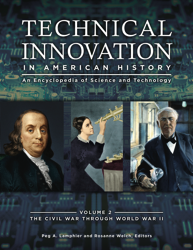
First Look at our next book – Technical Innovation in American History: An Encyclopedia of Science and Technology

A3788C Wayne v1 REV

A3788C Wayne v2 REV

A3788C Wayne v3 REV

My co-editor Peg Lamphier and I were happy to see the newly designed covers for our next 3 Volume encyclopedia – Technical Innovation in American History. Thanks to all the wonderful contributors who came over from our encylcopedia on Women in American History

Look for it in 2019!

From ABC-CLIO…

Technical Innovation in American History: An Encyclopedia of Science and Technology surveys the history of technology, documenting the chronological and thematic connections between specific inventions, technological systems, individuals, and events that have contributed to the history of science and technology in the United States. Covering eras from colonial times to the present day in three chronological volumes, the entries include innovations in fields such as architecture, civil engineering, transportation, energy, mining and oil industries, chemical industries, electronics, computer and information technology, communications (television, radio, and print), agriculture and food technology, and military technology.

The A–Z entries address key individuals, events, organizations, and legislation related to themes such as industry, consumer and medical technology, military technology, computer technology, and space science, among others, enabling readers to understand how specific inventions, technological systems, individuals, and events influenced the history, cultural development, and even self-identity of the United States and its people. The information also spotlights how American culture, the U.S. government, and American society have specifically influenced technological development.


Final Draft 10 Software | Gifts for the Screenwriter #2

Final Draft 10 Software | Gifts for the Screenwriter #2

Whether your are a screenwriter, or know an aspiring one, Final Draft is one of the standard pieces of software for planning, writing and formatting your script properly. Make the best impression possible.

Know a screenwriting student? You might be able to save a significant amount using the Educational version.

* A portion of each sale from Amazon.com directly supports our blogs

Without Lying Down by Cari Beauchamp | Gifts for the Screenwriter #1

Without Lying Down by Cari Beauchamp | Gifts for the Screenwriter #1

Without Lying Down by Cari Beauchamp | Gifts for Screenwriters #1

One of the best biographies of a writer – and a female writer at that – Without Lying Down tells the story of Frances Marion, the highest paid screenwriter and a double Oscar winner whose career spanned the Silent Era and transformed into Talkies quite well (judging by the Oscars). Since she surrounded herself with a cadre of other female screenwriters at the time, the book is a marvelous introduction to a time when women ran Hollywood. — Rosanne

* A portion of each sale from Amazon.com directly supports our blogs
** Many of these books may be available from your local library. Check it out!

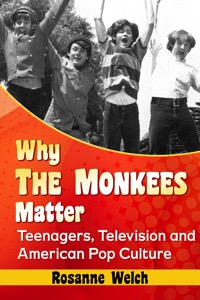
Quotes from “Why The Monkees Matter” by Dr. Rosanne Welch – 81 in a series – Davy the Teen idol

** Buy “Why The Monkees Matter” Today **

Quotes from

Forced into the teen idol role by Hollywood Jones was the one teen idol that resonated across the years. Jones pondered what it meant to have posters of his face plastered across so many teenagers walls when he co-wrote the song “Ceiling in my Room” (with Dominick DeMieri and Robert Dick) for the group’s fifth album The Birds, The Bees and The Monkees.  

from Why The Monkees Matter by Dr. Rosanne Welch —  Buy your Copy today!

 Why The Monkees Matter: Teenagers, Television and American Pop Culture


McFarland (Direct from Publisher) | Amazon | Kindle Edition | Nook Edition

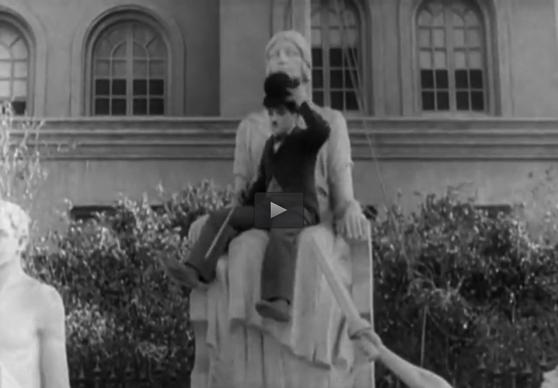
A History of Screenwriting – 46 in a series – The Gold Rush – Charlie Chaplin (1925)

A History of Screenwriting – 46 in a series – The Gold Rush – Charlie Chaplin (1925)

Gold rush chaplin

Gold rush poster.jpg
By UnknownHere, Public Domain, Link

The Gold Rush is a 1925 American comedy film written, produced, and directed by Charlie Chaplin. The film also stars Chaplin in his Little Tramp persona, Georgia Hale, Mack Swain, Tom Murray, Henry Bergman, and Malcolm Waite.

The Gold Rush received Academy Award nominations for Best Music and Best Sound Recording upon its re-release in 1942. It is today one of Chaplin’s most celebrated works, and he himself declared several times that it was the film for which he most wanted to be remembered.[3]

The idea for this film came from Chaplin looking at the pictures of the Gold Rush in Klondike in 1896. At the same time, he accidentally read a book about immigrants who trapped the snow in Sierra Nevada, had to eat their own boots or the corpses of their friends. Chaplin, who believed tragedies and comics were not far from each other, decided to combine these stories of deprivation and horror in comedy. He decided that his famous rogue figure should become a gold-digger who joins a brave optimist determined to face all the pitfalls associated with the search for gold, such as sickness, hunger, loneliness, or the possibility that he may at any time be attacked by a grizzly. In the movie, we see scenes like Chaplin cooking and dreaming of his shoe, or how his starving friend Big Jim sees him as a chicken. — Wikipedia


Learn More About Charlie Chaplin with these books


* A portion of each sale from Amazon.com directly supports our blogs
** Many of these books may be available from your local library. Check it out!
† Available at the LA Public Library

27: Peter Meyerson and The Monkees : “Why The Monkees Matter” Interview with Jean Power [Video] (0:40)

Rosanne Welch talks about “Why The Monkees Matter” with Jean Hopkins Power

Watch this entire presentation (45 mins)

Jean Powergirl takes the host reigns and welcomes her guest Rosanne Welch, PhD to the show! They’ll be discussing Roseanne’s book, “Why The Monkees Matter: Teenagers, Television and American Pop Culture.”

27: Peter Meyerson and The Monkees : “Why The Monkees Matter” Interview with Jean Power


Transcript:

Rosanne: Another gentleman I got to meet — and sadly who passed away 6 months after I met him — was Peter Meyerson, He ended up later in life he co-created Welcome Back, Kotter which interestingly enough it’s a show about 4 boys.

Jean: I love the show.

Rosanne: Four boys who were in school — in high school. So, Peter Meyerson, he was marvelous. he came in also because of a very hippie attitude. In fact, he went to the Monterey Pop Festival. He was the kind of guy who hung out at all those events. He wore the paisley clothing and the necklaces. He just really bought into that whole Ideology and so you see that represented then in some of his episodes. And he was great and he told me some very funny stories about hanging out with the actors at parties and whatnot.

Get your copy today!

A hit television show about a fictitious rock band, The Monkees (1966-1968) earned two Emmys–Outstanding Comedy Series and Outstanding Directorial Achievement in Comedy. Capitalizing on the show’s success, the actual band formed by the actors, at their peak, sold more albums than The Beatles and The Rolling Stones combined and set the stage for other musical TV characters from The Partridge Family to Hannah Montana. In the late 1980s, the Monkees began a series of reunion tours that continued into their 50th anniversary.

This book tells the story of The Monkees and how the show changed television, introducing a new generation to the fourth-wall-breaking slapstick created by Laurel and Hardy and the Marx Brothers. Its creators contributed to the innovative film and television of 1970s with projects like Bob & Carol & Ted & Alice, The Mary Tyler Moore Show, Laugh-In and Welcome Back, Kotter. Immense profits from the show, its music and its merchandising funded the producers’ move into films such as Head, Easy Rider and Five Easy Pieces.

Rosanne Welch, PhD has written for television (Touched by an Angel, Picket Fences) and print (Three Ring Circus: How Real Couples Balance Marriage, Work and Kids and The Encyclopedia of Women in Aviation and Space). In the documentary world she has written and produced Bill Clinton and the Boys Nation Class of 1963 for ABC NEWS/Nightline and consulted on PBS’s A Prince Among Slaves, the story of a prince from West Africa who was enslaved in the 1780s, freed by order of President John Quincy Adams in the 1820s and returned to his homeland.

From The Research Vault: The Politics of Ecstasy by Timothy Leary


Writings that sparkle with the psychedelic revolution. The Politics of Ecstasy is Timothy Leary’s most provocative and influential exploration of human consciousness, written during the period from his Harvard days to the Summer of Love. Includes his early pronouncements on the psychedelic movement and his views on social and political ramifications of psychedelic and mystical experience.
Here is the outspoken Playboy interview revealing the sexual power of LSD-a statement that many believe played a key role in provoking Leary’s incarceration by the authorities; an early outline of the neurological theory that became Leary’s classic eight-circuit model of the human nervous system; an insightful exploration of the life and work of novelist Hermann Hesse; an effervescent dialogue with humorist Paul Krassner; and an impassioned defense of what Leary called “The Fifth Freedom”-the right to get high. — Amazon

Why The Monkees Matter: Teenagers, Television and American Pop Culture


Order Your Copy Now!

Let’s Kill Off The Auteur Theory from Giving Voice to Silent Films and the Far From Silent Women Who Wrote Them with Dr. Rosanne Welch

Watch this entire presentation

Let’s Kill Off The Auteur Theory from Giving Voice to Silent Films and the Far From Silent Women Who Wrote Them with Dr. Rosanne Welch

Let's Kill Off The Auteur Theory  from Giving Voice to Silent Films and the Far From Silent Women Who Wrote Them with Dr. Rosanne Welch


A recording of my presentation at this year’s University Film and Video Association (UFVA) 2017 conference.

Transcript:

You got to the next question which is my first exercise in class — Name the writer. Lucky if they can. If it’s a writer/director, they can. Otherwise, they can’t and they suddenly are embarrassed because they adore the words of a person whose name they can’t tell you. If they have a favorite book they can tell you who wrote it, but they don’t know who wrote their favorite film. So it’s my goal to make them know that. I can’t stand the Auteur Theory because I think it’s bullshit. Directors aren’t the authors of their film. I don’t want to insult any directors in the class but you can’t direct something that doesn’t exist on the page first. It’s a collaborative thing and directors have lovely, but they’ve been given all the credit for far too long because, as we know, it goes back to all the book reviews in Cahiers and they came up with that theory. It’s nonsense.

Books Mentioned In This Presentation

Follow Dr. Rosanne Welch

Twitter: https://twitter.com/rosannewelch
Instagram: https://www.instagram.com/drrosannewelch/