02 How Did We Get To A Woman As The Doctor? from Gender Diversity in the Who-niverse [Video] (0:47)

Watch this entire presentation: Gender Diversity in the Who-niverse: Paving the Way for a Lady Doctor with Dr. Rosanne Welch [Video] (36:58)

02 How Did We Get To A Woman As The Doctor? from Gender Diversity in the Who-niverse

For her 5th Doctor Who lecture to the CPP community, Dr. Rosanne Welch discusses how society – and the show’s writing staff – prepared the audience for a major change in this 50-year franchise – the creation of the first Lady Doctor!

Transcript:

So this is really what allowed the show to make this change. Which is the big, radical, crazy, progressive change which is to have a lady Doctor. That is a big thing that has been in discussion for a little bit so we’re going to kind of trace that to see how males and females have been portrayed across time in the show and then just kind of wrap it out with what Jody represents and where they might take that character. Right? So, hopefully, we’ll all enjoy ourselves. Are we ready? Are we ready? Alright. So we’re talking about this and I couldn’t resist this when I saw it online because we’re thankful;y in a generation where you all are much less wrapped up in these old stereotypes and that’s a beautiful thing. I can’t say as much for my generation. So, I’m happy to see that in yours. So we’re going to see what are some of these things over the years.

Follow Dr. Welch on Twitter and Instagram
https://twitter.com/rosannewelchhttp://instagram.com/drrosannewelch


Dr. Rosanne Welch

Dr. Rosanne Welch teaches the History of Screenwriting and One-Hour Drama for the Stephens College MFA in Screenwriting.

Writing/producing credits include Beverly Hills 90210, Picket Fences, ABCNEWS: Nightline and Touched by an Angel. In 2016 she published the book Why The Monkees Matter: Teenagers, Television and American Pop; co-edited Women in American History: A Social, Political, and Cultural Encyclopedia; and placed “Transmitting Culture Transnationally Via the Characterization of Parents in Police Procedurals” in the New Review of Film and Television Studies. Essays appear in Torchwood Declassified: Investigating Mainstream Cult Television and Doctor Who and Race: An Anthology. Welch serves as Book Reviews editor for Journal of Screenwriting and on the Editorial Advisory Board for Written By magazine, the magazine of the Writers Guild.

Watch Dr. Welch’s talk “The Importance of Having a Female Voice in the Room” at the 2016 TEDxCPP.

Quotes from “Why The Monkees Matter” by Dr. Rosanne Welch – 93 in a series – Reviled by their Peers?

** Buy “Why The Monkees Matter” Today **

Quotes from

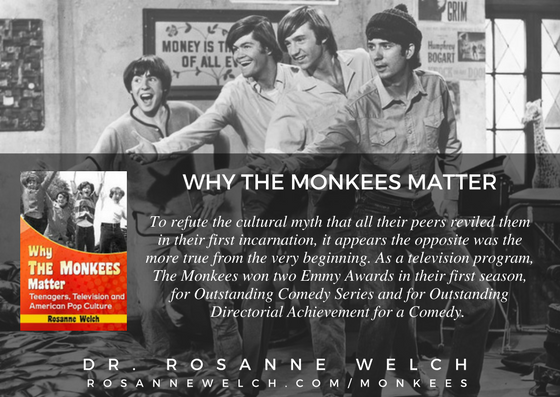
To refute the cultural myth that all their peers reviled them in their first incarnation, it appears the opposite was the more true from the very beginning. As a television program, The Monkees won two Emmy Awards in their first season, for Outstanding Comedy Series and for Outstanding Directorial Achievement for a Comedy. 

from Why The Monkees Matter by Dr. Rosanne Welch —  Buy your Copy today!

 Why The Monkees Matter: Teenagers, Television and American Pop Culture


McFarland (Direct from Publisher) | Amazon | Kindle Edition | Nook Edition

A History of Screenwriting 56 – Male and Female starring Gloria Swanson – Written by Jeanie Macpherson – 1919

A History of Screenwriting 56 – Male and Female starring Gloria Swanson – Written by Jeanie Macpherson – 1919

A History of Screenwriting 56 - Male and Female starring Gloria Swanson - Written by Jeanie Macpherson - 1919

A History of Screenwriting 56 - Male and Female starring Gloria Swanson - Written by Jeanie Macpherson - 1919


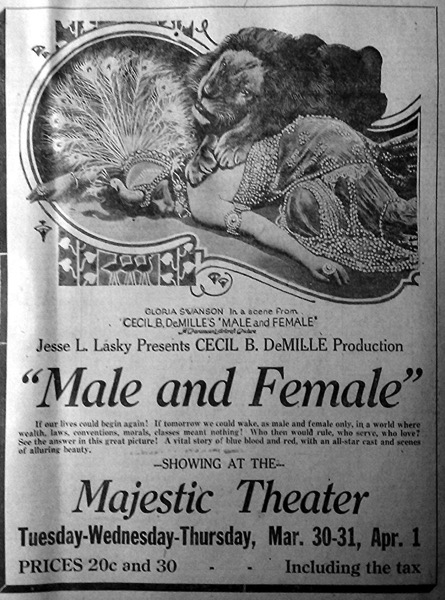
Male and Female is a 1919 American silent adventure/drama film directed by Cecil B. DeMille and starring Gloria Swanson and Thomas Meighan.[2] Its main themes are gender relations and social class. The film is based on the J. M. Barrie play The Admirable Crichton.[1]

A previous version was filmed the year before in England as The Admirable Crichton

The film centers on the relationship between Lady Mary Loam (Swanson), a British aristocrat, and her butler, Crichton (Meighan). Crichton fancies a romance with Mary, but she disdains him because of his lower social class. When the two and some others are shipwrecked on a deserted island, they are left to fend for themselves in a state of nature.

The aristocrats’ abilities to survive are far worse than those of Crichton, and a role reversal ensues, with the butler becoming a king among the stranded group. Crichton and Mary are about to wed on the island when the group is rescued. Upon returning to Britain, Crichton chooses not to marry Mary; instead, he asks a maid, Tweeny (who was attracted to Crichton throughout the film), to marry him, and the two move to the United States– Wikipedia


Learn More About Gloria Swanson with these books


* A portion of each sale from Amazon.com directly supports our blogs
** Many of these books may be available from your local library. Check it out!
† Available at the LA Public Library

11 Gidget On Television from How Gidget Got Into the Girl Ghetto [Video] (0:58) – Dr. Rosanne Welch – SRN Conference 2017

11 Gidget On Television from How Gidget Got Into the Girl Ghetto [Video] (0:58) – Dr. Rosanne Welch – SRN Conference 2017

11 Gidget On Television from How Gidget Got Into the Girl Ghetto [Video] (0:58) - Dr. Rosanne Welch - SRN Conference 2017

Watch this entire presentation


Transcript:

So then we come to the television show, which stars Sally Field. This was her first major job. She’d never done a film or anything large before, so she is the active character in every episode which is the thing that we do in television so maybe that helped Ruth bring the story back to being about Gidget’s decisions. I don’t know, but I am sure that contributed to it and later in her career Flippen is going to write these other “plucky” women. That Girl being the first single woman on television to live without her parents and have a career. We always think about Mary Tyler Moore who did that but it was That Girl who did it first and her career was acting so that wasn’t taken quite seriously but she lived on her own. She supported herself, right? And Bewitched who, of course, had the power of magic and always ended up saving the day for her husband and I would say maybe see the Brady girls had some power in their lives — they brought Davy Jones into their world, so that’s a big deal. So I think it’s interesting that she always wrote female characters that are well remembered.

At this year’s 10th Annual Screenwriting Research Network Conference at Otago University in Dunedin, New Zealand I presented…

“How Gidget Got Into the Girl Ghetto by Accident (and How We Can Get Her Out of it): Demoting Gidget: The Little Girl with Big Ideas from Edgy Coming of Age Novel to Babe on the Beach Genre Film via Choices made in the Adaptation Process.”

It’ a long title, as I joke up front, but covers the process of adapting the true life story of Kathy Kohner (nicknamed ‘Gidget’ by the group of male surfers who she spent the summers with in Malibu in the 1950s) into the film and television series that are better remembered than the novel. The novel had been well-received upon publication, even compared to A Catcher in the Rye, but has mistakenly been relegated to the ‘girl ghetto’ of films. Some of the adaptations turned the focus away from the coming of age story of a young woman who gained respect for her talent at a male craft – surfing – and instead turned the focus far too much on Kathy being boy crazy.

Along the way I found interesting comparisons between how female writers treated the main character while adapting the novel and how male writers treated the character.

Gidget


Dr. Rosanne Welch

Dr. Rosanne Welch teaches the History of Screenwriting and One-Hour Drama for the Stephens College MFA in Screenwriting.

Writing/producing credits include Beverly Hills 90210, Picket Fences, ABCNEWS: Nightline and Touched by an Angel. In 2016 she published the book Why The Monkees Matter: Teenagers, Television and American Pop; co-edited Women in American History: A Social, Political, and Cultural Encyclopedia; and placed “Transmitting Culture Transnationally Via the Characterization of Parents in Police Procedurals” in the New Review of Film and Television Studies. Essays appear in Torchwood Declassified: Investigating Mainstream Cult Television and Doctor Who and Race: An Anthology. Welch serves as Book Reviews editor for Journal of Screenwriting and on the Editorial Advisory Board for Written By magazine, the magazine of the Writers Guild.

Watch Dr. Welch’s talk “The Importance of Having a Female Voice in the Room” at the 2016 TEDxCPP.


SRN logo red

The Screenwriting Research Network is a research group consisting of scholars, reflective practitioners and practice-based researchers interested in research on screenwriting. The aim is to rethink the screenplay in relation to its histories, theories, values and creative practices.

01 Generation and Regeneration from Gender Diversity in the Who-niverse with Dr. Rosanne Welch [Video] (1:01)

Watch this entire presentation: Gender Diversity in the Who-niverse: Paving the Way for a Lady Doctor with Dr. Rosanne Welch [Video] (36:58)

01 Generation and Regeneration from Gender Diversity in the Who-niverse with Dr. Rosanne Welch

For her 5th Doctor Who lecture to the CPP community, Dr. Rosanne Welch discusses how society – and the show’s writing staff – prepared the audience for a major change in this 50-year franchise – the creation of the first Lady Doctor!

Transcript:

Whether you know new Who or old Who we’re going to talk about a kind of a combination of both of them and looking particularly at how gender has been portrayed and what I think works on the show and why the show has lasted so long. we all know it started in 1963 and so it survived because, if you don’t know Doctor Who, I imagine you do, but if you don’t writers invented the act of regeneration which was a brilliant idea because in the first few years their lead actor got sick and the whole show was going to have to be cancelled and the writers didn’t want to lose their jobs so they smartly sat around the room and said “How can we save this?” and suddenly somebody — and they don’t remember who it was now — said, “Hey, our lead character’s an alien. How about when he dies he doesn’t really die. He just regenerates into another body and then we can hire another actor and we can all keep our jobs?” and the network was agreeable to that and they did it and of course, as we know, they’ve done it and done it and done it over the years.

Follow Dr. Welch on Twitter and Instagram
https://twitter.com/rosannewelchhttp://instagram.com/drrosannewelch


Dr. Rosanne Welch

Dr. Rosanne Welch teaches the History of Screenwriting and One-Hour Drama for the Stephens College MFA in Screenwriting.

Writing/producing credits include Beverly Hills 90210, Picket Fences, ABCNEWS: Nightline and Touched by an Angel. In 2016 she published the book Why The Monkees Matter: Teenagers, Television and American Pop; co-edited Women in American History: A Social, Political, and Cultural Encyclopedia; and placed “Transmitting Culture Transnationally Via the Characterization of Parents in Police Procedurals” in the New Review of Film and Television Studies. Essays appear in Torchwood Declassified: Investigating Mainstream Cult Television and Doctor Who and Race: An Anthology. Welch serves as Book Reviews editor for Journal of Screenwriting and on the Editorial Advisory Board for Written By magazine, the magazine of the Writers Guild.

Watch Dr. Welch’s talk “The Importance of Having a Female Voice in the Room” at the 2016 TEDxCPP.

Quotes from “Why The Monkees Matter” by Dr. Rosanne Welch – 92 in a series – No Easy Rider Without The Monkees

** Buy “Why The Monkees Matter” Today **

Quotes from

A final note on the long tail of their cultural footprint comes from the fact that the financial success of the show funded the filmmaking careers of show creators Bert Schneider and Bob Rafelson. Screen Gems executive Steve Blauner adamantly believed, “There’d have been no Easy Rider without The Monkees so they should canonize The Monkees just for that.”

from Why The Monkees Matter by Dr. Rosanne Welch —  Buy your Copy today!

 Why The Monkees Matter: Teenagers, Television and American Pop Culture


McFarland (Direct from Publisher) | Amazon | Kindle Edition | Nook Edition

Quote from “America’s Forgotten Founding Father by Dr Rosanne Welch – 1 in a series – Why is Mazzei NOT here?

Quote from

“In all circumstances, I have acted in the same manner, and my behavior has been attributed more to modesty than to sound policy. 

I have never wished anyone to ask: “Why is Mazzei here? But rather “Why is Mazzei not here?” -Fillipo Mazzei

 From America’s Forgotten Founding Father — Get Your Copy Today!


Print Edition | Kindle Edition | Apple iBooks Edition | Nook Edition

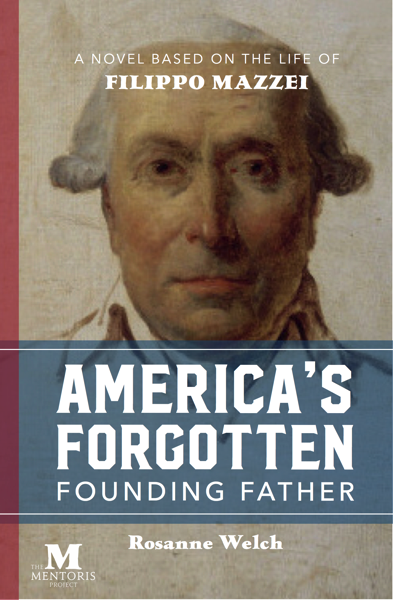
His loyalty lasted a lifetime… Surgeon, merchant, vintner, and writer Filippo Mazzei influenced American business, politics, and philosophy. Befriending Benjamin Franklin and Thomas Jefferson, Mazzei was a strong liaison for others in Europe. Mazzei was Jefferson’s inspiration for the most famous line in the Declaration of Independence: “All men are created equal.” Clearly, Mazzei had a gift of language and often used his words to share his ideas about religious freedom. Mazzei encouraged other Italians still living overseas to join him in a country rich with opportunity and promise. Often, when returning from Italy, he booked passages on ships for people who desired to travel to America and employed them on his estate—just to ensure a better, more fruitful life for everyone. During those travels, Mazzei found himself at the center of many fights for freedom. He was truly a friend to freedom around the world.

10 Gidget Grows Up from How Gidget Got Into the Girl Ghetto [Video] (0:44) – Dr. Rosanne Welch – SRN Conference

10 Gidget Grows Up from How Gidget Got Into the Girl Ghetto [Video] (0:44) – Dr. Rosanne Welch – SRN Conference

10 Gidget Grows Up from How Gidget Got Into the Girl Ghetto [Video] (0:44) - Dr. Rosanne Welch - SRN Conference

Watch this entire presentation


Transcript:

This one was written largely by Gabrielle Upton and we have the Gidget who needs help and has to ask and is always worried about things and she cries which is always the thing that girls go to when they have to be dramatic. When we get over to this one, which is co-written with Katherine and Dale Eunson again she’s in college. Suddenly her vocabulary has popped up. the woman knew three-syllable words that she used with her friends as a normal and casual as you could be. She quotes Shakespeare and Dante’s Inferno because her father is a professor of literature so that’s the culture of her home, which is actually true and she is very proud of her independence in that film. So as Ruth Brooks Flippen gets ahold of the character, she starts to mold her back into who she was in her original book.

At this year’s 10th Annual Screenwriting Research Network Conference at Otago University in Dunedin, New Zealand I presented…

“How Gidget Got Into the Girl Ghetto by Accident (and How We Can Get Her Out of it): Demoting Gidget: The Little Girl with Big Ideas from Edgy Coming of Age Novel to Babe on the Beach Genre Film via Choices made in the Adaptation Process.”

It’ a long title, as I joke up front, but covers the process of adapting the true life story of Kathy Kohner (nicknamed ‘Gidget’ by the group of male surfers who she spent the summers with in Malibu in the 1950s) into the film and television series that are better remembered than the novel. The novel had been well-received upon publication, even compared to A Catcher in the Rye, but has mistakenly been relegated to the ‘girl ghetto’ of films. Some of the adaptations turned the focus away from the coming of age story of a young woman who gained respect for her talent at a male craft – surfing – and instead turned the focus far too much on Kathy being boy crazy.

Along the way I found interesting comparisons between how female writers treated the main character while adapting the novel and how male writers treated the character.

Gidget


Dr. Rosanne Welch

Dr. Rosanne Welch teaches the History of Screenwriting and One-Hour Drama for the Stephens College MFA in Screenwriting.

Writing/producing credits include Beverly Hills 90210, Picket Fences, ABCNEWS: Nightline and Touched by an Angel. In 2016 she published the book Why The Monkees Matter: Teenagers, Television and American Pop; co-edited Women in American History: A Social, Political, and Cultural Encyclopedia; and placed “Transmitting Culture Transnationally Via the Characterization of Parents in Police Procedurals” in the New Review of Film and Television Studies. Essays appear in Torchwood Declassified: Investigating Mainstream Cult Television and Doctor Who and Race: An Anthology. Welch serves as Book Reviews editor for Journal of Screenwriting and on the Editorial Advisory Board for Written By magazine, the magazine of the Writers Guild.

Watch Dr. Welch’s talk “The Importance of Having a Female Voice in the Room” at the 2016 TEDxCPP.


SRN logo red

The Screenwriting Research Network is a research group consisting of scholars, reflective practitioners and practice-based researchers interested in research on screenwriting. The aim is to rethink the screenplay in relation to its histories, theories, values and creative practices.

Gender Diversity in the Who-niverse: Paving the Way for a Lady Doctor with Dr. Rosanne Welch [Video] (36:58)

Gender Diversity in the Who-niverse: Paving the Way for a Lady Doctor with Dr. Rosanne Welch [Video] (36:58)

Gender Diversity in the Who-niverse: Paving the Way for a Lady Doctor with Dr. Rosanne Welch [Video] (36:58)

For her 5th Doctor Who lecture to the CPP community, Dr. Rosanne Welch discusses how society – and the show’s writing staff – prepared the audience for a major change in this 50-year franchise – the creation of the first Lady Doctor!

Follow Dr. Welch on Twitter and Instagram
https://twitter.com/rosannewelchhttp://instagram.com/drrosannewelch


Dr. Rosanne Welch

Dr. Rosanne Welch teaches the History of Screenwriting and One-Hour Drama for the Stephens College MFA in Screenwriting.

Writing/producing credits include Beverly Hills 90210, Picket Fences, ABCNEWS: Nightline and Touched by an Angel. In 2016 she published the book Why The Monkees Matter: Teenagers, Television and American Pop; co-edited Women in American History: A Social, Political, and Cultural Encyclopedia; and placed “Transmitting Culture Transnationally Via the Characterization of Parents in Police Procedurals” in the New Review of Film and Television Studies. Essays appear in Torchwood Declassified: Investigating Mainstream Cult Television and Doctor Who and Race: An Anthology. Welch serves as Book Reviews editor for Journal of Screenwriting and on the Editorial Advisory Board for Written By magazine, the magazine of the Writers Guild.

Watch Dr. Welch’s talk “The Importance of Having a Female Voice in the Room” at the 2016 TEDxCPP.

A History of Screenwriting 55 – The Trespasser starring Gloria Swanson – Written by Edmund Goulding – 1929

A History of Screenwriting 55 – The Trespasser starring Gloria Swanson – Written by Edmund Goulding – 1929

A History of Screenwriting 55 - The Trespasser starring Gloria Swanson - Written by Edmund Goulding - 1929

The Trespasser is a 1929 American pre-Code film directed and written by Edmund Goulding, starring Gloria Swanson, Robert Ames, Purnell Pratt, Henry B. Walthall, and Wally Albright. The film was released by United Artists in both silent and talkie versions.

A humble woman (Swanson) marries a wealthy man (Ames). Their marriage is annulled by the man’s father (Holden), who considers her a fortune-hunter, and she is left alone to raise her child. She later becomes a “kept woman” for an older, married man. When the man dies, leaving Swanson a $500,000 inheritance, the press is quick to cast doubts upon the paternity of Swanson’s child. Her ex-husband has since remarried, and now comes back into Swanson’s life. For the sake of her child, she sends the boy to live with her ex and his wife. The wife dies and the film ends happily (if improbably) with Swanson reunited with her ex-husband.

The Trespasser was produced as both a silent and sound version for a total negative cost of $725,000.[1] The film earned an Academy Award nomination for (Gloria Swanson) in her talkie debut. It was written and directed by Edmund Goulding and was first filmed as a silent film. A talkie version was quickly made and was a smash hit for its star, Gloria Swanson. Goulding remade the film as That Certain Woman (1937) with Bette Davis and Henry Fonda. .- Wikipedia


Learn More About Gloria Swanson with these books

* A portion of each sale from Amazon.com directly supports our blogs
** Many of these books may be available from your local library. Check it out!
† Available at the LA Public Library