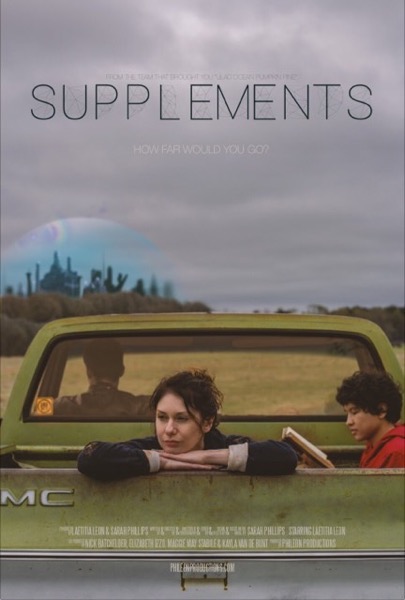
“It wouldn’t be in the shape it’s in without the insightful notes and feedback from Julie Berkobien, Sarah Amble Whorton, Amelia Phillips, and Amy Banks. Really appreciate all the Stephens’ MFA love and encouragement,” says Perez.
The hardest thing to do now — we’re having trouble reviving some of these female names but it is far more worse reviving African-American female names because these folks have had no paperwork left about them and even the men they worked with haven’t been cataloged in a way that we can look to them for information. Tressi Souders, we only have through newspaper accounts of films of hers that were opening in African-American neighborhoods. So we can see advertisements that she had product but the product doesn’t exist. You can’t find it even on — most of the women I’m gonna mention, the Caucasian women — the European women — and you could find some of their movies on YouTube because stuff has been kept in the Library of Congress. Sadly some has been saved because of men it’s connected to but at least it’s been saved. These women, none of their work exists anymore and that’s one of the most depressing things.
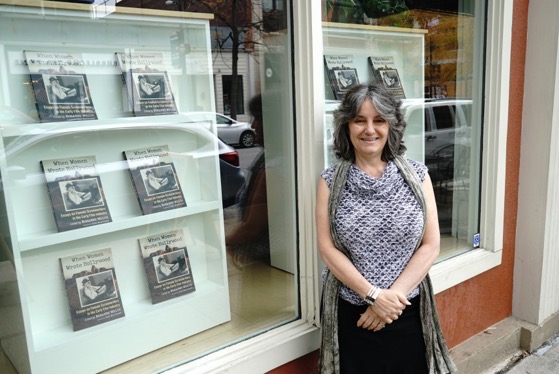
Dr. Rosanne Welch discusses the women in her new book “When Women Wrote Hollywood” which covers female screenwriters from the Silents through the early 1940s when women wrote over 50% of films and Frances Marion was the highest paid screenwriter (male or female) and the first to win 2 Oscars. Yet, she fails to appear in film history books, which continue to regurgitate the myth that male directors did it all – even though it’s been proven that the only profitable movies Cecil B. de Mille ever directed were all written by Jeannie Macpherson film ever won for Best Picture was written by Robert E. Sherwood (who people have heard of, mostly due to his connection to Dorothy Parker) and Joan Harrison.
* A portion of each sale from Amazon.com directly supports our blogs ** Many of these books may be available from your local library. Check it out! † Available from the LA Public Library
“Supplements” was created by Phileon Productions, a female-led production company located in Los Angeles.
In the film the year is 2289 and all that’s left on Planet Earth is the domed city of Old Centauri, roaming sun flares that scorch the land, and the nomadic tribes that mitigate the two. Kiirke comes from one such tribe, and she must travel to Old Centauri, along with her brother, to seek a small fortune to save her family. (Now if THAT doesn’t draw you in, we are at a total loss for what will!)
Wherever you go, you find Monkees fans and the Denver Popular Culture Con was no different. Amid rooms full of caped crusaders and cosplay creations, I was initially not sure how many folks would attend a talk on a TV show from the 1960s – but happily I was met by a nice, engaged audience for my talk on Why the Monkees Matter – and afterward they bought books! What more could an author ask for?
Transcript
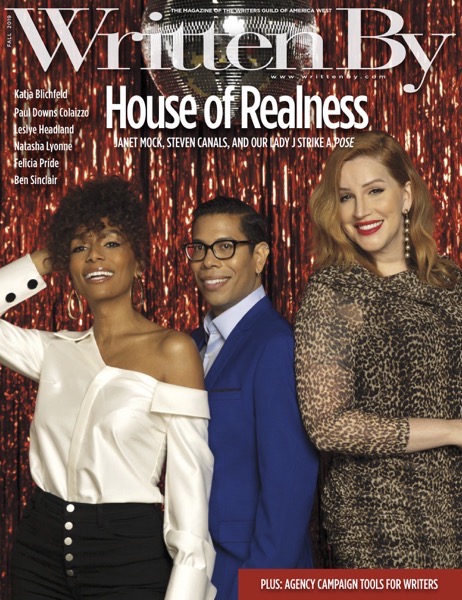
First thing is a little bit of who I am. On television I wrote for Touched By An Angel, Beverly Hills 90210, and Picket Fences and ABC’s News Nightline. When I decided to get into academia and start writing first of all the Monkees book obviously but then I’ve written a lot of stuff about women in history, women in popular culture, very interested in that and you’ll be hopefully interested in finding out but there is some things to be said about feminism on The Monkees in the 60s which nobody would have expected until I studied it. I also do book reviews for the Journal of Screenwriting. I’m their book review editor and I work on Written By magazine on the editorial board. That’s a magazine for members of the Writers Guild. So my deep focus is generally — words matter — writers matter — and women writers matter and we’re gonna find out that on The Monkees, there was the first female television writer who didn’t need a male partner in order to be have job which is sounds a little crazy to us today but was true back in the day.
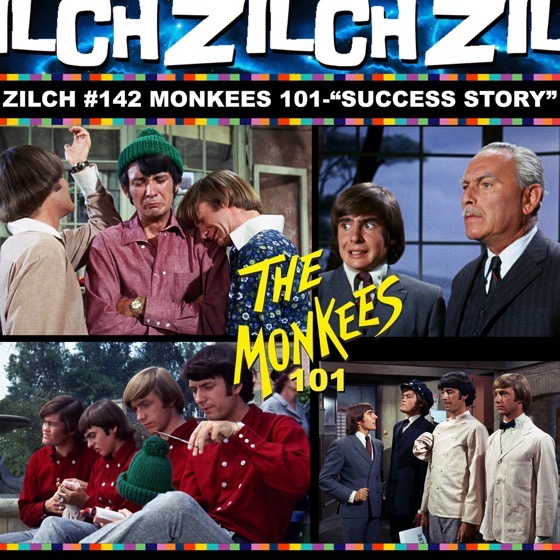
A hit television show about a fictitious rock band, The Monkees (1966-1968) earned two Emmys–Outstanding Comedy Series and Outstanding Directorial Acheivement in Comedy.
Capitalizing on the show’s success, the actual band formed by the actors, at their peak, sold more albums than The Beatles and The Rolling Stones combined, and set the stage for other musical TV characters from The Partridge Family to Hannah Montana. In the late 1980s, the Monkees began a series of reunion tours that continued into their 50th anniversary.
This book tells the story of The Monkees and how the show changed television, introducing a new generation to the fourth-wall-breaking slapstick created by Laurel and Hardy and the Marx Brothers.
Its creators contributed to the innovative film and television of 1970s with projects like Bob & Carol & Ted & Alice, The Mary Tyler Moore Show, Laugh-In and Welcome Back, Kotter. Immense profits from the show, its music and its merchandising funded the producers’ move into films such as Head, Easy Riderand Five Easy Pieces.
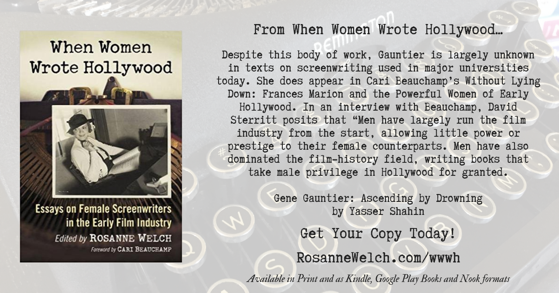
Despite this body of work, Gauntier is largely unknown in texts on screenwriting used in major universities today. She does appear in Cari Beauchamp’s Without Lying Down: Frances Marion and the Powerful Women of Early Hollywood. In an interview with Beauchamp, David Sterritt posits that “Men have largely run the film industry from the start, allowing little power or prestige to their female counterparts. Men have also dominated the film-history field, writing books that take male privilege in Hollywood for granted.
Gene Gauntier: Ascending by Drowning
by Yasser Shahin
* A portion of each sale from Amazon.com directly supports our blogs
** Many of these books may be available from your local library. Check it out!
† Available from the LA Public Library
This one allowed me to riff on some of my favorite female science fiction writers across time, whether they be novelists or television writers. It also opened up a good conversation on what art we support and include in our lives – and what that art says to us and about us. — Rosanne
Transcript:
We get around to this point and Pat Murphy. She can have her name on the book because why? (Audience) Her name is unisex. (Welch) Pat is one of those great names. Is it a boy or girl? You don’t know looking at it. So then she has to decide, do you put your picture on the inside cover where it’s the author’s thing or you don’t and then you leave it up to people to assume that Pat must be a boy because you know. This is a pretty kind of interesting book. Must be written by a boy. I think that’s funny. It’s also one of my pet peeves when you’re watching movies or TV shows and there’s a really tough woman character. She’s always got a name that can be a boy’s. She’s always Samantha so she can be Sam right or she’s Patricia so she can see Pat. There’s always that name, seriously I want Tiffany to be really cool and I want her to do something amazing or Betsy. I don’t want it always to be a name that could be a boy’s name if you want, and that happens all the time.
* A portion of each sale from Amazon.com directly supports our blogs ** Many of these books may be available from your local library. Check it out!
Come join Cinematographer Sarah Phillips (and Stephens College MFA in TV and Screenwriting alum (inaugural class of 2017)) as she talks about how to help (or hurt) your story structure with the way you (as a director, writer, actor, or producer) work with your cinematographer, and the way you craft light and character together.
Sarah Phillips is a cinematographer (and camera nerd) in Los Angeles who works in many areas of film. She primarily shoots independent films, including scripted features, documentaries, and short films, but also can be found the camera departments of national commercials and music videos, because her passion for writing story with light supersedes that of genre and form. sarahphillipscamera.com
Key Takeaways:
Learn about story Structure as a Cinematographer
Hear how to craft light and character together
Discuss working with directors, writers, actors and producers on building story structure
Today’s guest is Stacia Raymond, author of Grace Notes: A Novel Based on the Life of Henry Mancini
With a legacy that resonates today in the work of contemporary film composers, the magnanimous Henry Mancini left an indelible mark on the culture. Over the course of a life cut short, Mancini helped liberate a concentration camp at the end of WWII, created some of the most iconic film and television themes ever written, and unseated the Beatles from the number one spot at the apex of rock and roll.
About the Author
Stacia Raymond is a freelance writer and editor based in Southern California. With more than fifteen years of experience in the film and television industry, Raymond has built a body of work that includes fiction, non-fiction, and ghostwriting for clients in the fields of music, film, and technology. Raymond’s television writing has been produced by CBS, Paramount, and Lifetime, and she has developed projects with Showtime and ABC Family. In 2013, she was awarded a Fellowship with the Puglia Film Commission as part of a program to bring more production to the Southern Italian region.
Major Congratulations to Stephens College MFA in TV and Screenwriting alum Ilona Rossman Ho (Class of 2019) who’s screenplay “Indivisible Mom” has been named a 2019 summer edition BAFF (Big Apple Film Festival) Screenplay Award Winner!
Sarah Mason had a similar thing happen to her. Sarah Mason worked together with her husband Victor Hermann, They got the first Oscar for adaptation. It was for Little Women which of course has been done and done and done over again. They also worked on Stella Dallas and many films in the early period. Again, Victor Herrmann left writing to become a director and he ended up directing the Marx Brothers so he’s a little he appears in a few more film histories. She disappears out of the film histories though she’s got an Oscar to her name and Victor, who outlived his wife, gave an oral history where he said he did most of the writing when they were a team. The problem is if you look at her IMDB list of movies she wrote before marrying him and after he left the team to become a director, she has about 64 films. He alone has written four. So who’s the writer in that team right? it’s not who he says it was unless that’s all you ever read. So Sarah disappears from history, right? I’ve actually met her grandson and interviewed him. He had no idea that that’s what his grandmother did. All he remembers is she really liked Shakespeare and she made him remember whole quotes from Shakespeare before he could go out and play. He had to recite sections of Shakespeare. So don’t tell me she doesn’t have the heart of a writer right? .
Dr. Rosanne Welch discusses the women in her new book “When Women Wrote Hollywood” which covers female screenwriters from the Silents through the early 1940s when women wrote over 50% of films and Frances Marion was the highest paid screenwriter (male or female) and the first to win 2 Oscars. Yet, she fails to appear in film history books, which continue to regurgitate the myth that male directors did it all – even though it’s been proven that the only profitable movies Cecil B. de Mille ever directed were all written by Jeannie Macpherson film ever won for Best Picture was written by Robert E. Sherwood (who people have heard of, mostly due to his connection to Dorothy Parker) and Joan Harrison.
* A portion of each sale from Amazon.com directly supports our blogs ** Many of these books may be available from your local library. Check it out! † Available from the LA Public Library