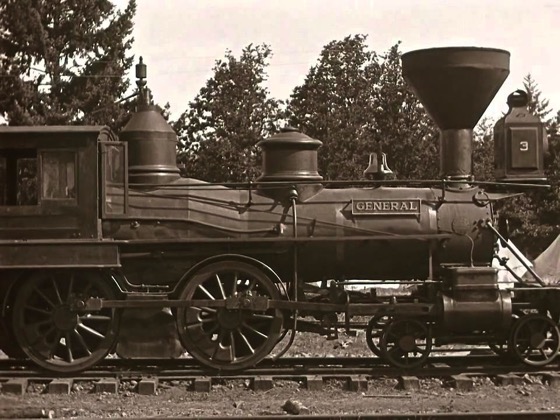
Screenplay by Al Boasberg, Clyde Bruckman, Buster Keaton, Charles Henry Smith, Paul Girard Smith Based on The Great Locomotive Chase by William Pittenger
The General is a 1926 American silent comedy film released by United Artists. It was inspired by the Great Locomotive Chase, a true story of an event that occurred during the American Civil War. The story was adapted from the memoir The Great Locomotive Chase by William Pittenger. The film stars Buster Keaton who co-directed it with Clyde Bruckman.
At the time of its initial release, The General, an action-adventure-comedy made toward the end of the silent era, was not well received by critics and audiences, resulting in mediocre box office returns (about half a million dollars domestically, and approximately one million worldwide). Because of its then-huge budget ($750,000 supplied by Metro chief Joseph Schenck) and failure to turn a significant profit, Keaton lost his independence as a filmmaker and was forced into a restrictive deal with MGM. In 1954 the film entered the public domain (in the USA), owing to the claimant’s failure to renew its copyright registration in the 28th year after publication.[2]
The General has since been reevaluated, and is now often ranked among the greatest American films ever made.[3] — Wikipedia
Learn more about Buster Keaton with these books
††
* A portion of each sale from Amazon.com directly supports our blogs ** Many of these books may be available from your local library. Check it out! † Available at the LA Public Library
Backward again we go to a boy writing the show. The boyfriends always wait until the last minute to call the girls for a date because they have to see if there is good surf. If there’s good surf they won’t call them for dates. Gidget decides that that’s being treated dis-respectively. We should all make a plan to do something else so when the boys call at the last minute we’re already busy. So they do that. They have a sleepover party at her house. The problem is, the girlfriends all get calls from their boyfriends and they leave the party. Better to be with boys than to be with their girlfriends, right? So her plan fails, which is kind of sad and at the end, this is her weak…weak ass…lesson. “As far as courtesy and respect are concerned, if a boy meets you halfway, that’s good enough.” I don’t understand. You know, I love guys. Hello, I’m married to a guy. I have a son, but what is this writing women as little weak girls. It is very sad.
“How Gidget Got Into the Girl Ghetto by Accident (and How We Can Get Her Out of it): Demoting Gidget: The Little Girl with Big Ideas from Edgy Coming of Age Novel to Babe on the Beach Genre Film via Choices made in the Adaptation Process.”
It’ a long title, as I joke up front, but covers the process of adapting the true life story of Kathy Kohner (nicknamed ‘Gidget’ by the group of male surfers who she spent the summers with in Malibu in the 1950s) into the film and television series that are better remembered than the novel. The novel had been well-received upon publication, even compared to A Catcher in the Rye, but has mistakenly been relegated to the ‘girl ghetto’ of films. Some of the adaptations turned the focus away from the coming of age story of a young woman who gained respect for her talent at a male craft – surfing – and instead turned the focus far too much on Kathy being boy crazy.
Along the way I found interesting comparisons between how female writers treated the main character while adapting the novel and how male writers treated the character.
Dr. Rosanne Welch teaches the History of Screenwriting and One-Hour Drama for the Stephens College MFA in Screenwriting.
Writing/producing credits include Beverly Hills 90210, Picket Fences, ABCNEWS: Nightline and Touched by an Angel. In 2016 she published the book Why The Monkees Matter: Teenagers, Television and American Pop; co-edited Women in American History: A Social, Political, and Cultural Encyclopedia; and placed “Transmitting Culture Transnationally Via the Characterization of Parents in Police Procedurals” in the New Review of Film and Television Studies. Essays appear in Torchwood Declassified: Investigating Mainstream Cult Television and Doctor Who and Race: An Anthology. Welch serves as Book Reviews editor for Journal of Screenwriting and on the Editorial Advisory Board for Written By magazine, the magazine of the Writers Guild.
The Screenwriting Research Network is a research group consisting of scholars, reflective practitioners and practice-based researchers interested in research on screenwriting. The aim is to rethink the screenplay in relation to its histories, theories, values and creative practices.
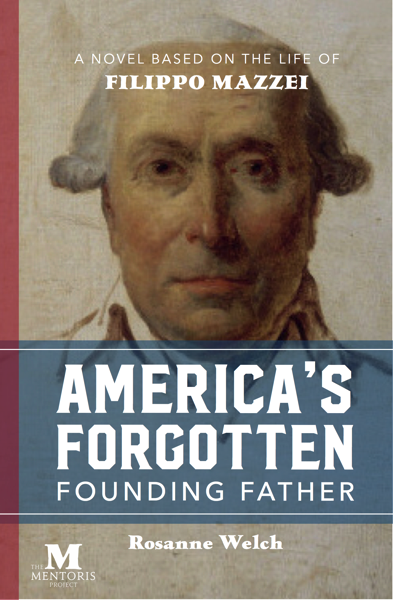
Livorno? The coast? Could he go that far? Filippo remembered all the days of sitting with his tutor dreaming of going even farther, even to the American colonies. How odd that they suddenly popped into his head again. How better to begin a life’s journey across the ocean than by living near one for a while?
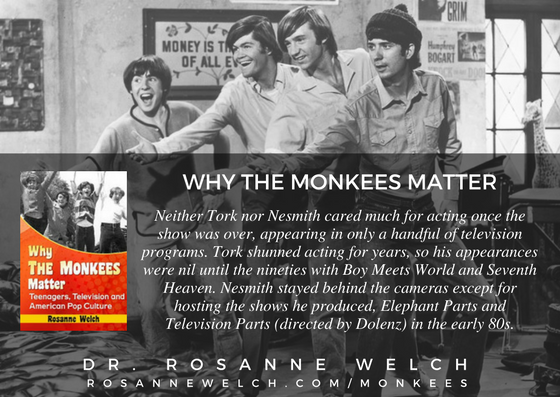
Neither Tork nor Nesmith cared much for acting once the show was over, appearing in only a handful of television programs. Tork shunned acting for years, so his appearances were nil until the nineties with Boy Meets World and Seventh Heaven. Nesmith stayed behind the cameras except for hosting the shows he produced, Elephant Parts and Television Parts (directed by Dolenz) in the early 80s.
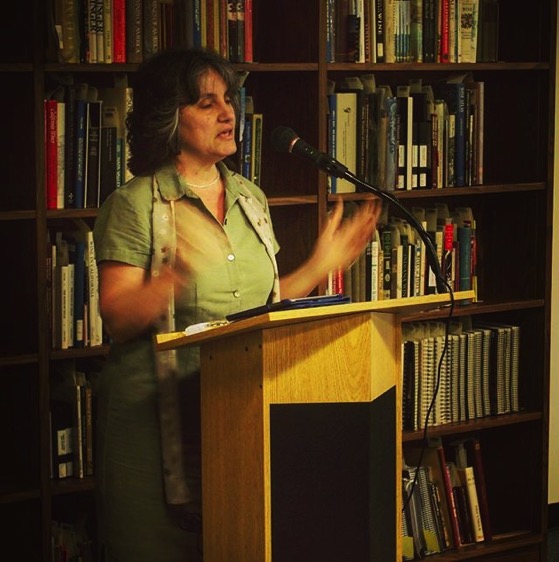
If we flip back to Flippen, and now she’s taking her friend seriously. This friend, Larue, is being bullied at school so talk about an interesting theme that is still very prevalent right? And it’s her friend Gidget who stands by her and doesn’t care what the other girls think. “You’re still my friend.” It’s because Larue likes to ride horses more than she wants to get a boyfriend and the girls don’t respect her for that. So again, a girl interested in a sport that she wants to be better at. That’s the kind of friend Gidget wants to have, not a friend who goes shopping and kisses boys all the time. So she takes care of her friend, the Dad helps out, which I think is really pretty, and in the end, again, we go back to, “As long as a girl’s got something to love, all’s right with the world and it can be an ocean, a horse, a friend of just incidentally, a boy.” Men are not the most important catch in her life. I think that’s really cool. Written by a woman in a TV show.
“How Gidget Got Into the Girl Ghetto by Accident (and How We Can Get Her Out of it): Demoting Gidget: The Little Girl with Big Ideas from Edgy Coming of Age Novel to Babe on the Beach Genre Film via Choices made in the Adaptation Process.”
It’ a long title, as I joke up front, but covers the process of adapting the true life story of Kathy Kohner (nicknamed ‘Gidget’ by the group of male surfers who she spent the summers with in Malibu in the 1950s) into the film and television series that are better remembered than the novel. The novel had been well-received upon publication, even compared to A Catcher in the Rye, but has mistakenly been relegated to the ‘girl ghetto’ of films. Some of the adaptations turned the focus away from the coming of age story of a young woman who gained respect for her talent at a male craft – surfing – and instead turned the focus far too much on Kathy being boy crazy.
Along the way I found interesting comparisons between how female writers treated the main character while adapting the novel and how male writers treated the character.
Dr. Rosanne Welch teaches the History of Screenwriting and One-Hour Drama for the Stephens College MFA in Screenwriting.
Writing/producing credits include Beverly Hills 90210, Picket Fences, ABCNEWS: Nightline and Touched by an Angel. In 2016 she published the book Why The Monkees Matter: Teenagers, Television and American Pop; co-edited Women in American History: A Social, Political, and Cultural Encyclopedia; and placed “Transmitting Culture Transnationally Via the Characterization of Parents in Police Procedurals” in the New Review of Film and Television Studies. Essays appear in Torchwood Declassified: Investigating Mainstream Cult Television and Doctor Who and Race: An Anthology. Welch serves as Book Reviews editor for Journal of Screenwriting and on the Editorial Advisory Board for Written By magazine, the magazine of the Writers Guild.
The Screenwriting Research Network is a research group consisting of scholars, reflective practitioners and practice-based researchers interested in research on screenwriting. The aim is to rethink the screenplay in relation to its histories, theories, values and creative practices.
Then he turned to his mother sadly. “Good-bye, mother. May God reward you as you deserve for your behavior toward me. If you will not listen to me, if you will not see the error of these choices, I will spend the rest of my life proving you have given all your love to the wrong son.”
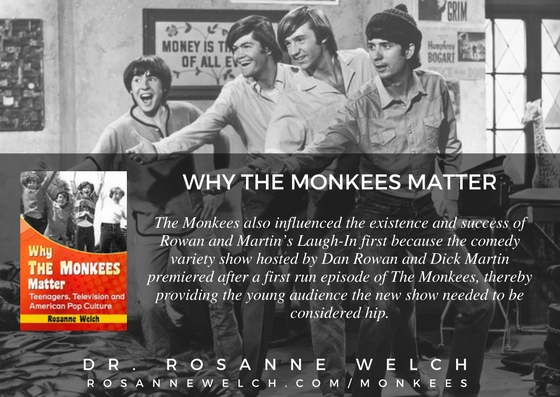
The Monkees also influenced the existence and success of Rowan and Martin’s Laugh-In first because the comedy variety show hosted by Dan Rowan and Dick Martin premiered after a first run episode of The Monkees, thereby providing the young audience the new show needed to be considered hip.


![18 Lack of Chivalry from How Gidget Got Into the Girl Ghetto with Dr. Rosanne Welch [Video] (0:50)](https://rosannewelch.com/wp-content/uploads/2018/04/gidget-srn-18-chivalry.jpeg)





![17 When Women Write Gidget from How Gidget Got Into the Girl Ghetto with Dr. Rosanne Welch [Video] (0:54)](https://rosannewelch.com/wp-content/uploads/2018/04/gidget-srn-17-women-gidget.jpeg)

 and Follow