A History of Screenwriting – 36 in a series – Intolerance (1916) – D.W. Griffith
A History of Screenwriting – 36 in a series – Intolerance (1916) – D.W. Griffith

A History of Screenwriting - 36 in a series - Intolerance (1916) - D.W. Griffith

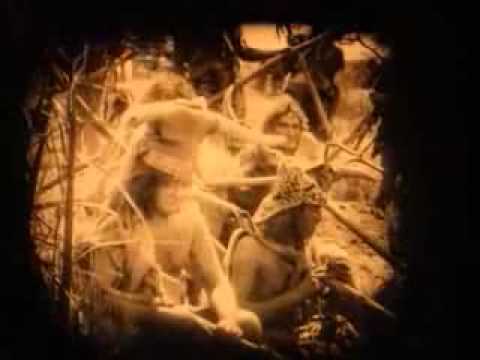
Intolerance is a 1916 epic silent film directed by D. W. Griffith. Subtitles include Love’s Struggle Throughout the Ages and A Sun-Play of the Ages.[2][3]

Widely regarded as one of the great masterpieces of the silent era, as well as one of the first art films,[3] the three-and-a-half-hour epic intercuts four parallel storylines, each separated by several centuries: (1) a contemporary melodrama of crime and redemption, (2) a Judean story: Christ‘s mission and death, (3) a French story: the events surrounding the St. Bartholomew’s Day massacre of 1572, and (4) a Babylonian story: the fall of the Babylonian Empire to Persia in 539 BC. Each story had its own distinctive color tint in the original print.[3] The scenes are linked by shots of a figure representing Eternal Motherhood, rocking a cradle.[3]

Intolerance was made partly in response to criticism of Griffith’s previous film, The Birth of a Nation (1915),[4] which was criticized by the NAACP and other groups as perpetuating racial stereotypes and glorifying the Ku Klux Klan.[5] It was not—as is commonly implied—an apology for the racism of his earlier film;[6]in numerous interviews, Griffith made clear that the film’s title and overriding themes were meant as a response to those who he felt had been intolerant of him in condemning The Birth of a Nation.[7] In the years following its release, Intolerance would strongly influence European film movements despite its lack of commercial success domestically. —Wikipedia


* A portion of each sale from Amazon.com directly supports our blogs ** Many of these books may be available from your local library. Check it out! 


I teach several classes for the Stephens College Low-Residency MFA in Screenwriting, including History of Screenwriting. In fact, I created the curriculum for that course from scratch and customized it to this particular MFA in that it covers ‘Screenwriting’ (not directors) and even more specifically, the class has a female-centric focus.  As part History of Screenwriting I, the first course in the four-class series, we focus on the early women screenwriters of the silent film era  who male historians have, for the most part, quietly forgotten in their books. In this series, I share with you some of the screenwriters and films that should be part of any screenwriters education. I believe that in order  to become a great screenwriter, you need to understand the deep history of screenwriting and the amazing people who created the career. — Dr. Rosanne Welch

Women in American History : A Social, Political and Cultural Encyclopedia and Document Collection

My ABC-CLIO catalog arrived while we were off in New Zealand at the Screenwriting Research Network Conference and inside it was this page for my latest encyclopedia — which is now available for purchase. Please take am moment to recommend it to your local librarian.

Women in American History : A Social, Political and Cultural Encyclopedia and Document Collection

Click for larger image

Purchase from ABC-CLIO Web SIte

Purchase from Amazon.com


A History of Screenwriting – 35 in a series – Gertie the Dinosaur (1914)

A History of Screenwriting – 35 in a series – Gertie the Dinosaur (1914)

A History of Screenwriting - 35 in a series - Gertie the Dinosaur (1914)

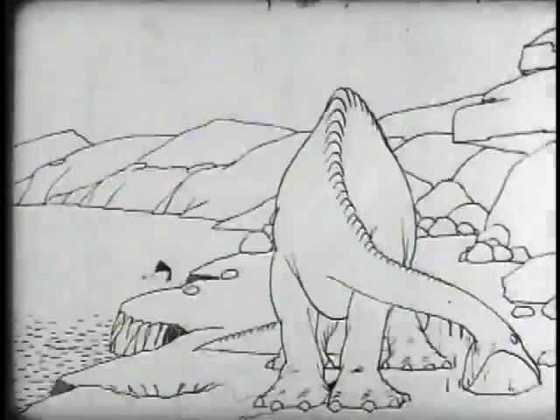
Gertie the Dinosaur is a 1914 animated short film by American cartoonist and animator Winsor McCay. It is the earliest animated film to feature a dinosaur. McCay first used the film before live audiences as an interactive part of his vaudeville act; the frisky, childlike Gertie did tricks at the command of her master. McCay’s employer William Randolph Hearst later curtailed McCay’s vaudeville activities, so McCay added a live-action introductory sequence to the film for its theatrical release. McCay abandoned a sequel, Gertie on Tour (c. 1921), after producing about a minute of footage.

Although Gertie is popularly thought to be the earliest animated film, McCay had earlier made Little Nemo (1911) and How a Mosquito Operates (1912). The American J. Stuart Blacktonand the French Émile Cohl had experimented with animation even earlier; Gertie being a character with an appealing personality distinguished McCay’s film from these earlier “trick films”. Gertie was the first film to use animation techniques such as keyframes, registration marks, tracing paper, the Mutoscope action viewer, and animation loops. It influenced the next generation of animators such as the Fleischer brothers, Otto Messmer, Paul Terry, and Walt Disney. John Randolph Bray unsuccessfully tried to patent many of McCay’s animation techniques and is said to have been behind a plagiarized version of Gertie that appeared a year or two after the original. Gertie is the best preserved of McCay’s films—some of which have been lost or survive only in fragments—and has been preserved in the U.S. Library of Congress‘ National Film Registry as being “culturally, historically, or aesthetically significant”. — Wikipedia


* A portion of each sale from Amazon.com directly supports our blogs ** Many of these books may be available from your local library. Check it out! 


I teach several classes for the Stephens College Low-Residency MFA in Screenwriting, including History of Screenwriting. In fact, I created the curriculum for that course from scratch and customized it to this particular MFA in that it covers ‘Screenwriting’ (not directors) and even more specifically, the class has a female-centric focus.  As part History of Screenwriting I, the first course in the four-class series, we focus on the early women screenwriters of the silent film era  who male historians have, for the most part, quietly forgotten in their books. In this series, I share with you some of the screenwriters and films that should be part of any screenwriters education. I believe that in order  to become a great screenwriter, you need to understand the deep history of screenwriting and the amazing people who created the career. — Dr. Rosanne Welch

Quotes from “Why The Monkees Matter” by Dr. Rosanne Welch – 71 in a series – Monkeemen

** Buy “Why The Monkees Matter” Today **

Quotes from

The Monkees also dabbled in super hero adventures by creating the Monkeemen. Because shots of them in Monkeemen costumes appeared in the series’ opening credits, it cemented the idea that the Monkeemen appeared more frequently than they did. Yet only three episodes involved Monkeemen: “I’ve Got a Little Song Here”, “Monkee Chow Mein”, and “I was a 99 lb Weakling”.

from Why The Monkees Mattered by Dr. Rosanne Welch —  Buy your Copy today!

 Why The Monkees Matter: Teenagers, Television and American Pop Culture


McFarland (Direct from Publisher) | Amazon | Kindle Edition | Nook Edition

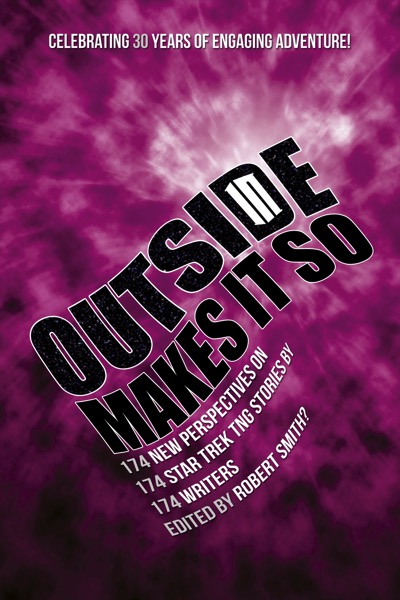
Dr. Rosanne Welch’s Latest Essay Appears in “OUTSIDE IN MAKES IT SO: 174 New Perspectives on 174 Star Trek TNG Stories by 174 Writers”

Dr. Rosanne Welch’s Latest Essay Appears in “OUTSIDE IN MAKES IT SO: 174 New Perspectives on 174 Star Trek TNG Stories by 174 Writers”

My essay is on the 3rd Season, premiere episode “Evolution” by Michael Piller – because I was his script typist when he wrote that as a freelancer and it became his path into getting the job and eventually running the show. But I also get to comment on Beverly Crusher as part of the evolution of working moms on TV – and Will Wheaton as an example of evolving his brand over the course of a long career. — Rosanne

Dr. Rosanne Welch's Latest Essay Appears in

This item will be released on September 28, 2017.

PRE-ORDER NOW

Celebrating 30 years of Star Trek: The Next Generation, Outside In Makes It So is a collection of 174 reviews, one for every story of the show, the four movies and a few bonus extras. Well, we say “reviews,” but we mean that loosely: within these pages, you’ll find scripts, recipes, a Monty Python sketch, a psych test, gossip columns, newspaper ads, a sitcom, a eulogy and a daily log from Riker’s beard, not to mention insightful and thoughtful articles examining Picard-era Star Trek from just about every angle imaginable…and then some!


Dr. Rosanne Welch with her WGA Panel Participants from “Crafting Strong Female Characters”

One attendee comment made my evening, “This panel was both inspirational and aspirational!”

From The Research Vault: Why Sinatra Matters by Peter Hamill

From The Research Vault: Why Sinatra Matters by Peter Hamill

In honor of Sinatra’s 100th birthday, Pete Hamill’s classic tribute returns with a new introduction by the author.

In this unique homage to an American icon, journalist and award-winning author Pete Hamill evokes the essence of Sinatra–examining his art and his legend from the inside, as only a friend of many years could do. Shaped by Prohibition, the Depression, and war, Francis Albert Sinatra became the troubadour of urban loneliness. With his songs, he enabled millions of others to tell their own stories, providing an entire generation with a sense of tradition and pride belonging distinctly to them.

With a new look and a new introduction by Hamill, this is a rich and touching portrait that lingers like a beautiful song. — Amazon


Why The Monkees Matter: Teenagers, Television and American Pop Culture

Order Your Copy Now!

A History of Screenwriting – 34 in a series – The Squaw Man (1914)

A History of Screenwriting – 34 in a series – The Squaw Man (1914)

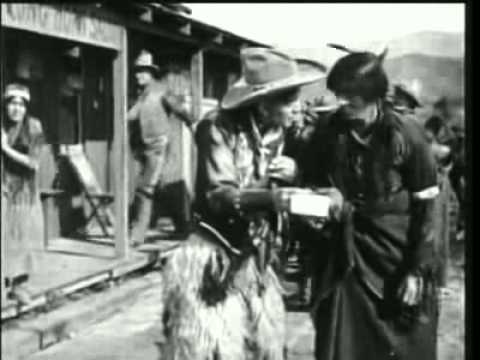
Directed by Oscar Apfel and Cecil B. DeMille and produced by DeMille and Jesse L. Lasky, the screenplay was adapted by Beulah Marie Dix from the 1905 stage play, of the same name, written by Edwin Milton Royle.

This first screen version of the story was the legendary DeMille’s first movie assignment. It also holds the distinction of being the first feature-length movie filmed specifically in Hollywood. DeMille wanted to emphasize the outdoors and wanted to shoot the movie in a place that had exotic scenery and great vistas. Initially he traveled to Flagstaff, Arizona to film the movie.[3] After seeing the vast amount of mountains near Flagstaff; the filming was moved to the Los Angeles area. It was not the first film to be made in the Los Angeles area, and film historians agree that shorts had previously been filmed in Hollywood, with In Old California considered the earliest. Harbor scenes were shot in San Pedro, California and the western saloon set was built beside railroad tracks in the San Fernando Valley. Footage of cattle on the open range were shot at Keen Camp near Idyllwild, California, while snow scenes were shot at Mount Palomar.[4] Cecil B. DeMille felt that lighting in a movie was extremely important and viewed it as the visual and emotional foundation to build his image. He believed that lighting was to a film as “music is to an opera”.[1]

The Squaw Man went on to become the only movie successfully filmed three times by the same director/producer, DeMille. He filmed a silent remake in 1918, and a talkie version in 1931. The Squaw Man was 74 minutes long and generated $244,700 in profit.[1] — Wikipedia


* A portion of each sale from Amazon.com directly supports our blogs
** Many of these books may be available from your local library. Check it out! 


I teach several classes for the Stephens College Low-Residency MFA in Screenwriting, including History of Screenwriting. In fact, I created the curriculum for that course from scratch and customized it to this particular MFA in that it covers ‘Screenwriting’ (not directors) and even more specifically, the class has a female-centric focus.  As part History of Screenwriting I, the first course in the four-class series, we focus on the early women screenwriters of the silent film era  who male historians have, for the most part, quietly forgotten in their books. In this series, I share with you some of the screenwriters and films that should be part of any screenwriters education. I believe that in order  to become a great screenwriter, you need to understand the deep history of screenwriting and the amazing people who created the career. — Dr. Rosanne Welch
Quotes from “Why The Monkees Matter” by Dr. Rosanne Welch – 70 in a series – Gangsters

** Buy “Why The Monkees Matter” Today **

Quotes from

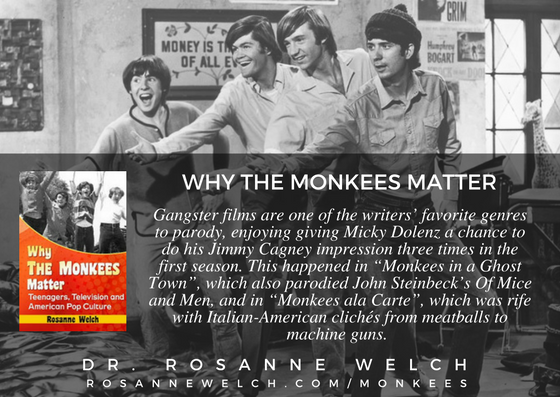
Gangster films are one of the writers’ favorite genres to parody, enjoying giving Micky Dolenz a chance to do his Jimmy Cagney impression three times in the first season. This happened in “Monkees in a Ghost Town”, which also parodied John Steinbeck’s Of Mice and Men, and in “Monkees ala Carte”, which was rife with Italian-American clichés from meatballs to machine guns. 

from Why The Monkees Mattered by Dr. Rosanne Welch —  Buy your Copy today!

 Why The Monkees Matter: Teenagers, Television and American Pop Culture


McFarland (Direct from Publisher) | Amazon | Kindle Edition | Nook Edition

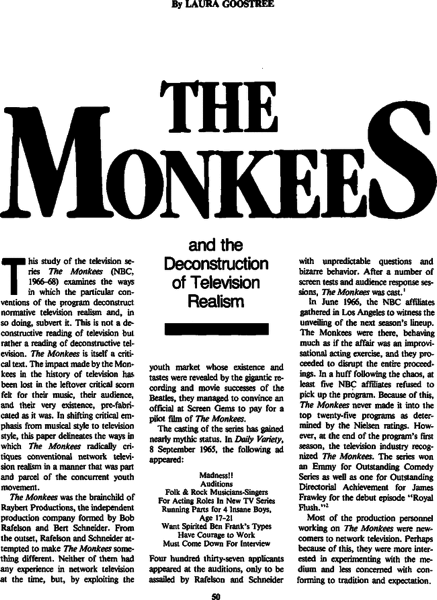
From The Research Vault: The Monkees” and the Deconstruction of Television Realism. Journal of Popular Film & Television

From The Research Vault: The Monkees” and the Deconstruction of Television Realism. Journal of Popular Film & Television

From The Research Vault: The Monkees 

Why The Monkees Matter: Teenagers, Television and American Pop Culture

Order Your Copy Now!