10 Randy Scouse Git and the War from How The Monkees Changed Television [Video] (0:53)

What this entire presentation — How The Monkees Changed Television with Rosanne Welch, PhD (Complete Presentation and Q&A) [Video] (45:06)

10 Randy Scouse Git and the War from How The Monkees Changed Television

Rosanne Welch, PhD, Author of Why The Monkees Matter, presents “How The Monkees Changed Television” at a Cal State Fullerton Lunch Lecture on May 8, 2018.

In this talk, she shows how The Monkees, and specifically their presence on television, set the stage for large changes to come in the late 1960s.


Transcript

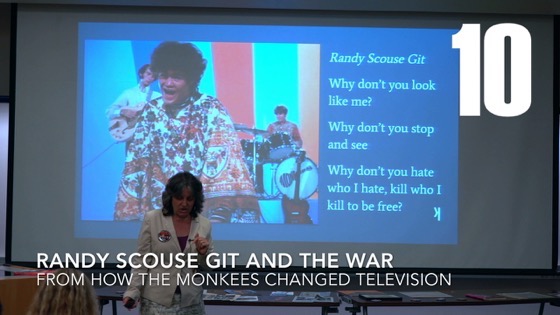
This is a song that Mickey’s famous for singing. He wrote it while he was in England. He heard this phrase — Randy Scouse Git — He didn’t know what it meant. He just thought they were funny words. It’s actually — it’s cussing in English. It was from a TV Show that is the TV show that, in America, we based All In The Family on, rights so it was older man yelling at his son-in-law calling him a randy scouse git. Randy means you have too much sex and scouse git are bad words. He just thought they were funny words so he came back and wrote this song, but think about the lyrics…

Why don’t you hate who I hate
Kill who I kill to be free

If that’s not a Vietnam protest war song I don’t know what is and they got away with singing that on broadcast television in their very trippy hippie clothes. So I couldn’t believe how much they got away with frankly in terms of messages.


 Why The Monkees Matter: Teenagers, Television and American Pop Culture


McFarland (Direct from Publisher) | Amazon | Kindle Edition | Nook Edition

Want to use “Why The Monkees Matter” in your classroom?

Order Examination Copies, Library and Campus Bookstore orders directly from McFarland

McFarland Company logo


About Rosanne Welch, PhD

Rosanne Welch, PhD is a writer, producer and university professor with credits that include Beverly Hills 90210, Picket Fences, Touched by an Angel and ABC NEWS/Nightline. Other books include Why The Monkees Matter: Teenagers, Television and American Pop Culture (McFarland, 2017) and Women in American History: A Social, Political, and Cultural Encyclopedia and Document Collection (ABC-CLIO, 2017), named to the 2018 Outstanding References Sources List, by the Reference and User Services Association (RUSA), a division of the American Library Association. Welch has also published chapters in Torchwood Declassified: Investigating Mainstream Cult Television (I.B.Tauris) and The American Civil War on Film and TV: Blue and Gray in Black and White and Color (Lexington Books, 2018) and essays in Doctor Who and Race: An Anthology and Outside In Makes it So, and Outside in Boldly Goes (both edited by Robert Smith). By day she teaches courses on the history of screenwriting and on television writing for the Stephens College MFA in Screenwriting programs. Her talk “The Importance of Having a Female Voice in the Room” at the 2016 TEDxCPP is available on YouTube.

21 Strong Female Companions In The Past from Gender Diversity in the Who-niverse [Video] (0:51)

Watch this entire presentation: Gender Diversity in the Who-niverse: Paving the Way for a Lady Doctor with Dr. Rosanne Welch [Video] (36:58)

21 Strong Female Companions In The Past from Gender Diversity in the Who-niverse

For her 5th Doctor Who lecture to the CPP community, Dr. Rosanne Welch discusses how society – and the show’s writing staff – prepared the audience for a major change in this 50-year franchise – the creation of the first Lady Doctor!

Transcript:

She really wants people, of course not, to be upset or worried about it. Which is important. Now, as far as I’m concerned when you think about gender, females have always been strong characters on Doctor Who. Going back to the early days and all these women have had really important jobs. From the very beginning, Susan, who was the first companion, his granddaughter, left because she wanted to rebuild the planet that she had seen destroyed. So she wanted to put her efforts into helping other people and using her talents for that. Right? She could have continued adventuring and having a party with her grandpa and all that meeting The Mayans, The Aztecs and what have you, but she wanted to do something more important and that’s a strength, right? I think that’s a woman who has active strength being shown. Then, as I mentioned, Agent Sara Kingdom. She switched sides. So she chose the good. So she’s a little bit like Darth Vader flipping at the end finally.

Follow Dr. Welch on Twitter and Instagram
https://twitter.com/rosannewelchhttp://instagram.com/drrosannewelch


Rosanne Welch, PhD

Rosanne Welch PhD teaches the History of Screenwriting and One-Hour Drama for the Stephens College MFA in Screenwriting.

Writing/producing credits include Beverly Hills 90210, Picket Fences, ABCNEWS: Nightline and Touched by an Angel. In 2016 she published the book Why The Monkees Matter: Teenagers, Television and American Pop; co-edited Women in American History: A Social, Political, and Cultural Encyclopedia; and placed “Transmitting Culture Transnationally Via the Characterization of Parents in Police Procedurals” in the New Review of Film and Television Studies. Essays appear in Torchwood Declassified: Investigating Mainstream Cult Television and Doctor Who and Race: An Anthology. Welch serves as Book Reviews editor for Journal of Screenwriting and on the Editorial Advisory Board for Written By magazine, the magazine of the Writers Guild.

Watch Dr. Welch’s talk “The Importance of Having a Female Voice in the Room” at the 2016 TEDxCPP.

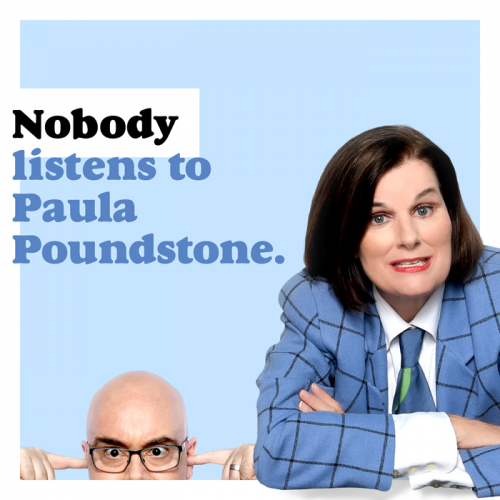
New Podcast: Nobody Listens to Paula Poundstone – Check it out!

Check out comedian (and friend to the Stephens College MFA in TV and Screenwriting program) Paula Poundstone’s new podcast Nobody Listens to Paula Poundstone. She’ll be holding entertaining and engaging conversations as she interviews experts in various interesting fields.

New Podcast: Nobody Listen to Paula Poundstone - Sponsored by The Stephens College MFA In Screenwriting Program

GUESTS
Mario Soto- Sports Psychologist
@mariosportsdoc

Melissa Brandzel – Grammarian
@MediaChickEdits

John Grab – Trombone
John doesn’t have a large social media footprint, but he often plays with The Orchestre Surreal

During this inaugural episode at 19:45 you’ll hear a great add for our Stephens College MFA in TV and Screenwriting – between funny conversations first with sports psychiatrist Mario Soto followed by grammarian Melissa Brandzel. In Paula’s typical style she’s funny off the cuff, finding different comic ways to interpret the helpful tips offered by her experts.

I also noticed this fun request on their website…

“We need a theme song!  We launched this show without a theme song, and are turning to YOU, dear listener, to find one. If you have a tune in your head that you think should kick off our show each week, please reach out to us via our website.” So if you’re a local musician, check it out – and leave them a comment if you happen to be an expert in some fun field. Maybe they’ll have you on the show!

Visit the Nobody Listens to Paula Poundstone Web Site to subcribe via iTunes or your favorite Podcast program

Find out more about the Stephens College MFA in TV and Screenwriting

Find out more about the Stephens College MFA in TV and Screenwriting

09 Counterculture and The Monkees from How The Monkees Changed Television [Video] (0:58)

What this entire presentation — How The Monkees Changed Television with Rosanne Welch, PhD (Complete Presentation and Q&A) [Video] (45:06)

09 Counterculture and The Monkees from How The Monkees Changed Television

Rosanne Welch, PhD, Author of Why The Monkees Matter, presents “How The Monkees Changed Television” at a Cal State Fullerton Lunch Lecture on May 8, 2018.

In this talk, she shows how The Monkees, and specifically their presence on television, set the stage for large changes to come in the late 1960s.


Transcript

Back in the day — I just mentioned the war — they did have many moments where they referenced the war — the war on poverty — and President Lyndon Johnson and they mentioned particularly — there was a great episode where they were playing dominoes and they dropped all the dominoes and then Davy Jones said to Peter Tork “what do you call this game?” and Peter Tork said “Southeast Asia” and nobody cut that, right, because nobody who is a censor at the network understood what it meant which is pretty shocking if you ask me.

This is Dr. Timothy Leary who was famous back in the day for dropping LSD and whatnot and taking experiments with the psyche and he was watching the program and defining it and recognizing that it was far deeper than anyone else had given it the thought before. So already in the 60s people in the know knew that this was something different and worth paying attention to.


 Why The Monkees Matter: Teenagers, Television and American Pop Culture


McFarland (Direct from Publisher) | Amazon | Kindle Edition | Nook Edition

Want to use “Why The Monkees Matter” in your classroom?

Order Examination Copies, Library and Campus Bookstore orders directly from McFarland

McFarland Company logo


About Rosanne Welch, PhD

Rosanne Welch, PhD is a writer, producer and university professor with credits that include Beverly Hills 90210, Picket Fences, Touched by an Angel and ABC NEWS/Nightline. Other books include Why The Monkees Matter: Teenagers, Television and American Pop Culture (McFarland, 2017) and Women in American History: A Social, Political, and Cultural Encyclopedia and Document Collection (ABC-CLIO, 2017), named to the 2018 Outstanding References Sources List, by the Reference and User Services Association (RUSA), a division of the American Library Association. Welch has also published chapters in Torchwood Declassified: Investigating Mainstream Cult Television (I.B.Tauris) and The American Civil War on Film and TV: Blue and Gray in Black and White and Color (Lexington Books, 2018) and essays in Doctor Who and Race: An Anthology and Outside In Makes it So, and Outside in Boldly Goes (both edited by Robert Smith). By day she teaches courses on the history of screenwriting and on television writing for the Stephens College MFA in Screenwriting programs. Her talk “The Importance of Having a Female Voice in the Room” at the 2016 TEDxCPP is available on YouTube.

20 More Preparations For A Lady Doctor for Lady Doctor from Gender Diversity in the Who-niverse [Video] (1:04)

Watch this entire presentation: Gender Diversity in the Who-niverse: Paving the Way for a Lady Doctor with Dr. Rosanne Welch [Video] (36:58)

20 More Preparations For A Lady Doctor for Lady Doctor from Gender Diversity in the Who-niverse

For her 5th Doctor Who lecture to the CPP community, Dr. Rosanne Welch discusses how society – and the show’s writing staff – prepared the audience for a major change in this 50-year franchise – the creation of the first Lady Doctor!

Transcript:

Then he wrote this lovely short piece called “Night of the Doctor” which blended the movie — that was not very good, back in the day — with the modern story and again gave us the concept that regeneration could change your gender. So they’ve been laying the groundwork. They had to warm us up to get us ready for this and it’s all the writers that did that work. Then, Chris Chibnall took over as I said as Moffat retired and I love what David Tennant said. He really thinks Chris is going to do a good job and I tend to agree because I love the work that Chris Chibnall has done in the past, soi am looking forward to what he might do with this character and he’s the guy who had the guts to say “I’m going to be the one who changes. I’m going to make the full change.” So that’s a big deal. When Jody was chosen, she knew there was some controversy — people back and forth on the idea — turns out it’s about 80 Pro/20% against it so the against people always get the bigger voices. So we have to be louder than them and make sure the show gets really good ratings to prove its a good idea to have switched it into a girl. So we have to have viewing parties on opening night, right. Write about it on your blogs and Twitter and all that.

Follow Dr. Welch on Twitter and Instagram
https://twitter.com/rosannewelchhttp://instagram.com/drrosannewelch


Rosanne Welch, PhD

Rosanne Welch PhD teaches the History of Screenwriting and One-Hour Drama for the Stephens College MFA in Screenwriting.

Writing/producing credits include Beverly Hills 90210, Picket Fences, ABCNEWS: Nightline and Touched by an Angel. In 2016 she published the book Why The Monkees Matter: Teenagers, Television and American Pop; co-edited Women in American History: A Social, Political, and Cultural Encyclopedia; and placed “Transmitting Culture Transnationally Via the Characterization of Parents in Police Procedurals” in the New Review of Film and Television Studies. Essays appear in Torchwood Declassified: Investigating Mainstream Cult Television and Doctor Who and Race: An Anthology. Welch serves as Book Reviews editor for Journal of Screenwriting and on the Editorial Advisory Board for Written By magazine, the magazine of the Writers Guild.

Watch Dr. Welch’s talk “The Importance of Having a Female Voice in the Room” at the 2016 TEDxCPP.

My thoughts on Mister Rogers and “Won’t You Be My Neighbor?” Documentary in POP! A Pop Culture Podcast #31

Thanks for Ken Mills for asking me to record this fun piece of commentary about how important the Mr. Rogers documentary is to our understanding of the power of television and the importance of early childhood education in empathy.

My segment starts at the 15 minute mark in the show.

Rosanne Welch

My thoughts on Mister Rogers and

Ken Mills & Courtney Dold play Catch up, Play a song or 2 from Das Beatles, Taco Mouth & Matt Farley of Motern Media and Courtney goes to Germany & More!

My segment starts at the 15 minute mark in the show.

Transcript

I can’t recommend the new Mr. Rogers documentary strongly enough. 

“Won’t You Be My Neighbor?” is about so much more than the man behind one children’s program.  It’s about the way you can dedicate your life to a cause. It’s about the obvious point that if we teach children they are loved and give them security in their early years, we can avoid so much of the issues in their later lives. It’s about standing up for what you believe in.  It’s about how hard it is to fight our society’s glorification of toxic masculinity.  And, to me, most importantly, it’s about the power of television – a topic we all need to consider.

The two quotes I can’t forget – from a set of interviews with Fred Rogers that contained many worthwhile quotes (which is why you need to see the film so I don’t have to replicate them all here) — are:

“What we see and hear on television molds our lives”

and

“Television has the capability of being a neighborhood for the whole country.”

People far too often ignore television but because it comes into our homes effortlessly and is ever present, it does have the ability to shape ideas and opinions and it has always had the ability to educate. I don’t mean it only has to teach us multiplication and fractions, but like any good genre of storytelling, it teaches us empathy and understanding of others. Mr. Rogers did that gently and quietly because he was addressing children as they formed their identities, and for that we ought to be grateful.

On top of all that, when he says “The greatest thing you can teach someone is that they are loved, and are capable of loving, he validates a frequent comment I make to writing students – that every story, in the end, is a love story.  And this one is one you should not miss.

It almost makes me sad that children today on their iPads are watching the animated adventures of Daniel Tiger. While I’m happy they are being exposed to Mr. Rogers’ stories and lessons, I hope they don’t forget to show this new generation the actual episodes starring Mr. Rogers because seeing a gentle man in real life is probably more instructive than all the messages an animated tiger can give.

08 Television After 1968 from How The Monkees Changed Television [Video] (0:55)

What this entire presentation — How The Monkees Changed Television with Rosanne Welch, PhD (Complete Presentation and Q&A) [Video] (45:06)

08 Television After 1968 from How The Monkees Changed Television

Rosanne Welch, PhD, Author of Why The Monkees Matter, presents “How The Monkees Changed Television” at a Cal State Fullerton Lunch Lecture on May 8, 2018.

In this talk, she shows how The Monkees, and specifically their presence on television, set the stage for large changes to come in the late 1960s.


Transcript

Back in the day — I just mentioned the war — they did have many moments where they referenced the war — the war on poverty — and President Lyndon Johnson and they mentioned particularly — there was a great episode where they were playing dominoes and they dropped all the dominoes and then Davy Jones said to Peter Tork “what do you call this game?” and Peter Tork said “Southeast Asia” and nobody cut that, right, because nobody who is a censor at the network understood what it meant which is pretty shocking if you ask me.

This is Dr. Timothy Leary who was famous back in the day for dropping LSD and whatnot and taking experiments with the psyche and he was watching the program and defining it and recognizing that it was far deeper than anyone else had given it the thought before. So already in the 60s people in the know knew that this was something different and worth paying attention to.


 Why The Monkees Matter: Teenagers, Television and American Pop Culture


McFarland (Direct from Publisher) | Amazon | Kindle Edition | Nook Edition

Want to use “Why The Monkees Matter” in your classroom?

Order Examination Copies, Library and Campus Bookstore orders directly from McFarland

McFarland Company logo


About Rosanne Welch, PhD

Rosanne Welch, PhD is a writer, producer and university professor with credits that include Beverly Hills 90210, Picket Fences, Touched by an Angel and ABC NEWS/Nightline. Other books include Why The Monkees Matter: Teenagers, Television and American Pop Culture (McFarland, 2017) and Women in American History: A Social, Political, and Cultural Encyclopedia and Document Collection (ABC-CLIO, 2017), named to the 2018 Outstanding References Sources List, by the Reference and User Services Association (RUSA), a division of the American Library Association. Welch has also published chapters in Torchwood Declassified: Investigating Mainstream Cult Television (I.B.Tauris) and The American Civil War on Film and TV: Blue and Gray in Black and White and Color (Lexington Books, 2018) and essays in Doctor Who and Race: An Anthology and Outside In Makes it So, and Outside in Boldly Goes (both edited by Robert Smith). By day she teaches courses on the history of screenwriting and on television writing for the Stephens College MFA in Screenwriting programs. Her talk “The Importance of Having a Female Voice in the Room” at the 2016 TEDxCPP is available on YouTube.

19 Steven Moffatt Prepares for Lady Doctor from Gender Diversity in the Who-niverse [Video] (1:13)

Watch this entire presentation: Gender Diversity in the Who-niverse: Paving the Way for a Lady Doctor with Dr. Rosanne Welch [Video] (36:58)

Steven Moffatt Prepares for Lady Doctor from Gender Diversity in the Who-niverse

For her 5th Doctor Who lecture to the CPP community, Dr. Rosanne Welch discusses how society – and the show’s writing staff – prepared the audience for a major change in this 50-year franchise – the creation of the first Lady Doctor!

Transcript:

Have to give Steven for laying the groundwork finally and, as I said, if you look at his writing, when Matt changed he gave us “Not a girl. Still not ginger.” — a little ginger joke there. Which is fine. he made everyone think they were going to pick — oh my gosh I never forgot his name — Ron Weasley — yes — Rupert Grint, thank you so much. There was discussion that Rupert Grint would become a new Doctor, so a little joke there, the ginger is referencing that. So he knows what’s happening in culture. What people are saying about his program, right? So he laid that in. he also laid in in “The Doctor’s Wife” which is a marvelous episode — written by Neil Gaiman, wh you might know form American Gods and the other very cool novels. So they invited Nei Gaiman to come in and write an episode and they found old, dead, Timelords trapped in these little boxes and this is what he said about this guy, right? “He didn’t feel himself unless he had the tattoo. Or herself, a couple of times. Ooooo, she was a bad girl.” So Timelord who switched their gender It is possible. So Steven is writing or Executive Producing the writing in all these episodes. So he’s laying the groundwork for all this to happen.

Follow Dr. Welch on Twitter and Instagram
https://twitter.com/rosannewelchhttp://instagram.com/drrosannewelch


Rosanne Welch, PhD

Rosanne Welch PhD teaches the History of Screenwriting and One-Hour Drama for the Stephens College MFA in Screenwriting.

Writing/producing credits include Beverly Hills 90210, Picket Fences, ABCNEWS: Nightline and Touched by an Angel. In 2016 she published the book Why The Monkees Matter: Teenagers, Television and American Pop; co-edited Women in American History: A Social, Political, and Cultural Encyclopedia; and placed “Transmitting Culture Transnationally Via the Characterization of Parents in Police Procedurals” in the New Review of Film and Television Studies. Essays appear in Torchwood Declassified: Investigating Mainstream Cult Television and Doctor Who and Race: An Anthology. Welch serves as Book Reviews editor for Journal of Screenwriting and on the Editorial Advisory Board for Written By magazine, the magazine of the Writers Guild.


Watch Dr. Welch’s talk “The Importance of Having a Female Voice in the Room” at the 2016 TEDxCPP.

07 Overview of The Monkees’ Affect from How The Monkees Changed Television [Video] (1:28)

What this entire presentation — How The Monkees Changed Television with Rosanne Welch, PhD (Complete Presentation and Q&A) [Video] (45:06)

07 Overview of The Monkees'  Affect from How The Monkees Changed Television

Rosanne Welch, PhD, Author of Why The Monkees Matter, presents “How The Monkees Changed Television” at a Cal State Fullerton Lunch Lecture on May 8, 2018.

In this talk, she shows how The Monkees, and specifically their presence on television, set the stage for large changes to come in the late 1960s.


Transcript

Then we come to what I’m going to talk about, which is the various major chapters in the book — how this show spread some social justice messages which was shocking and other shows will be canceled for having tried that — particularly The Smothers Brothers, Laugh-In got in trouble for it. This show, I didn’t realize as a kid until I looked at all 58 episodes over and over again to write the book actually said something about feminism because every single girl that dated one of these boys had a job. None of them was a bubble-headed cheerleader. None of them was just waiting around to marry someone to take care of her. They were all women with jobs. So, they might have been record stores and whatever, but they were jobs and I think that was an interesting message in 1966. I’ll also talk briefly about metatextuality, which is the big thing in critical studies. What — How were they speaking to the audience? Breaking the 4th wall. It’s a Shakespearian thing. For this show particularly, identity construction. These guys went through a lot because with how their names were actually used in the program. Just like Jerry Seinfeld, they went by their real names and this gets very confusing when fans want to understand “Are you really that goofy guy in the TV show?” “No I’m not.I’m actually a grown man and I have kids, but I can’t tell you that because then you won’t dream or fantasize about marrying me someday.” So that was the big deal on this show and it really harmed them in their later careers and then a little bit on the Cultural Caché — how much they’ve last over the years.


 Why The Monkees Matter: Teenagers, Television and American Pop Culture


McFarland (Direct from Publisher) | Amazon | Kindle Edition | Nook Edition

Want to use “Why The Monkees Matter” in your classroom?

Order Examination Copies, Library and Campus Bookstore orders directly from McFarland

McFarland Company logo


About Rosanne Welch, PhD

Rosanne Welch, PhD is a writer, producer and university professor with credits that include Beverly Hills 90210, Picket Fences, Touched by an Angel and ABC NEWS/Nightline. Other books include Why The Monkees Matter: Teenagers, Television and American Pop Culture (McFarland, 2017) and Women in American History: A Social, Political, and Cultural Encyclopedia and Document Collection (ABC-CLIO, 2017), named to the 2018 Outstanding References Sources List, by the Reference and User Services Association (RUSA), a division of the American Library Association. Welch has also published chapters in Torchwood Declassified: Investigating Mainstream Cult Television (I.B.Tauris) and The American Civil War on Film and TV: Blue and Gray in Black and White and Color (Lexington Books, 2018) and essays in Doctor Who and Race: An Anthology and Outside In Makes it So, and Outside in Boldly Goes (both edited by Robert Smith). By day she teaches courses on the history of screenwriting and on television writing for the Stephens College MFA in Screenwriting programs. Her talk “The Importance of Having a Female Voice in the Room” at the 2016 TEDxCPP is available on YouTube.

18 Moffat, Vertue and a Lady Doctor from Gender Diversity in the Who-niverse [Video] (1:08)

Watch this entire presentation: Gender Diversity in the Who-niverse: Paving the Way for a Lady Doctor with Dr. Rosanne Welch [Video] (36:58)

18 Moffat, Vertue and a Lady Doctor from Gender Diversity in the Who-niverse

For her 5th Doctor Who lecture to the CPP community, Dr. Rosanne Welch discusses how society – and the show’s writing staff – prepared the audience for a major change in this 50-year franchise – the creation of the first Lady Doctor!

Transcript:

Going back to the 80’s, Sydney Newman, who was still in the BBC also said at some point in the history of this show The Doctor should become a woman. So this idea has been around for a while. I don’t think of the 80’s as that far back — but you all weren’t born — so it’s a long time ago to you and these ideas were there but among artists not quite in the major society. This is why art is so important. That’s how we influence society. So Sydney Newman thought that. We don’t get the stepping stones of a lady Doctor until we get Steven Moffat as I have said and his wife Sue Vertue. So a woman helped influence the time for this to happen and as you can see here this is not the cast of Doctor Who. So who is this?

Audience: Sherlock!

The cast of Sherlock, which Steven put together with Mark Gatiss and Sue produces. So his wife is his producing partner. he comes from a marriage where they are equally important in their job if in fact, she is not more important because she produces his work. She sells what he writes. So in a way, obviously, she has the power.

Follow Dr. Welch on Twitter and Instagram
https://twitter.com/rosannewelchhttp://instagram.com/drrosannewelch


Rosanne Welch, PhD

Rosanne Welch PhD teaches the History of Screenwriting and One-Hour Drama for the Stephens College MFA in Screenwriting.

Writing/producing credits include Beverly Hills 90210, Picket Fences, ABCNEWS: Nightline and Touched by an Angel. In 2016 she published the book Why The Monkees Matter: Teenagers, Television and American Pop; co-edited Women in American History: A Social, Political, and Cultural Encyclopedia; and placed “Transmitting Culture Transnationally Via the Characterization of Parents in Police Procedurals” in the New Review of Film and Television Studies. Essays appear in Torchwood Declassified: Investigating Mainstream Cult Television and Doctor Who and Race: An Anthology. Welch serves as Book Reviews editor for Journal of Screenwriting and on the Editorial Advisory Board for Written By magazine, the magazine of the Writers Guild.

Watch Dr. Welch’s talk “The Importance of Having a Female Voice in the Room” at the 2016 TEDxCPP.