Wikipedia: “Dolenz, Jones, Boyce & Hart starred in their own 1976 TV special called The Great Golden Hits of the Monkees Show, which appeared in syndication. It featured a medley of other Boyce and Hart songs, as well as the songs they had produced for the Monkees. Strangely, it did not include any songs from their new album.”
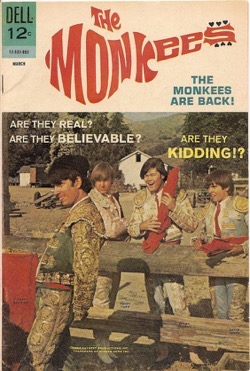
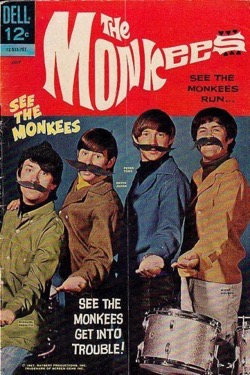
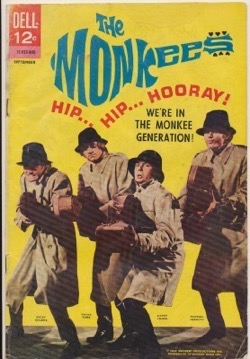
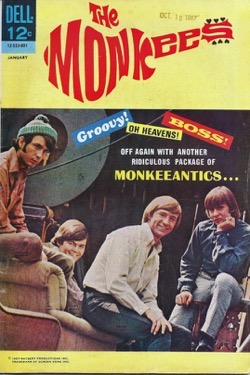
Early 1960s television characters came in a one-size-fits-all, squeaky-clean-cut style, from Dr. Kildare in his white lab coat, to Hoss Cartwright in his white Stetson, to Sr. Bertrille in her white habit. That lasted until 7:30 p.m. Monday, September 12, 1966 when four long-haired teenagers began dancing a Monkeewalk while singing, “Hey, Hey, We’re the Monkees.”
Though it looked simple enough, the comedy was about more than four struggling musicians living in a beach house they couldn’t afford, without adult supervision, and hoping for success while engaging in Marx(Bros)ian humor. According to star Micky Dolenz, the only actor with previous television series experience: “It brought long hair into the living room and changed the way teenagers were portrayed on television.”
Dolenz’s opinion is backed up by psychologist and author Timothy Leary in The Politics of Ecstasy: “While it lasted, it was a classic Sufi[ism] put-on. An early-Christian electronic satire. A mystic magic show. A jolly Buddha laugh at hypocrisy. And woven into the fast-moving psychedelic stream of action were the prophetic, holy, challenging words. Micky was rapping quickly, dropping literary names, making scholarly references.”
* A portion of each sale from Amazon.com directly supports our blogs ** Many of these books may be available from your local library. Check it out! † Available from the LA Public Library
Rosanne Welch, PhD, Author of Why The Monkees Matter, presents “How The Monkees Changed Television” at a Cal State Fullerton Lunch Lecture on May 8, 2018.
In this talk, she shows how The Monkees, and specifically their presence on television, set the stage for large changes to come in the late 1960s.
Transcript
Peter Tork, who’s pretty brilliant, said they probably got a larger audience for this anti-war point of view than even The Beatles did because TV was free and young kids couldn’t always afford to buy an album and The Beatles weren’t on TV every week, The Monkees were, so their message got through to those kids on a more regular basis.
Who can guess who’s Peter Tork sitting with at the Monterey Pop Festival? Janis Joplin! There’s a whole lot of talk about how nobody took them seriously. People in the music business took them seriously because they were selling millions of records. They hung out together. They played music and jammed at each other’s houses over the weekend. They were all friends. It was the critics who didn’t take their music seriously and as I was discussing before we started their music has legs and is still around so the critics were wrong for once.
Rosanne Welch, PhD is a writer, producer and university professor with credits that include Beverly Hills 90210, Picket Fences, Touched by an Angel and ABC NEWS/Nightline. Other books include Why The Monkees Matter: Teenagers, Television and American Pop Culture (McFarland, 2017) and Women in American History: A Social, Political, and Cultural Encyclopedia and Document Collection (ABC-CLIO, 2017), named to the 2018 Outstanding References Sources List, by the Reference and User Services Association (RUSA), a division of the American Library Association. Welch has also published chapters in Torchwood Declassified: Investigating Mainstream Cult Television (I.B.Tauris) and The American Civil War on Film and TV: Blue and Gray in Black and White and Color (Lexington Books, 2018) and essays in Doctor Who and Race: An Anthology and Outside In Makes it So, and Outside in Boldly Goes (both edited by Robert Smith). By day she teaches courses on the history of screenwriting and on television writing for the Stephens College MFA in Screenwriting programs. Her talk “The Importance of Having a Female Voice in the Room” at the 2016 TEDxCPP is available on YouTube.
For her 5th Doctor Who lecture to the CPP community, Dr. Rosanne Welch discusses how society – and the show’s writing staff – prepared the audience for a major change in this 50-year franchise – the creation of the first Lady Doctor!
Transcript:
Sarah Jane is one of my favorite companions. She’s come from the old Who to new Who and then she even had her own program The Sarah Jane Adventures. So what happened was she came into the Third Doctor’s life. She was an investigative reporter so she wasn’t some girl who did nothing and she wasn’t just reporting on fashion and/or celebrities. She was an investigative reporter. She looked for things that were wrong in her society and she highlighted that with being her newspaper writer. So that’s how she came to meet The Doctor. She traveled with him through Tom Baker obviously. Then she left and returned in an episode called School Reunion with David Tennant. So in the new Who era and at that time, of course, time had passed and she was invited to continue traveling and she had the strength and the intelligence to say No. I need to move on with my life. I’ve been thinking of you for too long. I need to have my own life.
Rosanne Welch PhD teaches the History of Screenwriting and One-Hour Drama for the Stephens College MFA in Screenwriting.
Writing/producing credits include Beverly Hills 90210, Picket Fences, ABCNEWS: Nightline and Touched by an Angel. In 2016 she published the book Why The Monkees Matter: Teenagers, Television and American Pop; co-edited Women in American History: A Social, Political, and Cultural Encyclopedia; and placed “Transmitting Culture Transnationally Via the Characterization of Parents in Police Procedurals” in the New Review of Film and Television Studies. Essays appear in Torchwood Declassified: Investigating Mainstream Cult Television and Doctor Who and Race: An Anthology. Welch serves as Book Reviews editor for Journal of Screenwriting and on the Editorial Advisory Board for Written By magazine, the magazine of the Writers Guild.
Michael Nesmith of The Monkees isn’t exactly known for being a road warrior. With the exception of a few tours with his past and present Monkee bandmates (Davy Jones died in 2012), the last two years have brought Nesmith back to the road for his first official solo dates since 1992.
But don’t mistake this for indifference or laziness. Nesmith is more than just a musician. He’s an innovator (after all, he IS partially responsible for the beginning stages of MTV), thespian, Liquid Paper heir, novelist, entrepreneur and producer. Yes, Michael Nesmith never seems to have a problem staying occupied.
Over the last year Nesmith has cited several reasons for his long awaited return to the stage, but don’t expect a greatest hits package if he decides to stop by a venue near you.
* A portion of each sale from Amazon.com directly supports our blogs ** Many of these books may be available from your local library. Check it out! † Available from the LA Public Library
Rosanne Welch, PhD, Author of Why The Monkees Matter, presents “How The Monkees Changed Television” at a Cal State Fullerton Lunch Lecture on May 8, 2018.
In this talk, she shows how The Monkees, and specifically their presence on television, set the stage for large changes to come in the late 1960s.
Transcript
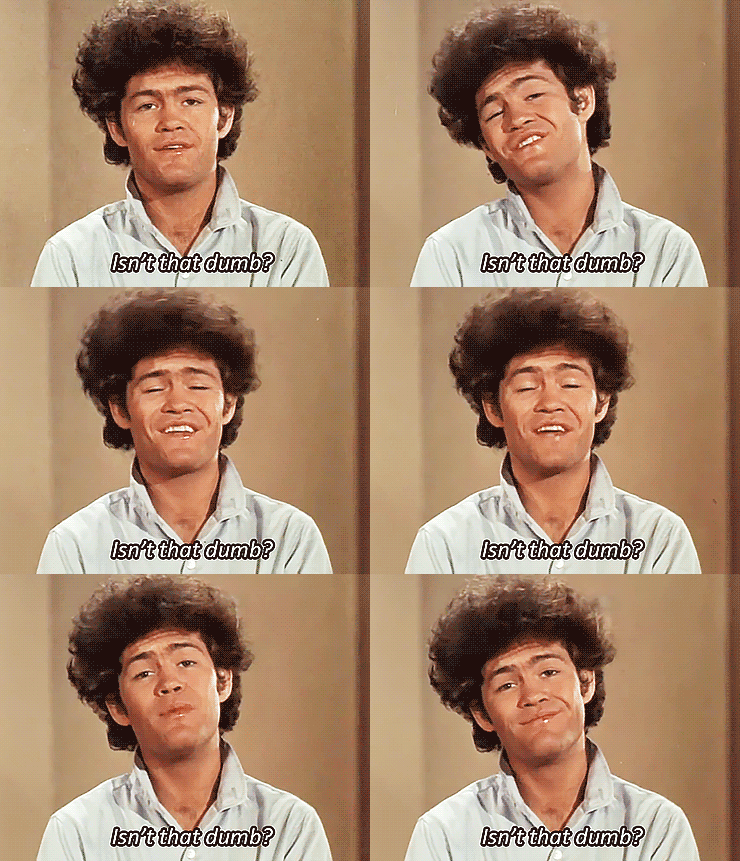
This is a great shot. I love from the Associated Press. All four of the men — three of the men — were drafted while they were on the show because they were all like 18, 19 and 20 years old. Michael Nesmith had already been in the Air Force so he was not but the other 3 guys were and they had to find a way around it. Even Davy Jones who was from England was drafted because he was living and making money in the United States. Thee girls took to the streets and said “If Davy goes, we go too!” The protests against losing them were very huge, but in general they were talking about how this is a bad war.. So if you look at this line I love from one of the episodes…
“They want to put the blame on teenagers. Take the war. Whose fault is it? We’re not fighting. it must be those crazy kids. They’re the ones doing all the fighting.”
Again, if that’s not an anti-war message wrapped up in a funny show. I have not idea how they got away with that, but they did.
Rosanne Welch, PhD is a writer, producer and university professor with credits that include Beverly Hills 90210, Picket Fences, Touched by an Angel and ABC NEWS/Nightline. Other books include Why The Monkees Matter: Teenagers, Television and American Pop Culture (McFarland, 2017) and Women in American History: A Social, Political, and Cultural Encyclopedia and Document Collection (ABC-CLIO, 2017), named to the 2018 Outstanding References Sources List, by the Reference and User Services Association (RUSA), a division of the American Library Association. Welch has also published chapters in Torchwood Declassified: Investigating Mainstream Cult Television (I.B.Tauris) and The American Civil War on Film and TV: Blue and Gray in Black and White and Color (Lexington Books, 2018) and essays in Doctor Who and Race: An Anthology and Outside In Makes it So, and Outside in Boldly Goes (both edited by Robert Smith). By day she teaches courses on the history of screenwriting and on television writing for the Stephens College MFA in Screenwriting programs. Her talk “The Importance of Having a Female Voice in the Room” at the 2016 TEDxCPP is available on YouTube.
For her 5th Doctor Who lecture to the CPP community, Dr. Rosanne Welch discusses how society – and the show’s writing staff – prepared the audience for a major change in this 50-year franchise – the creation of the first Lady Doctor!
Transcript:
…and I also just jokingly have to say, from a strength standpoint Jean Marsh, the actress who played that character (Sara Kingdom) ended up writing the miniseries “Upstairs, Downstairs” which was the “Downton Abbey” of your parent’s generation. Huge PBS show about the maids and the rich people living in a house. So literally it was a copy — or the predecessor I should say — of “Downton Abbey.” So she moved her career, using this acting career into a writing career where she could write the kind of representations she felt that the world needed. So that is pretty cool. Liz Shaw came up in the John Pertwee era, The third Doctor Who and she was a scientist so she was the equal to any of the men she worked with and sometimes she was smarter than they were, because she had a Ph.D. and she could do science and these guys sometimes weren’t — sometimes just military dudes. So Liz Shaw is a pretty good example of a strong woman we’ve met along the way.
Rosanne Welch PhD teaches the History of Screenwriting and One-Hour Drama for the Stephens College MFA in Screenwriting.
Writing/producing credits include Beverly Hills 90210, Picket Fences, ABCNEWS: Nightline and Touched by an Angel. In 2016 she published the book Why The Monkees Matter: Teenagers, Television and American Pop; co-edited Women in American History: A Social, Political, and Cultural Encyclopedia; and placed “Transmitting Culture Transnationally Via the Characterization of Parents in Police Procedurals” in the New Review of Film and Television Studies. Essays appear in Torchwood Declassified: Investigating Mainstream Cult Television and Doctor Who and Race: An Anthology. Welch serves as Book Reviews editor for Journal of Screenwriting and on the Editorial Advisory Board for Written By magazine, the magazine of the Writers Guild.
A classic resource on feminist theory, Feminist Thought offers a clear, comprehensive, and incisive introduction to the major traditions of feminist theory, from liberal feminism, radical feminism, and Marxist and socialist feminism to care-focused feminism, psychoanalytic feminism, and ecofeminism. The fifth edition has been thoroughly revised, and now includes a new chapter on Third Wave and Third Space Feminism. Also added to this edition are significantly expanded discussions on women of color feminisms, psychoanalytic and care feminisms, as well as new examinations of queer theory, LGBTQ and trans feminism.Learning tools like end-of-chapter discussion questions and the bibliography make Feminist Thought an essential resource for students and thinkers who want to understand the theoretical origins and complexities of contemporary feminist debates. — Amazon
* A portion of each sale from Amazon.com directly supports our blogs ** Many of these books may be available from your local library. Check it out! † Available from the LA Public Library
![More on the Monkees: Dolenz, Jones, Boyce & Hart ~ 1976 TV Special (Part 1) [Video]](https://rosannewelch.com/wp-content/uploads/2018/08/dolenz-jones.jpg)




![12 Acceptance, Critics and The Monkees from How The Monkees Changed Television [Video] (0:48)](https://rosannewelch.com/wp-content/uploads/2018/08/monkees-tv-12-acceptance.jpeg)
![23 Sarah Jane Smith from Gender Diversity in the Who-niverse [Video] (0:54)](https://rosannewelch.com/wp-content/uploads/2018/08/gender-dw-23-sarah-jane-smith.jpeg)

![11 The War and The Monkees from How The Monkees Changed Television [Video] (0:53)](https://rosannewelch.com/wp-content/uploads/2018/08/monkees-tv-11-monkees-war.jpeg)
![22 More Strong Female Companions In The Past from Gender Diversity in the Who-niverse [Video] (0:51)](https://rosannewelch.com/wp-content/uploads/2018/07/gender-dw-22-strong-women-2.jpeg)

 †
†