From The Research Vault: Musical influences, the mysteries of songwriting and God.

Yet another research resource for Why The Monkees Matter

Musical influences, the mysteries of songwriting and God
Barrett, Joel. (2014, March 6). Musical influences, the mysteries of songwriting and God.  

JB: What were some of your earlier influences musically?

RS: My first favorite song was “Daydream Believer,” the Monkees’ version. How’s that for guilty pleasure? I loved that song when I was 8 or 9 years old and I still love it. Of course, there was Dylan, we always had Dylan in the house all the time. We had Gilbert and Sullivan. We had the Beatles. Kingston Trio, Pete Seeger. For me, it was mostly the Monkees and the Beatles. Shortly thereafter, the Allman Brothers, and then shortly thereafter Genesis and then shortly thereafter Bruce Springsteen, which caused a horrible riff between me and my ‘art rock-prog’ friends. They couldn’t understand Springsteen. The early stuff really is probably Dylan and the Beatles.

JB: When did you know that music could really be your career?

RS: It was in Hartford, Conn., right after my first record came out. I still had some doubts if this could happen as an actual career. I went to a gig at WWUH and afterwards I sold $325 worth of CDs, which to me at that time was a ridiculous amount of money. After the gig they said this is the money for your CDs. I just not could believe that they’d give me $325 for 22 CDs. I thought it was the greatest thing that ever happened. Right then and there, a little switch went off in my head, “aha. I like this.”

JB: If you weren’t a singer-songwriter, what would you be?

RS: An editor.

Read this entire article


Why The Monkees Matter: Teenagers, Television and American Pop Culture

Order Your Copy Now!

Previously in Out of Research Vault:

Quotes from “Why The Monkees Matter” by Dr. Rosanne Welch – 45 in a series – Native American Portrayals

** Buy “Why The Monkees Matter” Today **

Quotes from

Perhaps due to the attention drawn by the Red Power Movement during the run of The Monkees, Native Americans tended to fare better than Americans of Asian descent.  Perhaps the fact that Dolenz self-identified as part Native American on his mother’s side had an effect. Perhaps the writers were looking to move beyond the Tonto/Lone Ranger dynamic. Or perhaps the writers and actors found a connection between Native Americans and the emerging ideology of the hippie movement. 

from Why The Monkees Mattered by Dr. Rosanne Welch —  Buy your Copy today!

 Why The Monkees Matter: Teenagers, Television and American Pop Culture


McFarland (Direct from Publisher) | Amazon | Kindle Edition | Nook Edition

From The Research Vault: THE MONKEES – Clive James Talks Back interview (ITV), 4th March 1997

Yet another research resource for Why The Monkees Matter

THE MONKEES – Clive James Talks Back interview (ITV), 4th March 1997

From The Research Vault: THE MONKEES - Clive James Talks Back interview (ITV), 4th March 1997

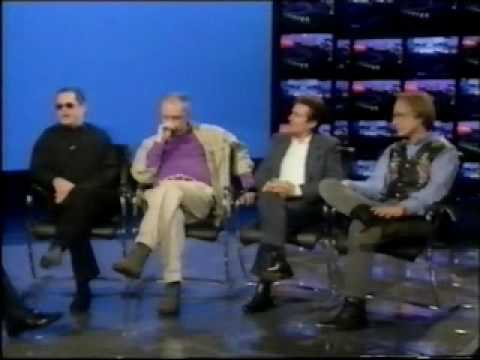
This 1997 interview clip involves all four actor/musicians on the Clive James program out of the UK.  They discuss the Justus tour, their history, and the 30th anniversary special that aired that year.  James (or his editors) are  good at giving each their individual moment during the interview.  James defines the show as “their old but always new” series – which is a compliment and shows how James understood the show and its importance.  It’s always interesting to compare the questions asked by American interviewers and those from other countries. — Rosanne


Why The Monkees Matter: Teenagers, Television and American Pop Culture

Order Your Copy Now!

Previously in Out of Research Vault:

Zor and Zam and The Monkees from 1960’s TV Censorship and The Monkees [Video] (1:00)

Watch this entire presentation

Zor and Zam and The Monkees from 1960's TV Censorship and The Monkees


“1960s TV Censorship and The Monkees” gives a brief overview of where censorship standards were in the era – and how The Monkees pushed the envelope with its mentions of the Vietnam War – and Sunset Strip riots – and even with the outrageous storytelling behind “Frodis Caper”, the episode that celebrated the saving of an alien plant that very closely resembled a marijuana plant…  

Writer Treva Silverman said the staff got away with such jokes because the network executives were just old enough not to understand any of the references.
Presented at Stephens College MFA in Screenwriting classes on Friday, August 5, 2016

Transcript:

In the course of this episode they do this song, which is hugely anti-war, if you look at it. Zoor and Zam.

“The king of Zor, he called for war
And the king of Zam, he answered.

Two little kings playing a game.
They gave a war and nobody came.”

That’s a hugely anti-war song to be in the middle of the still, fussing around kind of program. They got away with it. They got away with it. I’m not — I just find that fascinating. At the very end of the episode, they get to the bad plant. They’re going to kill it unti the plant says, “No, no, it’s not my fault. The other guy used me. I want to help the world. If I reenergize my Frodis power, more people will be happier. It will be a lovely thing.” This is the bad Wizard Glick and once he gets near the plant this is how he starts to feel. It’s an entire episode dedicated the love of marijuana. In 1967 in American television. I just love that.


Buy “Why The Monkees Matter” Today!

 Why The Monkees Matter: Teenagers, Television and American Pop Culture


McFarland (Direct from Publisher) | Amazon | Kindle Edition | Nook Edition


About Dr. Rosanne Welch

Dr. Rosanne Welch is a professor in the Low Residency MFA in Screenwriting Program from Stephens College, California State University, Fullerton, Mount San Antonio Community College and Cal Poly Pomona.  In 2007, she graduated with her Ph.D. in 20th Century U.S./Film History from Claremont Graduate University.  She graduated with her M.A. in 20th Century United States History from California State University, Northridge in 2004.

Welch is also a television writer/producer with credits for Beverly Hills 90210 , CBS’s Emmy winning Picket Fences and Touched By An Angel . She also writes and hosts her own podcasts on 3rdPass.media, her first one titled “Mindful(I) Media with Dr. Rosanne Welch.”

Three Ring Circus: How Real Couples Balance Marriage, Work and Kids and The Encyclopedia of Women in Aviation and Space are two books she has written. Los Angeles Times and the Journal of Screenwriting hold some of her published articles.

Dr. Rosanne Welch Web Site and Blog

Follow Dr. Welch on Twitter

Dr. Rosanne Welch on YouTube

Quotes from “Why The Monkees Matter” by Dr. Rosanne Welch – 44 in a series – Asian Portrayals

** Buy “Why The Monkees Matter” Today **

Quotes from

The only positive representation of Asian culture came unexpectedly in the final episode, “Frodis Caper”, co-written by Dolenz and Dave Evans. As discussed in the chapter on counter-culture, a Buddhist chant known as the Lotus Sutra aided the band in escaping the evil Wizard Glick and saving the world. Therefore these all-American boys save the world with the help of Nam-myoho-renge-kyo, a teaching from the first historical Budda, Siddhartha Gautama.

from Why The Monkees Mattered by Dr. Rosanne Welch —  Buy your Copy today!

 Why The Monkees Matter: Teenagers, Television and American Pop Culture


McFarland (Direct from Publisher) | Amazon | Kindle Edition | Nook Edition

From The Research Vault: Making Sense of Cultural Studies: Central Problems and Critical Debates by Chris Barker

Yet another research resource for Why The Monkees Matter

Making Sense of Cultural Studies: Central Problems and Critical Debates by Chris Barker

Find this book on Amazon.com

‘The book is an important read for persons who practice or study within the field. Anyone with experience or interest in the topic will come away with a deepened understanding of debates within cultural studies and with an array of nfew questions and ideas to pursue. The book would make a fine text for graduate level classes dealing with culture and media; the question/debate-orientated structure especially could provide the launching pad for a whole range of discussions, profjects, and papter topics’ — The Southern Communication Journal

In this sequel to the best-selling text Cultural Studies: Theory and Practice, Chris Barker turns his attention to the significance and future of the field. He analyzes the strengths and weaknesses of cultural studies, providing students and practitioners with an authoritative diagnosis of the subject and a balanced prognosis, and investigates the boundaries of cultural studies elucidating the main underlying themes of study.

Written with panache, and an understanding of classroom needs, Making Sense of Cultural Studies is the perfect teaching complement to Chris Barker’s earlier textbook. It is a rich resource for seminar work and undergraduate and postgraduate thesis topics, yet it can also be read as a free-standing analysis of the condition of cultural studies today.


Why The Monkees Matter: Teenagers, Television and American Pop Culture

Order Your Copy Now!

Previously in Out of Research Vault:

The Frodis Caper from 1960’s TV Censorship and The Monkees [Video] (0:56)

Watch this entire presentation

The Frodis Caper from 1960's TV Censorship and The Monkees


“1960s TV Censorship and The Monkees” gives a brief overview of where censorship standards were in the era – and how The Monkees pushed the envelope with its mentions of the Vietnam War – and Sunset Strip riots – and even with the outrageous storytelling behind “Frodis Caper”, the episode that celebrated the saving of an alien plant that very closely resembled a marijuana plant…  

Writer Treva Silverman said the staff got away with such jokes because the network executives were just old enough not to understand any of the references.
Presented at Stephens College MFA in Screenwriting classes on Friday, August 5, 2016

Transcript:

This particular episode is very famous. It’s call “Frodis Caper.” Frodis is a code word for marijuana. Right? And so this whole episode is built around this alien plant. What does it look like? What does it look like to you? Nobody caught that. The entire episode is built around one bad American who ties in with the alien, uses his power to zombie out everybody in town and we have to stop this guy. They do it — they use the aliens power through the TV which is the bad thing. TV will destroy your brian if you watch too much of it. So you notice this — that’s the CBS logo kind of messed around with. Their on NBC. So they’re riffing on the other network right now being the bad thing you shouldn’t focus on. 


Buy “Why The Monkees Matter” Today!

 Why The Monkees Matter: Teenagers, Television and American Pop Culture


McFarland (Direct from Publisher) | Amazon | Kindle Edition | Nook Edition


About Dr. Rosanne Welch

Dr. Rosanne Welch is a professor in the Low Residency MFA in Screenwriting Program from Stephens College, California State University, Fullerton, Mount San Antonio Community College and Cal Poly Pomona.  In 2007, she graduated with her Ph.D. in 20th Century U.S./Film History from Claremont Graduate University.  She graduated with her M.A. in 20th Century United States History from California State University, Northridge in 2004.

Welch is also a television writer/producer with credits for Beverly Hills 90210 , CBS’s Emmy winning Picket Fences and Touched By An Angel . She also writes and hosts her own podcasts on 3rdPass.media, her first one titled “Mindful(I) Media with Dr. Rosanne Welch.”

Three Ring Circus: How Real Couples Balance Marriage, Work and Kids and The Encyclopedia of Women in Aviation and Space are two books she has written. Los Angeles Times and the Journal of Screenwriting hold some of her published articles.

Dr. Rosanne Welch Web Site and Blog

Follow Dr. Welch on Twitter

Dr. Rosanne Welch on YouTube

Quotes from “Why The Monkees Matter” by Dr. Rosanne Welch – 43 in a series – Italians

** Buy “Why The Monkees Matter” Today **

Quotes from

The oddest part of having most Italian characters presented as gangsters and none of them as normal Italian friends populating the world of The Monkees, is, as previously mentioned, that Dolenz was essentially Italian. His father, George Dolenz, came from Trieste, Italy (though when the elder Dolenz was born it was still part of Austria-Hungary). Since Micky’s character did not conform to any of the broader Italian stereotypes involving accents or criminal activity (and he was only ½ Italian) did the audience even sense that he was representing that ethnicity?

from Why The Monkees Mattered by Dr. Rosanne Welch —  Buy your Copy today!

 Why The Monkees Matter: Teenagers, Television and American Pop Culture


McFarland (Direct from Publisher) | Amazon | Kindle Edition | Nook Edition

More On The Vietnam War and The Monkees from 1960’s TV Censorship and The Monkees with Dr. Rosanne Welch [Video] (1:03)

Watch this entire presentation

More On The Vietnam War and The Monkees from 1960's TV Censorship and The Monkees with Dr. Rosanne Welch [Video] (1:03)


“1960s TV Censorship and The Monkees” gives a brief overview of where censorship standards were in the era – and how The Monkees pushed the envelope with its mentions of the Vietnam War – and Sunset Strip riots – and even with the outrageous storytelling behind “Frodis Caper”, the episode that celebrated the saving of an alien plant that very closely resembled a marijuana plant…  

Writer Treva Silverman said the staff got away with such jokes because the network executives were just old enough not to understand any of the references.
Presented at Stephens College MFA in Screenwriting classes on Friday, August 5, 2016

Transcript:

It’s called “Monkee’s Watch Their Feet.” It’s written by Coslough Johnson, who’s the brother of Arte Johnson who is from Laugh-In and this is the story of aliens who come down to Earth and they kidnap Micky Dolenz and make a copy of him who’s a robot and their trying to understand the brain of Americans, which is pretty silly, but notice the sort of patriotic backdrop here. It guest starred Pat Paulsen, who is going to end up on Laugh-In and these are some lines that he has in this episode. Think about what he’s talking about right in the center of the Vietnam War. Particularly I like this line. This is the aliens talking about the Americans.  We don’t ever have to say Vietnam. We know what they’re talking about. These are the guys. This is the age of the guy who is being drafted to go. This other is a nice chunk that they talk about. “They want to put the blame on teenagers. Take the war for example. Whose fault is it? Not ours. we’re not fighting. It must be those crazy kids. They’re the ones doing all the fighting.” 


Buy “Why The Monkees Matter” Today!

 Why The Monkees Matter: Teenagers, Television and American Pop Culture


McFarland (Direct from Publisher) | Amazon | Kindle Edition | Nook Edition


About Dr. Rosanne Welch

Dr. Rosanne Welch is a professor in the Low Residency MFA in Screenwriting Program from Stephens College, California State University, Fullerton, Mount San Antonio Community College and Cal Poly Pomona.  In 2007, she graduated with her Ph.D. in 20th Century U.S./Film History from Claremont Graduate University.  She graduated with her M.A. in 20th Century United States History from California State University, Northridge in 2004.

Welch is also a television writer/producer with credits for Beverly Hills 90210 , CBS’s Emmy winning Picket Fences and Touched By An Angel . She also writes and hosts her own podcasts on 3rdPass.media, her first one titled “Mindful(I) Media with Dr. Rosanne Welch.”

Three Ring Circus: How Real Couples Balance Marriage, Work and Kids and The Encyclopedia of Women in Aviation and Space are two books she has written. Los Angeles Times and the Journal of Screenwriting hold some of her published articles.

Dr. Rosanne Welch Web Site and Blog

Follow Dr. Welch on Twitter

Dr. Rosanne Welch on YouTube

Quotes from “Why The Monkees Matter” by Dr. Rosanne Welch – 42 in a series – Mexicans, Italians and Jews

** Buy “Why The Monkees Matter” Today **

Quotes from

Since Mexican-Americans were not yet a prominent stereotype in middle America, the writers weren’t used to relying on them for humor, whereas most of the largely Jewish writing staff knew the standard jokes associated with other ethnicities, especially Italians since the two immigrant-based ethnic groups often shared neighborhoods in urban centers around the country.  

from Why The Monkees Mattered by Dr. Rosanne Welch —  Buy your Copy today!

 Why The Monkees Matter: Teenagers, Television and American Pop Culture


McFarland (Direct from Publisher) | Amazon | Kindle Edition | Nook Edition