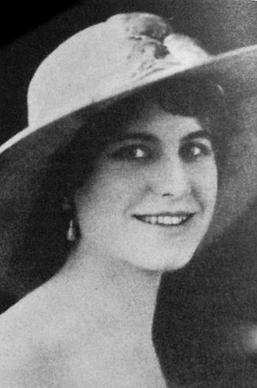
A box arrived today and it contained my first print copies of this collection of essays written by the original cohort of students in our first Stephens College MFA in Screenwriting which I edited and for which author Cari Beauchamp wrote a wonderful forward covering the life and influence of Frances Marion. — Rosanne
“These 23 essays cover a range of female screenwriters from the early years of film through the 1940s, women whose work helped create the unforgettable stories and characters beloved generations of audiences but whose names have been left out of most film histories. Not this one. This collection is dedicated to those women and written by a group of women grateful to stand on the shoulders of those who came before – as a beacon to those who will come after.”
* A portion of each sale from Amazon.com directly supports our blogs ** Many of these books may be available from your local library. Check it out! † Available from the LA Public Library
To highlight the wonderful yet largely forgotten work of a collection of female screenwriters from the early years of Hollywood (and as a companion to the book, When Women Wrote Hollywood) we will be posting quick bits about the many films they wrote along with links to further information and clips from their works which are still accessible online. Take a few moments once or twice a week to become familiar with their names and their stories. I think you’ll be surprised at how much bold material these writers tackled at the birth of this new medium. — Rosanne Welch
Alice Guy-Blaché (July 1, 1873 – March 24, 1968) was a pioneer filmmaker, active from the late 19th century, and one of the first to make a narrative fiction film.[2] From 1896 to 1906 she was probably the only female filmmaker in the world. [3] She experimented with Gaumont’s Chronophone sound syncing system, color tinting, interracial casting, and special effects. She was a founder and artistic director of the Solax Studios in Flushing, New York, in 1908. In 1912 Solax invested $100,000 for a new studio in Fort Lee, New Jersey, the center of American filmmaking prior to the establishment of Hollywood. That same year she made the film A Fool and his Money, with a cast comprised only African-American actors. The film is now at the National Center for Film and Video Preservation at the American Film Institute.[4] — Wikipedia
* A portion of each sale from Amazon.com directly supports our blogs ** Many of these books may be available from your local library. Check it out! † Available from the LA Public Library
For her 5th Doctor Who lecture to the CPP community, Dr. Rosanne Welch discusses how society – and the show’s writing staff – prepared the audience for a major change in this 50-year franchise – the creation of the first Lady Doctor!
Transcript:
You may never have seen a Tom Baker Doctor Who. You should check it out, but you have in fact seen Tom Baker as Doctor Who if you saw the 50th Anniversary special. That was his special guest starring moment. Right? And I think it’s quite adorable. It was quite fun. He was, as I said, replaced by Peter Davison who happens to be my favorite Doctor. Although there was some controversy with the announcement of the new lady Doctor. He actually said he was sorry that they had chosen to make her a female because boys would lose a role model that they needed. And there was a whole lot of … Oh, you’re old-fashioned. You’re all bad. We don’t like you. You have to listen to what he’s saying. He’s saying that what’s special about Doctor Who is he shows a different side of gender. He counters the toxic masculinity in our society. The kind of stuff that’s been discussed in the news right now over the Weinstein thing and Loius CK. The toxic masculinity. The Doctor has always been a man driven by his intellect, his brain. He’s not using violence to solve problems and so what Peter Davison was saying was he regretted little boys not having this kind of man to look up to. An argument on the other side could be why can’t little boys look up to women who are in power positions. So you could go and look at it that way. I think it goes either way.
Rosanne Welch PhD teaches the History of Screenwriting and One-Hour Drama for the Stephens College MFA in Screenwriting.
Writing/producing credits include Beverly Hills 90210, Picket Fences, ABCNEWS: Nightline and Touched by an Angel. In 2016 she published the book Why The Monkees Matter: Teenagers, Television and American Pop; co-edited Women in American History: A Social, Political, and Cultural Encyclopedia; and placed “Transmitting Culture Transnationally Via the Characterization of Parents in Police Procedurals” in the New Review of Film and Television Studies. Essays appear in Torchwood Declassified: Investigating Mainstream Cult Television and Doctor Who and Race: An Anthology. Welch serves as Book Reviews editor for Journal of Screenwriting and on the Editorial Advisory Board for Written By magazine, the magazine of the Writers Guild.
To highlight the wonderful yet largely forgotten work of a collection of female screenwriters from the early years of Hollywood (and as a companion to the book, When Women Wrote Hollywood) we will be posting quick bits about the many films they wrote along with links to further information and clips from their works which are still accessible online. Take a few moments once or twice a week to become familiar with their names and their stories. I think you’ll be surprised at how much bold material these writers tackled at the birth of this new medium. — Rosanne Welch
When Women Wrote Hollywood – 5 in a series – The New York Hat (1912), Wr: Anita Loos, Dirs: D. W. Griffith
The New York Hat (1912) is a short silent film directed by D. W. Griffith from a screenplay by Anita Loos, and starring Mary Pickford, Lionel Barrymore, and Lillian Gish.
The New York Hat is one of the most notable of the Biograph Studios short films and is perhaps the best known example of Pickford’s early work, and an example of Anita Loos’s witty writing. The film was made by Biograph when it and many other early U.S. movie studios were based in Fort Lee, New Jersey at the beginning of the 20th century.[1][2][3]
Mollie Goodhue leads a cheerless, impoverished life, largely because of her stern, miserly father. Mrs. Goodhue is mortally ill, but before dying, she gives the minister, Preacher Bolton, some money with which to buy her daughter the “finery” her father always forbade her.
Mollie is delighted when the minister presents her with a fashionable New York hat she has been longing for, but village gossips misinterpret the minister’s intentions and spread malicious rumors. Mollie becomes a social pariah, and her father tears up the beloved hat in a rage.
All ends well, however, after the minister produces a letter from Mollie’s mother about the money she left the minister to spend on Mollie. Soon afterwards, he proposes to Mollie, who accepts his offer of marriage.— Wikipedia
* A portion of each sale from Amazon.com directly supports our blogs ** Many of these books may be available from your local library. Check it out! † Available from the LA Public Library
For her 5th Doctor Who lecture to the CPP community, Dr. Rosanne Welch discusses how society – and the show’s writing staff – prepared the audience for a major change in this 50-year franchise – the creation of the first Lady Doctor!
Transcript:
Is this the first time anyone’s ever considered a lady Doctor? As a matter of fact, it’s not. This has been in discussions for a while but it’s as if society wasn’t ready for it and they knew it. They had to wait for us to catch up to what the writers wanted to do. Tome Baker who some of you, if you know old Who, should know as one of the most popular, previous Doctors — he actually said, when they were switching Doctors and that was in 1980 — “I wish my successor, whoever he or she might be, the best of luck.” So he was already planting the seeds of this possibility and I think that’s really interesting in 1980. What’s funny is, I often tell people, it’s wonderful to watch news from other countries to realize there are different perspectives than our American perspectives and my favorite story is, in 1980 when they announced the new Doctor, the first story on the BBC news that evening was that Peter Davison would take over for the job of Doctor Who from Tom Baker. The second news story in England that day was that Ronald Reagan had just won the American presidency.
Rosanne Welch PhD teaches the History of Screenwriting and One-Hour Drama for the Stephens College MFA in Screenwriting.
Writing/producing credits include Beverly Hills 90210, Picket Fences, ABCNEWS: Nightline and Touched by an Angel. In 2016 she published the book Why The Monkees Matter: Teenagers, Television and American Pop; co-edited Women in American History: A Social, Political, and Cultural Encyclopedia; and placed “Transmitting Culture Transnationally Via the Characterization of Parents in Police Procedurals” in the New Review of Film and Television Studies. Essays appear in Torchwood Declassified: Investigating Mainstream Cult Television and Doctor Who and Race: An Anthology. Welch serves as Book Reviews editor for Journal of Screenwriting and on the Editorial Advisory Board for Written By magazine, the magazine of the Writers Guild.
To highlight the wonderful yet largely forgotten work of a collection of female screenwriters from the early years of Hollywood (and as a companion to the book, When Women Wrote Hollywood) we will be posting quick bits about the many films they wrote along with links to further information and clips from their works which are still accessible online. Take a few moments once or twice a week to become familiar with their names and their stories. I think you’ll be surprised at how much bold material these writers tackled at the birth of this new medium. — Rosanne Welch
Anita Loos (April 26, 1889[1] – August 18, 1981) was an American screenwriter, playwright and author, best known for her blockbuster comic novel, Gentlemen Prefer Blondes. She wrote film scripts from 1912, and became arguably the first-ever staff scriptwriter, when D.W. Griffith put her on the payroll at Triangle Film Corporation. She went on to write many of the Douglas Fairbanks films, as well as the stage adaptation of Colette’s Gigi.
Loos would continue writing, always a constant magazine contributor and appearing regularly in Harper’s Bazaar, Vanity Fair and The New Yorker. Biographer Gary Carey notes: “She was a born storyteller and was always in peak form when reshaping a real-life encounter to make an amusing anecdote.”[4] Loos began a volume of memoirs, A Girl Like I, which would be published in September 1966. Her 1972 book, Twice Over Lightly: New York Then and Now, was written in collaboration with friend and actress Helen Hayes. Kiss Hollywood Good-by (1974) was another Hollywood memoir, this time about the MGM years and would be very successful. Her book The Talmadge Girls (1978) is about the actress sisters Constance Talmadge and Norma Talmadge.
Loos would become a virtual New York institution, an assiduous partygoer and diner-out, conspicuous at fashion shows, theatrical and movie events, balls and galas.[14] A celebrity anecdotalist, she was also never one to let facts spoil a good story: — Wikipedia
* A portion of each sale from Amazon.com directly supports our blogs ** Many of these books may be available from your local library. Check it out! † Available from the LA Public Library
To highlight the wonderful yet largely forgotten work of a collection of female screenwriters from the early years of Hollywood (and as a companion to the book, When Women Wrote Hollywood) we will be posting quick bits about the many films they wrote along with links to further information and clips from their works which are still accessible online. Take a few moments once or twice a week to become familiar with their names and their stories. I think you’ll be surprised at how much bold material these writers tackled at the birth of this new medium. — Rosanne Welch
When Women Wrote Hollywood – 4 in a series – Jeanie MacPherson
Jeanie MacPherson (May 18, 1886[1] – August 26, 1946) was an American actress, writer, and director from 1908 until the late 1940s. She was a pioneer for women in the film industry. She worked with some of the best filmmakers of the time period including D. W. Griffith and Cecil B. DeMille. While she started in the theater, and then had a brief stint as an actress, she ultimately dedicated her life’s work to screenwriting for DeMille.[2] She was appraised for her new level resourcefulness and attentiveness to the needs of DeMille.[3]
DeMille and MacPherson formed what became one of the most influential and long-lasting partnerships in the industry.[3] She was infatuated with his perfection and force of will, while he was captivated by her high spirited courage. She penned 30 of DeMille’s next 34 films. They admired each other; he would provide the crowd shots and epic sense, while she would humanize the heroine. They both loathed weakness, which they defined as a man being degraded and women, who were shallow and money-hungry, looking for a man to take care of them. They both believed in the power of people to change their ways, which many of their scripts showed.[3] — Wikipedia
* A portion of each sale from Amazon.com directly supports our blogs ** Many of these books may be available from your local library. Check it out! † Available from the LA Public Library
For her 5th Doctor Who lecture to the CPP community, Dr. Rosanne Welch discusses how society – and the show’s writing staff – prepared the audience for a major change in this 50-year franchise – the creation of the first Lady Doctor!
Transcript:
Finally, we’re now looking at what will happen to the show with a new writer Chris Chibnall and Chris Chibnall is a really interesting writer. He worked on Torchwood as a staff writer. He created this program Broachchurch which I highly recommend if you have some time. One of the best-written mini-series I have ever seen. Very good stuff and in doing the show he worked with Jody Whittaker who played the mother on Broadchurch of a 10-year-old boy who went missing. Jody, blonded out, is going to be the new Doctor Who. So through working with Chris on this previous program, he decided she had the chutzpah and the charisma and what was necessary to be the new Doctor Who and also, as I said earlier, in his writing for Doctor Who he invented Kate Lethbridge-Stewart who is a head in the military. Her father was a head. We’re going to talk about in a minute. So, I think Chris is a really interesting writer. I think he’s going to do a lot of good work for the show. So that’s what I want to think about.
Rosanne Welch PhD teaches the History of Screenwriting and One-Hour Drama for the Stephens College MFA in Screenwriting.
Writing/producing credits include Beverly Hills 90210, Picket Fences, ABCNEWS: Nightline and Touched by an Angel. In 2016 she published the book Why The Monkees Matter: Teenagers, Television and American Pop; co-edited Women in American History: A Social, Political, and Cultural Encyclopedia; and placed “Transmitting Culture Transnationally Via the Characterization of Parents in Police Procedurals” in the New Review of Film and Television Studies. Essays appear in Torchwood Declassified: Investigating Mainstream Cult Television and Doctor Who and Race: An Anthology. Welch serves as Book Reviews editor for Journal of Screenwriting and on the Editorial Advisory Board for Written By magazine, the magazine of the Writers Guild.
Dorothy Parker’s story is such a classic it keeps being made and remade across the decades – first adapted by Moss Hart, then by Joan Didion and John Gregory Dunne – this time by Eric Roth (Oscar winner for Forest Gump), Bradley Cooper and Will Fetters. THAT is a successful piece of writing. The trailer already has me teared up- that’s how powerful the story still is.
* A portion of each sale from Amazon.com directly supports our blogs ** Many of these books may be available from your local library. Check it out! † Available from the LA Public Library
To highlight the wonderful yet largely forgotten work of a collection of female screenwriters from the early years of Hollywood (and as a companion to the book, When Women Wrote Hollywood) we will be posting quick bits about the many films they wrote along with links to further information and clips from their works which are still accessible online. Take a few moments once or twice a week to become familiar with their names and their stories. I think you’ll be surprised at how much bold material these writers tackled at the birth of this new medium. — Rosanne Welch
The Ten Commandments (1923), Wr: Jeanie Macpherson, Dirs: Cecil B. DeMille, USA 136 mins
Segments from The Ten Commandments (1923)
Original Poster Art
The Ten Commandments is a 1923 American silent religious, epic film and produced and directed by Cecil B. DeMille. Written by Jeanie MacPherson, the film is divided into two parts: a prologue recreating the biblical story of the Exodus and a modern story concerning two brothers and their respective views of the Ten Commandments.
Lauded for its “immense and stupendous” scenes, use of Technicolor process 2, and parting of the Red Sea sequence,[3] the expensive film proved to be a box-office hit upon release.[4] It is the first in DeMille’s biblical trilogy, followed by The King of Kings (1927) and The Sign of the Cross (1932).
Despite its epic scale, the Moses story takes up only about the first third of the film. After that, the story changes to a modern setting involving living by the lessons of the commandments. Two brothers make opposite decisions, one, John, to follow his mother’s teaching of the Ten Commandments and become a poor carpenter, and the other, Danny, to break every one of them and rise to the top. The film shows his unchecked immorality to be momentarily gainful, but ultimately disastrous. — Wikipedia
* A portion of each sale from Amazon.com directly supports our blogs ** Many of these books may be available from your local library. Check it out! † Available from the LA Public Library




![17 Toxic Masculinity, Patriarchy and Doctor Who from Gender Diversity in the Who-niverse [Video] (1:20)](https://rosannewelch.com/wp-content/uploads/2018/06/gender-dw-17-toxic.jpeg)

![16 First Mention of a Lady Doctor? from Gender Diversity in the Who-niverse [Video] (1:02)](https://rosannewelch.com/wp-content/uploads/2018/06/gender-dw-16-first-lady.jpeg)


 †
†

![15 Chris Chibnall and Doctor Who from Gender Diversity in the Who-niverse [Video] (0:54)](https://rosannewelch.com/wp-content/uploads/2018/06/gender-dw-15-chibnall.jpeg)