To highlight the wonderful yet largely forgotten work of a collection of female screenwriters from the early years of Hollywood (and as a companion to the book, When Women Wrote Hollywood) we will be posting quick bits about the many films they wrote along with links to further information and clips from their works which are still accessible online. Take a few moments once or twice a week to become familiar with their names and their stories. I think you’ll be surprised at how much bold material these writers tackled at the birth of this new medium. — Rosanne Welch
When Women Wrote Hollywood – 2 in a series – Adela Rogers St. Johns
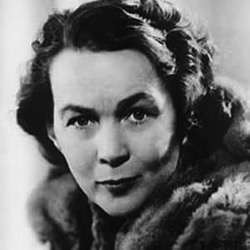
Adela Nora Rogers St. Johns (May 20, 1894 – August 10, 1988) was an American journalist, novelist, and screenwriter. She wrote a number of screenplays for silent movies but is best remembered for her groundbreaking exploits as “The World’s Greatest Girl Reporter” during the 1920s and 1930s and her celebrity interviews for Photoplay magazine.
She obtained her first job in 1912 working as a reporter for Hearst’s San Francisco Examiner. She reported on crime, politics, society, and sports news before transferring to the Los Angeles Herald in 1913.[1]
After seeing her work for that newspaper, James R. Quirk offered her a job writing for his new fan magazine Photoplay. St. Johns accepted the job so she could spend more time with her husband and children. Her celebrity interviews helped the magazine become a success through her numerous revealing interviews with Hollywood film stars.[3]
She also wrote short stories for Cosmopolitan, The Saturday Evening Post, and other magazines and finished nine of her thirteen screenplays before returning to reporting for Hearst newspapers. — Wikipedia
* A portion of each sale from Amazon.com directly supports our blogs ** Many of these books may be available from your local library. Check it out! † Available from the LA Public Library
For her 5th Doctor Who lecture to the CPP community, Dr. Rosanne Welch discusses how society – and the show’s writing staff – prepared the audience for a major change in this 50-year franchise – the creation of the first Lady Doctor!
Transcript:
He gave us Bill Potts who is Pearl Mackie over there in the corner who was the last companion we’ve seen with The Doctor. Also, and out lesbian at that time when she was introduced as that character. So these are big steps in a show that was meant, originally, for children. These are big cultural influential steps. So, I tend to like — I tend to like Steven Moffat. Also in the layout before the announcement of a female Doctor Who, he gave us a female Master. And this was a huge surprise to people. So they were laying in the groundworks so you wouldn’t be so shocked when The Doctor turned into a woman this year. In this case, Missy is what they called her. These are all the men in the past who had played the regenerations of The Master and they’re all from previous — most from old Who and then right up front we get a couple of the newer Who guys. So he planted that in the storyline and so we would have that character to deal with and Iove Missy. I think she’s like — she’s like Mary Poppins and bad steroids, but she’s quite a fun character.
Rosanne Welch PhD teaches the History of Screenwriting and One-Hour Drama for the Stephens College MFA in Screenwriting.
Writing/producing credits include Beverly Hills 90210, Picket Fences, ABCNEWS: Nightline and Touched by an Angel. In 2016 she published the book Why The Monkees Matter: Teenagers, Television and American Pop; co-edited Women in American History: A Social, Political, and Cultural Encyclopedia; and placed “Transmitting Culture Transnationally Via the Characterization of Parents in Police Procedurals” in the New Review of Film and Television Studies. Essays appear in Torchwood Declassified: Investigating Mainstream Cult Television and Doctor Who and Race: An Anthology. Welch serves as Book Reviews editor for Journal of Screenwriting and on the Editorial Advisory Board for Written By magazine, the magazine of the Writers Guild.
Rosanne Welch, PhD, Author of Why The Monkees Matter, presents “How The Monkees Changed Television” at a Cal State Fullerton Lunch Lecture on May 8, 2018.
In this talk, she shows how The Monkees, and specifically their presence on television, set the stage for large changes to come in the late 1960s.
Transcript
As a kid, all I wanted was to meet Micky Dolenz — who’s the guy on the far right in case you don’t know that because you’re too young to know who I’m talking about right now, but that was really funnny to me and the kids reacted well to the show and that taught me that it did have something to say to a newer generation so I thoguht, “Hmm”and then ended up writing an article — I’m on the editorial board of Written BY magazine which is the magazine of the Writers Guild of America and I wrote an article about the show, because we write about writers so I thought to myself, “Hmmm, how many of the writers are still alive?” and there were about 7 of the orignal 15 and they were welcome to chat about their time on the show. So, I met with them at their various homes in Beverly Hills, because they made a lot of money in television way back in the day and found that many of them grew up — “grew up” — they were young when they wrote on this show. They were all newcomers and many of them went on to win Emmy Awards including Treva Silverman who was the first female to be on a comedy show without a male partner. So she was solo writing on the show and we’re talking about 1966 so that was a big deal not to have a “boy” help you.
Rosanne Welch, PhD is a writer, producer and university professor with credits that include Beverly Hills 90210, Picket Fences, Touched by an Angel and ABC NEWS/Nightline. Other books include Why The Monkees Matter: Teenagers, Television and American Pop Culture (McFarland, 2017) and Women in American History: A Social, Political, and Cultural Encyclopedia and Document Collection (ABC-CLIO, 2017), named to the 2018 Outstanding References Sources List, by the Reference and User Services Association (RUSA), a division of the American Library Association. Welch has also published chapters in Torchwood Declassified: Investigating Mainstream Cult Television (I.B.Tauris) and The American Civil War on Film and TV: Blue and Gray in Black and White and Color (Lexington Books, 2018) and essays in Doctor Who and Race: An Anthology and Outside In Makes it So, and Outside in Boldly Goes (both edited by Robert Smith). By day she teaches courses on the history of screenwriting and on television writing for the Stephens College MFA in Screenwriting programs. Her talk “The Importance of Having a Female Voice in the Room” at the 2016 TEDxCPP is available on YouTube.
To highlight the wonderful yet largely forgotten work of a collection of female screenwriters from the early years of Hollywood (and as a companion to the book, When Women Wrote Hollywood) we will be posting quick bits about the many films they wrote along with links to further information and clips from their works which are still accessible online. Take a few moments once or twice a week to become familiar with their names and their stories. I think you’ll be surprised at how much bold material these writers tackled at the birth of this new medium. — Rosanne Welch
“The Red Kimono” – Story by Adela Rogers St. Johns, Directed and Starring Dorothy Davenport
A clip from The Red Kimono
Original Poster Art
The Red Kimono is a 1925 American silent film drama about prostitution produced by Dorothy Davenport (billed as Mrs. Wallace Reid) and starring Priscilla Bonner.
The film is notable today for being one of the few independent productions produced and written by women. This is the third of Davenport’s “social conscience” releases, preceded by Human Wreckage (1923) on the topic of drug addiction (released five months after Wallace Reid‘s death from morphine), and Broken Laws (1924) about excessive mother-love.
The film is based on a real case of prostitution that took place in New Orleans in 1917. This film, billing itself as a true story, used the real name of the woman played by Priscilla Bonner who as a consequence sued producer Dorothy Davenport for a hefty sum in court and won.[1] The case, Melvin v Reid has been cited recently in the emerging “right to be forgotten” cases around the world as an early example of one’s right to leave a past one wishes to forget. In the ruling of the California Appellate Court (Melvin v. Reid, 112 Cal.App. 285, 297 P. 91 (1931)) the Court stated, “any person living a life of rectitude has that right to happiness which includes a freedom from unnecessary attacks on his character, social standing or reputation.”[citation needed]
* A portion of each sale from Amazon.com directly supports our blogs ** Many of these books may be available from your local library. Check it out! † Available from the LA Public Library
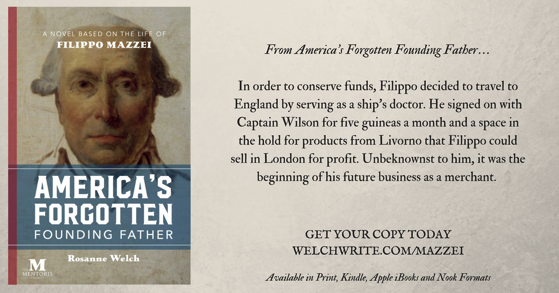
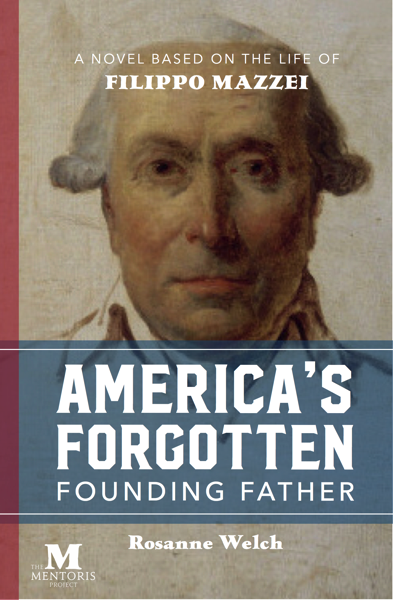
In order to conserve funds, Filippo decided to travel to England by serving as a ship’s doctor. He signed on with Captain Wilson for five guineas a month and a space in the hold for products from Livorno that Filippo could sell in London for profit. Unbeknownst to him, it was the beginning of his future business as a merchant.
For her 5th Doctor Who lecture to the CPP community, Dr. Rosanne Welch discusses how society – and the show’s writing staff – prepared the audience for a major change in this 50-year franchise – the creation of the first Lady Doctor!
Transcript:
So Russell Davies brought this new thing into the program — this new ability to represent. Now we have Steven Moffat who took over after Russell Davies and sometimes there’s controversy over Steven — was he as good, people don’t like him or they do like him. I think he did a lot of good things for the show particularly in paying with what kinds of women who traveled with The Doctor and how they were represented. Right? He gave us Amy Pond who’s married to a male nurse. We have a man in a generally, stereotypically female job and they are this perfect, lovely little couple. So I think that’s cool. He gave us Kate Lethbridge-Stewart, the daughter of a character that I’ll talk about in a little bit and she’s a Brigadier in the Army. He gave us Mels who is a Time Lord herself. We’ll talk about here in a minute. he gave us the first lesbian couple and it’s a lesbian alien-human couple. Right? You can’t get much more representative than that. Right? Madame Vastra and Jennie.
Rosanne Welch PhD teaches the History of Screenwriting and One-Hour Drama for the Stephens College MFA in Screenwriting.
Writing/producing credits include Beverly Hills 90210, Picket Fences, ABCNEWS: Nightline and Touched by an Angel. In 2016 she published the book Why The Monkees Matter: Teenagers, Television and American Pop; co-edited Women in American History: A Social, Political, and Cultural Encyclopedia; and placed “Transmitting Culture Transnationally Via the Characterization of Parents in Police Procedurals” in the New Review of Film and Television Studies. Essays appear in Torchwood Declassified: Investigating Mainstream Cult Television and Doctor Who and Race: An Anthology. Welch serves as Book Reviews editor for Journal of Screenwriting and on the Editorial Advisory Board for Written By magazine, the magazine of the Writers Guild.
I was missing the Memorial Day parades of my Cleveland, Ohio childhood until I realized I was engaging in an individual Memorial Day event without even planning such coordination.
Having taken my Mom to see a touring company of South Pacific for Mothers Day a few weekends back at the La Mirada Theatre, I had finally decided I ought to read the book from which the musical sprang so I ordered a copy of James Michener’s Tales of the South Pacific. I’ve been spending the day learning more about the men and women (remember there were nurses nearly wherever the soldiers were sent) who patrolled the Pacific in the early days of WWII. It’s a kind of double-major moment since it’s also allowing me the chance to consider which of the many tangential stories Oscar Hammerstein chose to include in the adaptation.
It’s also allowed me to recognize a part of my reader personality that I don’t think I had ever noticed – books hit me like the lightning bolt of Italian romantic myths. Tales of the South Pacific has always been available to me but it wasn’t until I had a reason to read it that suddenly I found a way to slide some reading time into my busy grading and writing schedule. And then I swallow that book I’ve been meaning to read in a couple of days – like taking a vacation from life and work for a few hours without the cost of fuel or lodging. Books – the world’s cheapest vacations!
†
* A portion of each sale from Amazon.com directly supports our blogs ** Many of these books may be available from your local library. Check it out! † Available from the LA Public Library
Rosanne Welch, PhD, Author of Why The Monkees Matter, presents “How The Monkees Changed Television” at a Cal State Fullerton Lunch Lecture on May 8, 2018.
In this talk, she shows how The Monkees, and specifically their presence on television, set the stage for large changes to come in the late 1960s.
Transcript
We’re going to talk about what was my favorite tv show when I was about 7-years-old and who knew that I would grow up and become a professor of Television Studies and I was asked at one point here at Fullerton to do a summer program we have for students, Gear Up, which is a program for students from high schools who are going to be introduced to what college is like so that they can be more comfortable signing up. It’s low income/high-achieving kids and so for that, they asked me to do a class in Critical Studies which is how to see into television programming, what was the ideology? What was behind the ideas of the show? And in doing so I thought “Well, gee, I want to talk about something I want to talk about so I chose my favorite show which I hadn’t really looked at in years only to find it was far more innovative than I had ever given it credit for as a kid.
Rosanne Welch, PhD is a writer, producer and university professor with credits that include Beverly Hills 90210, Picket Fences, Touched by an Angel and ABC NEWS/Nightline. Other books include Why The Monkees Matter: Teenagers, Television and American Pop Culture (McFarland, 2017) and Women in American History: A Social, Political, and Cultural Encyclopedia and Document Collection (ABC-CLIO, 2017), named to the 2018 Outstanding References Sources List, by the Reference and User Services Association (RUSA), a division of the American Library Association. Welch has also published chapters in Torchwood Declassified: Investigating Mainstream Cult Television (I.B.Tauris) and The American Civil War on Film and TV: Blue and Gray in Black and White and Color (Lexington Books, 2018) and essays in Doctor Who and Race: An Anthology and Outside In Makes it So, and Outside in Boldly Goes (both edited by Robert Smith). By day she teaches courses on the history of screenwriting and on television writing for the Stephens College MFA in Screenwriting programs. Her talk “The Importance of Having a Female Voice in the Room” at the 2016 TEDxCPP is available on YouTube.




![14 From Master to Missy from Gender Diversity in the Who-niverse [Video] (1:02)](https://rosannewelch.com/wp-content/uploads/2018/06/gender-dw-14-master-missy.jpeg)

![02 The Writers of The Monkees from How The Monkees Changed Television with Rosanne Welch, PhD [Video] (1:06)](https://rosannewelch.com/wp-content/uploads/2018/05/monkees-tv-02-writers.jpeg)

![13 Steven Moffat, Representation and Doctor Who from Gender Diversity in the Who-niverse [Video] (1:01)](https://rosannewelch.com/wp-content/uploads/2018/05/gender-dw-13-moffat-1.jpeg)

![01 Introduction from How The Monkees Changed Television with Rosanne Welch, PhD [Video] (0:50)](https://rosannewelch.com/wp-content/uploads/2018/05/monkees-tv-01-intro.png)