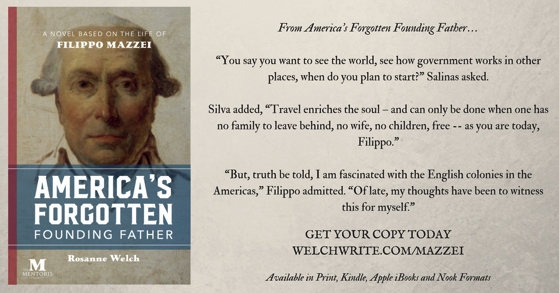
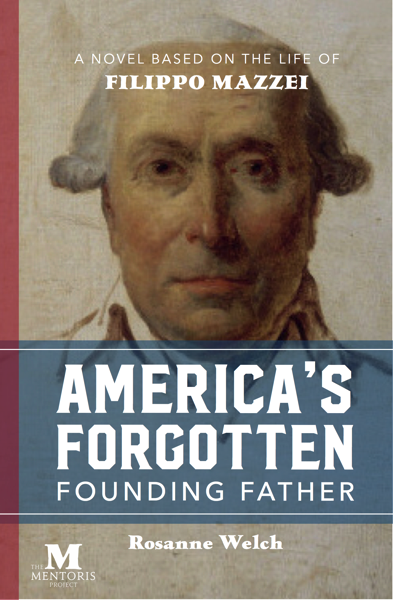
In order to conserve funds, Filippo decided to travel to England by serving as a ship’s doctor. He signed on with Captain Wilson for five guineas a month and a space in the hold for products from Livorno that Filippo could sell in London for profit. Unbeknownst to him, it was the beginning of his future business as a merchant.
I was missing the Memorial Day parades of my Cleveland, Ohio childhood until I realized I was engaging in an individual Memorial Day event without even planning such coordination.
Having taken my Mom to see a touring company of South Pacific for Mothers Day a few weekends back at the La Mirada Theatre, I had finally decided I ought to read the book from which the musical sprang so I ordered a copy of James Michener’s Tales of the South Pacific. I’ve been spending the day learning more about the men and women (remember there were nurses nearly wherever the soldiers were sent) who patrolled the Pacific in the early days of WWII. It’s a kind of double-major moment since it’s also allowing me the chance to consider which of the many tangential stories Oscar Hammerstein chose to include in the adaptation.
It’s also allowed me to recognize a part of my reader personality that I don’t think I had ever noticed – books hit me like the lightning bolt of Italian romantic myths. Tales of the South Pacific has always been available to me but it wasn’t until I had a reason to read it that suddenly I found a way to slide some reading time into my busy grading and writing schedule. And then I swallow that book I’ve been meaning to read in a couple of days – like taking a vacation from life and work for a few hours without the cost of fuel or lodging. Books – the world’s cheapest vacations!
†
* A portion of each sale from Amazon.com directly supports our blogs ** Many of these books may be available from your local library. Check it out! † Available from the LA Public Library
Rosanne Welch, PhD, Author of Why The Monkees Matter, presents “How The Monkees Changed Television” at a Cal State Fullerton Lunch Lecture on May 8, 2018.
In this talk, she shows how The Monkees, and specifically their presence on television, set the stage for large changes to come in the late 1960s.
Transcript
We’re going to talk about what was my favorite tv show when I was about 7-years-old and who knew that I would grow up and become a professor of Television Studies and I was asked at one point here at Fullerton to do a summer program we have for students, Gear Up, which is a program for students from high schools who are going to be introduced to what college is like so that they can be more comfortable signing up. It’s low income/high-achieving kids and so for that, they asked me to do a class in Critical Studies which is how to see into television programming, what was the ideology? What was behind the ideas of the show? And in doing so I thought “Well, gee, I want to talk about something I want to talk about so I chose my favorite show which I hadn’t really looked at in years only to find it was far more innovative than I had ever given it credit for as a kid.
Rosanne Welch, PhD is a writer, producer and university professor with credits that include Beverly Hills 90210, Picket Fences, Touched by an Angel and ABC NEWS/Nightline. Other books include Why The Monkees Matter: Teenagers, Television and American Pop Culture (McFarland, 2017) and Women in American History: A Social, Political, and Cultural Encyclopedia and Document Collection (ABC-CLIO, 2017), named to the 2018 Outstanding References Sources List, by the Reference and User Services Association (RUSA), a division of the American Library Association. Welch has also published chapters in Torchwood Declassified: Investigating Mainstream Cult Television (I.B.Tauris) and The American Civil War on Film and TV: Blue and Gray in Black and White and Color (Lexington Books, 2018) and essays in Doctor Who and Race: An Anthology and Outside In Makes it So, and Outside in Boldly Goes (both edited by Robert Smith). By day she teaches courses on the history of screenwriting and on television writing for the Stephens College MFA in Screenwriting programs. Her talk “The Importance of Having a Female Voice in the Room” at the 2016 TEDxCPP is available on YouTube.
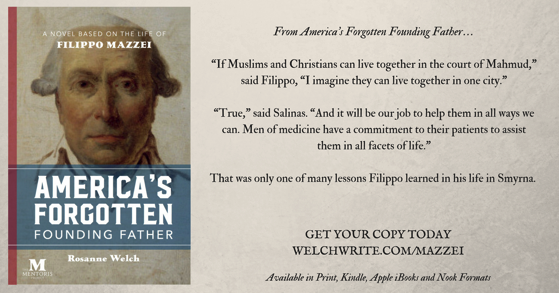
“If Muslims and Christians can live together in the court of Mahmud,” said Filippo, “I imagine they can live together in one city.”
“True,” said Salinas. “And it will be our job to help them in all ways we can. Men of medicine have a commitment to their patients to assist them in all facets of life.”
That was only one of many lessons Filippo learned in his life in Smyrna
I’m so excited to see that we’re now publishing on this collection of essays written by the original cohort of students in our first Stephens College MFA in Screenwriting which I edited and for which author Cari Beauchamp wrote a wonderful forward covering the life and influence of Frances Marion.
These 23 essays cover a range of female screenwriters from the early years of film through the 1940s, women whose work helped create the unforgettable stories and characters beloved generations of audiences but whose names have been left out of most film histories. Not this one. This collection is dedicated to those women and written by a group of women grateful to stand on the shoulders of those who came before – as a beacon to those who will come after.
Rosanne Welch, PhD, Author of Why The Monkees Matter, presents “How The Monkees Changed Television” at a Cal State Fullerton Lunch Lecture on May 8, 2018.
In this talk, she shows how The Monkees, and specifically their presence on television, set the stage for large changes to come in the late 1960s.
Rosanne Welch, PhD is a writer, producer and university professor with credits that include Beverly Hills 90210, Picket Fences, Touched by an Angel and ABC NEWS/Nightline. Other books include Why The Monkees Matter: Teenagers, Television and American Pop Culture (McFarland, 2017) and Women in American History: A Social, Political, and Cultural Encyclopedia and Document Collection (ABC-CLIO, 2017), named to the 2018 Outstanding References Sources List, by the Reference and User Services Association (RUSA), a division of the American Library Association. Welch has also published chapters in Torchwood Declassified: Investigating Mainstream Cult Television (I.B.Tauris) and The American Civil War on Film and TV: Blue and Gray in Black and White and Color (Lexington Books, 2018) and essays in Doctor Who and Race: An Anthology and Outside In Makes it So, and Outside in Boldly Goes (both edited by Robert Smith). By day she teaches courses on the history of screenwriting and on television writing for the Stephens College MFA in Screenwriting programs. Her talk “The Importance of Having a Female Voice in the Room” at the 2016 TEDxCPP is available on YouTube.
“You say you want to see the world, see how government works in other places, when do you plan to start?” Salinas asked.
Silva added, “Travel enriches the soul – and can only be done when one has no family to leave behind, no wife, no children, free — as you are today, Filippo.”
“But, truth be told, I am fascinated with the English colonies in the Americas,” Filippo admitted. “Of late, my thoughts have been to witness this for myself.”
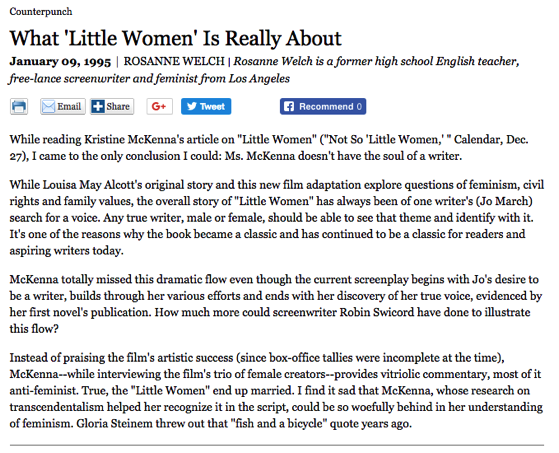
The writer of the essay was a male, JSTOR Daily’s features editor Benjamin Winterhalter and he was reminiscing about a summer in his elementary years when his mother and friends dissected all the filmed adaptations of the novel in preparation for writing an article — “A Feminist Romance: Adapting Little Women to the Screen” for Tulsa Studies in Women’s Literature.
Winterhalter’s article came up because along his research way he came across an Op-Ed I had written for the Los Angeles Times, “What ‘Little Women’ Is Really About” about the 1995 Robin Schiff adaptation (starring Winona Ryder) which I had framed as both a more deeply feminist interpretation but, more importantly, accessible to all as the story of a writer finding their voice.
How fun to be reminded of that Op-Ed and to see how accessible my earlier work can be with archives going digital. It’s also good timing as I often recommend to screenwriting students that they write for various local publications in order to get their names out there and to fill out their writing CVs. Here’s an example of a piece I wrote when I had a passionate idea ( the one about how this is more the story of a writer finding their voice than merely a bunch of sisters surviving the Civil War). Since I did not see that idea represented in the mainstream press, I brought it to their attention and they noticed it and presented it to their readers.

![01 Introduction from How The Monkees Changed Television with Rosanne Welch, PhD [Video] (0:50)](https://rosannewelch.com/wp-content/uploads/2018/05/monkees-tv-01-intro.png)



![How The Monkees Changed Television with Rosanne Welch, PhD (Complete Presentation and Q&A) [Video] (45:06)](https://rosannewelch.com/wp-content/uploads/2018/05/How-The-Monkees-Changed-Television-1.png)