Then he turned to his mother sadly. “Good-bye, mother. May God reward you as you deserve for your behavior toward me. If you will not listen to me, if you will not see the error of these choices, I will spend the rest of my life proving you have given all your love to the wrong son.”
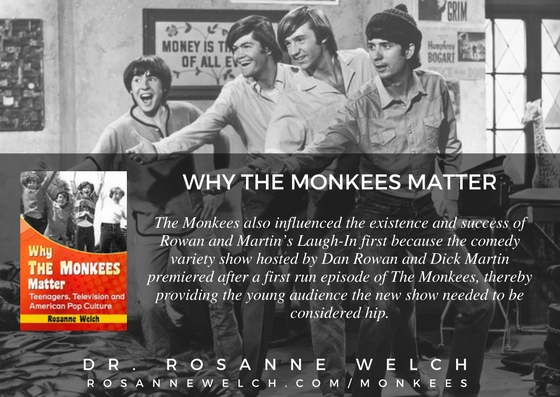
The Monkees also influenced the existence and success of Rowan and Martin’s Laugh-In first because the comedy variety show hosted by Dan Rowan and Dick Martin premiered after a first run episode of The Monkees, thereby providing the young audience the new show needed to be considered hip.
Screenwriters often joke that “no one ever paid a dollar at a movie theater to watch a screenplay.” Yet the screenplay is where a movie begins, determining whether a production gets the “green light” from its financial backers and wins approval from its audience. This innovative volume gives readers a comprehensive portrait of the art and business of screenwriting, while showing how the role of the screenwriter has evolved over the years.
Reaching back to the early days of Hollywood, when moonlighting novelists, playwrights, and journalists were first hired to write scenarios and photoplays, Screenwriting illuminates the profound ways that screenwriters have contributed to the films we love. This book explores the social, political, and economic implications of the changing craft of American screenwriting from the silent screen through the classical Hollywood years, the rise of independent cinema, and on to the contemporary global multi-media marketplace. From The Birth of a Nation (1915), Gone With the Wind (1939), and Gentleman’s Agreement (1947) to Chinatown (1974), American Beauty (1999), and Lost in Translation (2003), each project began as writers with pen and ink, typewriters, or computers captured the hopes and dreams, the nightmares and concerns of the periods in which they were writing.
As the contributors take us behind the silver screen to chronicle the history of screenwriting, they spotlight a range of key screenplays that changed the game in Hollywood and beyond. With original essays from both distinguished film scholars and accomplished screenwriters, Screenwriting is sure to fascinate anyone with an interest in Hollywood, from movie buffs to industry professionals. — Amazon.com
†
* A portion of each sale from Amazon.com directly supports our blogs ** Many of these books may be available from your local library. Check it out! † Available at the LA Public Library
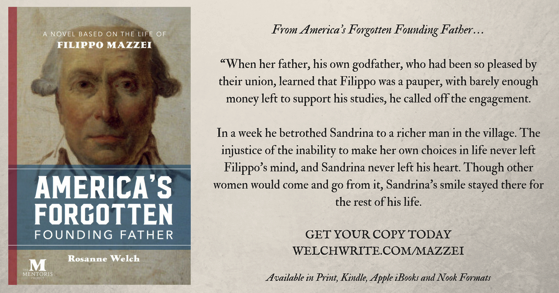
“When her father, his own godfather, who had been so pleased by their union, learned that Filippo was a pauper, with barely enough money left to support his studies, he called off the engagement.
In a week he betrothed Sandrina to a richer man in the village. The injustice of the inability to make her own choices in life never left Filippo’s mind, and Sandrina never left his heart. Though other women would come and go from it, Sandrina’s smile stayed there for the rest of his life.”
Dr. Rosanne Welch presents at Cal Poly Pomona’s Golden Leaves Presentation [Video] (5:21)
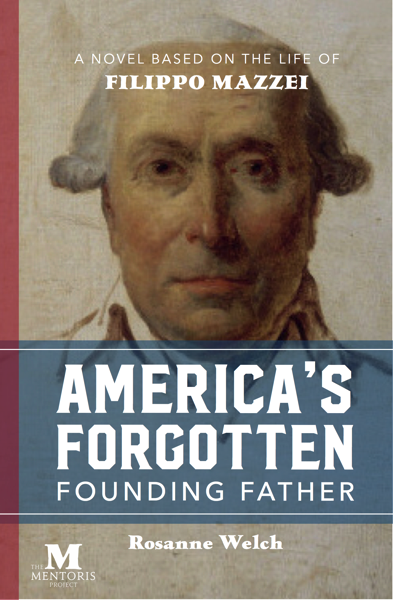
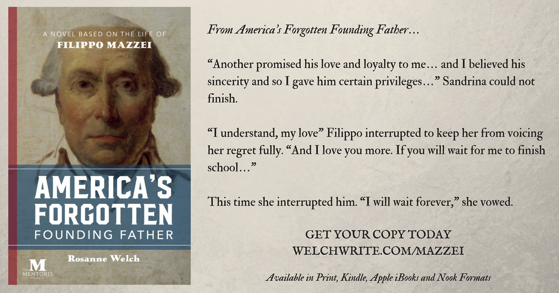
Thanks to the librarians at CalPoly Pomona for another fun afternoon listening to all my colleagues who have published books this year at the annual Golden Leaves Ceremony. This year I enjoyed sharing a reading from my new novel, Filippo Mazzei America’s Forgotten Founding Father, the story of an Italian-American patriot who owned the plantation next door to Thomas Jefferson – but chose not to own slaves. Rather he worked at establishing a vineyard with the help of other Italian immigrants (whose children and grandchildren helped populate Virginia according to records kept at Monticello).
Alongside Jefferson, Mazzei wrote articles in support of the Revolution and is now credited with coining the phrase “All Men are Created Equal”, which Jefferson found so inspiring he added it to his Declaration. As the Revolutionary War waged on, Jefferson and other Founding Fathers asked Mazzei to return to Europe and solicit funds, weapons and other support from the leading countries of Europe, which he gladly did, though it separated him from the beloved country he had adopted.
It is my hope that the more people who hear my talks and read this novel, the more will learn to add Mazzei’s name to the list of folks who helped found our country.
The Golden Leaves
Since 1986, the Golden Leaves program has celebrated those members of the Cal Poly Pomona campus community (faculty, staff, students, alumni and retirees) who have authored or edited a book* in the preceding year. The Golden Leaves program is funded by the University Library.
Each year books published by Cal Poly Pomona authors are on display in the Library during the month of April. The Golden Leaves program is celebrated annually at the University Library in conjunction with National Library Week.
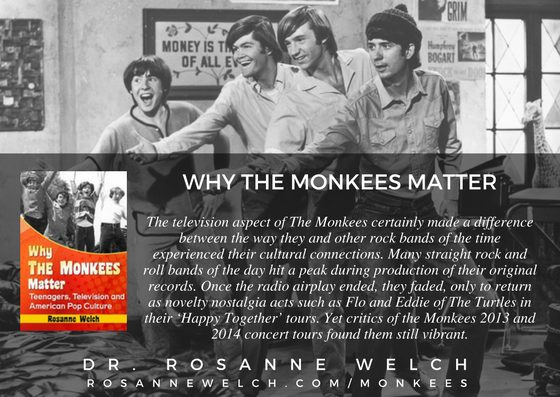
The television aspect of The Monkees certainly made a difference between the way they and other rock bands of the time experienced their cultural connections. Many straight rock and roll bands of the day hit a peak during production of their original records. Once the radio airplay ended, they faded, only to return as novelty nostalgia acts such as Flo and Eddie of The Turtles in their ‘Happy Together’ tours. Yet critics of the Monkees 2013 and 2014 concert tours found them still vibrant.
“Another promised his love and loyalty to me… and I believed his sincerity and so I gave him certain privileges…” Sandrina could not finish.
“I understand, my love” Filippo interrupted to keep her from voicing her regret fully. “And I love you more. If you will wait for me to finish school…”
This time she interrupted him. “I will wait forever,” she vowed.
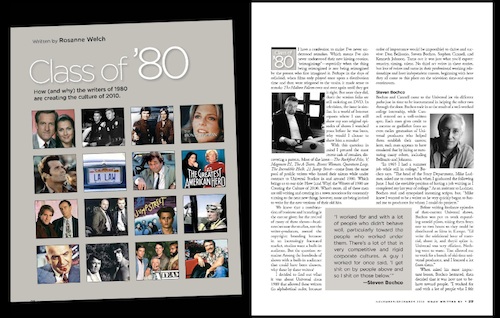
On the passing of Steven Bochco I was reminded of the wonderful opportunity I had to interview him for Written By Magazine back in 2010 thanks to the aide of my former boss, Kenny Johnson, who was a former college buddy and lifetime friend of Mr. Bochco. That was the year of the (deservedly) failed re-imagining of The Bionic Woman and talk of film versions of 21 Jump Street and The A Team so I had come up with an article idea to interview the creative geniuses behind the originals.
I emailed Kenny to see if he would sit for the interview, and if he thought his friends the two Steves (Bochco and Cannel) would do the same. He called around and they all said yes. I had only to approach Don Bellisario on my own to fill out the foursome and I was on my way. Funny thing was I had told Kenny about the story idea but admitted I was swamped finishing my PhD so I might not get to it for another few months. Kenny encouraged me to go for it “now” – so I did – and in the course of seeing the article through to publication, Mr. Cannell passed away of cancer only his family and friends knew about – including Kenny. So Kenny had urged me to work in the piece knowing I wouldn’t be able to include Mr. Cannell if I waited too long. The magazine was able to collect letters from writers who had been given their start at the Cannell company and publish a tribute to him alongside my article.
Now we’ve lost Mr. Bochco as well – a man I never had the chance to work with, but whom I have always admired. Even today I rave to my one-hour drama students about “Hearts and Souls” – the NYPD BLUE episode where Jimmy Smits’ character Bobby Simone dies (story by Bochco, David Milch and Bill Clark, teleplay by Nicholas Wootton- and I get tears in my eyes just recounting the story to them all these years later. He truly created what we now call the 2nd Golden Age of Television Drama from Hill Street Blues forward, though NYPD BLUE will always be my favorite.
* A portion of each sale from Amazon.com directly supports our blogs ** Many of these books may be available from your local library. Check it out! † Available from the LA Public Library



 †
†
![Dr. Rosanne Welch presents at Cal Poly Pomona’s Golden Leaves Presentation [Video] (5:21)](https://rosannewelch.com/wp-content/uploads/2018/04/rmw-golden-leaves-2018.jpeg)



 †
†