When two Monkees fans get together, magic always happens, as you’ll see when you read what Wendy Fawthrop of the Orange County Register thought of my last Monkees lecture, which was open to the public. — Rosanne
And after Rosanne Welch spoke recently to a gathering of Cal State Fullerton students and faculty, many of them were left also believing that the Monkees, the 1960s boy band, had a greater impact on television, music and pop culture than they had thought.
Illustrated with slides of the Monkees with Paul McCartney and Janis Joplin, on cereal boxes and in pop culture references long after their heyday, Welch’s talk laid out evidence that the group’s TV show made strong feminist statements and advanced such TV practices as characters addressing the audience, used today on such shows as “Modern Family” and “House of Cards.”
“They influenced so many of today’s modern-day performers and yet people keep forgetting about that,” said Welch.
To highlight the wonderful yet largely forgotten work of a collection of female screenwriters from the early years of Hollywood (and as a companion to the book, When Women Wrote Hollywood) we will be posting quick bits about the many films they wrote along with links to further information and clips from their works which are still accessible online. Take a few moments once or twice a week to become familiar with their names and their stories. I think you’ll be surprised at how much bold material these writers tackled at the birth of this new medium. — Rosanne Welch
Alice Guy-Blaché (July 1, 1873 – March 24, 1968) was a pioneer filmmaker, active from the late 19th century, and one of the first to make a narrative fiction film.[2] From 1896 to 1906 she was probably the only female filmmaker in the world. [3] She experimented with Gaumont’s Chronophone sound syncing system, color tinting, interracial casting, and special effects. She was a founder and artistic director of the Solax Studios in Flushing, New York, in 1908. In 1912 Solax invested $100,000 for a new studio in Fort Lee, New Jersey, the center of American filmmaking prior to the establishment of Hollywood. That same year she made the film A Fool and his Money, with a cast comprised only African-American actors. The film is now at the National Center for Film and Video Preservation at the American Film Institute.[4] — Wikipedia
* A portion of each sale from Amazon.com directly supports our blogs ** Many of these books may be available from your local library. Check it out! † Available from the LA Public Library
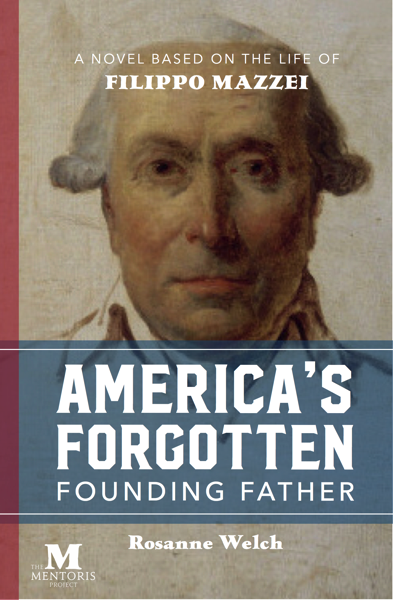
Finding some royals deeply intelligent and others deeply ignorant fed Filippo’s distaste of the act of royal succession and fueled his later interest in supporting the colonists in their overthrow of King George III. In the meantime, Filippo decided to go to Rome to face the Tribunal of the Inquisition himself, letters in hand, though he would be without a passport so if they chose to incarcerate him, he would be trapped.
For her 5th Doctor Who lecture to the CPP community, Dr. Rosanne Welch discusses how society – and the show’s writing staff – prepared the audience for a major change in this 50-year franchise – the creation of the first Lady Doctor!
Transcript:
You may never have seen a Tom Baker Doctor Who. You should check it out, but you have in fact seen Tom Baker as Doctor Who if you saw the 50th Anniversary special. That was his special guest starring moment. Right? And I think it’s quite adorable. It was quite fun. He was, as I said, replaced by Peter Davison who happens to be my favorite Doctor. Although there was some controversy with the announcement of the new lady Doctor. He actually said he was sorry that they had chosen to make her a female because boys would lose a role model that they needed. And there was a whole lot of … Oh, you’re old-fashioned. You’re all bad. We don’t like you. You have to listen to what he’s saying. He’s saying that what’s special about Doctor Who is he shows a different side of gender. He counters the toxic masculinity in our society. The kind of stuff that’s been discussed in the news right now over the Weinstein thing and Loius CK. The toxic masculinity. The Doctor has always been a man driven by his intellect, his brain. He’s not using violence to solve problems and so what Peter Davison was saying was he regretted little boys not having this kind of man to look up to. An argument on the other side could be why can’t little boys look up to women who are in power positions. So you could go and look at it that way. I think it goes either way.
Rosanne Welch PhD teaches the History of Screenwriting and One-Hour Drama for the Stephens College MFA in Screenwriting.
Writing/producing credits include Beverly Hills 90210, Picket Fences, ABCNEWS: Nightline and Touched by an Angel. In 2016 she published the book Why The Monkees Matter: Teenagers, Television and American Pop; co-edited Women in American History: A Social, Political, and Cultural Encyclopedia; and placed “Transmitting Culture Transnationally Via the Characterization of Parents in Police Procedurals” in the New Review of Film and Television Studies. Essays appear in Torchwood Declassified: Investigating Mainstream Cult Television and Doctor Who and Race: An Anthology. Welch serves as Book Reviews editor for Journal of Screenwriting and on the Editorial Advisory Board for Written By magazine, the magazine of the Writers Guild.
To highlight the wonderful yet largely forgotten work of a collection of female screenwriters from the early years of Hollywood (and as a companion to the book, When Women Wrote Hollywood) we will be posting quick bits about the many films they wrote along with links to further information and clips from their works which are still accessible online. Take a few moments once or twice a week to become familiar with their names and their stories. I think you’ll be surprised at how much bold material these writers tackled at the birth of this new medium. — Rosanne Welch
When Women Wrote Hollywood – 5 in a series – The New York Hat (1912), Wr: Anita Loos, Dirs: D. W. Griffith
The New York Hat (1912) is a short silent film directed by D. W. Griffith from a screenplay by Anita Loos, and starring Mary Pickford, Lionel Barrymore, and Lillian Gish.
The New York Hat is one of the most notable of the Biograph Studios short films and is perhaps the best known example of Pickford’s early work, and an example of Anita Loos’s witty writing. The film was made by Biograph when it and many other early U.S. movie studios were based in Fort Lee, New Jersey at the beginning of the 20th century.[1][2][3]
Mollie Goodhue leads a cheerless, impoverished life, largely because of her stern, miserly father. Mrs. Goodhue is mortally ill, but before dying, she gives the minister, Preacher Bolton, some money with which to buy her daughter the “finery” her father always forbade her.
Mollie is delighted when the minister presents her with a fashionable New York hat she has been longing for, but village gossips misinterpret the minister’s intentions and spread malicious rumors. Mollie becomes a social pariah, and her father tears up the beloved hat in a rage.
All ends well, however, after the minister produces a letter from Mollie’s mother about the money she left the minister to spend on Mollie. Soon afterwards, he proposes to Mollie, who accepts his offer of marriage.— Wikipedia
* A portion of each sale from Amazon.com directly supports our blogs ** Many of these books may be available from your local library. Check it out! † Available from the LA Public Library
Rosanne Welch, PhD, Author of Why The Monkees Matter, presents “How The Monkees Changed Television” at a Cal State Fullerton Lunch Lecture on May 8, 2018.
In this talk, she shows how The Monkees, and specifically their presence on television, set the stage for large changes to come in the late 1960s.
Transcript
In the book world, not only have I don the Monkees book, but I’ve done — in our library here — the Women in American History. It’s a four-volume encyclopedia series — I think they have an ebook version of it here — that I just put out last year, as well, which is really interesting because we cover women in history and popular culture and often you don’t blend those,. So our little tagline was you’ll meet Lady Bird Johnson and Lady Gaga all in the same book. So That;s Cool. My most recent one is a novel on Filippo Mazzei who was the man who owned the plantation next door to Thomas Jefferson. he was an Italian immigrant and he wrote the words “All Men Are Created Equal” in a pamphlet and Thomas Jefferson liked it and you know where it appeared later. He’s a pretty cool guy. I liked him. So that’s what I do. I’m also on the book review board for the Journal of Screenwriting and, as I just noted, Written By Magazine.
Rosanne Welch, PhD is a writer, producer and university professor with credits that include Beverly Hills 90210, Picket Fences, Touched by an Angel and ABC NEWS/Nightline. Other books include Why The Monkees Matter: Teenagers, Television and American Pop Culture (McFarland, 2017) and Women in American History: A Social, Political, and Cultural Encyclopedia and Document Collection (ABC-CLIO, 2017), named to the 2018 Outstanding References Sources List, by the Reference and User Services Association (RUSA), a division of the American Library Association. Welch has also published chapters in Torchwood Declassified: Investigating Mainstream Cult Television (I.B.Tauris) and The American Civil War on Film and TV: Blue and Gray in Black and White and Color (Lexington Books, 2018) and essays in Doctor Who and Race: An Anthology and Outside In Makes it So, and Outside in Boldly Goes (both edited by Robert Smith). By day she teaches courses on the history of screenwriting and on television writing for the Stephens College MFA in Screenwriting programs. Her talk “The Importance of Having a Female Voice in the Room” at the 2016 TEDxCPP is available on YouTube.
A letter arrived from Raimondo Cocchi, his oldest friend in the city. “I wanted to warn you that a letter against you has been filed here. It is alleged that you sent a large number of banned books on a ship bound for Genoa, Livorno, Civita, Vecchia, Naples and Messina, for the purpose of infecting all of Italy. The matter is one for the Inquisition and may cause you some trouble.
For her 5th Doctor Who lecture to the CPP community, Dr. Rosanne Welch discusses how society – and the show’s writing staff – prepared the audience for a major change in this 50-year franchise – the creation of the first Lady Doctor!
Transcript:
Is this the first time anyone’s ever considered a lady Doctor? As a matter of fact, it’s not. This has been in discussions for a while but it’s as if society wasn’t ready for it and they knew it. They had to wait for us to catch up to what the writers wanted to do. Tome Baker who some of you, if you know old Who, should know as one of the most popular, previous Doctors — he actually said, when they were switching Doctors and that was in 1980 — “I wish my successor, whoever he or she might be, the best of luck.” So he was already planting the seeds of this possibility and I think that’s really interesting in 1980. What’s funny is, I often tell people, it’s wonderful to watch news from other countries to realize there are different perspectives than our American perspectives and my favorite story is, in 1980 when they announced the new Doctor, the first story on the BBC news that evening was that Peter Davison would take over for the job of Doctor Who from Tom Baker. The second news story in England that day was that Ronald Reagan had just won the American presidency.
Rosanne Welch PhD teaches the History of Screenwriting and One-Hour Drama for the Stephens College MFA in Screenwriting.
Writing/producing credits include Beverly Hills 90210, Picket Fences, ABCNEWS: Nightline and Touched by an Angel. In 2016 she published the book Why The Monkees Matter: Teenagers, Television and American Pop; co-edited Women in American History: A Social, Political, and Cultural Encyclopedia; and placed “Transmitting Culture Transnationally Via the Characterization of Parents in Police Procedurals” in the New Review of Film and Television Studies. Essays appear in Torchwood Declassified: Investigating Mainstream Cult Television and Doctor Who and Race: An Anthology. Welch serves as Book Reviews editor for Journal of Screenwriting and on the Editorial Advisory Board for Written By magazine, the magazine of the Writers Guild.
To highlight the wonderful yet largely forgotten work of a collection of female screenwriters from the early years of Hollywood (and as a companion to the book, When Women Wrote Hollywood) we will be posting quick bits about the many films they wrote along with links to further information and clips from their works which are still accessible online. Take a few moments once or twice a week to become familiar with their names and their stories. I think you’ll be surprised at how much bold material these writers tackled at the birth of this new medium. — Rosanne Welch
Anita Loos (April 26, 1889[1] – August 18, 1981) was an American screenwriter, playwright and author, best known for her blockbuster comic novel, Gentlemen Prefer Blondes. She wrote film scripts from 1912, and became arguably the first-ever staff scriptwriter, when D.W. Griffith put her on the payroll at Triangle Film Corporation. She went on to write many of the Douglas Fairbanks films, as well as the stage adaptation of Colette’s Gigi.
Loos would continue writing, always a constant magazine contributor and appearing regularly in Harper’s Bazaar, Vanity Fair and The New Yorker. Biographer Gary Carey notes: “She was a born storyteller and was always in peak form when reshaping a real-life encounter to make an amusing anecdote.”[4] Loos began a volume of memoirs, A Girl Like I, which would be published in September 1966. Her 1972 book, Twice Over Lightly: New York Then and Now, was written in collaboration with friend and actress Helen Hayes. Kiss Hollywood Good-by (1974) was another Hollywood memoir, this time about the MGM years and would be very successful. Her book The Talmadge Girls (1978) is about the actress sisters Constance Talmadge and Norma Talmadge.
Loos would become a virtual New York institution, an assiduous partygoer and diner-out, conspicuous at fashion shows, theatrical and movie events, balls and galas.[14] A celebrity anecdotalist, she was also never one to let facts spoil a good story: — Wikipedia
* A portion of each sale from Amazon.com directly supports our blogs ** Many of these books may be available from your local library. Check it out! † Available from the LA Public Library
Rosanne Welch, PhD, Author of Why The Monkees Matter, presents “How The Monkees Changed Television” at a Cal State Fullerton Lunch Lecture on May 8, 2018.
In this talk, she shows how The Monkees, and specifically their presence on television, set the stage for large changes to come in the late 1960s.
Transcript
…and they won for Best Director who happened to be James Frawley who was a new young guy in town. He grew up to direct the original Muppets Movie and win several awards in his career. So this is how he got started and you’ll see some similarities between the four guys and The Muppets. They’re all just kind of characters having fun. So, just to let you know who I am as John was happy to say, I was television writer for many years. I wrote on Beverly Hills 90210, a show called Picket Fences which I adored but was canceled in its third season and I spent a long time on Touched By An Angel. I did a documentary for ABC News Nightline which was based on the American Legion Boys Nation group. There 50th anniversary year for 1963. They had all met President John F. Kennedy and 1993 Bill Clinton who was one of them was President of the United States and they had a reunion at The White House and so I got meet with them and interview them about their life and what they had lived through.
Rosanne Welch, PhD is a writer, producer and university professor with credits that include Beverly Hills 90210, Picket Fences, Touched by an Angel and ABC NEWS/Nightline. Other books include Why The Monkees Matter: Teenagers, Television and American Pop Culture (McFarland, 2017) and Women in American History: A Social, Political, and Cultural Encyclopedia and Document Collection (ABC-CLIO, 2017), named to the 2018 Outstanding References Sources List, by the Reference and User Services Association (RUSA), a division of the American Library Association. Welch has also published chapters in Torchwood Declassified: Investigating Mainstream Cult Television (I.B.Tauris) and The American Civil War on Film and TV: Blue and Gray in Black and White and Color (Lexington Books, 2018) and essays in Doctor Who and Race: An Anthology and Outside In Makes it So, and Outside in Boldly Goes (both edited by Robert Smith). By day she teaches courses on the history of screenwriting and on television writing for the Stephens College MFA in Screenwriting programs. Her talk “The Importance of Having a Female Voice in the Room” at the 2016 TEDxCPP is available on YouTube.




 To highlight the wonderful yet largely forgotten work of a collection of female screenwriters from the early years of Hollywood (and as a companion to the book,


![17 Toxic Masculinity, Patriarchy and Doctor Who from Gender Diversity in the Who-niverse [Video] (1:20)](https://rosannewelch.com/wp-content/uploads/2018/06/gender-dw-17-toxic.jpeg)

![05 Books by Dr. Rosanne Welch from How The Monkees Changed Television [Video] (0:52)](https://rosannewelch.com/wp-content/uploads/2018/06/monkees-tv-05-books.jpeg)

![16 First Mention of a Lady Doctor? from Gender Diversity in the Who-niverse [Video] (1:02)](https://rosannewelch.com/wp-content/uploads/2018/06/gender-dw-16-first-lady.jpeg)


 †
†![04 How Monkees Directors & Who Is Rosanne Welch? from How The Monkees Changed Television [Video] (1:02)](https://rosannewelch.com/wp-content/uploads/2018/06/monkees-tv-04-who.jpeg)