07 Madeline Pugh From Women in Early TV for the American Women Writers National Museum [Video]

07 Madeline Pugh From Women in Early TV for the American Women Writers National Museum [Video]

Many thanks to Janice Law of the American Women Writers National Museum who invited me to give a short talk on The Women of Early TV.

I enjoyed sharing the names and careers of women like Peg Lynch, Gertrude Berg, Selma Diamond, and D.C. Fontana to the members who gathered on Zoom last Wednesday morning. There are so many more I could have talked about whose names don’t appear in mainstream books about the history of television so we have to learn who they are and carry those names forward ourselves.  It’s one of the missions of the Stephens College MFA in TV and Screenwriting – and has been one of my missions all my life.

RMW Rosanne Signature for Web

Transcript:

Madeline Pugh is not a woman who is forgotten in the books because she wrote for, of course, the most iconic woman on television, Lucille Ball and Madeleine Pugh was at the very beginning of Lucille Ball’s television career and stayed with her all the way through each of the three major shows she was ever a star of. You’ll notice here very tiny on her chair. It said Madeline Pugh Girl Writer. Imagine that. She is not a girl at this stage in her career. She is a grown woman who has a good history behind her of writing radio programs and then moving into this world. She co-wrote with this gentleman Bob Carroll whom she never married. They were just writing partners which was marvelous. She had her own personal life. She, in fact, married a man who had three children and eventually left Hollywood for a while and then decided she missed it and they as a whole family moved back and she continued. so Madeline Pugh is a huge, huge person in the history of television. She’s one of the few who might show up in a book because if you talk about The Lucille Ball Show you must talk about Madeline. One of the things madeleine did was as they wrote gags or the particular physical comedy that they would expect Lucy to do, Madeline would perform those tricks first. She would have to see if they were safe and they were doable and in fact, were they really funny when you saw them finished. So she was both sort of a side performer and of course a writer on the show. So I think Madeline Pugh is someone you should never forget as well as of course Lucille Ball.1

Many thanks to Janice Law of the American Women Writers National Museum who invited me to give a short talk on The Women of Early TV.

I enjoyed sharing the names and careers of women like Peg Lynch, Gertrude Berg, Selma Diamond, and D.C. Fontana to the members who gathered on Zoom last Wednesday morning. There are so many more I could have talked about whose names don’t appear in mainstream books about the history of television so we have to learn who they are and carry those names forward ourselves. It’s one of the missions of the Stephens College MFA in TV and Screenwriting – and has been one of my missions all my life.

Watch this entire presentation


Women pioneers who created, produced, or shepherded many of America’s most wildly popular, early television programs will be profiled by Dr. Rosanne Welch.

Get your copy today!

32 More On Pitching…from Worry and Wonder | The Courier Thirteen Podcast [Video]

Watch the entire presentation – Worry and Wonder | The Courier Thirteen Podcast | Episode # 29 here

32 More On Pitching...from Worry and Wonder | The Courier Thirteen Podcast [Video]

Transcript:

Yeah. It doesn’t even — they don’t have to like your story. If they like you they can bring you and you know that’s the other thing that happens — if they like you but they don’t buy your story, your pitch, whether, it’s a tv show or a movie whatever it is but they have a book that they have bought their rights to and they want someone to come in with what is your idea and how this book will work. That’s when they’ll go oh I really like working with you. I really feel a connection to you. Go home and think about this and come back in a couple weeks and tell me how you would attack this and maybe you’ll get that gig. So that’s what you’re trying in a meeting if nothing else happens or you know I ended up doing that Picket Fences episode because I had temped on a show that Jeff Melvoin was an executive — that time he’s a supervising producer — and so we met for like two weeks and he read something of mine and he was impressed and we stayed in touch. It was four years before he got the job where he could hire me. One, two-week job gave me a story — a script — four years later. You gotta always think about the future of the relationships that you’re making.

It’s always fun to sit down with students and share stories about entering the television industry and how things work at all stages and I had that opportunity the other day.

Daniela Torres, a just-graduated (Congratulations!) student of the Columbia College Semester in LA program asked me to guest on a podcast she had recently begun hosting with another college student she met during her internship (good example of networking in action!).

We could have talked all morning (the benefit of a 3 hour class session) but we held it to about an hour and fifteen minutes or so. Hopefully, along the way I answered some questions you might have about how the business works. So often it amounts to working hard at being a better writer and gathering a group of other talented, hard-working people around you so you can all rise together.

Dr. Rosanne Welch is a television writer with credits that include Beverly Hills 90210, Picket Fences, ABCNEWS: Nightline and Touched by an Angel. She also teaches Television Writing and the Art of Film at San Jose State University.

Rosanne discusses what made shows like Beverly Hills 90210 compelling, what to do and not to do when attempting to pitch a show to broadcast or streaming, what most young writers neglect in their writing process, and much more!

The Courier Thirteen Podcast is available on YouTube, Spotify, Apple Podcasts, SoundCloud, and Audible.

05 The Missing Women Part 2 From Women in Early TV for the American Women Writers National Museum [Video]

05 The Missing Women Part 2 From Women in Early TV for the American Women Writers National Museum [Video]

Many thanks to Janice Law of the American Women Writers National Museum who invited me to give a short talk on The Women of Early TV.

I enjoyed sharing the names and careers of women like Peg Lynch, Gertrude Berg, Selma Diamond, and D.C. Fontana to the members who gathered on Zoom last Wednesday morning. There are so many more I could have talked about whose names don’t appear in mainstream books about the history of television so we have to learn who they are and carry those names forward ourselves.  It’s one of the missions of the Stephens College MFA in TV and Screenwriting – and has been one of my missions all my life.

RMW Rosanne Signature for Web

Transcript:

However, those two ladies were so important to the creation of Rose Marie — this character on the beloved Dick Van Dyke Show. This is one of the most important characters really in television history and many many female tv writers today will tell you that they knew this job was possible because they saw her do it on the fictional Dick Van Dyke Show and The Dick Van Dyke Show was a fictionalization of the staff writing for Sid Caesar right? Carl Reiner’s character is meant to be a personification of that. So these are the typical gentlemen who worked for him and she is a representation of Lucille and Selma Diamond sort of wrapped together. A woman who never got married right? Couldn’t find a guy. This is a very stereotypical vision of a career gal as they would say back in the day but she inspired many many women all the way up through Tina Fey and I think it’s always important to think about the power of television. One of my favorite stories has nothing to do with tv writers but to do with a Supreme Court Justice Sonia Sotomayor, who says she learned that she could be a lawyer someday by watching Perry Mason as a child. She learned that lawyers existed and that it was a job that required college and so she did well in school so that she could move forward and look she’s on the Supreme Court today. So television has a lot of power and the visuals women see on television are very very important to the ideas. You have to see it so that you can be it right? So Rose Marie stands for a lot of things — a representation of the women who truly did come before her and an inspiration to the women who came after.

Many thanks to Janice Law of the American Women Writers National Museum who invited me to give a short talk on The Women of Early TV.

I enjoyed sharing the names and careers of women like Peg Lynch, Gertrude Berg, Selma Diamond, and D.C. Fontana to the members who gathered on Zoom last Wednesday morning. There are so many more I could have talked about whose names don’t appear in mainstream books about the history of television so we have to learn who they are and carry those names forward ourselves. It’s one of the missions of the Stephens College MFA in TV and Screenwriting – and has been one of my missions all my life.

Watch this entire presentation


Women pioneers who created, produced, or shepherded many of America’s most wildly popular, early television programs will be profiled by Dr. Rosanne Welch.

Get your copy today!

31 More On My Worst Pitch Meeting from Worry and Wonder | The Courier Thirteen Podcast [Video]

Watch the entire presentation – Worry and Wonder | The Courier Thirteen Podcast | Episode # 29 here

31 More On My Worst Pitch Meeting from Worry and Wonder | The Courier Thirteen Podcast [Video]

Transcript:

…and then finally there was a movie that had come out — it’s a while ago now — this is an old meeting — called Indecent Proposal and it was Woody Harrelson, Demi Moore, and Robert Redford. The idea was that Robert Redford was a rich man who gave offered Woody Harrelson and his wife a million dollars for his wife to sleep with him for one night. So the couple would get a million dollars and she’d have sex with the guy one night and that was the question of the movie and my joke when that movie came out had always been well there’s no question. It’s a win-win. I get a million dollars and I have sex with Robert Redford. Where’s the loss in this right? The movie made no sense to me. She brought it up and she wasn’t stupid — she brought it up — I said what I always said about the movie which was that I said it needs to be like a million dollars and Danny Devito and now I have a question right? Even though I love Danny DeVito right? I don’t mean to be insulting to him. She then was happy to let me know she had been an associate producer on that movie. Her name doesn’t appear on the poster. It doesn’t there was no, yeah I could not have known that except my agent should have set me up by giving me some of her background and he didn’t. So that was like three strikes you’re out. Buh-bye like we’re not ever going to be friends. We’re not ever going to go have coffee later and you’re not going to buy anything from me. So I’ll leave, right? At least I should have known her movie background. Maybe an agent wasn’t going to be able to tell me where she grew up but yeah three strikes you’re out. That was not a good meeting. So you need to know you need to know you’re not going to sell that woman Thank You For Not Smoking right? That’s not a piece you’re going to bring into her office. So it is very important who you’re talking to.

It’s always fun to sit down with students and share stories about entering the television industry and how things work at all stages and I had that opportunity the other day.

Daniela Torres, a just-graduated (Congratulations!) student of the Columbia College Semester in LA program asked me to guest on a podcast she had recently begun hosting with another college student she met during her internship (good example of networking in action!).

We could have talked all morning (the benefit of a 3 hour class session) but we held it to about an hour and fifteen minutes or so. Hopefully, along the way I answered some questions you might have about how the business works. So often it amounts to working hard at being a better writer and gathering a group of other talented, hard-working people around you so you can all rise together.

Dr. Rosanne Welch is a television writer with credits that include Beverly Hills 90210, Picket Fences, ABCNEWS: Nightline and Touched by an Angel. She also teaches Television Writing and the Art of Film at San Jose State University.

Rosanne discusses what made shows like Beverly Hills 90210 compelling, what to do and not to do when attempting to pitch a show to broadcast or streaming, what most young writers neglect in their writing process, and much more!

The Courier Thirteen Podcast is available on YouTube, Spotify, Apple Podcasts, SoundCloud, and Audible.

05 The Missing Women From Women in Early TV for the American Women Writers National Museum [Video]

05 The Missing Women From Women in Early TV for the American Women Writers National Museum [Video]

Many thanks to Janice Law of the American Women Writers National Museum who invited me to give a short talk on The Women of Early TV.

I enjoyed sharing the names and careers of women like Peg Lynch, Gerturde Berg, Selma Diamond and D.C. Fontana to the members who gathered on Zoom last Wednesday morning. There are so many more I could have talked about whose names don’t appear in mainstream books about the history of television so we have to learn who they are and carry those names forward ourselves.  It’s one of the missions of the Stephens College MFA in TV and Screenwriting – and has been one of my missions all my life.

RMW Rosanne Signature for Web

Transcript:

…and here’s the problem. See all these men that we’re seeing in the pictures. All these men are who are remembered for writing for Sid Caesar. You’ve got Carl Reiner. You’ve got Woody Allen. You’ve got Larry Gelbart, who’s going to go on to do M*A*SH for us. These men are icons of comedy. When they came together to be recognized both Lucille and Selma had passed away. So when it was time to take this photograph, this is what people will remember about the writers of these classic iconic early comedies. They will not remember that women were on board for those things. The other sad thing to realize is this is still the visual of what a writing staff looks like on a late-night comedy show. When Stephen Colbert’s show won the Emmy a few years ago, there’s one female writer among the 13 male writers on that show. It is an issue that is still with us today in television. So we have to think about it, but sadly because this is such a great photograph, people will forget way down here it says not pictured the two ladies who didn’t happen to be able to be there that day.

Many thanks to Janice Law of the American Women Writers National Museum who invited me to give a short talk on The Women of Early TV.

I enjoyed sharing the names and careers of women like Peg Lynch, Gerturde Berg, Selma Diamond and D.C. Fontana to the members who gathered on Zoom last Wednesday morning. There are so many more I could have talked about whose names don’t appear in mainstream books about the history of television so we have to learn who they are and carry those names forward ourselves. It’s one of the missions of the Stephens College MFA in TV and Screenwriting – and has been one of my missions all my life.

Watch this entire presentation


Women pioneers who created, produced or shepherded many of America’s most wildly popular, early television programs will be profiled by Dr. Rosanne Welch.

Get your copy today!

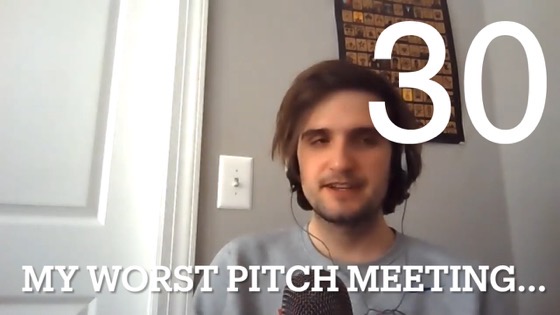
30 My Worst Pitch Meeting from Worry and Wonder | The Courier Thirteen Podcast [Video]

Watch the entire presentation – Worry and Wonder | The Courier Thirteen Podcast | Episode # 29 here

30 My Worst Pitch Meeting from Worry and Wonder | The Courier Thirteen Podcast [Video[

Transcript:

Host: You have if you have a show and you’re going on you’re going to pitch it, do you have that in mind always like okay I’m going to pitch to HBO. These are the people I’m pitching to. How do they react?

Rosanne: Yeah. What do I think they want. What part of this is going to be most interesting to them? Their own personal backgrounds. I mean you need to know as much of that as possible. Also so you don’t step into any landmines, right? I mean you know everyone has a joke about the worst pitch they ever did and the worst pitch I ever did was for a movie idea and I went in to meet with someone and…

Host: What — can you share what the movie idea was by chance?

Rosanne: Yu know what? I honestly can’t even remember anymore. You do so much for this. It’s really — I don’t — I don’t remember. I just remember I had this meeting and first you do a little chit-chatting right — a little chit-chat general stuff. Who are you? To see if you even like each other and maybe if this doesn’t sell they’ll want you to do something else with them. So you’re hoping to make a connection and in the middle of the chit-chatting, I don’t know why but the concept of cheerleading came up and I said something derogatory about cheerleaders because I certainly wasn’t one in high school and you know they’re easy to pick on except the woman I was meeting with had been a cheerleader.

Host: Yes.

Rosanne: So right away, you’re like oh I just insulted her. Okay, fine keep talking — keep — let’s find a thing we have in common right? At some point later, it came up — smoking came up — and it’s generally pretty good to say smoking is stupid. It kills people. Who the hell would waste their money on a pack of cigarettes. She grew up on a tobacco farm in Kentucky.

Host: Oh my god. No. No.

Rosanne: I didn’t know that. I didn’t have the ability to get that kind of information back in the day right? I was like, oh my god, what am I going to say now?

It’s always fun to sit down with students and share stories about entering the television industry and how things work at all stages and I had that opportunity the other day.

Daniela Torres, a just-graduated (Congratulations!) student of the Columbia College Semester in LA program asked me to guest on a podcast she had recently begun hosting with another college student she met during her internship (good example of networking in action!).

We could have talked all morning (the benefit of a 3 hour class session) but we held it to about an hour and fifteen minutes or so. Hopefully, along the way I answered some questions you might have about how the business works. So often it amounts to working hard at being a better writer and gathering a group of other talented, hard-working people around you so you can all rise together.

Dr. Rosanne Welch is a television writer with credits that include Beverly Hills 90210, Picket Fences, ABCNEWS: Nightline and Touched by an Angel. She also teaches Television Writing and the Art of Film at San Jose State University.

Rosanne discusses what made shows like Beverly Hills 90210 compelling, what to do and not to do when attempting to pitch a show to broadcast or streaming, what most young writers neglect in their writing process, and much more!

The Courier Thirteen Podcast is available on YouTube, Spotify, Apple Podcasts, SoundCloud, and Audible.

04 Selma Diamond From Women in Early TV for the American Women Writers National Museum [Video]

04 Selma Diamond From Women in Early TV for the American Women Writers National Museum [Video]

Many thanks to Janice Law of the American Women Writers National Museum who invited me to give a short talk on The Women of Early TV.

I enjoyed sharing the names and careers of women like Peg Lynch, Gerturde Berg, Selma Diamond and D.C. Fontana to the members who gathered on Zoom last Wednesday morning. There are so many more I could have talked about whose names don’t appear in mainstream books about the history of television so we have to learn who they are and carry those names forward ourselves.  It’s one of the missions of the Stephens College MFA in TV and Screenwriting – and has been one of my missions all my life.

RMW Rosanne Signature for Web

Transcript:

Next, we want to see Selma Diamond. Selma Diamond was an early writer on Your Show of Shows. Look at these names that she is with — Mel Tolkin, Larry Gelbart, Mel Brooks, and Selma Diamond right? She was such a fascinating woman but many people only know her from her part on Night Court which was a show in the late 80s. She stepped into that character. She actually passed away in the course of the show and was replaced by Marsha Warfield. So most people only know her from her acting career but in fact, she was a writer many years earlier. She had some comedy albums that were very very well respected and I happen to know right now her great-nephew is working on a documentary to tell the story of her career because sadly what happens to her and this woman, Lucy Kallen — Lucille Kallen, excuse me. She was also a writer on these early Sid Caesar shows right? So you can see her in this picture. She’s right there doing the work with everybody. She’s part of it everywhere you go except when we start to think about memorializing the people who worked on these shows. Now you have to think about how brilliant Lucille Kallen was. When tv went away from her right when it started to be something that they weren’t really giving her jobs in she began to write murder mysteries. The Tanglewood Murder. That whole CB Greenfield line is her. So she was already in the world of let’s have a continuing series. If I can’t do it on tv, I’ll do it in book form. So this is a woman who wrote all her career and I also happen to love this quote by her — a man’s home is his castle and his wife is the janitor. This is the kind of wit. She’s very much a Dorothy Parker type of person.

Many thanks to Janice Law of the American Women Writers National Museum who invited me to give a short talk on The Women of Early TV.

I enjoyed sharing the names and careers of women like Peg Lynch, Gerturde Berg, Selma Diamond and D.C. Fontana to the members who gathered on Zoom last Wednesday morning. There are so many more I could have talked about whose names don’t appear in mainstream books about the history of television so we have to learn who they are and carry those names forward ourselves. It’s one of the missions of the Stephens College MFA in TV and Screenwriting – and has been one of my missions all my life.

Watch this entire presentation


Women pioneers who created, produced or shepherded many of America’s most wildly popular, early television programs will be profiled by Dr. Rosanne Welch.

Get your copy today!

29 Executives and Writers from Worry and Wonder | The Courier Thirteen Podcast [Video]

Watch the entire presentation – Worry and Wonder | The Courier Thirteen Podcast | Episode # 29 here

29 Executives and Writers from Worry and Wonder | The Courier Thirteen Podcast [Video]

Transcript:

Host: In your experience has it varied from company to company from executives to executives and just how much self-awareness they have about the fact that they’re not artists in that way.

Rosanne: Well you know if you could be a writer you would be. You can’t. So you’re telling them how to do it what they already do. Now that’s not completely true all the time. There are some executives who’ve become writers which is always very interesting. They finally decided that they couldn’t not do it and they went off and did it themselves which I think is lovely. I would say some however many years ago that was more — there was more difference. A lot of executives now certainly come out of film programs where they studied — one hopes they’ve studied some screenwriting. They don’t have to be screenwriters to study the format and then it’s about how instinctively they understand story and character and what makes something engaging to people and how can they communicate that to someone who has an idea. You know you can shape and mold something and be a real help. It’s almost like people who write novels. We think oh they write them all by themselves. Well no, they have editors at the publishing companies and editors make lots of changes and they make lots of suggestions and then, of course, it’s up to the writer to take them or not but if they don’t they generally don’t get their book published. So there’s a lot of collaboration there too and so the best executives are people who understand story and either don’t want to risk being writers because it’s pretty freelance you know take your chances or they’re truly the nurturing type of people that want to pull forward people with talent and that’s the powerful place to do it more so right? So it’s an interesting mix. It’s always important if you’re going to pitch to an executive to look them up figure out where they came from. You know, where did they study? What is their background? Sometimes they were you know in somehow in production previously or sometimes they came out of Harvard right and they just studied from somebody big or whatever that is. So it’s important to understand where they’re coming from so you can understand the kind of notes that they’re given and the kind of control they want or need to have or their ability to not need it — to trust you to do what they hired you to do.

It’s always fun to sit down with students and share stories about entering the television industry and how things work at all stages and I had that opportunity the other day.

Daniela Torres, a just-graduated (Congratulations!) student of the Columbia College Semester in LA program asked me to guest on a podcast she had recently begun hosting with another college student she met during her internship (good example of networking in action!).

We could have talked all morning (the benefit of a 3 hour class session) but we held it to about an hour and fifteen minutes or so. Hopefully, along the way I answered some questions you might have about how the business works. So often it amounts to working hard at being a better writer and gathering a group of other talented, hard-working people around you so you can all rise together.

Dr. Rosanne Welch is a television writer with credits that include Beverly Hills 90210, Picket Fences, ABCNEWS: Nightline and Touched by an Angel. She also teaches Television Writing and the Art of Film at San Jose State University.

Rosanne discusses what made shows like Beverly Hills 90210 compelling, what to do and not to do when attempting to pitch a show to broadcast or streaming, what most young writers neglect in their writing process, and much more!

The Courier Thirteen Podcast is available on YouTube, Spotify, Apple Podcasts, SoundCloud, and Audible.

03 Gertrude Berg From Women in Early TV for the American Women Writers National Museum [Video]

03 Gertrude Berg From Women in Early TV for the American Women Writers National Museum [Video]

Many thanks to Janice Law of the American Women Writers National Museum who invited me to give a short talk on The Women of Early TV.

I enjoyed sharing the names and careers of women like Peg Lynch, Gerturde Berg, Selma Diamond and D.C. Fontana to the members who gathered on Zoom last Wednesday morning. There are so many more I could have talked about whose names don’t appear in mainstream books about the history of television so we have to learn who they are and carry those names forward ourselves.  It’s one of the missions of the Stephens College MFA in TV and Screenwriting – and has been one of my missions all my life.

RMW Rosanne Signature for Web

Transcript:

Gertrude Berg is a woman we need to know about. We think about early television. We think about diversity. In this case, it was considered quite diverse that there would be a Jewish family on television and so she wrote The Goldbergs, one of the earliest, again, sitcoms and these are the pile of scripts behind her because this ran as well on radio and then moved into television where she portrayed herself in the show right? So that’s a beautiful other thing. Long before they were Seinfeld in any of those other comics, she became the star of the show she also wrote. This impresses me because the double work involved in that is almost hard to explain and what’s really amazing about Molly Goldberg is in the 1940s she was voted the second most admired woman in America, right after the first lady Eleanor Roosevelt. Imagine that was showing us the early power of television and how those stories can move into our lives and really be part of something. So I found that absolutely fascinating.

Many thanks to Janice Law of the American Women Writers National Museum who invited me to give a short talk on The Women of Early TV.

I enjoyed sharing the names and careers of women like Peg Lynch, Gerturde Berg, Selma Diamond and D.C. Fontana to the members who gathered on Zoom last Wednesday morning. There are so many more I could have talked about whose names don’t appear in mainstream books about the history of television so we have to learn who they are and carry those names forward ourselves. It’s one of the missions of the Stephens College MFA in TV and Screenwriting – and has been one of my missions all my life.

Watch this entire presentation


Women pioneers who created, produced or shepherded many of America’s most wildly popular, early television programs will be profiled by Dr. Rosanne Welch.

Get your copy today!

28 Art Is Very Subjective from Worry and Wonder | The Courier Thirteen Podcast [Video]

Watch the entire presentation – Worry and Wonder | The Courier Thirteen Podcast | Episode # 29 here

28 Art Is Very Subjective from Worry and Wonder | The Courier Thirteen Podcast [Video]

Transcript:

So fascinating but you’re right and what’s interesting is you just hit on the fact that here Shonda Rhimes who almost always has a hit but not always because it’s not science right? You can’t even — it’s always a little bit of a this is my gut feeling. This is interesting. Now you go see what the audience thinks about it and not every person who you think should be — same thing right — Steven Spielberg doesn’t always have a hit. Sometimes he misses. It’s not science. It’s art and art is very subjective.

It’s always fun to sit down with students and share stories about entering the television industry and how things work at all stages and I had that opportunity the other day.

Daniela Torres, a just-graduated (Congratulations!) student of the Columbia College Semester in LA program asked me to guest on a podcast she had recently begun hosting with another college student she met during her internship (good example of networking in action!).

We could have talked all morning (the benefit of a 3 hour class session) but we held it to about an hour and fifteen minutes or so. Hopefully, along the way I answered some questions you might have about how the business works. So often it amounts to working hard at being a better writer and gathering a group of other talented, hard-working people around you so you can all rise together.

Dr. Rosanne Welch is a television writer with credits that include Beverly Hills 90210, Picket Fences, ABCNEWS: Nightline and Touched by an Angel. She also teaches Television Writing and the Art of Film at San Jose State University.

Rosanne discusses what made shows like Beverly Hills 90210 compelling, what to do and not to do when attempting to pitch a show to broadcast or streaming, what most young writers neglect in their writing process, and much more!

The Courier Thirteen Podcast is available on YouTube, Spotify, Apple Podcasts, SoundCloud, and Audible.