When Women Wrote Hollywood – 7 in a series – La Fee aux Choux | The Cabbage Fairy – Alice Guy Blaché (1896)

To highlight the wonderful yet largely forgotten work of a collection of female screenwriters from the early years of Hollywood (and as a companion to the book, When Women Wrote Hollywood) we will be posting quick bits about the many films they wrote along with links to further information and clips from their works which are still accessible online. Take a few moments once or twice a week to become familiar with their names and their stories. I think you’ll be surprised at how much bold material these writers tackled at the birth of this new medium. — Rosanne Welch


When Women Wrote Hollywood – 7 in a series – La Fee aux Choux | The Cabbage Fairy – Alice Guy Blaché (1896)

When Women Wrote Hollywood - 7 in a series - La Fee aux Choux | The Cabbage Fairy – Alice Guy Blaché

La Fée aux Choux (The Fairy of the Cabbages) is one of the earliest narrative fiction films ever made. It was probably made before the first Méliès fiction film, but after the Lumière brothers’ L’Arroseur Arrosé. The confusion stems from the uncertainty in the dating of these three films. Many film historians have accepted that La Fée aux Choux was made in April 1896, just a month or two before Méliès made his first fiction film. L’Arroseur arrosé (generally considered the earliest fiction film) was screened in December 1895.

La Fée aux Choux is sixty seconds long, possibly making it the earliest known film with a running time of at least one minute.

The film is based on an old and popular French (and actually, European) fairy tale. According to it, baby boys are born in cabbages, and baby girls are born in roses.

Alice Guy-Blaché, the director of La Fée aux Choux, is one of the early cinema’s most important figures, and had an extensive career as a director, producer and studio owner, working in both France and the United States. In a remake called Sage-femme de première classe (Midwife to the Upper Classes) from 1902, Guy Blaché appears, dressed as a man. Wikipedia

Watch La Fee aux Choux | The Cabbage Fairy


More about Alice Guy Blaché

* A portion of each sale from Amazon.com directly supports our blogs
** Many of these books may be available from your local library. Check it out!
† Available from the LA Public Library

06 TV Before The Monkees from How The Monkees Changed Television [Video] (1:10)

What this entire presentation — How The Monkees Changed Television with Rosanne Welch, PhD (Complete Presentation and Q&A) [Video] (45:06)

06 TV Before The Monkees from How The Monkees Changed Television

Rosanne Welch, PhD, Author of Why The Monkees Matter, presents “How The Monkees Changed Television” at a Cal State Fullerton Lunch Lecture on May 8, 2018.

In this talk, she shows how The Monkees, and specifically their presence on television, set the stage for large changes to come in the late 1960s.


Transcript

Before the show went on the air, this is what you were watching on television. Notice most of them are black and white. Nothing wrong with black and white. Sometimes I have students who say “Oh, for a black and white movie that wasn’t so bad.” And I have to remind them that it’s not the writer’s fault that technology didn’t have color yet, but this is — you can see that these are more or less quieter, gentler, blander, family shows. Nothing wrong with them. Andy Griffith was quite fun. Dragnet, you know, was as serious as one could be in tv back in the day, but this is what you had going on. You notice in the far corner just for fun. See that face? Circus Boy? 1950’s. That’s Micky Dolenz as a ten-year-old. He was a child star. he already had a tv show before The Monkees ever happened. His father was a tv star. George Dolenz, he was The Count of Monte Cristo in 1958 and so gee one day his agent said, “They’re doing a show called Circus Boy. Do you think your kid could be the Circus Boy?” and the Dad said, “You know how much money they’ll pay. Yeah, my kid could do that.” but they blonded his hair out because they thought he looked too ethnic because he was Italian. Ethnic.Italian back in the day. That was as ethnic as we were going to go.


 Why The Monkees Matter: Teenagers, Television and American Pop Culture


McFarland (Direct from Publisher) | Amazon | Kindle Edition | Nook Edition

Want to use “Why The Monkees Matter” in your classroom?

Order Examination Copies, Library and Campus Bookstore orders directly from McFarland

McFarland Company logo


About Rosanne Welch, PhD

Rosanne Welch, PhD is a writer, producer and university professor with credits that include Beverly Hills 90210, Picket Fences, Touched by an Angel and ABC NEWS/Nightline. Other books include Why The Monkees Matter: Teenagers, Television and American Pop Culture (McFarland, 2017) and Women in American History: A Social, Political, and Cultural Encyclopedia and Document Collection (ABC-CLIO, 2017), named to the 2018 Outstanding References Sources List, by the Reference and User Services Association (RUSA), a division of the American Library Association. Welch has also published chapters in Torchwood Declassified: Investigating Mainstream Cult Television (I.B.Tauris) and The American Civil War on Film and TV: Blue and Gray in Black and White and Color (Lexington Books, 2018) and essays in Doctor Who and Race: An Anthology and Outside In Makes it So, and Outside in Boldly Goes (both edited by Robert Smith). By day she teaches courses on the history of screenwriting and on television writing for the Stephens College MFA in Screenwriting programs. Her talk “The Importance of Having a Female Voice in the Room” at the 2016 TEDxCPP is available on YouTube.

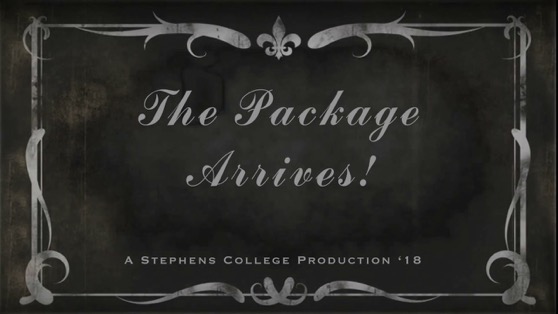
The Package Arrives!

A box arrived today and it contained my first print copies of this collection of essays written by the original cohort of students in our first Stephens College MFA in Screenwriting which I edited and for which author Cari Beauchamp wrote a wonderful forward covering the life and influence of Frances Marion. — Rosanne


The Package Arrives!

“These 23 essays cover a range of female screenwriters from the early years of film through the 1940s, women whose work helped create the unforgettable stories and characters beloved generations of audiences but whose names have been left out of most film histories. Not this one. This collection is dedicated to those women and written by a group of women grateful to stand on the shoulders of those who came before – as a beacon to those who will come after.”

* A portion of each sale from Amazon.com directly supports our blogs
** Many of these books may be available from your local library. Check it out!
† Available from the LA Public Library

Cal State Fullerton expert finds the Monkees were a steppin’ stone to cultural change — Rosanne in The Orange County Register

When two Monkees fans get together, magic always happens, as you’ll see when you read what Wendy Fawthrop of the Orange County Register thought of my last Monkees lecture, which was open to the public. — Rosanne

Cal State Fullerton expert finds the Monkees were a steppin’ stone to cultural change Cal State Fullerton expert finds the Monkees were a steppin’ stone to cultural change — Rosanne in The Orange County Register

She’s a believer.

And after Rosanne Welch spoke recently to a gathering of Cal State Fullerton students and faculty, many of them were left also believing that the Monkees, the 1960s boy band, had a greater impact on television, music and pop culture than they had thought.

Illustrated with slides of the Monkees with Paul McCartney and Janis Joplin, on cereal boxes and in pop culture references long after their heyday, Welch’s talk laid out evidence that the group’s TV show made strong feminist statements and advanced such TV practices as characters addressing the audience, used today on such shows as “Modern Family” and “House of Cards.”

“They influenced so many of today’s modern-day performers and yet people keep forgetting about that,” said Welch.

Read this entire article — Cal State Fullerton expert finds the Monkees were a steppin’ stone to cultural change 


 Why The Monkees Matter: Teenagers, Television and American Pop Culture


McFarland (Direct from Publisher) | Amazon | Kindle Edition | Nook Edition

Want to use “Why The Monkees Matter” in your classroom?

Order Examination Copies, Library and Campus Bookstore orders directly from McFarland

McFarland Company logo

When Women Wrote Hollywood – 6 in a series – Alice Guy Blaché

To highlight the wonderful yet largely forgotten work of a collection of female screenwriters from the early years of Hollywood (and as a companion to the book, When Women Wrote Hollywood) we will be posting quick bits about the many films they wrote along with links to further information and clips from their works which are still accessible online. Take a few moments once or twice a week to become familiar with their names and their stories. I think you’ll be surprised at how much bold material these writers tackled at the birth of this new medium. — Rosanne Welch


When Women Wrote Hollywood – 6 in a series – Alice Guy Blaché

When Women Wrote Hollywood - 5 in a series - Alice Guy Blaché

Alice Guy-Blaché (July 1, 1873 – March 24, 1968) was a pioneer filmmaker, active from the late 19th century, and one of the first to make a narrative fiction film.[2] From 1896 to 1906 she was probably the only female filmmaker in the world. [3] She experimented with Gaumont’s Chronophone sound syncing system, color tinting, interracial casting, and special effects. She was a founder and artistic director of the Solax Studios in Flushing, New York, in 1908. In 1912 Solax invested $100,000 for a new studio in Fort Lee, New Jersey, the center of American filmmaking prior to the establishment of Hollywood. That same year she made the film A Fool and his Money, with a cast comprised only African-American actors. The film is now at the National Center for Film and Video Preservation at the American Film Institute.[4] Wikipedia

Guy Blaché

A House Divided (Solax, 1913)

More about Alice Guy Blaché

* A portion of each sale from Amazon.com directly supports our blogs
** Many of these books may be available from your local library. Check it out!
† Available from the LA Public Library

Quote from “America’s Forgotten Founding Father” by Dr. Rosanne Welch – 17 in a series – Royals

Quote from

Finding some royals deeply intelligent and others deeply ignorant fed Filippo’s distaste of the act of royal succession and fueled his later interest in supporting the colonists in their overthrow of King George III. In the meantime, Filippo decided to go to Rome to face the Tribunal of the Inquisition himself, letters in hand, though he would be without a passport so if they chose to incarcerate him, he would be trapped.

 From America’s Forgotten Founding Father — Get Your Copy Today!


Join the Rosanne Welch Mailing List for future book and event announcements!
 

Print Edition | Kindle Edition | Apple iBooks Edition | Nook Edition

More on Mazzei: Jefferson Library Collections including The Filippo Mazzei Archive

Mazzei cover small 2This series will focus on material I found while researching my book, America’s Forgotten Founding Father: A Novel Based on the Life of Filippo Mazzei.

While I only used a portion of my total research, there are a host of little tidbits of information on this amazing man which I wanted to share here. — Rosanne.


More on Mazzei: Jefferson Library Collections including the The Filippo Mazzei ArchiveJefferson Library Collections including The Filippo Mazzei Archive

The Jefferson Library is a gateway to information on Thomas Jefferson’s life, times, and legacy. To this end, the library collects comprehensively, including books, journal and newspaper articles, ephemera, unpublished research, websites, microforms, audio-visuals, photographs, and digital full-text files. In addition to all materials about Thomas Jefferson and Monticello, we acquire materials on colonial and early federal periods, revolutionary America and Atlantic history, worldwide religions and philosophy, and European arts and culture.  Topics of particular interest include wine and cuisine, slavery and natural rights, science and exploration, the University of Virginia, Jefferson descendants, and the legacy of Jefferson’s actions and ideas. 

The Filippo Mazzei Archive, courtesy of Sister Margherita Marchione, MPF. This collection includes comprehensive manuscript facsimiles of this Italian Founding Father; also included are the expansive research files of Sister Margherita.  Hundreds of publications are included uncatalogued by other libraries.

Visit This Site: Jefferson Library Collections includingThe Filippo Mazzei Archive


Join the Rosanne Welch Mailing List for future book and event announcements!
 

Print Edition | Kindle Edition | Apple iBooks Edition | Nook Edition

Want to use this book in your classroom? Contact the Mentors Project!

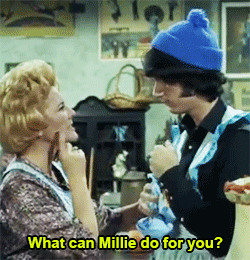
More on the Monkees: Scenes from “Monkee Mother”

More on the Monkees: Scenes from “Monkee Mother”

Millie monkees

http://mrsarcadian.tumblr.com/post/160811237357/the-monkees-by-the-numbers-eight-moments

Discovered via As We Go Along


 Why The Monkees Matter: Teenagers, Television and American Pop Culture


McFarland (Direct from Publisher) | Amazon | Kindle Edition | Nook Edition

Want to use “Why The Monkees Matter” in your classroom?

Order Examination Copies, Library and Campus Bookstore orders directly from McFarland

McFarland Company logo

From The Research Vault: Sunshine Factory – 1960s Magazine Articles

From The Research Vault: Factory – 1960s Magazine Articles

https://www.dropbox.com/s/r796xc4n49qdhck/Screenshot%202018-06-22%2012.26.36.png?dl=0

Tiger beat 66

49 peter micky davy mike 1


Why The Monkees Matter: Teenagers, Television and American Pop Culture

Buy Your Copy Now!

* A portion of each sale from Amazon.com directly supports our blogs
** Many of these books may be available from your local library. Check it out!
† Available from the LA Public Library

When Women Wrote Hollywood – 5 in a series – The New York Hat (1912), Wr: Anita Loos, Dirs: D. W. Griffith

To highlight the wonderful yet largely forgotten work of a collection of female screenwriters from the early years of Hollywood (and as a companion to the book, When Women Wrote Hollywood) we will be posting quick bits about the many films they wrote along with links to further information and clips from their works which are still accessible online. Take a few moments once or twice a week to become familiar with their names and their stories. I think you’ll be surprised at how much bold material these writers tackled at the birth of this new medium. — Rosanne Welch


When Women Wrote Hollywood – 5 in a series – The New York Hat (1912), Wr: Anita Loos, Dirs: D. W. Griffith

When Women Wrote Hollywood - 5 in a series - The New York Hat (1912), Wr: Anita Loos, Dirs: D. W. Griffith

The New York Hat (1912) is a short silent film directed by D. W. Griffith from a screenplay by Anita Loos, and starring Mary Pickford, Lionel Barrymore, and Lillian Gish.

The New York Hat is one of the most notable of the Biograph Studios short films and is perhaps the best known example of Pickford’s early work, and an example of Anita Loos’s witty writing. The film was made by Biograph when it and many other early U.S. movie studios were based in Fort Lee, New Jersey at the beginning of the 20th century.[1][2][3] 

Mollie Goodhue leads a cheerless, impoverished life, largely because of her stern, miserly father. Mrs. Goodhue is mortally ill, but before dying, she gives the minister, Preacher Bolton, some money with which to buy her daughter the “finery” her father always forbade her.

Mollie is delighted when the minister presents her with a fashionable New York hat she has been longing for, but village gossips misinterpret the minister’s intentions and spread malicious rumors. Mollie becomes a social pariah, and her father tears up the beloved hat in a rage.

All ends well, however, after the minister produces a letter from Mollie’s mother about the money she left the minister to spend on Mollie. Soon afterwards, he proposes to Mollie, who accepts his offer of marriage.Wikipedia

Watch The New York Hat”

More about Anita Loos

* A portion of each sale from Amazon.com directly supports our blogs
** Many of these books may be available from your local library. Check it out!
† Available from the LA Public Library