From The Research Vault: Hey, hey we’re the Wrinklies (The Monkees are back 45 years on… with a £1m motive) via Daily Mail

From The Research Vault: Hey, hey we’re the Wrinklies (The Monkees are back 45 years on… with a £1m motive) via Daily Mail

From The Research Vault: Hey, hey we're the Wrinklies (The Monkees are back 45 years on... with a £1m motive) via Daily Mail

Given their advancing years, you’d be forgiven for doubting whether there’ll be much monkeying around.

Yesterday The Monkees announced they would be reforming for a 45th anniversary tour of the UK.

The band, who broke up in 1971, were put together by music executives in 1966 to star in a TV comedy and to be the U.S. answer to The Beatles.

Why The Monkees Matter: Teenagers, Television and American Pop Culture

Buy Your Copy Now!

* A portion of each sale from Amazon.com directly supports our blogs
** Many of these books may be available from your local library. Check it out!
† Available from the LA Public Library

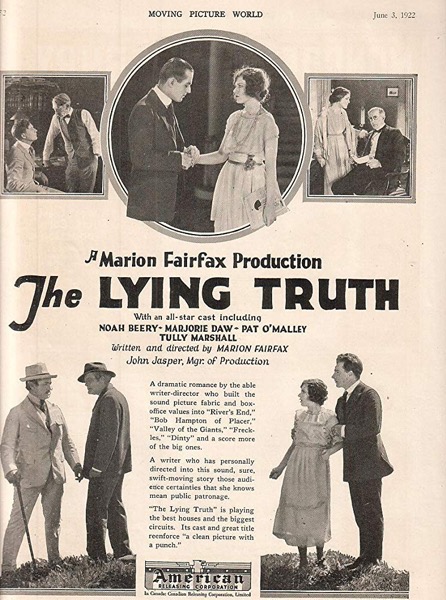
When Women Wrote Hollywood – 13 in a series – The Lying Truth & The Lost World, Wr: Marion Fairfax

To highlight the wonderful yet largely forgotten work of a collection of female screenwriters from the early years of Hollywood (and as a companion to the book, When Women Wrote Hollywood) we will be posting quick bits about the many films they wrote along with links to further information and clips from their works which are still accessible online. Take a few moments once or twice a week to become familiar with their names and their stories. I think you’ll be surprised at how much bold material these writers tackled at the birth of this new medium. — Rosanne Welch


When Women Wrote Hollywood – 13 in a series – The Lying Truth & The Lost World, Wr: Marion Fairfax

When Women Wrote Hollywood - 13 in a series - The Lying Truth & The Lost World, Wr: Marion Fairfax

Marion Fairfax (October 24, 1875 – October 2, 1970) was an American screenwriter and playwright. Born as Marion Neiswanger in Richmond, Virginia, After she graduated from Chicago’s South Division High School, she enrolled in Emerson College in Boston, Massachusetts. She was married to actor Tully Marshallfor forty-three years. Fairfax worked as a company director, director, editor, editorial director, playwright, producer, screenwriter and theatre actress.

Fairfax first started her career as a stage actress, just like many other women did in that era. By 1901 she was appearing on Broadway and soon after that her own plays started appearing on Broadway. Before she went into pictures she was known for being one of the most distinguished stage authors in the United States, writing Broadway hits such as The Builders (1907), The Chaperon (1908), The Talker (1912), A Modern Girl (1914), In 1915 The Lasky Feature Play Company entered into a contract with Fairfax. This opportunity gave Fairfax the chance to work under William C. DeMille who is known as the author for many successful plays such as “The Warrens of Virginia” and “The Woman.” The success of Fairfax comes through wide knowledge of dramatic values, not only from an author’s perspective but also from that of the artist.[1] — Wikipedia 

More about Marion Fairfax


Buy a signed copy of when Women Write Hollywood


* A portion of each sale from Amazon.com directly supports our blogs
** Many of these books may be available from your local library. Check it out!
† Available from the LA Public Library

Show Boat and the History of Screenwriting

Among the many films I have my History of Screenwriting students watch as we march through the chronological eras of that history from Silents to (what I call) Superhero Saturation, I include a couple of musicals to illustrate that genre. Among those musicals I include Show Boat for many reasons. 

First, because they ought to know about Edna Ferber, who wrote the novel on which the show is based, had an interesting history with Hollywood in that she did not approve of selling off her IP (intellectual property) completely – so she leased novels to Hollywood (including the Pulitzer Prize-winning So Big, and the popular Giant (starring Elizabeth Taylor, Rock Hudson and James Dean and adapted by Fred Guiol and Ivan Moffat). 

Second, because they ought to know Paul Robeson who starred in the 1936 film adaptation after having played “Joe” in the London production and became synonymous with the song “Ol’ Man River”.

Third, because it was one of the earliest musicals to take a social justice stance and even handle the subject of miscegenation.

Fourth, because it’s a classic. 

But, I recognize even being socially conscious for their times that there are moments in the portrayals of the African American characters that aren’t always comfortable for my students of color so I’m always on the lookout for ways to teach this.  That’s why I was happy to come across this 2013 book by Todd Decker Show Boat: Performing Race in an American Musical where he focuses on how the story is really the story of how a white girl singer becomes famous on the riverboat by using a ‘black’ voice, making the story more a study of cultural appropriation. I’ve only begun reading it out of order (movie section first, stage play section second) but have found what I’ve read fascinating. 

Check it out at your local library or find it here

†

Also of interest is the various changes to the original lyrics of “Ol’ Man River” made by artists over the years.

* A portion of each sale from Amazon.com directly supports our blogs
** Many of these books may be available from your local library. Check it out!
† Available from the LA Public Library

When Women Wrote Hollywood – 12 in a series – Marion Fairfax

To highlight the wonderful yet largely forgotten work of a collection of female screenwriters from the early years of Hollywood (and as a companion to the book, When Women Wrote Hollywood) we will be posting quick bits about the many films they wrote along with links to further information and clips from their works which are still accessible online. Take a few moments once or twice a week to become familiar with their names and their stories. I think you’ll be surprised at how much bold material these writers tackled at the birth of this new medium. — Rosanne Welch


When Women Wrote Hollywood – 12 in a series – Marion Fairfax

When Women Wrote Hollywood - 12 in a series - Marion Fairfax

Marion Fairfax (October 24, 1875 – October 2, 1970) was an American screenwriter and playwright. Born as Marion Neiswanger in Richmond, Virginia, After she graduated from Chicago’s South Division High School, she enrolled in Emerson College in Boston, Massachusetts. She was married to actor Tully Marshallfor forty-three years. Fairfax worked as a company director, director, editor, editorial director, playwright, producer, screenwriter and theatre actress.

Fairfax first started her career as a stage actress, just like many other women did in that era. By 1901 she was appearing on Broadway and soon after that her own plays started appearing on Broadway. Before she went into pictures she was known for being one of the most distinguished stage authors in the United States, writing Broadway hits such as The Builders (1907), The Chaperon (1908), The Talker (1912), A Modern Girl (1914), In 1915 The Lasky Feature Play Company entered into a contract with Fairfax. This opportunity gave Fairfax the chance to work under William C. DeMille who is known as the author for many successful plays such as “The Warrens of Virginia” and “The Woman.” The success of Fairfax comes through wide knowledge of dramatic values, not only from an author’s perspective but also from that of the artist.[1] — Wikipedia 

Lying truth

Lost world

More about Marion Fairfax


Buy a signed copy of when Women Write Hollywood


* A portion of each sale from Amazon.com directly supports our blogs
** Many of these books may be available from your local library. Check it out!
† Available from the LA Public Library

20 More Preparations For A Lady Doctor for Lady Doctor from Gender Diversity in the Who-niverse [Video] (1:04)

Watch this entire presentation: Gender Diversity in the Who-niverse: Paving the Way for a Lady Doctor with Dr. Rosanne Welch [Video] (36:58)

20 More Preparations For A Lady Doctor for Lady Doctor from Gender Diversity in the Who-niverse

For her 5th Doctor Who lecture to the CPP community, Dr. Rosanne Welch discusses how society – and the show’s writing staff – prepared the audience for a major change in this 50-year franchise – the creation of the first Lady Doctor!

Transcript:

Then he wrote this lovely short piece called “Night of the Doctor” which blended the movie — that was not very good, back in the day — with the modern story and again gave us the concept that regeneration could change your gender. So they’ve been laying the groundwork. They had to warm us up to get us ready for this and it’s all the writers that did that work. Then, Chris Chibnall took over as I said as Moffat retired and I love what David Tennant said. He really thinks Chris is going to do a good job and I tend to agree because I love the work that Chris Chibnall has done in the past, soi am looking forward to what he might do with this character and he’s the guy who had the guts to say “I’m going to be the one who changes. I’m going to make the full change.” So that’s a big deal. When Jody was chosen, she knew there was some controversy — people back and forth on the idea — turns out it’s about 80 Pro/20% against it so the against people always get the bigger voices. So we have to be louder than them and make sure the show gets really good ratings to prove its a good idea to have switched it into a girl. So we have to have viewing parties on opening night, right. Write about it on your blogs and Twitter and all that.

Follow Dr. Welch on Twitter and Instagram
https://twitter.com/rosannewelch – http://instagram.com/drrosannewelch


Rosanne Welch, PhD

Rosanne Welch PhD teaches the History of Screenwriting and One-Hour Drama for the Stephens College MFA in Screenwriting.

Writing/producing credits include Beverly Hills 90210, Picket Fences, ABCNEWS: Nightline and Touched by an Angel. In 2016 she published the book Why The Monkees Matter: Teenagers, Television and American Pop; co-edited Women in American History: A Social, Political, and Cultural Encyclopedia; and placed “Transmitting Culture Transnationally Via the Characterization of Parents in Police Procedurals” in the New Review of Film and Television Studies. Essays appear in Torchwood Declassified: Investigating Mainstream Cult Television and Doctor Who and Race: An Anthology. Welch serves as Book Reviews editor for Journal of Screenwriting and on the Editorial Advisory Board for Written By magazine, the magazine of the Writers Guild.

Watch Dr. Welch’s talk “The Importance of Having a Female Voice in the Room” at the 2016 TEDxCPP.

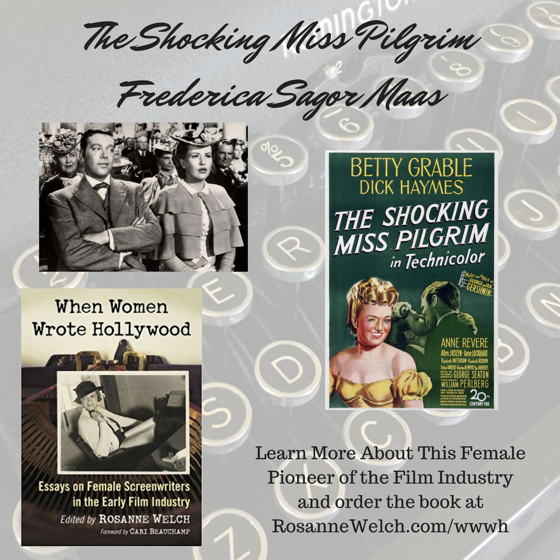
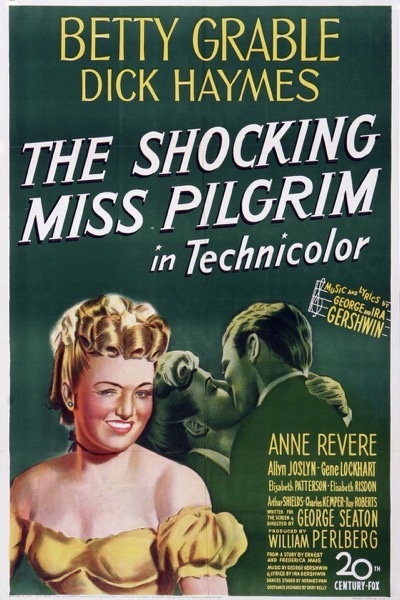
When Women Wrote Hollywood – 11 in a series – The Shocking Miss Pilgrim (1947), Story: Frederica Sagor Maas

To highlight the wonderful yet largely forgotten work of a collection of female screenwriters from the early years of Hollywood (and as a companion to the book, When Women Wrote Hollywood) we will be posting quick bits about the many films they wrote along with links to further information and clips from their works which are still accessible online. Take a few moments once or twice a week to become familiar with their names and their stories. I think you’ll be surprised at how much bold material these writers tackled at the birth of this new medium. — Rosanne Welch


When Women Wrote Hollywood – 11 in a series – The Shocking Miss Pilgrim (1947), Story: Frederica Sagor Maas

When Women Wrote Hollywood - 11 in a series - The Shocking Miss Pilgrim (1947), Wr: Frederica Sagor Maas

The Shocking Miss Pilgrim is a 1947 American musical comedy film in Technicolor written and directed by George Seaton, and starring Betty Grable and Dick Haymes.

The screenplay, based on a story by Frederica Sagor Maas and Ernest Maas, focuses on a young typist who becomes involved in the Women’s Suffrage movement in 1874. The songs were composed by George and Ira Gershwin. Marilyn Monroe made her film debut as an uncredited voice as a telephone operator.

In 1941, husband-and-wife screenwriting team Ernest Maas and Frederica Sagor collaborated on Miss Pilgrim’s Progress, a story about a young woman who enters the business world by demonstrating the newly invented typewriter in the window of a Wall Street establishment. When she tries to fend off the unwanted advances of one of the firm’s clerks, her employer comes to her rescue but is killed when he falls down the stairs in the ensuing altercation. Abigail Pilgrim becomes the focus of a murder trial that attracts widespread coverage by the media and the attention of Susan B. Anthony when the concept of women working in offices comes under fire.[2] — Wikipedia 

Miss pilgrim

More about Frederica Sagor Maas


Buy a signed copy of when Women Write Hollywood

Also available soon via Amazon.com in Print and eBook editions

 †

* A portion of each sale from Amazon.com directly supports our blogs
** Many of these books may be available from your local library. Check it out!
† Available from the LA Public Library

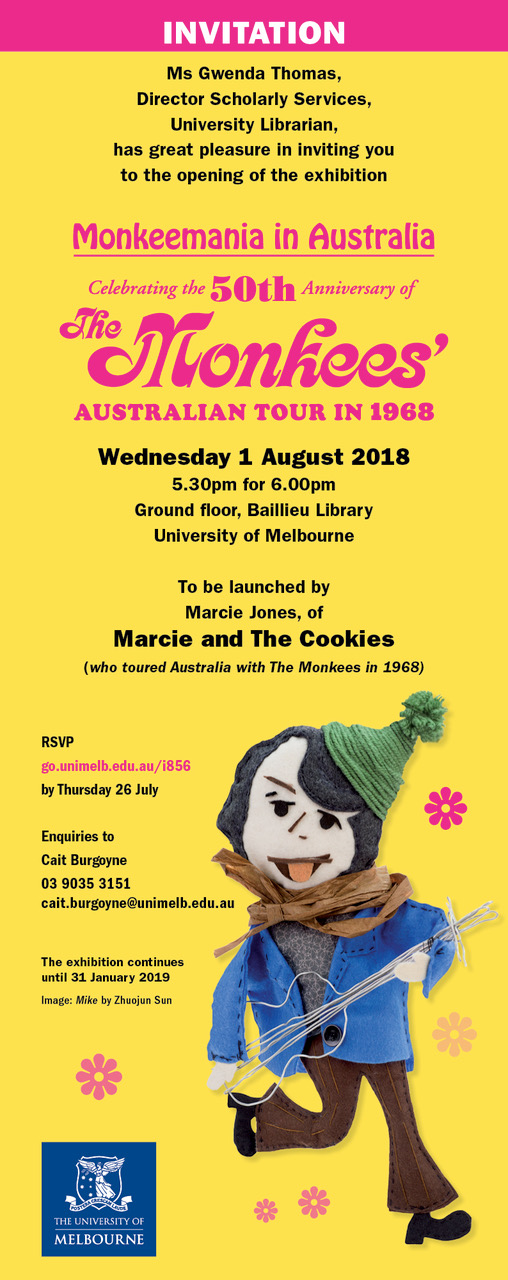
Event: Monkeemania in Australia: Celebrating the 50th anniversary of The Monkees Australian Tour in 1968, August 1, 2018, Melbourne

If you’re in Melbourne – or have friends and family there – check out the invitation and GO to this exhibit centered solely on The Monkees in honor of the 50th anniversary of their Australian tour.

In another wonderful example of how The Monkees bring people together I’m happy to help announce an exhibit open to all our Australian Monkees fans. I met Derham Groves, professor architecture at the Melbourne School of Design, University of Melbourne because he wrote a review of Why The Monkees Matter for The Journal of American Culture and was kind enough to send me a link. Then he happened to be in Los Angeles for a conference so we met for a marvelous dinner of pasta and Monkees conversation in Hollywood.

Derham’s special interest is the influence of popular culture on architecture and design, but he’s written quite a lot about the history of television in Australia, including a book called TV Houses: Television’s Influence on the Australian Home (2004). Last year he curated an exhibition at the Baillieu Library to celebrate the 60th anniversary of television in Australia.

For fun – here are some great clips on Youtube – their arrival and conference:

And the newsreel (though the footage jumps a lot) about their arrival with the funny line “the only thing to rival man’s descent from the apes is their descent from an airplane”:

It’s certainly an event worth celebrating!

 Why The Monkees Matter: Teenagers, Television and American Pop Culture


McFarland (Direct from Publisher) | Amazon | Kindle Edition | Nook Edition

Want to use “Why The Monkees Matter” in your classroom?

Order Examination Copies, Library and Campus Bookstore orders directly from McFarland

McFarland Company logo

My next book in progress! — Follow Me On Instagram!

My next book in progress! -- Follow Me On Instagram!

My next book in progress!

Working hard every day on my book on Giuseppe Garibaldi — “In Search of Unity” — for the Mentoris Project. 

Done by the end of Summer. 

Instagram and Follow


Join the Rosanne Welch Mailing List for future book and event announcements!
 

My Previous Mentoris Project Title

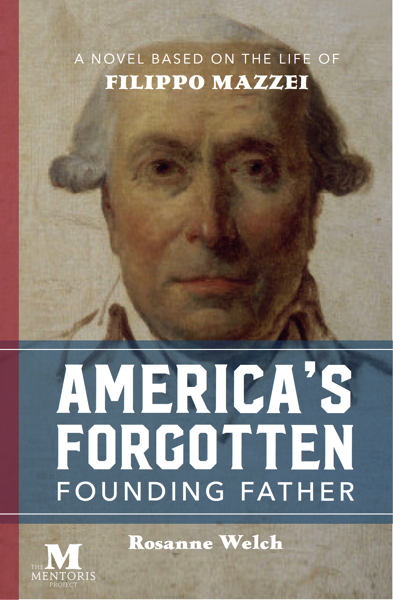
Order an autographed copy of America’s Forgotten Founding Father

Print Edition | Kindle Edition | Apple iBooks Edition | Nook Edition

Want to use this book in your classroom? Contact the Mentoris Project!


When Women Wrote Hollywood – 10 in a series – Frederica Sagor Maas

To highlight the wonderful yet largely forgotten work of a collection of female screenwriters from the early years of Hollywood (and as a companion to the book, When Women Wrote Hollywood) we will be posting quick bits about the many films they wrote along with links to further information and clips from their works which are still accessible online. Take a few moments once or twice a week to become familiar with their names and their stories. I think you’ll be surprised at how much bold material these writers tackled at the birth of this new medium. — Rosanne Welch
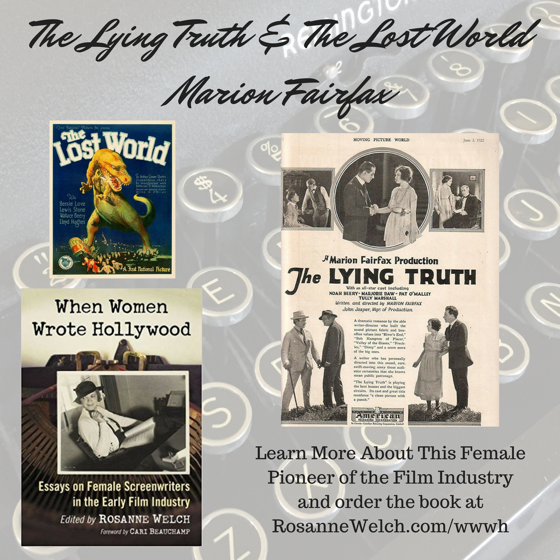

When Women Wrote Hollywood – 10 in a series – Frederica Sagor Maas

When Women Wrote Hollywood - 10 in a series - Frederica Sagor Maas

Frederica Alexandrina Sagor Maas (/ˌfɹɛdəˈɹikə səˈgɔɹ mæs/; July 6, 1900 – January 5, 2012) was an American dramatist and playwright, screenwriter, memoirist, and author,[1] the youngest daughter of Russian immigrants. As an essayist, Maas was best known for a detailed, tell-all memoir of her time spent in early Hollywood.[2] She was one of the oldest surviving entertainers from the silent film era.[3]

Once in Hollywood, Maas negotiated a contract with Preferred Pictures to adapt Percy Marks’s novel The Plastic Age for film. Based on this, she was signed to a three-year contract with MGM for $350 per week, though in her words: “I had the peculiar feeling that wily Louis B. [Mayer] was less interested in my writing ability than in signing someone who had worked for Ben Schulberg and Al Lichtman.”[5] It was in this period that she wrote the screenplays for silent films Dance Madnessand The Waning Sex. — Wikipedia 

Miss pilgrim

More about Frederica Sagor Maas


Buy a signed copy of when Women Write Hollywood

Also available soon via Amazon.com in Print and eBook editions

 †

* A portion of each sale from Amazon.com directly supports our blogs
** Many of these books may be available from your local library. Check it out!
† Available from the LA Public Library

19 Steven Moffatt Prepares for Lady Doctor from Gender Diversity in the Who-niverse [Video] (1:13)

Watch this entire presentation: Gender Diversity in the Who-niverse: Paving the Way for a Lady Doctor with Dr. Rosanne Welch [Video] (36:58)

Steven Moffatt Prepares for Lady Doctor from Gender Diversity in the Who-niverse

For her 5th Doctor Who lecture to the CPP community, Dr. Rosanne Welch discusses how society – and the show’s writing staff – prepared the audience for a major change in this 50-year franchise – the creation of the first Lady Doctor!

Transcript:

Have to give Steven for laying the groundwork finally and, as I said, if you look at his writing, when Matt changed he gave us “Not a girl. Still not ginger.” — a little ginger joke there. Which is fine. he made everyone think they were going to pick — oh my gosh I never forgot his name — Ron Weasley — yes — Rupert Grint, thank you so much. There was discussion that Rupert Grint would become a new Doctor, so a little joke there, the ginger is referencing that. So he knows what’s happening in culture. What people are saying about his program, right? So he laid that in. he also laid in in “The Doctor’s Wife” which is a marvelous episode — written by Neil Gaiman, wh you might know form American Gods and the other very cool novels. So they invited Nei Gaiman to come in and write an episode and they found old, dead, Timelords trapped in these little boxes and this is what he said about this guy, right? “He didn’t feel himself unless he had the tattoo. Or herself, a couple of times. Ooooo, she was a bad girl.” So Timelord who switched their gender It is possible. So Steven is writing or Executive Producing the writing in all these episodes. So he’s laying the groundwork for all this to happen.

Follow Dr. Welch on Twitter and Instagram
https://twitter.com/rosannewelch – http://instagram.com/drrosannewelch


Rosanne Welch, PhD

Rosanne Welch PhD teaches the History of Screenwriting and One-Hour Drama for the Stephens College MFA in Screenwriting.

Writing/producing credits include Beverly Hills 90210, Picket Fences, ABCNEWS: Nightline and Touched by an Angel. In 2016 she published the book Why The Monkees Matter: Teenagers, Television and American Pop; co-edited Women in American History: A Social, Political, and Cultural Encyclopedia; and placed “Transmitting Culture Transnationally Via the Characterization of Parents in Police Procedurals” in the New Review of Film and Television Studies. Essays appear in Torchwood Declassified: Investigating Mainstream Cult Television and Doctor Who and Race: An Anthology. Welch serves as Book Reviews editor for Journal of Screenwriting and on the Editorial Advisory Board for Written By magazine, the magazine of the Writers Guild.


Watch Dr. Welch’s talk “The Importance of Having a Female Voice in the Room” at the 2016 TEDxCPP.