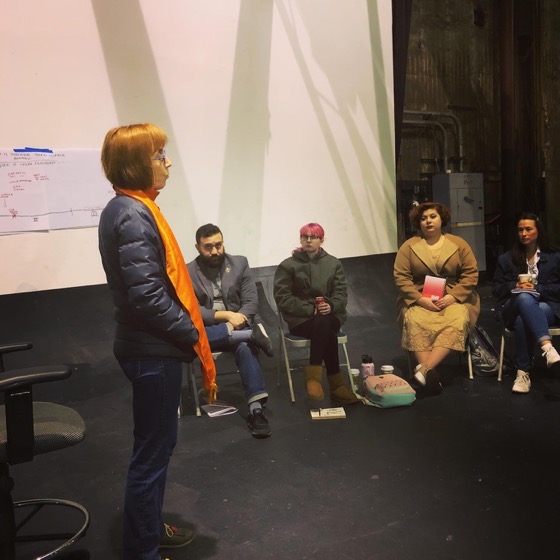
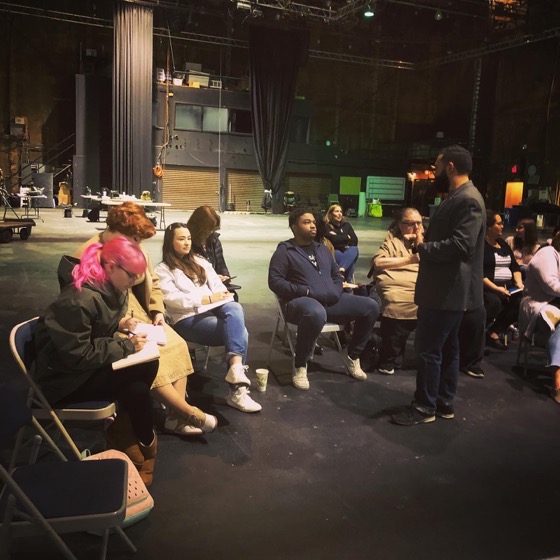
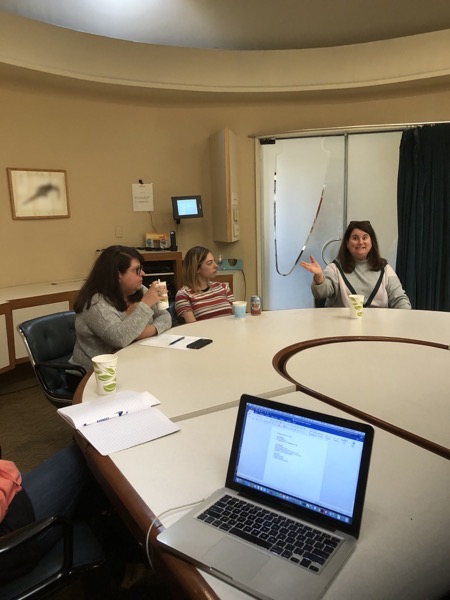
Claudia Puig Speaks On Film Critique at the Stephens College MFA in TV and Screenwriting Winter Workshop (3 photos)

Claudia Puig Speaks On Film Critique at the Stephens College MFA in TV and Screenwriting Winter Workshop (3 photos)

Claudia Puig Speaks On Film Critique at the Stephens College MFA in TV and Screenwriting Winter Workshop (3 photos)

Claudia Puig Speaks On Film Critique at the Stephens College MFA in TV and Screenwriting Winter Workshop (3 photos)

Claudia Puig Speaks On Film Critique at the Stephens College MFA in TV and Screenwriting Winter Workshop (3 photos)

Claudia Puig, President of the Los Angeles Film Critics Association, came to January’s workshop to discuss the art of film critique as well as the current state of Diversity in Media. She also curates two film festivals and spoke about how to work the festival circuit to gain attention for your writing career.


Questions about the Stephens College MFA in TV and Screenwriting?

Leave a comment here or email me, Executive Director, Dr. Rosanne Welch and I’ll be happy to answer your questions.


Visit Stephens.edu/mfa for more information.Follow @StephensMFA on Instagram

Follow and Like the Stephens College MFA in TV and Screenwriting#MentorMonday 8 - Dawn Comer Jefferson - Stephens College MFA in TV and Screenwriting

39 Buffy The Vampire Slayer from The Sisterhood of Science Fiction – Dr. Rosanne Welch [Video] (48 seconds)

Watch this entire presentation

The Sisterhood of Science Fiction: A Walk Through Some Writers and Characters You (Should) Know And Love

39 Buffy The Vampire Slayer from The Sisterhood of Science Fiction - Dr. Rosanne Welch

Subscribe to Rosanne’s Channel and receive notice of each new video!


This one allowed me to riff on some of my favorite female science fiction writers across time, whether they be novelists or television writers. It also opened up a good conversation on what art we support and include in our lives – and what that art says to us and about us. — Rosanne

Transcript:

Moves us into the world of Buffy which is part horror/part sci-fi I would say blending and I think really finally a powerful woman though yes she does use weapons but it’s also about her inner strength and her buddy Willow who doesn’t have to be sexy she’s just a cool really smart girl. So we’re trying to get some more normal representations of women. However when they sell the box set, uhhh, that’s a pretty like it yeah, an overtly sexual pose that doesn’t really thrill me, but the series is pretty brilliant and she’s pretty powerful in it and there’s an ending to it — not gonna spoil it — but there’s a choice made in the last episode in terms of how men would take having to deal with their power issues and how a woman decides to save the day. — what she does and it’s a big interesting thing.


* A portion of each sale from Amazon.com directly supports our blogs
** Many of these books may be available from your local library. Check it out! 

Screenwriter Jane Anderson Presents at the Stephens College MFA in TV and Screenwriting Winter Workshop (5 photos)

Screenwriter Jane Anderson Presents at the Stephens College MFA in TV and Screenwriting Winter Workshop (5 photos)

Screenwriter Jane Anderson Presents at the Stephens College MFA in TV and Screenwriting Winter Workshop (6 photos)

Screenwriter Jane Anderson Presents at the Stephens College MFA in TV and Screenwriting Winter Workshop (6 photos)

Screenwriter Jane Anderson Presents at the Stephens College MFA in TV and Screenwriting Winter Workshop (6 photos)

Screenwriter Jane Anderson Presents at the Stephens College MFA in TV and Screenwriting Winter Workshop (6 photos)

Screenwriter Jane Anderson Presents at the Stephens College MFA in TV and Screenwriting Winter Workshop (6 photos)

One of the highlights of January’s Stephens College MFA in TV and Screenwriting workshop came in the form of a story structure seminar with screenwriting Jane Anderson (The Wife, Olive Kitteridge, The Prize Winner of Defiance, Ohio) held on the Henson soundstage. Her energy and honesty in discussing her work and her life in the business was greatly appreciated.


Questions about the Stephens College MFA in TV and Screenwriting?

Leave a comment here or email me, Executive Director, Dr. Rosanne Welch and I’ll be happy to answer your questions.


Visit Stephens.edu/mfa for more information.Follow @StephensMFA on Instagram

Follow and Like the Stephens College MFA in TV and Screenwriting#MentorMonday 8 - Dawn Comer Jefferson - Stephens College MFA in TV and Screenwriting

From The Journal Of Screenwriting V10 Issue 3: From dialogue writer to screenwriter: Pier Paolo Pasolini at work for Federico Fellini by Claudia Romanelli

Highlighting the articles in the past editions of the Journal of Screenwriting, of which I am the Book Reviews Editor. Hopefully these abstracts will entice you to did a little deeper into the history and future of screenwriting. — Rosanne


From dialogue writer to screenwriter: Pier Paolo Pasolini at work for Federico Fellini by Claudia Romanelli

Pier Paolo Pasolini was a poet, novelist, essayist and filmmaker who also worked as a screenwriter for some of the most important Italian directors including Mario Soldati, Mauro Bolognini and Bernardo Bertolucci, to name a few. While Pasolini’s poems, novels and films are widely studied, his work as a screenwriter has not attracted much critical attention. This is partly because Pasolini tended to collaborate with directors whose artistic tastes were very different from his own, making it difficult to understand what he could possibly bring to the films on which he worked. The fact that he took his first steps in the screenwriting teams for which Italian cinema was famous has also contributed to downplay his screenwriting activity. One such example is his contribution to Federico Fellini’s screenplays. Fellini first approached Pasolini because he wished to revise the dialogue in Le notti di Cabiria, which he thought lacked the authentic feel of the language spoken in the Roman slums where the film took place. Although critics have always assumed that Fellini discarded Pasolini’s revisions to his scripts, archival sources tell a different story, revealing Pasolini’s key contribution to Fellini’s work and his eagerness to leave a lasting impression on it.


The Journal of Screenwriting is an international double-blind peer-reviewed journal that is published three times a year. The journal highlights current academic and professional thinking about the screenplay and intends to promote, stimulate and bring together current research and contemporary debates around the screenplay whilst encouraging groundbreaking research in an international arena. The journal is discursive, critical, rigorous and engages with issues in a dynamic and developing field, linking academic theory to screenwriting practice. 

Get your copy and subscription to the Journal of Screenwriting Today!


Screenwriting Research Network Conference 2020

Join me at the Screenwriting Research Network’s Annual Conference in Oxford, UK


* A portion of each sale from Amazon.com directly supports our blogs
** Many of these books may be available from your local library. Check it out!

New Book Arrives April 2020 – The Civil War on Film by Dr. Rosanne Welch and Dr. Peg Lamphier (ABC-CLIO) – Pre-Order Now

New Book Arrives April 2020 - The Civil War on Film by Dr. Rosanne Welch and Dr. Peg Lamphier (ABC-CLIO) - Pre-Order Now

The Civil War on Film will inform high school and college readers interested in Civil War film history on is-sues that arise when film viewers confuse entertainment with historical accuracy.

The nation’s years of civil war were painful, destructive, and unpleasant. Yet war films tend to embrace mythologies that erase that historical reality, romanticizing the Civil War. The editors of this volume have little patience for any argument that implies race-based slavery isn’t an entirely repugnant economic, political, and cultural institution and that the people who fought to preserve slavery were fighting for a glorious and admirable cause.

To that end, The Civil War on Film will open with a timeline and introduction and then explore ten films across decades of cinema history in ten chapters, from Birth of a Nation, which debuted in 1915, to The Free State of Jones, which debuted one hundred and one years later. It will also analyze and critique the myriad of mythologies and ideologies which appear in American Civil War films, including Lost Cause ideation, Black Confederate fictions, Northern Aggression mythologies, and White Savior tropes. It will also suggest the way particular films mirror the time in which they were written and filmed. Further resources will close the volume.

  • Makes clear that depictions of the Civil War on film are often mythologized
  • Analyzes films in a manner that shows students the historical context in which the films were made and viewed
  • Goes beyond just synopses and historical facts, helping students to develop critical thinking skills
  • Stimulates debate over the various ways the war was interpreted and experienced

Carol Barbee Speaks at Stephens College MFA in TV and Screenwriting Winter Workshop (5 photos)

Carol Barbee Speaks at Stephens College MFA in TV and Screenwriting Winter Workshop (5 photos)

Carol Barbee Speaks at Stephens College MFA in TV and Screenwriting Winter Workshop (5 photos)

Carol Barbee Speaks at Stephens College MFA in TV and Screenwriting Winter Workshop (5 photos)

Carol Barbee Speaks at Stephens College MFA in TV and Screenwriting Winter Workshop (5 photos)

Carol Barbee Speaks at Stephens College MFA in TV and Screenwriting Winter Workshop (5 photos)

Carol Barbee Speaks at Stephens College MFA in TV and Screenwriting Winter Workshop (5 photos)

Carol Barbee, creator and showrunner of Netflix’s Raising Dion came to speak to the combined 1st and 2nd year students during January’s workshop. She outlined how she pitched her take on the original IP, how she hired her writers room, and how the create stories for the first year series – which has been given a pickup for season two so watch for it!


Questions about the Stephens College MFA in TV and Screenwriting?

Leave a comment here or email me, Executive Director, Dr. Rosanne Welch and I’ll be happy to answer your questions.


Visit Stephens.edu/mfa for more information.Follow @StephensMFA on Instagram

Follow and Like the Stephens College MFA in TV and Screenwriting#MentorMonday 8 - Dawn Comer Jefferson - Stephens College MFA in TV and Screenwriting

From The “When Women Wrote Hollywood” Archives 13: Anita Loos Rediscovered: Film Treatments and Fiction by Anita Loos, Creator of Gentlemen Prefer Blondes by Anita Loos, Cari Beauchamp, Mary Anita Loos

Months of research went into the creation of the essays in “When Women Wrote Hollywood.” Here are some of the resources used to enlighten today’s film lovers to the female pioneers who helped create it.

From The “When Women Wrote Hollywood” Archives 13: Anita Loos Rediscovered: Film Treatments and Fiction by Anita Loos, Creator of Gentlemen Prefer Blondes by Anita Loos, Cari Beauchamp, Mary Anita Loos

From The

† Available at Los Angeles Public Library

Anita Loos (1888-1981) was one of Hollywood’s most respected and prolific screenwriters, as well as an acclaimed novelist and playwright. This unique collection of previously unpublished film treatments, short stories, and one-act plays spans fifty years of her creative writing and showcases the breadth and depth of her talent. Beginning in 1912 with the stories she submitted from her San Diego home (some made into films by D. W. Griffith), through her collaboration with Colette on the play Gigi, Anita Loos wrote almost every day for the screen, stage, books, or magazines. Film scripts include San Francisco, The Women, and Red-Headed Woman. The list of stars for whom she created unforgettable roles includes Mary Pickford, Jean Harlow, Clark Gable, Audrey Hepburn, and Carol Channing.

This collection has been selected by Anita’s niece and close friend, the best-selling author Mary Anita Loos, together with the acclaimed film historian Cari Beauchamp. Their essays are laced throughout the volume, introducing each section and giving previously untold insights and behind-the-scenes stories about Anita―her life, her friendships, and her times.


Buy “When Women Wrote Hollywood” Today!

Paperback Edition | Kindle Edition | Google Play Edition

* A portion of each sale from Amazon.com directly supports our blogs
** Many of these books may be available from your local library. Check it out!
† Available from the LA Public Library

38 Russell T Davies and Doctor Who from The Sisterhood of Science Fiction – Dr. Rosanne Welch [Video] (57 seconds)

Watch this entire presentation

The Sisterhood of Science Fiction: A Walk Through Some Writers and Characters You (Should) Know And Love

38 Russell T Davies and Doctor Who from The Sisterhood of Science Fiction - Dr. Rosanne Welch

Subscribe to Rosanne’s Channel and receive notice of each new video!


This one allowed me to riff on some of my favorite female science fiction writers across time, whether they be novelists or television writers. It also opened up a good conversation on what art we support and include in our lives – and what that art says to us and about us. — Rosanne

Transcript:

I’m going to go back to my Russell Davies guy because he said something that is really interesting in one of his interviews about what’s wrong with television. He happens to be a gay man — an out, gay man — in England. So he made sure that most of his pieces involved gay men in partnerships because he wanted to see, again, as a child — he wanted to see that that was normal and acceptable, but he also recognized how badly women are represented on television and he wanted to something about that. So, in Doctor Who, when he took it over, he invented a lot of very interesting female companions who had all their different levels of strength. I could do a whole talk on that. I already have, but of course, the great thing about Doctor Who, post the Russell Davies period we’ve now come up with regenerating — so we’re going back to Virginia Woolfe and Orlando — we’re making the male character — who for 50 years has been represented by a male actor — he regenerated into a female character and so we’re moving forward in the Doctor Who universe as well as a female character.


* A portion of each sale from Amazon.com directly supports our blogs
** Many of these books may be available from your local library. Check it out! 

Children’s Animation Panel at the Stephens College MFA in TV and Screenwriting Winter Workshop (3 photos)

Children’s Animation Panel at the Stephens College MFA in TV and Screenwriting Winter Workshop

Children’s Animation Panel at the Stephens College MFA in TV and Screenwriting Winter Workshop

Children’s Animation Panel at the Stephens College MFA in TV and Screenwriting Winter Workshop

Children’s Animation Panel at the Stephens College MFA in TV and Screenwriting Winter Workshop

MFA mentor Maria Escobedo (Dora the Explorer, Give a Mouse a Cookie) organized a children’s Animation panel for January’s workshop so MFA candidates were treated to a visit by Laura Kleinbaum (Butterbean’s Café, Esme and Roy) and Jenny Keene (Phineas and Ferb, Big City Greens). 


Questions about the Stephens College MFA in TV and Screenwriting?

Leave a comment here or email me, Executive Director, Dr. Rosanne Welch and I’ll be happy to answer your questions.


Visit Stephens.edu/mfa for more information.Follow @StephensMFA on Instagram

Follow and Like the Stephens College MFA in TV and Screenwriting#MentorMonday 8 - Dawn Comer Jefferson - Stephens College MFA in TV and Screenwriting

From The Journal Of Screenwriting V10 Issue 3: Network television writers and the ‘race problems’ of 1968 by Caryn Murphy

Highlighting the articles in the past editions of the Journal of Screenwriting, of which I am the Book Reviews Editor. Hopefully these abstracts will entice you to did a little deeper into the history and future of screenwriting. — Rosanne


Network television writers and the ‘race problems’ of 1968 by Caryn Murphy

This article examines the development of television scripts in the crime drama genre within the context of US commercial broadcasting in the network era. In 1968, public discourse around race relations, civil rights and violence reached a height following the assassinations of Martin Luther King, Jr and Robert F. Kennedy, and the release of a government study on urban uprisings by the National Advisory Commission on Civil Disorders. Ironside (1967–75, NBC) and N.Y.P.D. (1967–69, ABC) are two crime dramas that drew on recent events related to black militants and white supremacy in order to appeal to viewers with socially relevant entertainment during this time. The archival records of screenwriters Sy Salkowitz and Lonne Elder make it possible to trace the development of one episode from each series over the course of multiple drafts. This analysis of the script development process explores the relationship between public discourse, industrial context, commercial agendas and creative priorities. Ironside and N.Y.P.D. are both crime dramas, but an examination of both series yields points of divergence which help to illustrate the norms of the network system in terms of act structure, genre tropes, and the oversight of standards and practices.
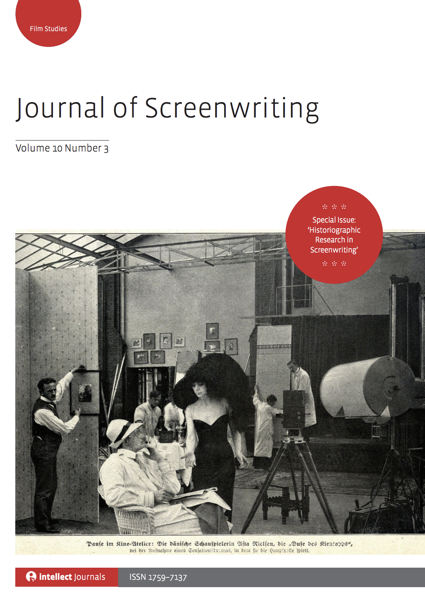


The Journal of Screenwriting is an international double-blind peer-reviewed journal that is published three times a year. The journal highlights current academic and professional thinking about the screenplay and intends to promote, stimulate and bring together current research and contemporary debates around the screenplay whilst encouraging groundbreaking research in an international arena. The journal is discursive, critical, rigorous and engages with issues in a dynamic and developing field, linking academic theory to screenwriting practice. 

Get your copy and subscription to the Journal of Screenwriting Today!
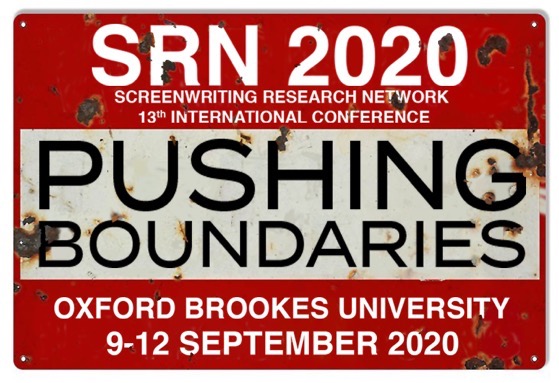

Screenwriting Research Network Conference 2020

Join me at the Screenwriting Research Network’s Annual Conference in Oxford, UK


* A portion of each sale from Amazon.com directly supports our blogs
** Many of these books may be available from your local library. Check it out!