Subscribe to Rosanne’s Channel and receive notice of each new video!
In honor of Halloween – and in service to my teaching philosophy —
“Words Matter. Writers Matter. Women Writers Matter.”
I presented this holiday lecture “When Women Write Horror” on Tuesday, October 29th, 2019. Researching the many, many women who have written horror stories – in novels, films and television – brought new names to my attention who I am excited to start reading. I hope you will be, too!
Transcript:
This ghost comes back into her life after the Civil War is over, because what an awful thing — I didn’t want my children to live as slaves, so I killed her and then the war ended and then there was no slavery anymore and she could have lived and now that guilt is the haunting that’s in her mind forever. So it a really, really, powerful story. Taking the haunted house from kind of pop culture-y goofy to Oh My God, serious literature. That, as well, won a Pulitzer Prize — which is pretty huge.
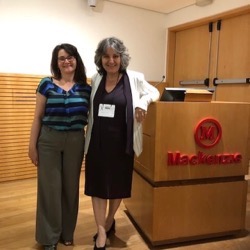
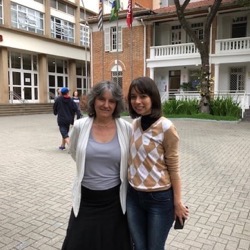
I gave the opening lecture entitled, “Why Researching Screenwriters (has Always) Mattered” which appears here in English, though the rest of the papers (naturally) are in Portuguese. It was an honor to be asked to do the lecture and privilege to spend time with Professor Glaucia Davino and her students who made me feel very welcome in their city.
Words matter. Writers matter and women writers matter in this world. It is important to consider writers because the word writer comes before the word director when you describe a filmmaker who can do two things. They are writer-directors, they are not director-writers. That tells us something. The vision of a movie cannot exist without the screenplay. A director cannot direct nothing. There must be an idea. There must be a philosophy. There must be a theme. There must be a story. This proves that the writer is of equal importance. We must remember writers have to be equal partners and I think we realize that without realizing it. When people talk about movies to their friends they don’t say “I loved the camera angle in scene 7.” They quote dialogue from their favorite movies whether they are from a Pixar film or a Disney one, they quote the dialogue and that is the work of the writer. That’s the person who should be given credit, yet often at the start a class I ask students to list their two or three favorite films, who directed those films and who wrote that film. They very often cannot name the person who wrote the film they claim to adore. How can you study to be a writer if you don’t remember writers yourself? Hence the reason to study Screenwriting. Hence researching screenwriters has always mattered.
When actors Frances McDormand won her Oscar for Three Billboards Outside Ebbing Missouri she said of the screenwriter Martin McDonagh, “He did not sketch a blueprint. That’s an insult to a screenplay. He didn’t string together a few words. He wrote, meticulously crafted, a tsunami, and then he allowed his troupe of actors to surf it into the shore.” (https://www.hollywoodreporter.com/news/sag-awards-three-billboards-takes-top-honors-at-a-show-women-took-center-stage-1076726) She credited the writer in a way that many people do not.
Stories – and therefore screenplays and therefore screenwriters — are important because they transmit culture around the world. The United States has had a corner on that market for far too many years but now we’re beginning to see other stories permeate our culture, a good and beneficial thing for a country made of immigrants and the ancestors of immigrants. Stories have always transmitted culture far back to the cave paintings of many ancient cultures, through Gilgamesh, and the griots of Africa. Humans have used stories to move culture forward. Movies are the most current version of doing that so why do we forget to study the storytellers? Now is the time to fix this glaring omission both in casual discussions of films and in academia.
Subscribe to Rosanne’s Channel and receive notice of each new video!
Transcript:
Another answer for why we don’t credit writers is that we never really credited them equally. In the very early days of Hollywood, you can see on the bottom of this poster, it says it was written and directed by Preston Sturgis, a very famous director of the 30s and 40s and 50s however, it was co-written by two men. The other man’s name doesn’t appear on the poster because he didn’t also direct it yet he co-wrote the movie and in fact his name was Charlie Brackett and he put out – his family put – out his diary the diaries he kept. They published a couple of years ago and in those diaries he wrote things about how he saw himself being written out of Hollywood and he didn’t know what to do about it right? So, in this case, he’s talking about the poster I just had where it says it’s written and directed by Preston Sturgis and he says “evidently he took out every comma as I expected he would do”, right? So he knew he was being erased.
A Note About This Presentation
A clip from my keynote speech at the 10th Screenwriters´(hi)Stories Seminar for the interdisciplinary Graduation Program in “Education, Art, and History of Culture”, in Mackenzie Presbyterian University, at São Paulo, SP, Brazil, focused on the topic “Why Researching Screenwriters (has Always) Mattered.” I was especially pleased with the passion these young scholars have toward screenwriting and it’s importance in transmitting culture across the man-made borders of our world.
To understand the world we have to understand its stories and to understand the world’s stories we must understand the world’s storytellers. A century ago and longer those people would have been the novelists of any particular country but since the invention of film, the storytellers who reach the most people with their ideas and their lessons have been the screenwriters. My teaching philosophy is that: Words matter, Writers matter, and Women writers matte, r so women writers are my focus because they have been the far less researched and yet they are over half the population. We cannot tell the stories of the people until we know what stories the mothers have passed down to their children. Those are the stories that last. Now is the time to research screenwriters of all cultures and the stories they tell because people are finally recognizing the work of writers and appreciating how their favorite stories took shape on the page long before they were cast, or filmed, or edited. But also because streaming services make the stories of many cultures now available to a much wider world than ever before.
Many thanks to Glaucia Davino for the invitation.
* A portion of each sale from Amazon.com directly supports our blogs ** Many of these books may be available from your local library. Check it out! † Available from the LA Public Library
Subscribe to Rosanne’s Channel and receive notice of each new video!
In honor of Halloween – and in service to my teaching philosophy —
“Words Matter. Writers Matter. Women Writers Matter.”
I presented this holiday lecture “When Women Write Horror” on Tuesday, October 29th, 2019. Researching the many, many women who have written horror stories – in novels, films and television – brought new names to my attention who I am excited to start reading. I hope you will be, too!
Transcript:
In our class, we go from Shirley Jackson, We deal with probably the most respected haunted house story in American literature — which is Beloved by Toni Morrison, who passed away just earlier this year because what she’s doing is using, again, like Pauline Hopkins, the history of slavery and what those ghosts are for all of our society right because it’s the story of a woman — based on a true story — a woman who did not want her children to grow up in slavery so she ran away with them and when the master almost captured them, she wanted to kill her children rather than make them live as slaves but she only succeeded in killing one of them before the rest were recaptured and now she lives with a ghost of the little girl who is named Beloved because that’s the only thing she could afford to put on the tombstone. Instead of Dearly Beloved it’s just Beloved.
Subscribe to Rosanne’s Channel and receive notice of each new video!
Transcript:
Historiography. Who got to tell the history matters. Hamilton is a very famous play in the United States right now and there’s a whole song about the idea that who lives and who dies makes a difference in who gets to tell your story. So you need to be better about keeping your records and making sure that they are passed down to someone’s when you’re studying a writer you need to be looking into many other things than just what a couple of people said about them. So this is one of the things I teach my students.
A Note About This Presentation
A clip from my keynote speech at the 10th Screenwriters´(hi)Stories Seminar for the interdisciplinary Graduation Program in “Education, Art, and History of Culture”, in Mackenzie Presbyterian University, at São Paulo, SP, Brazil, focused on the topic “Why Researching Screenwriters (has Always) Mattered.” I was especially pleased with the passion these young scholars have toward screenwriting and it’s importance in transmitting culture across the man-made borders of our world.
To understand the world we have to understand its stories and to understand the world’s stories we must understand the world’s storytellers. A century ago and longer those people would have been the novelists of any particular country but since the invention of film, the storytellers who reach the most people with their ideas and their lessons have been the screenwriters. My teaching philosophy is that: Words matter, Writers matter, and Women writers matte, r so women writers are my focus because they have been the far less researched and yet they are over half the population. We cannot tell the stories of the people until we know what stories the mothers have passed down to their children. Those are the stories that last. Now is the time to research screenwriters of all cultures and the stories they tell because people are finally recognizing the work of writers and appreciating how their favorite stories took shape on the page long before they were cast, or filmed, or edited. But also because streaming services make the stories of many cultures now available to a much wider world than ever before.
Many thanks to Glaucia Davino for the invitation.
* A portion of each sale from Amazon.com directly supports our blogs ** Many of these books may be available from your local library. Check it out! † Available from the LA Public Library
Subscribe to Rosanne’s Channel and receive notice of each new video!
In honor of Halloween – and in service to my teaching philosophy —
“Words Matter. Writers Matter. Women Writers Matter.”
I presented this holiday lecture “When Women Write Horror” on Tuesday, October 29th, 2019. Researching the many, many women who have written horror stories – in novels, films and television – brought new names to my attention who I am excited to start reading. I hope you will be, too!
Transcript:
For me what’s interesting is other haunted house books and films — Beetlejuice being one of the more famous ones and now we’re looking at the influence here of a female actress coming into a piece because this film was written by Michael McDowell and Warren Skerin but because we have Geena Davis, who today is in charge of the Geena Davis Women in Hollywood faction — she made sure that her character had power. She had some agency inside the film. It’s about a couple that gets killed on their honeymoon and they go into hell and they meet Beetlejuice and what’s interesting is that the end they have to get rid of him. She’s the one who kills him. Not the husband. Not the male character. It’s the female character who does the thing that gets rid of the bad guy. So she saves the day and I think it’s adorable at the end of the film there’s a little human girl who can see the ghosts and they have a party not because she met a boy because she got an A in her math test. That’s a girl idea. This is what we celebrate. We don’t sully the boys come and go like buses right but the a in the math test that’s a hot thing. We’re happy about that. So you can see the influence of the female voice in this story — in this haunted house story. So I think that’s rather cool.
Subscribe to Rosanne’s Channel and receive notice of each new video!
Transcript:
There are a lot of people out in the world. Now, in this case, actors can be unreliable narrators because again they have an ego. They have a persona they have to put out into the world and as much as I love Marlon Brando — and I am quite a fan of The Godfather because my family is Italian so that was quite the movie to know. An academic recently went through all his papers and the notes he made on scripts and, in her mind, he wrote some fo the best dialogue in his films, and in her book, she credits Marlon Brando,. In fact, in In The Waterfront, the very famous line is “I could have had class. I could have been someone. I could have been a contender.” She says Marlon Brando wrote that line because in his own papers he says he wrote it but if you go back to the very first script which was written by Budd Schulberg his wife showed it to the academic, that line appeared in the very first draft of the very first script ever. How we credited Marlon Brando I don’t know, but that’s the newest thing now. So it amazes me how many unreliable narrators are out in the world.
A Note About This Presentation
A clip from my keynote speech at the 10th Screenwriters´(hi)Stories Seminar for the interdisciplinary Graduation Program in “Education, Art, and History of Culture”, in Mackenzie Presbyterian University, at São Paulo, SP, Brazil, focused on the topic “Why Researching Screenwriters (has Always) Mattered.” I was especially pleased with the passion these young scholars have toward screenwriting and it’s importance in transmitting culture across the man-made borders of our world.
To understand the world we have to understand its stories and to understand the world’s stories we must understand the world’s storytellers. A century ago and longer those people would have been the novelists of any particular country but since the invention of film, the storytellers who reach the most people with their ideas and their lessons have been the screenwriters. My teaching philosophy is that: Words matter, Writers matter, and Women writers matte, r so women writers are my focus because they have been the far less researched and yet they are over half the population. We cannot tell the stories of the people until we know what stories the mothers have passed down to their children. Those are the stories that last. Now is the time to research screenwriters of all cultures and the stories they tell because people are finally recognizing the work of writers and appreciating how their favorite stories took shape on the page long before they were cast, or filmed, or edited. But also because streaming services make the stories of many cultures now available to a much wider world than ever before.
Many thanks to Glaucia Davino for the invitation.
* A portion of each sale from Amazon.com directly supports our blogs ** Many of these books may be available from your local library. Check it out! † Available from the LA Public Library
Subscribe to Rosanne’s Channel and receive notice of each new video!
In honor of Halloween – and in service to my teaching philosophy —
“Words Matter. Writers Matter. Women Writers Matter.”
I presented this holiday lecture “When Women Write Horror” on Tuesday, October 29th, 2019. Researching the many, many women who have written horror stories – in novels, films and television – brought new names to my attention who I am excited to start reading. I hope you will be, too!
Transcript:
The idea of a haunted house and what we do with haunted houses led us to probably the most famous horror house – changed house — book then film series – The Amityville Horror. Written by a guy so right I’m not doing guys today too much however it’s kind of interesting to say that the dude’s book was proven to be an entire fake. He gave a story about a family that had actually lived in this house and what had happened and then eventually the family came forward and said “Yeah, we just did that for the money. None of that really happened. We made it all up.” So it kind of undermined the whole concept.
Subscribe to Rosanne’s Channel and receive notice of each new video!
Transcript:
Marion Wong was a Chinese-American woman who made films in the early era in San Francisco. You won’t see her in many books. These ladies were also writers in the early days and I think that we’ll find out more about them in the future because they were connected to other important United States people like President Ulysses S. Grant but no one’s done a lot of research on them. No one has found that of interest yet. It’s just becoming a new thing for us.
A Note About This Presentation
A clip from my keynote speech at the 10th Screenwriters´(hi)Stories Seminar for the interdisciplinary Graduation Program in “Education, Art, and History of Culture”, in Mackenzie Presbyterian University, at São Paulo, SP, Brazil, focused on the topic “Why Researching Screenwriters (has Always) Mattered.” I was especially pleased with the passion these young scholars have toward screenwriting and it’s importance in transmitting culture across the man-made borders of our world.
To understand the world we have to understand its stories and to understand the world’s stories we must understand the world’s storytellers. A century ago and longer those people would have been the novelists of any particular country but since the invention of film, the storytellers who reach the most people with their ideas and their lessons have been the screenwriters. My teaching philosophy is that: Words matter, Writers matter, and Women writers matte, r so women writers are my focus because they have been the far less researched and yet they are over half the population. We cannot tell the stories of the people until we know what stories the mothers have passed down to their children. Those are the stories that last. Now is the time to research screenwriters of all cultures and the stories they tell because people are finally recognizing the work of writers and appreciating how their favorite stories took shape on the page long before they were cast, or filmed, or edited. But also because streaming services make the stories of many cultures now available to a much wider world than ever before.
Many thanks to Glaucia Davino for the invitation.
* A portion of each sale from Amazon.com directly supports our blogs ** Many of these books may be available from your local library. Check it out! † Available from the LA Public Library
For a few years running my colleague Warren Lewis has asked me to be a panelist for the semi-annual Film Spark event for ASU (Arizona State University) discussing pitching on a panel and then listening and giving notes to students during an afternoon pitchathon.
This year, due to our sheltering at home during the virus the event used Zoom so for the first time they recorded the hour long panel – and here it is.
We were each asked to give advice based on the stories of our best and worst pitches, which provided a few good laughs and hopefully a lot of good advice.
![16 More On Toni Morrison and Beloved from When Women Write Horror with Dr. Rosanne Welch [Video] (31 seconds)](https://rosannewelch.com/wp-content/uploads/2020/06/rmw-cpp-horror-16.jpeg)



![14 Charlie Brackett from Why Researching Screenwriters (has Always) Mattered [Video] (54 seconds)](https://rosannewelch.com/wp-content/uploads/2020/06/rmw-sao-paolo-14.jpeg)
![15 Toni Morrison and Beloved from When Women Write Horror with Dr. Rosanne Welch [Video] (1 minute)](https://rosannewelch.com/wp-content/uploads/2020/06/rmw-cpp-horror-15.jpeg)
![13 Who Tells Your Story from Why Researching Screenwriters (has Always) Mattered [Video] (28 seconds)](https://rosannewelch.com/wp-content/uploads/2020/06/rmw-sao-paolo-13.jpeg)
![14 Beetlejuice from When Women Write Horror with Dr. Rosanne Welch [Video] (1 minute 16 seconds)](https://rosannewelch.com/wp-content/uploads/2020/06/rmw-cpp-horror-14.jpeg)
![12 Who Wrote What? from Why Researching Screenwriters (has Always) Mattered [Video] (1 minute 9 seconds)](https://rosannewelch.com/wp-content/uploads/2020/06/rmw-sao-paolo-12.jpeg)
![13 The Amityville Horror from When Women Write Horror with Dr. Rosanne Welch [Video] (32 seconds)](https://rosannewelch.com/wp-content/uploads/2020/05/rmw-cpp-horror-13.jpeg)
![11 Marion E. Wong & Jennie Louise Toussaint from Why Researching Screenwriters (has Always) Mattered [Video] (27 seconds)](https://rosannewelch.com/wp-content/uploads/2020/05/rmw-sao-paolo-11.jpeg)
![Watch Now: Creative Career Kickstart: Catching and Pitching Panel – ASU Film Spark Program [Video] (1 hour 15 minutes)](https://rosannewelch.com/wp-content/uploads/2020/05/asu-film-spark-logo.png)
![Creative Career Kickstart: Catching and Pitching Panel - ASU Film Spark Program [Video] (1 hour 15 minutes)](https://rosannewelch.com/wp-content/uploads/2020/05/asu-fim-spark.png)