08 Television After 1968 from How The Monkees Changed Television [Video] (0:55)

What this entire presentation — How The Monkees Changed Television with Rosanne Welch, PhD (Complete Presentation and Q&A) [Video] (45:06)

08 Television After 1968 from How The Monkees Changed Television

Rosanne Welch, PhD, Author of Why The Monkees Matter, presents “How The Monkees Changed Television” at a Cal State Fullerton Lunch Lecture on May 8, 2018.

In this talk, she shows how The Monkees, and specifically their presence on television, set the stage for large changes to come in the late 1960s.


Transcript

Back in the day — I just mentioned the war — they did have many moments where they referenced the war — the war on poverty — and President Lyndon Johnson and they mentioned particularly — there was a great episode where they were playing dominoes and they dropped all the dominoes and then Davy Jones said to Peter Tork “what do you call this game?” and Peter Tork said “Southeast Asia” and nobody cut that, right, because nobody who is a censor at the network understood what it meant which is pretty shocking if you ask me.

This is Dr. Timothy Leary who was famous back in the day for dropping LSD and whatnot and taking experiments with the psyche and he was watching the program and defining it and recognizing that it was far deeper than anyone else had given it the thought before. So already in the 60s people in the know knew that this was something different and worth paying attention to.


 Why The Monkees Matter: Teenagers, Television and American Pop Culture


McFarland (Direct from Publisher) | Amazon | Kindle Edition | Nook Edition

Want to use “Why The Monkees Matter” in your classroom?

Order Examination Copies, Library and Campus Bookstore orders directly from McFarland

McFarland Company logo


About Rosanne Welch, PhD

Rosanne Welch, PhD is a writer, producer and university professor with credits that include Beverly Hills 90210, Picket Fences, Touched by an Angel and ABC NEWS/Nightline. Other books include Why The Monkees Matter: Teenagers, Television and American Pop Culture (McFarland, 2017) and Women in American History: A Social, Political, and Cultural Encyclopedia and Document Collection (ABC-CLIO, 2017), named to the 2018 Outstanding References Sources List, by the Reference and User Services Association (RUSA), a division of the American Library Association. Welch has also published chapters in Torchwood Declassified: Investigating Mainstream Cult Television (I.B.Tauris) and The American Civil War on Film and TV: Blue and Gray in Black and White and Color (Lexington Books, 2018) and essays in Doctor Who and Race: An Anthology and Outside In Makes it So, and Outside in Boldly Goes (both edited by Robert Smith). By day she teaches courses on the history of screenwriting and on television writing for the Stephens College MFA in Screenwriting programs. Her talk “The Importance of Having a Female Voice in the Room” at the 2016 TEDxCPP is available on YouTube.

19 Steven Moffatt Prepares for Lady Doctor from Gender Diversity in the Who-niverse [Video] (1:13)

Watch this entire presentation: Gender Diversity in the Who-niverse: Paving the Way for a Lady Doctor with Dr. Rosanne Welch [Video] (36:58)

Steven Moffatt Prepares for Lady Doctor from Gender Diversity in the Who-niverse

For her 5th Doctor Who lecture to the CPP community, Dr. Rosanne Welch discusses how society – and the show’s writing staff – prepared the audience for a major change in this 50-year franchise – the creation of the first Lady Doctor!

Transcript:

Have to give Steven for laying the groundwork finally and, as I said, if you look at his writing, when Matt changed he gave us “Not a girl. Still not ginger.” — a little ginger joke there. Which is fine. he made everyone think they were going to pick — oh my gosh I never forgot his name — Ron Weasley — yes — Rupert Grint, thank you so much. There was discussion that Rupert Grint would become a new Doctor, so a little joke there, the ginger is referencing that. So he knows what’s happening in culture. What people are saying about his program, right? So he laid that in. he also laid in in “The Doctor’s Wife” which is a marvelous episode — written by Neil Gaiman, wh you might know form American Gods and the other very cool novels. So they invited Nei Gaiman to come in and write an episode and they found old, dead, Timelords trapped in these little boxes and this is what he said about this guy, right? “He didn’t feel himself unless he had the tattoo. Or herself, a couple of times. Ooooo, she was a bad girl.” So Timelord who switched their gender It is possible. So Steven is writing or Executive Producing the writing in all these episodes. So he’s laying the groundwork for all this to happen.

Follow Dr. Welch on Twitter and Instagram
https://twitter.com/rosannewelchhttp://instagram.com/drrosannewelch


Rosanne Welch, PhD

Rosanne Welch PhD teaches the History of Screenwriting and One-Hour Drama for the Stephens College MFA in Screenwriting.

Writing/producing credits include Beverly Hills 90210, Picket Fences, ABCNEWS: Nightline and Touched by an Angel. In 2016 she published the book Why The Monkees Matter: Teenagers, Television and American Pop; co-edited Women in American History: A Social, Political, and Cultural Encyclopedia; and placed “Transmitting Culture Transnationally Via the Characterization of Parents in Police Procedurals” in the New Review of Film and Television Studies. Essays appear in Torchwood Declassified: Investigating Mainstream Cult Television and Doctor Who and Race: An Anthology. Welch serves as Book Reviews editor for Journal of Screenwriting and on the Editorial Advisory Board for Written By magazine, the magazine of the Writers Guild.


Watch Dr. Welch’s talk “The Importance of Having a Female Voice in the Room” at the 2016 TEDxCPP.

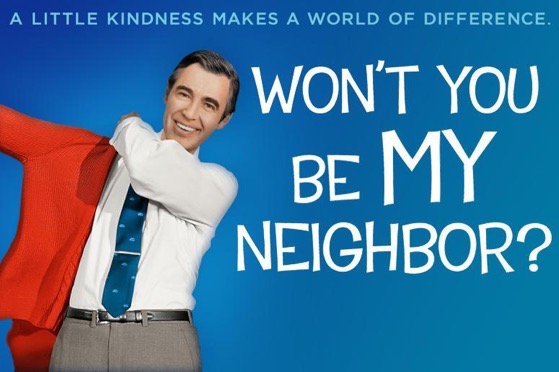
Won’t You Be My Neighbor? – Fred Rogers Documentary

Won't You Be My Neighbor? - Fred Rogers Documentary

I can’t recommend the new Mr. Rogers documentary strongly enough. 

“Won’t You Be My Neighbor?” is about so much more than the man behind one children’s program.  It’s about the way you can dedicate your life to a cause. It’s about the obvious point that if we teach children they are loved and give them security in their early years, we can avoid so much of the issues in their later lives. It’s about standing up for what you believe in.  It’s about how hard it is to fight our society’s glorification of toxic masculinity.  And, to me, most importantly, it’s about the power of television – a topic we all need to consider.

The two quotes I can’t forget – from a set of interviews with Fred Rogers that contained many worthwhile quotes (which is why you need to see the film so I don’t have to replicate them all here) — are:

“What we see and hear on television molds our lives”

and

“Television has the capability of being a neighborhood for the whole country.”

People far too often ignore television but because it comes into our homes effortlessly and is ever present, it does have the ability to shape ideas and opinions and it has always had the ability to educate. I don’t mean it only has to teach us multiplication and fractions, but like any good genre of storytelling, it teaches us empathy and understanding of others. Mr. Rogers did that gently and quietly because he was addressing children as they formed their identities, and for that we ought to be grateful.

On top of all that, when he says “The greatest thing you can teach someone is that they are loved, and are capable of loving, he validates a frequent comment I make to writing students – that every story, in the end, is a love story.  And this one is one you should not miss.

It almost makes me sad that children today on their iPads are watching the animated adventures of Daniel Tiger. While I’m happy they are being exposed to Mr. Rogers’ stories and lessons, I hope they don’t forget to show this new generation the actual episodes starring Mr. Rogers because seeing a gentle man in real life is probably more instructive than all the messages an animated tiger can give.

Learn more about Fred Rogers

* A portion of each sale from Amazon.com directly supports our blogs
** Many of these books may be available from your local library. Check it out!
† Available from the LA Public Library


More on the Monkees: Flip Magazine, December 1966 via Sunshine Factory

More on the Monkees: Flip Magazine, December 1966 via Sunshine Factory

More on the Monkees: Flip Magazine, December 1966 via Sunshine Factory


 Why The Monkees Matter: Teenagers, Television and American Pop Culture


McFarland (Direct from Publisher) | Amazon | Kindle Edition | Nook Edition

Want to use “Why The Monkees Matter” in your classroom?

Order Examination Copies, Library and Campus Bookstore orders directly from McFarland

McFarland Company logo

From The Research Vault: The face on the lunch box: television’s construction of the teen idol by Gael Sweeney (1994)

From The Research Vault: The face on the lunch box: television’s construction of the teen idol by Gael Sweeney (1994)

From The Research Vault: The face on the lunch box: television's construction of the teen idol by Gael Sweeney (1994)

ALL MY MONKEES ALBUMS ARE STILL LINED up next to the old stereo in my room in my mother’s house; my friend Claire still has the ticket stubs and souvenir program from a Bobby Sherman concert; my sister keeps her David Cassidy memorabilia in an old “Partridge Family” lunch box at the back of her closet. We each quickly abandoned our idols after a short time. They hardly seem part of our past, but some fantasy we can barely remember makes us cling to those scraps.

I have turned to the study of teen idols because it combines two areas on which much recent feminist film theory has focused: the representation of masculinity and female spectatorship in popular culture. Idols are uniquely positioned at the intersection of these two fields of study. The idol is especially relevant to feminist theory because he represents a specific kind of masculine image that is often at odds with the dominant version of the masculine in society while allying itself with the feminine. I would argue that there is the male star, such as John Wayne, Clark Gable, Gary Cooper, or Clint Eastwood, whose masculinity is secure and untroubled and whose image in culture is straightforward and sexually unambiguous. These stars generally play heroes, cowboys, soldiers, cops, and working men in mainstream, dramatic films. Their fans tend to be “average” moviegoers but skewed towards heterosexual white males, much like the characters they portray. The male viewers of these stars find their masculinity and power reflected back at them, confirming their status and superiority in patriarchal society. Stars depend on the gaze of other men for validation; although they accept the looks of others (such as women, gay men, or minorities), they need the authority of the dominant masculine paradigm to confirm their power as stars.

Read The face on the lunch box: television’s construction of the teen idol by Gael Sweeney (1994)


Why The Monkees Matter: Teenagers, Television and American Pop Culture

Buy Your Copy Now!

* A portion of each sale from Amazon.com directly supports our blogs
** Many of these books may be available from your local library. Check it out!
† Available from the LA Public Library

07 Overview of The Monkees’ Affect from How The Monkees Changed Television [Video] (1:28)

What this entire presentation — How The Monkees Changed Television with Rosanne Welch, PhD (Complete Presentation and Q&A) [Video] (45:06)

07 Overview of The Monkees'  Affect from How The Monkees Changed Television

Rosanne Welch, PhD, Author of Why The Monkees Matter, presents “How The Monkees Changed Television” at a Cal State Fullerton Lunch Lecture on May 8, 2018.

In this talk, she shows how The Monkees, and specifically their presence on television, set the stage for large changes to come in the late 1960s.


Transcript

Then we come to what I’m going to talk about, which is the various major chapters in the book — how this show spread some social justice messages which was shocking and other shows will be canceled for having tried that — particularly The Smothers Brothers, Laugh-In got in trouble for it. This show, I didn’t realize as a kid until I looked at all 58 episodes over and over again to write the book actually said something about feminism because every single girl that dated one of these boys had a job. None of them was a bubble-headed cheerleader. None of them was just waiting around to marry someone to take care of her. They were all women with jobs. So, they might have been record stores and whatever, but they were jobs and I think that was an interesting message in 1966. I’ll also talk briefly about metatextuality, which is the big thing in critical studies. What — How were they speaking to the audience? Breaking the 4th wall. It’s a Shakespearian thing. For this show particularly, identity construction. These guys went through a lot because with how their names were actually used in the program. Just like Jerry Seinfeld, they went by their real names and this gets very confusing when fans want to understand “Are you really that goofy guy in the TV show?” “No I’m not.I’m actually a grown man and I have kids, but I can’t tell you that because then you won’t dream or fantasize about marrying me someday.” So that was the big deal on this show and it really harmed them in their later careers and then a little bit on the Cultural Caché — how much they’ve last over the years.


 Why The Monkees Matter: Teenagers, Television and American Pop Culture


McFarland (Direct from Publisher) | Amazon | Kindle Edition | Nook Edition

Want to use “Why The Monkees Matter” in your classroom?

Order Examination Copies, Library and Campus Bookstore orders directly from McFarland

McFarland Company logo


About Rosanne Welch, PhD

Rosanne Welch, PhD is a writer, producer and university professor with credits that include Beverly Hills 90210, Picket Fences, Touched by an Angel and ABC NEWS/Nightline. Other books include Why The Monkees Matter: Teenagers, Television and American Pop Culture (McFarland, 2017) and Women in American History: A Social, Political, and Cultural Encyclopedia and Document Collection (ABC-CLIO, 2017), named to the 2018 Outstanding References Sources List, by the Reference and User Services Association (RUSA), a division of the American Library Association. Welch has also published chapters in Torchwood Declassified: Investigating Mainstream Cult Television (I.B.Tauris) and The American Civil War on Film and TV: Blue and Gray in Black and White and Color (Lexington Books, 2018) and essays in Doctor Who and Race: An Anthology and Outside In Makes it So, and Outside in Boldly Goes (both edited by Robert Smith). By day she teaches courses on the history of screenwriting and on television writing for the Stephens College MFA in Screenwriting programs. Her talk “The Importance of Having a Female Voice in the Room” at the 2016 TEDxCPP is available on YouTube.

18 Moffat, Vertue and a Lady Doctor from Gender Diversity in the Who-niverse [Video] (1:08)

Watch this entire presentation: Gender Diversity in the Who-niverse: Paving the Way for a Lady Doctor with Dr. Rosanne Welch [Video] (36:58)

18 Moffat, Vertue and a Lady Doctor from Gender Diversity in the Who-niverse

For her 5th Doctor Who lecture to the CPP community, Dr. Rosanne Welch discusses how society – and the show’s writing staff – prepared the audience for a major change in this 50-year franchise – the creation of the first Lady Doctor!

Transcript:

Going back to the 80’s, Sydney Newman, who was still in the BBC also said at some point in the history of this show The Doctor should become a woman. So this idea has been around for a while. I don’t think of the 80’s as that far back — but you all weren’t born — so it’s a long time ago to you and these ideas were there but among artists not quite in the major society. This is why art is so important. That’s how we influence society. So Sydney Newman thought that. We don’t get the stepping stones of a lady Doctor until we get Steven Moffat as I have said and his wife Sue Vertue. So a woman helped influence the time for this to happen and as you can see here this is not the cast of Doctor Who. So who is this?

Audience: Sherlock!

The cast of Sherlock, which Steven put together with Mark Gatiss and Sue produces. So his wife is his producing partner. he comes from a marriage where they are equally important in their job if in fact, she is not more important because she produces his work. She sells what he writes. So in a way, obviously, she has the power.

Follow Dr. Welch on Twitter and Instagram
https://twitter.com/rosannewelchhttp://instagram.com/drrosannewelch


Rosanne Welch, PhD

Rosanne Welch PhD teaches the History of Screenwriting and One-Hour Drama for the Stephens College MFA in Screenwriting.

Writing/producing credits include Beverly Hills 90210, Picket Fences, ABCNEWS: Nightline and Touched by an Angel. In 2016 she published the book Why The Monkees Matter: Teenagers, Television and American Pop; co-edited Women in American History: A Social, Political, and Cultural Encyclopedia; and placed “Transmitting Culture Transnationally Via the Characterization of Parents in Police Procedurals” in the New Review of Film and Television Studies. Essays appear in Torchwood Declassified: Investigating Mainstream Cult Television and Doctor Who and Race: An Anthology. Welch serves as Book Reviews editor for Journal of Screenwriting and on the Editorial Advisory Board for Written By magazine, the magazine of the Writers Guild.

Watch Dr. Welch’s talk “The Importance of Having a Female Voice in the Room” at the 2016 TEDxCPP.

From The Research Vault: Interview on Headquarters Radio Show: with Ward Sylvester (Part 2), (1989)

From The Research Vault: Interview on Headquarters Radio Show: with Ward Sylvester (Part 2), (1989)

From The Research Vault: Interview on Headquarters Radio Show: with Ward Sylvester (Part 2), (1989)

In 1987, Paris Stachtiaris and John Di Maio began a weekly Monkees radio program on WBAU, the radio station of Adelphi University on Long Island, New York. Entitled Headquarters, the show featured Monkees music (including material that hadn’t been officially released at the time), soundbites and clips from the TV show, and interviews with a host of Monkees notables, including Bobby Hart, Chip Douglas, Jerry Shepard, Lester Sill, Jack Good, David Pearl, Ward Sylvester, Coco Dolenz, and the individual Monkees themselves.

In the 38th episode of the Headquarters radio show, Paris and John continue their discussion with Ward Sylvester. Sylvester managed Davy Jones before he was a member of The Monkees, served as an associate producer for The Monkees television series, oversaw the first Monkees tour, acted as executive producer for The Monkees’ 1969 TV special, and worked with Michael Nesmith on various projects throughout the 1980s and 1990s. All four Monkees selected Sylvester as their manager in 1995 in preparation for the group’s 30th Anniversary activities.

Listen to this podcast


Why The Monkees Matter: Teenagers, Television and American Pop Culture

Buy Your Copy Now!

* A portion of each sale from Amazon.com directly supports our blogs
** Many of these books may be available from your local library. Check it out!
† Available from the LA Public Library

06 TV Before The Monkees from How The Monkees Changed Television [Video] (1:10)

What this entire presentation — How The Monkees Changed Television with Rosanne Welch, PhD (Complete Presentation and Q&A) [Video] (45:06)

06 TV Before The Monkees from How The Monkees Changed Television

Rosanne Welch, PhD, Author of Why The Monkees Matter, presents “How The Monkees Changed Television” at a Cal State Fullerton Lunch Lecture on May 8, 2018.

In this talk, she shows how The Monkees, and specifically their presence on television, set the stage for large changes to come in the late 1960s.


Transcript

Before the show went on the air, this is what you were watching on television. Notice most of them are black and white. Nothing wrong with black and white. Sometimes I have students who say “Oh, for a black and white movie that wasn’t so bad.” And I have to remind them that it’s not the writer’s fault that technology didn’t have color yet, but this is — you can see that these are more or less quieter, gentler, blander, family shows. Nothing wrong with them. Andy Griffith was quite fun. Dragnet, you know, was as serious as one could be in tv back in the day, but this is what you had going on. You notice in the far corner just for fun. See that face? Circus Boy? 1950’s. That’s Micky Dolenz as a ten-year-old. He was a child star. he already had a tv show before The Monkees ever happened. His father was a tv star. George Dolenz, he was The Count of Monte Cristo in 1958 and so gee one day his agent said, “They’re doing a show called Circus Boy. Do you think your kid could be the Circus Boy?” and the Dad said, “You know how much money they’ll pay. Yeah, my kid could do that.” but they blonded his hair out because they thought he looked too ethnic because he was Italian. Ethnic.Italian back in the day. That was as ethnic as we were going to go.


 Why The Monkees Matter: Teenagers, Television and American Pop Culture


McFarland (Direct from Publisher) | Amazon | Kindle Edition | Nook Edition

Want to use “Why The Monkees Matter” in your classroom?

Order Examination Copies, Library and Campus Bookstore orders directly from McFarland

McFarland Company logo


About Rosanne Welch, PhD

Rosanne Welch, PhD is a writer, producer and university professor with credits that include Beverly Hills 90210, Picket Fences, Touched by an Angel and ABC NEWS/Nightline. Other books include Why The Monkees Matter: Teenagers, Television and American Pop Culture (McFarland, 2017) and Women in American History: A Social, Political, and Cultural Encyclopedia and Document Collection (ABC-CLIO, 2017), named to the 2018 Outstanding References Sources List, by the Reference and User Services Association (RUSA), a division of the American Library Association. Welch has also published chapters in Torchwood Declassified: Investigating Mainstream Cult Television (I.B.Tauris) and The American Civil War on Film and TV: Blue and Gray in Black and White and Color (Lexington Books, 2018) and essays in Doctor Who and Race: An Anthology and Outside In Makes it So, and Outside in Boldly Goes (both edited by Robert Smith). By day she teaches courses on the history of screenwriting and on television writing for the Stephens College MFA in Screenwriting programs. Her talk “The Importance of Having a Female Voice in the Room” at the 2016 TEDxCPP is available on YouTube.

Cal State Fullerton expert finds the Monkees were a steppin’ stone to cultural change — Rosanne in The Orange County Register

When two Monkees fans get together, magic always happens, as you’ll see when you read what Wendy Fawthrop of the Orange County Register thought of my last Monkees lecture, which was open to the public. — Rosanne

Cal State Fullerton expert finds the Monkees were a steppin’ stone to cultural change Cal State Fullerton expert finds the Monkees were a steppin’ stone to cultural change — Rosanne in The Orange County Register

She’s a believer.

And after Rosanne Welch spoke recently to a gathering of Cal State Fullerton students and faculty, many of them were left also believing that the Monkees, the 1960s boy band, had a greater impact on television, music and pop culture than they had thought.

Illustrated with slides of the Monkees with Paul McCartney and Janis Joplin, on cereal boxes and in pop culture references long after their heyday, Welch’s talk laid out evidence that the group’s TV show made strong feminist statements and advanced such TV practices as characters addressing the audience, used today on such shows as “Modern Family” and “House of Cards.”

“They influenced so many of today’s modern-day performers and yet people keep forgetting about that,” said Welch.

Read this entire article — Cal State Fullerton expert finds the Monkees were a steppin’ stone to cultural change 


 Why The Monkees Matter: Teenagers, Television and American Pop Culture


McFarland (Direct from Publisher) | Amazon | Kindle Edition | Nook Edition

Want to use “Why The Monkees Matter” in your classroom?

Order Examination Copies, Library and Campus Bookstore orders directly from McFarland

McFarland Company logo