On Arthur Laurents and The Way We Were

Thewaywewere

Going to YouTube to find a fun clip to add to someone’s FB post generally leads down the rabbit hole (thank you Lewis Carroll for inventing Alice’s Adventures in Wonderland and therefore inventing the phrase “down the rabbit hole”). 

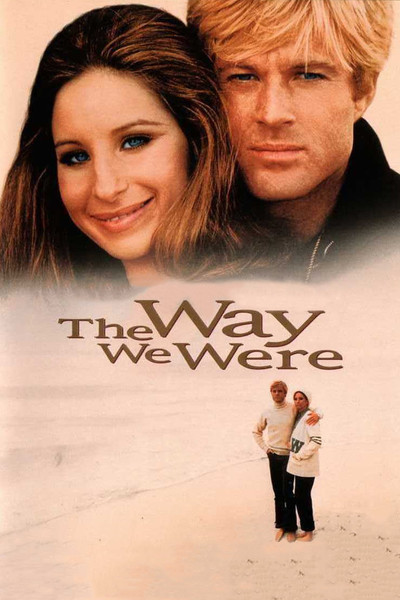
Last week it led me to clips from The Way We Were, written by Arthur Laurents and starring Barbra Streisand and Robert Redford.

I had re-read Laurents’ autobiography — Original Story — over the summer since I love reading about how writers came up with their best work (and his book had a whole chapter on it complete with explanations for a bad cut by the director and studio execs that destroyed a key reason the couple splits up – spoiler alert).

Iconic is overused but it fits here. That love story with an unexpected but completely organic ending is a classic for a reason – all the parts added up to the perfect whole.  I wanted to highlight this scene because of the power it gives the female character and the fear that power can have on the equally powerful male character.  I can’t think of too many scenes that can do that – enhanced by the power both of these superstars brought to their performances.

Resources

Professors Dr. Rosanne Welch and Dr. Peg Lamphier spotlight Gloria Steinem in women-centered book series – PolyPost

What’s normal in my world is working on books with my friend and colleague, Dr. Peg Lamphier, about brilliant women in U.S. history.  What’s not normal is having a brilliant young journalism student, Elizabeth Casillas, approach us to write an article about our work. 

This article in the PolyPost is the outcome of both of those events. 

It covers the latest book in the series Peg and I are editing:  Women Making History where we were asked to create 8 women’s biographies to include in the series – with the best part being we then chose the 8 writers for the job. That meant giving a few of them their first book project ever.  That is when this job become the most fun.  This article covers the latest book on the life of Gloria Steinem, written by William Pruden (the only male author in the whole series – why?  Because women’s history IS U.S. History so men can – and should – highlight it, too).


Professors Dr. Rosanne Welch and Dr. Peg Lamphier spotlight Gloria Steinem in women-centered book series - PolyPost

Peg Lamphier and Rosanne Welch, lecturers in the Interdisciplinary General Education Department, teamed up to co-edit “Gloria Steinem: A Life in American History,” the second installment of their book series focused on women’s contribution to American history and culture released Aug. 2.

The book, written by William Prudent and published by ABC-CLIO, covers the life of feminist journalist Gloria Steinem. After previously working with ABC-CLIO on “Women in American History,” an encyclopedia dedicated to detailing women’s contributions in American history and culture, Lamphier and Welch were sought out by the publishing firm to co-edit a larger book series.

Other subjects in the book series include Ruth Bader Ginsburg, Hillary Clinton, Helen Keller, Sally Ride, Eleanor Roosevelt, Ida B. Wells and Delores Huerta.

“If we’re going to have a series on women, what I want is books on women that don’t have 13 other books about them,” said Lamphier on the decision to incorporate Steinem into the series. “We keep trotting out the same women; it’s like we can only know 10 women at a time in America, so we got some people like Wilma Mankiller and Gloria Steinem.” A world-renowned feminist, Steinem’s life experiences were crucial to the feminist movement which compelled the lecturers to include her story in the series.

Read the entire article


Dr. Rosanne Welch’s Chapter in Doctor Who – New Dawn: Essays on the Jodie Whittaker Era from Manchester University Press Now Available

Dr. Rosanne Welch's Chapter in Doctor Who - New Dawn: Essays on the Jodie Whittaker Era  from Manchester University Press Now Available

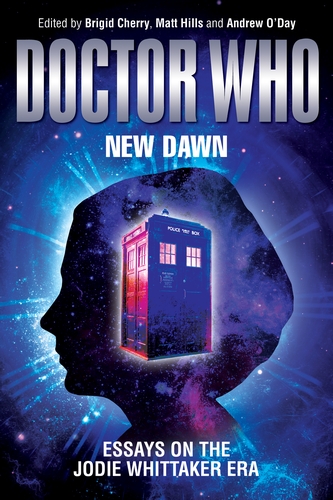
I’m happy to announce the publication of Doctor Who New Dawn: Essays on the Jodie Whittaker Era for which I was invited to write a chapter. 

My focus was on the delicate work showrunner/writer Chris Chibnall had to do in realizing this new Doctor so it’s called “She is Wise and Unafraid” Writing the First Female Doctor and a Diverse Universe for her to Protect

I touch on the myriad decisions a showrunner makes in creating a character from costuming to sidekicks (called companions in the Whoniverse) to dialogue.   I was excited to have been invited to contribute to this collection and proud to showcase the way screenwriters work.

I know academic books can be expensive but you can always ask your local or college library to order a copy for you to read!  


Doctor Who – new dawn explores the latest cultural moment in this long-running BBC TV series: the casting of a female lead. Analysing showrunner Chris Chibnall and Jodie Whittaker’s era means considering contemporary Doctor Who as an inclusive, regendered brand. Featuring original interview material with cast members, this edited collection also includes an in-depth discussion with Segun Akinola, composer of the iconic theme tune’s current version. The book critically address the series’ representations of diversity, as well as fan responses to the thirteenth Doctor via the likes of memes, cosplay and even translation into Spanish as a grammatically gendered language. In addition, concluding essays look at how this moment of Who has been merchandised, especially via the ‘experience economy’, and how official/unofficial reactions to UK lockdown helped the show to further re-emphasise its public-service potential.

P.S. You can check out the trailer for Jodie’s upcoming 3rd season here:

The Civil War On Film – Review

The Civil War On Film - Review

Because the Civil War ended less than 30 years before the first motion pictures, it became a favorite subject for the new medium and has remained so ever since. Unfortunately, many of these Civil War films are historically inaccurate. According to Lamphier (humanities, California State Polytechnic Univ.) and Welch (screenwriting, Stephens College), films of the Civil War “almost universally erase the past” in order to forget that it was so “painful, destructive, and unpleasant” (p. ix). To illustrate the varying approaches to Civil War history and memory, the authors selected ten significant films—ranging chronologically and thematically from Gone with the Wind (1939) to Free State of Jones (2016)—devoting a chapter to each. All the chapters present the historical background and cultural context for the film, contexts that include, among other things, combat, gender, immigration, leadership, pacifism, race, and slavery. Other works—e.g., Bruce Chadwick’s The Reel Civil War: Mythmaking in American Film (CH, Mar’02, 39-3875) and The American Civil War on Film and TV: Blue and Gray in Black and White and Color, ed. by Douglas Brode, Shea Brode, and Cynthia Miller (CH, May’18, 55-3151)—cover more films and themes; the present volume will be especially useful as a tool for teaching cinematic representations of the past. — J. I. Deutsch, George Washington University

Movies profiled in this book:

The Civil War On Film – 36 in a series – “Hattie McDaniel, who would not be allowed in the segregated theater where the film premiered.”

The Civil War On Film - 36 in a series -  

Local politicians and MGM publicists alike planned a gala three-day celebration that involved all the major cast members except Leslie Howard, who had returned to England when he heard his home country had declared war on Germany, and Hattie McDaniel, who would not be allowed in the segregated theater where the film premiered. Another African American was present, though his fame would not come until later in life. Martin Luther King Jr., then a ten-year-old member of his father’s church choir, sang four spirituals at the gala.

Movies profiled in this book:

The Civil War On Film – 35 in a series – “Lincoln wasn’t always popular.”

 Lincoln wasn’t always popular.

Lincoln wasn’t always popular. His presidency was contentious even in the North, as the contested 1864 presidential election suggests, and most white southerners reviled him. David H. Donald, one of Lincoln’s many biographers, contends that the sixteenth president did not take on heroic, even mythological status until the early twentieth century (Donald 1969).

Movies profiled in this book:

The Civil War On Film – 34 in a series – “…purports to be a history of the gangs of New York…”

The Civil War On Film - 34 in a series -

Judging the truth of the history portrayed on screen begins by judging the truth of the history portrayed in the original source material. While Asbury’s book is shelved with non-fiction and purports to be a history of the gangs of New York, the subtitle admits it is “An Informal History of the Underworld.” On top of that, unlike other films adapted from books, which work hard to remain loyal to the text, when Scorsese thought about making Gangs he admitted being more interested in being loyal to the town than its residents.

Movies profiled in this book:

The Civil War On Film – 33 in a series – “…the conflict that arose in Kansas in the seven years before the Civil War known as “Bleeding Kansas.”

The Civil War On Film - 33 in a series -

The roots of the Kansas-Missouri border war can be found in the conflict that arose in Kansas in the seven years before the Civil War known as “Bleeding Kansas.” In 1854, the Kansas-Nebraska Act created the two territories and solved the “slavery problem” with the addition of a popular sovereignty clause. While the notion that Kansas settlers would vote on whether they wanted slavery or not sounded like a sensible solution to the nation’s increasingly anxious conversation about slavery, it inadvertently caused a kind of war between anti-slavery and pro-slavery settlers.

Movies profiled in this book:

The Civil War On Film – 32 in a series – “…because it was insufficiently sympathetic to the Confederate point of view.”

The Civil War On Film - 32 in a series -

Predictably, some Civil War movie fans didn’t like Andersonville because it was insufficiently sympathetic to the Confederate point of view. Neo-Confederate viewers, who surely expected a different film from Georgian Ted Turner, pointed out Confederate soldiers in Union prison camps suffered as greatly as Union soldiers in Andersonville. On the whole though, Andersonville fairs well with Civil War movie fans who enjoy (or at least tolerate) a Northern point of view.

Movies profiled in this book:

The Civil War On Film – 31 in a series – …the heroism slathered on the men who survived Gettysburg…”

The Civil War On Film - 31 in a series - ...the heroism slathered on the men who survived Gettysburg...

Much of the heroism slathered on the men who survived Gettysburg on both sides, but mostly regarding the Confederates, came from the literary work of their wives and widows published for years after the war. For example, in 1913 La Salle Corbell Pickett published The Heart of a Soldier As revealed in the Intimate Letters of Genl. George E. Pickett C.S.A. Due to his wife’s efforts, his reckless and ill-conceived charge became synonymous with heroism – and with her husband and her husband alone – despite the fact that two Confederate divisions charged up Cemetery Ridge that day.

Movies profiled in this book: