Encyclopedia of Women in American History, edited by Dr. Rosanne Welch and Dr. Peg Lamphier, has been named to the 2018 Outstanding References Sources List, an annual list selected by experts of the Collection Development and Evaluation Section (CODES) of the Reference and User Services Association (RUSA), a division of the American Library Association.
The Outstanding Reference Sources Committee was established in 1958 to recommend the most outstanding reference publications published the previous year for small and medium-sized public and academic libraries. The selected titles are valuable reference resources and are highly recommended for inclusion in any library’s reference collections.
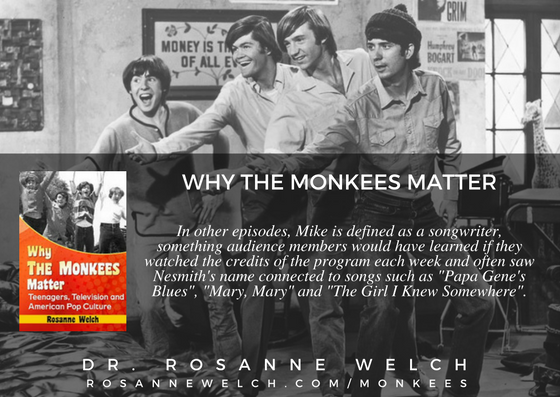
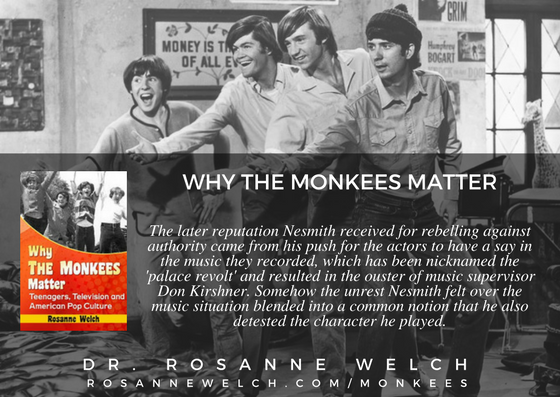
The later reputation Nesmith received for rebelling against authority came from his push for the actors to have a say in the music they recorded, which has been nicknamed the ‘palace revolt’ and resulted in the ouster of music supervisor Don Kirshner. Somehow the unrest Nesmith felt over the music situation blended into a common notion that he also detested the character he played. .
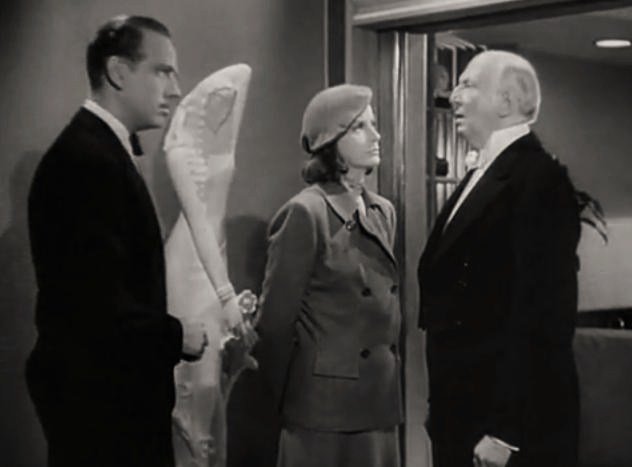
Ninotchka is a 1939 American film made for Metro-Goldwyn-Mayer by producer and director Ernst Lubitsch and starring Greta Garbo and Melvyn Douglas.[1] It is written by Billy Wilder, Charles Brackett, and Walter Reisch,[1] based on a screen story by Melchior Lengyel. Ninotchka is Greta Garbo’s first full comedy, and her penultimate film. It is one of the first American movies which, under the cover of a satirical, light romance, depicted the Soviet Union under Joseph Stalin as being rigid and gray, in this instance comparing it with the free and sunny Parisian society of pre-war years.- Wikipedia
Learn More About Greta Garbo with these books
††
* A portion of each sale from Amazon.com directly supports our blogs ** Many of these books may be available from your local library. Check it out! † Available at the LA Public Library
It really hurt me to watch these generations of women discuss the business of being a woman and their dismissing her skill entirely.
Audience: Which year is the film? In which year was that a film, sorry?
The film is 1959. Thank you, sorry. Yes, 1959. We’re going to move into the 1960s with the next 2 sequels and the show.
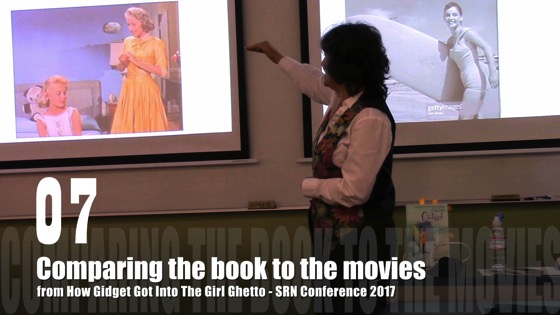
So this is typical when a guy writes it and also the difference between the book and the films. In the book, she has a friend who’s an aspiring playwright. Gidget herself is reading Rachel Carson because Rachel Carson’s book Silent Spring was about how we were affecting the environment and the environment means everything to her because that’s where the surf is. In the movie, she doesn’t read because that’s a boring thing for a girl to do. Her father’s a professor, in the movie he’s kind of a sitcom goof-off. He’s actually played by Carl Reiner in one of the sequels. She wants to learn to surf. that’s her “character want.” If we scripting this story. In this she want’s a boyfriend. I mean entirely take away the thing that makes her special and different.
“How Gidget Got Into the Girl Ghetto by Accident (and How We Can Get Her Out of it): Demoting Gidget: The Little Girl with Big Ideas from Edgy Coming of Age Novel to Babe on the Beach Genre Film via Choices made in the Adaptation Process.”
It’ a long title, as I joke up front, but covers the process of adapting the true life story of Kathy Kohner (nicknamed ‘Gidget’ by the group of male surfers who she spent the summers with in Malibu in the 1950s) into the film and television series that are better remembered than the novel. The novel had been well-received upon publication, even compared to A Catcher in the Rye, but has mistakenly been relegated to the ‘girl ghetto’ of films. Some of the adaptations turned the focus away from the coming of age story of a young woman who gained respect for her talent at a male craft – surfing – and instead turned the focus far too much on Kathy being boy crazy.
Along the way I found interesting comparisons between how female writers treated the main character while adapting the novel and how male writers treated the character.
Dr. Rosanne Welch teaches the History of Screenwriting and One-Hour Drama for the Stephens College MFA in Screenwriting.
Writing/producing credits include Beverly Hills 90210, Picket Fences, ABCNEWS: Nightline and Touched by an Angel. In 2016 she published the book Why The Monkees Matter: Teenagers, Television and American Pop; co-edited Women in American History: A Social, Political, and Cultural Encyclopedia; and placed “Transmitting Culture Transnationally Via the Characterization of Parents in Police Procedurals” in the New Review of Film and Television Studies. Essays appear in Torchwood Declassified: Investigating Mainstream Cult Television and Doctor Who and Race: An Anthology. Welch serves as Book Reviews editor for Journal of Screenwriting and on the Editorial Advisory Board for Written By magazine, the magazine of the Writers Guild.
The Screenwriting Research Network is a research group consisting of scholars, reflective practitioners and practice-based researchers interested in research on screenwriting. The aim is to rethink the screenplay in relation to its histories, theories, values and creative practices.
…and yet we don’t read books about a girl’s coming of age and Gidget turns out to be just such a thing. About a woman who goes to the beach to learn a skill. Yes, she meets some boys along the way and, of course, she finds one or two of them handsome, but she also makes choices about whether or not to have sex and that is a huge moment in the coming of age of a girl. Nobody takes advantage of her which tends to be the way the story goes. She makes the choices and the men respect her for it and thought that was fascinating when I read this book. So, Hollywood gets a hand of this book and they have to do something with it. They have to make it silly. So, in the real world, this is what she has to say. This book is all about how much she loves surfing and that’s a picture of the real Kathy Kohner back in the day with her surfboard. That is how she identified herself. We get to the movies and this is some typical dialogue. Yeah, the cringing can start at any time.
“How Gidget Got Into the Girl Ghetto by Accident (and How We Can Get Her Out of it): Demoting Gidget: The Little Girl with Big Ideas from Edgy Coming of Age Novel to Babe on the Beach Genre Film via Choices made in the Adaptation Process.”
It’ a long title, as I joke up front, but covers the process of adapting the true life story of Kathy Kohner (nicknamed ‘Gidget’ by the group of male surfers who she spent the summers with in Malibu in the 1950s) into the film and television series that are better remembered than the novel. The novel had been well-received upon publication, even compared to A Catcher in the Rye, but has mistakenly been relegated to the ‘girl ghetto’ of films. Some of the adaptations turned the focus away from the coming of age story of a young woman who gained respect for her talent at a male craft – surfing – and instead turned the focus far too much on Kathy being boy crazy.
Along the way I found interesting comparisons between how female writers treated the main character while adapting the novel and how male writers treated the character.
Dr. Rosanne Welch teaches the History of Screenwriting and One-Hour Drama for the Stephens College MFA in Screenwriting.
Writing/producing credits include Beverly Hills 90210, Picket Fences, ABCNEWS: Nightline and Touched by an Angel. In 2016 she published the book Why The Monkees Matter: Teenagers, Television and American Pop; co-edited Women in American History: A Social, Political, and Cultural Encyclopedia; and placed “Transmitting Culture Transnationally Via the Characterization of Parents in Police Procedurals” in the New Review of Film and Television Studies. Essays appear in Torchwood Declassified: Investigating Mainstream Cult Television and Doctor Who and Race: An Anthology. Welch serves as Book Reviews editor for Journal of Screenwriting and on the Editorial Advisory Board for Written By magazine, the magazine of the Writers Guild.
The Screenwriting Research Network is a research group consisting of scholars, reflective practitioners and practice-based researchers interested in research on screenwriting. The aim is to rethink the screenplay in relation to its histories, theories, values and creative practices.
In other episodes, Mike is defined as a songwriter, something audience members would have learned if they watched the credits of the program each week and often saw Nesmith’s name connected to songs such as “Papa Gene’s Blues”, “Mary, Mary” and “The Girl I Knew Somewhere”.
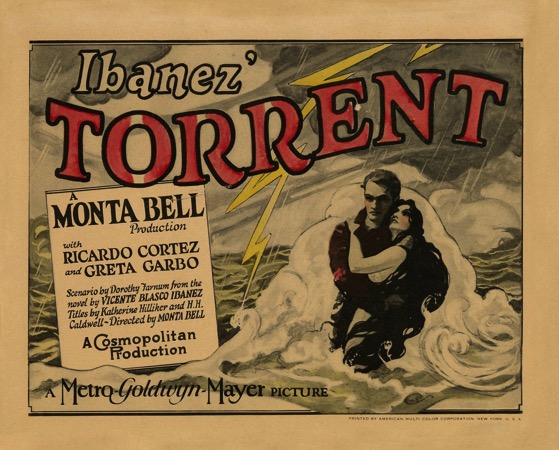
Torrent was the first American film starring Swedish actress Greta Garbo.[6] The film also starred Ricardo Cortez as the son of a domineering mother, played by Martha Mattox.
The title refers to a flood that occurs in the small town where most of the action takes place, which draws the two romantic leading characters closer together. — Wikipedia
Learn More About Greta Garbo with these books
††
* A portion of each sale from Amazon.com directly supports our blogs ** Many of these books may be available from your local library. Check it out! † Available at the LA Public Library




 †
†


 †
†