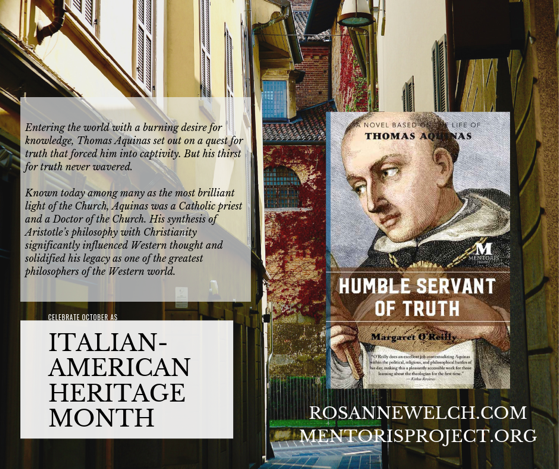
Entering the world with a burning desire for knowledge, Thomas Aquinas set out on a quest for truth that forced him into captivity. But his thirst for truth never wavered.
Known today among many as the most brilliant light of the Church, Aquinas was a Catholic priest and a Doctor of the Church. His synthesis of Aristotle’s philosophy with Christianity significantly influenced Western thought and solidified his legacy as one of the greatest philosophers of the Western world.
Over his lifetime, Aquinas wrote many Eucharistic hymns, some of which are to this day included in the Church’s liturgy. His theological insight and natural reason make him an ideal model teacher for those pursuing Catholic priesthood.
Today, Saint Thomas is often depicted with a writing quill or an open book, proving that the search for knowledge and truth forever lives within his name.
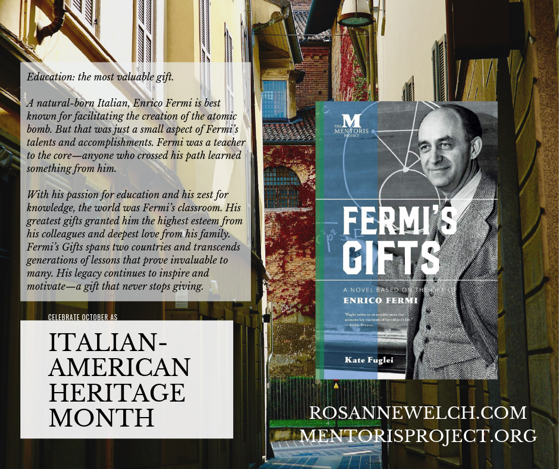
A natural-born Italian, Enrico Fermi is best known for facilitating the creation of the atomic bomb. But that was just a small aspect of Fermi’s talents and accomplishments. Fermi was a teacher to the core—anyone who crossed his path learned something from him.
With his passion for education and his zest for knowledge, the world was Fermi’s classroom. His greatest gifts granted him the highest esteem from his colleagues and deepest love from his family. Fermi’s Gifts spans two countries and transcends generations of lessons that prove invaluable to many. His legacy continues to inspire and motivate—a gift that never stops giving.
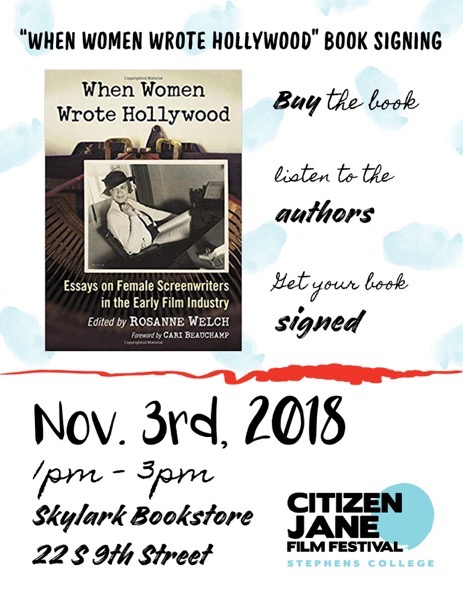
To highlight the wonderful yet largely forgotten work of a collection of female screenwriters from the early years of Hollywood (and as a companion to the book, When Women Wrote Hollywood) we will be posting quick bits about the many films they wrote along with links to further information and clips from their works which are still accessible online. Take a few moments once or twice a week to become familiar with their names and their stories. I think you’ll be surprised at how much bold material these writers tackled at the birth of this new medium. — Rosanne Welch
The Diary of Anne Frank is a 1959 film based on the Pulitzer Prize winning play of the same name, which was based on the diary of Anne Frank. It was directedby George Stevens, with a screenplay by Frances Goodrich and Albert Hackett. It is the first film version of both the play and the original story, and features three members of the original Broadway cast.
The film was based on the personal diary of Anne Frank, a Jewish girl who lived in hiding with her family during World War II. All her writings to her diary were addressed as “Dear Kitty”. It was published after the end of the war by her father, Otto Frank (played in the film by Joseph Schildkraut, also Jewish). All of his family members had been killed by the Nazis. The film was shot on a sound stage duplicate of the factory in Los Angeles, while exteriors were filmed at the actual building in Amsterdam.[3]
The film won three Academy Awards in 1960, including Best Supporting Actress for Shelley Winters. In 2006, it was honored as the eighteenth most inspiring American film on the list AFI’s 100 Years…100 Cheers. — Wikipedia
* A portion of each sale from Amazon.com directly supports our blogs ** Many of these books may be available from your local library. Check it out! † Available from the LA Public Library
You have stories to tell. We’re here to make it happen. Come to Hollywood to learn from some of the best working writers in the industry. Stephens is an institution on a mission: To increase the voices and impact of women in television and film.
WHY STEPHENS?
Our program — with its bold, daring mission — has drawn the attention and the support of some of the most successful and well-known writers in Hollywood. Our faculty includes some of the best working writers in the profession, and our curriculum includes an in-depth look at the business side of TV and screenwriting. Explore more: program highlights, student achievements and stories.
HOW DOES IT WORK?
Stephens is proud to be the first college in the nation to offer a low-residency MFA program specifically for TV and screenwriting. Our students come to Los Angeles twice a year for 10-day workshops at the beautiful Jim Henson Studio. Between workshops, students work one-on-one online with at least four different mentors over two years. Two years + four workshops in Hollywood = your M.F.A.
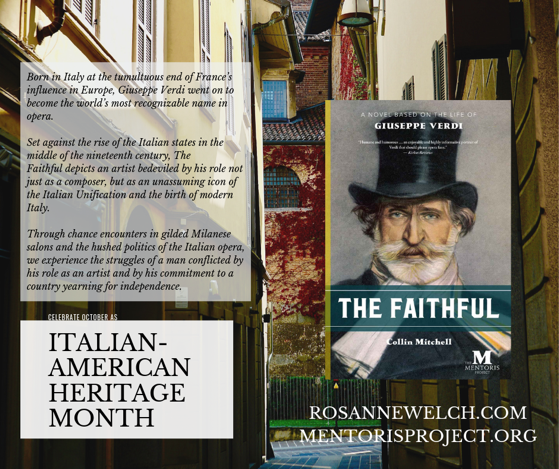
Born in Italy at the tumultuous end of France’s influence in Europe, Giuseppe Verdi went on to become the world’s most recognizable name in opera.
Set against the rise of the Italian states in the middle of the nineteenth century, The Faithful depicts an artist bedeviled by his role not just as a composer, but as an unassuming icon of the Italian Unification and the birth of modern Italy.
Through chance encounters in gilded Milanese salons and the hushed politics of the Italian opera, we experience the struggles of a man conflicted by his role as an artist and by his commitment to a country yearning for independence.
As in past years, my Stephens College MFA in TV and Screenwriting students will presenting on important women screenwriters during the festival, too. — Rosanne
To highlight the wonderful yet largely forgotten work of a collection of female screenwriters from the early years of Hollywood (and as a companion to the book, When Women Wrote Hollywood) we will be posting quick bits about the many films they wrote along with links to further information and clips from their works which are still accessible online. Take a few moments once or twice a week to become familiar with their names and their stories. I think you’ll be surprised at how much bold material these writers tackled at the birth of this new medium. — Rosanne Welch
Frances Goodrich (December 21, 1890 – January 29, 1984) was an American dramatist and screenwriter, best known for her collaborations with her partner and husband Albert Hackett.
Not long after marrying Hackett, the couple went to Hollywood in the late 1920s to write the screenplay for their stage success Up Pops the Devil for Paramount Pictures. In 1933 they signed a contract with MGM and remained with them until 1939. Among their earliest assignments was writing the screenplay for The Thin Man (1934). They were encouraged by the director W. S. Van Dyke to use the writing of Dashiell Hammett as a basis only, and to concentrate on providing witty exchanges for the principal characters, Nick and Nora Charles (played by William Powell and Myrna Loy). The resulting film was one of the major hits of the year, and the script, considered to show a modern relationship in a realistic manner for the first time, is considered groundbreaking. — Wikipedia
* A portion of each sale from Amazon.com directly supports our blogs ** Many of these books may be available from your local library. Check it out! † Available from the LA Public Library
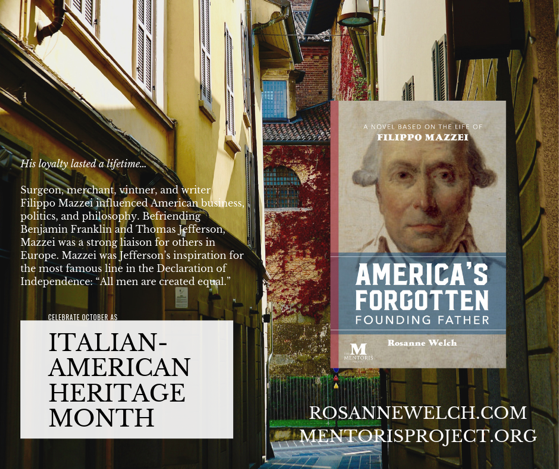
Surgeon, merchant, vintner, and writer Filippo Mazzei influenced American business, politics, and philosophy. Befriending Benjamin Franklin and Thomas Jefferson, Mazzei was a strong liaison for others in Europe. Mazzei was Jefferson’s inspiration for the most famous line in the Declaration of Independence: “All men are created equal.”
Clearly, Mazzei had a gift of language and often used his words to share his ideas about religious freedom. Mazzei encouraged other Italians still living overseas to join him in a country rich with opportunity and promise. Often, when returning from Italy, he booked passages on ships for people who desired to travel to America and employed them on his estate—just to ensure a better, more fruitful life for everyone. During those travels, Mazzei found himself at the center of many fights for freedom.
He was truly a friend to freedom around the world.
For her 5th Doctor Who lecture to the CPP community, Dr. Rosanne Welch discusses how society – and the show’s writing staff – prepared the audience for a major change in this 50-year franchise – the creation of the first Lady Doctor!
Transcript:
In the old era, but also largely in the new era, all the men have been given the chance to be depicted as sensitive human beings, which gives them a 3-dimensional complete humanity. Which I think is very important. Now in the very early days, as I said, Lethbridge-Stewart is the father of Kate, so that is how we invented her character in the future. So he started out in the early days with Jon, came through guest starred as an older actor of course on The Sarah Jane Adventures and he came into modern Who in one episode where everybody was turned into a Cyberman who had died. All the people buried in cemeteries had their bodies converted into Cybermen and yet he’s in a cemetery when his daughter gets kicked out of an airplane and she’s going to die except he catches her and saves her life which is a super-cool thing and because he loves his daughter. He’s a super-Dad which is a super-sensitive cool thing to be and so that’s why when the actor actually died they had The Doctor honor him with that portrait which I thought was pretty cool. So even back in the day, we had a relatively sensitive man.
Rosanne Welch PhD teaches the History of Screenwriting and One-Hour Drama for the Stephens College MFA in Screenwriting.
Writing/producing credits include Beverly Hills 90210, Picket Fences, ABCNEWS: Nightline and Touched by an Angel. In 2016 she published the book Why The Monkees Matter: Teenagers, Television and American Pop; co-edited Women in American History: A Social, Political, and Cultural Encyclopedia; and placed “Transmitting Culture Transnationally Via the Characterization of Parents in Police Procedurals” in the New Review of Film and Television Studies. Essays appear in Torchwood Declassified: Investigating Mainstream Cult Television and Doctor Who and Race: An Anthology. Welch serves as Book Reviews editor for Journal of Screenwriting and on the Editorial Advisory Board for Written By magazine, the magazine of the Writers Guild.
Did you know there was an Italian Heritage Month? And that it is October?
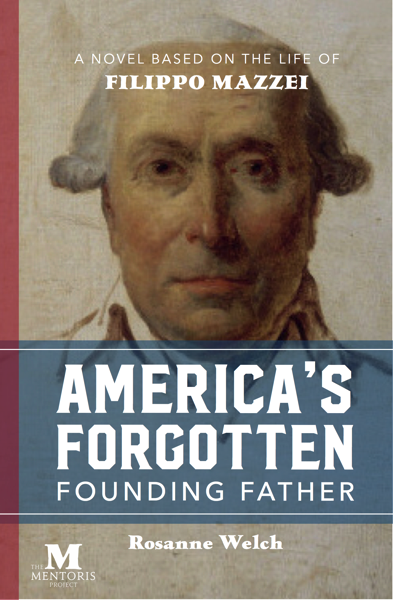
It was declared in 1989 so stay tuned to some fun things I’ll be posting this month to celebrate the contributions Italians have made to America since the days even before the country was founded (which you can learn about in my book “America’s Forgotten Founding Father: Filippo Mazzei”.
ITALIAN GENEALOGY: DISCOVERING YOUR ANCESTRAL RECORDS IN ITALY & THE USA – ITALIAN CULTURAL INSTITUTE (OCT. 14, 2017)
Taking place at the Italian Cultural Institute (IIC) this two-day workshop offers practical methods for researching documents relevant to families that emigrated from Southern Italy to the U.S. No knowledge of Italian is needed. Event recognized by the Consulate General of Italy in Los Angeles. Two sessions, $90 (non-member) / $85 (IIC members). Info and registration at (310) 824-7408 or classes.iicla@esteri.it.




 †
†![Want to go backstage at the Stephens MFA? Apply Now! [Video]](https://rosannewelch.com/wp-content/uploads/2018/10/stephens-behind-scenes.jpeg)


![30 Sensitive Men on Doctor Who from Gender Diversity in the Who-niverse [Video] (1:08)](https://rosannewelch.com/wp-content/uploads/2018/10/gender-dw-30-sensitive-men.jpeg)
