A toast to the man who changed how America drinks …
Enduring an unspeakable nightmare and a family secret that he guarded at all costs, Ernest Gallo overcame unimaginable odds to achieve the American dream.
Ernest Gallo (the “E” of E & J Gallo) may have been haunted by tragedy, but that didn’t deter him from his mission: putting a bottle of wine on every American table.
Gallo grew his legacy from the musty Modesto, California dirt. From fallow acres he practically willed the wine industry into being out of faith and tenacity as he overcame physical and emotional abuse, illness, and the near destruction of the family he was determined to save.
* A portion of each sale from Amazon.com directly supports our blogs ** Many of these books may be available from your local library. Check it out! † Books available at the LA Public Library
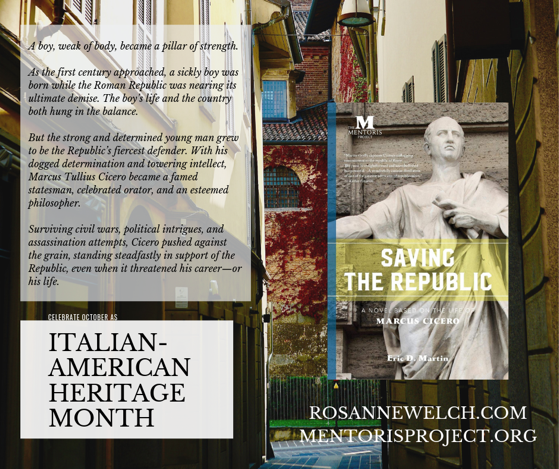
As the first century approached, a sickly boy was born while the Roman Republic was nearing its ultimate demise. The boy’s life and the country both hung in the balance.
But the strong and determined young man grew to be the Republic’s fiercest defender. With his dogged determination and towering intellect, Marcus Tullius Cicero became a famed statesman, celebrated orator, and an esteemed philosopher.
Surviving civil wars, political intrigues, and assassination attempts, Cicero pushed against the grain, standing steadfastly in support of the Republic, even when it threatened his career—or his life.
Rosanne Welch, PhD, Author of Why The Monkees Matter, presents “How The Monkees Changed Television” at a Cal State Fullerton Lunch Lecture on May 8, 2018.
In this talk, she shows how The Monkees, and specifically their presence on television, set the stage for large changes to come in the late 1960s.
Transcript
In this metatextuality world, they weren’t — The Monkees weren’t the first ones to do it. We can go back to George Burns and Jack Benny and they talked directly to the screen. George would be having a problem with Gracie then he would walk into his study and look right at you and say “Well, what’s Gracie gotten us into now?” So talking to the audience — breaking the fourth wall — it’s been done before, but no one was doing it right there in the 60’s so I think it’s interesting that our guys jumped in and did that. And you see that in a lot of ways. They would write on the screen, so in the Pilot, you have dancing and then ‘Typical Teenager? No, friends of the producer.” So there were often those kinds of inside jokes so they’re talking to the audience. They’re letting you in on the joke which made a younger audience, a hipper audience think “Wow. We’re part of this things. That’s really exciting.” Now we also have the fact that they were on NBC and in one of the episodes they were running through town and they were at NBC. It’s a little knock knock cute.
A hit television show about a fictitious rock band, The Monkees (1966-1968) earned two Emmys–Outstanding Comedy Series and Outstanding Directorial Acheivement in Comedy.
Capitalizing on the show’s success, the actual band formed by the actors, at their peak, sold more albums than The Beatles and The Rolling Stones combined, and set the stage for other musical TV characters from The Partridge Family to Hannah Montana. In the late 1980s, the Monkees began a series of reunion tours that continued into their 50th anniversary.
This book tells the story of The Monkees and how the show changed television, introducing a new generation to the fourth-wall-breaking slapstick created by Laurel and Hardy and the Marx Brothers.
Its creators contributed to the innovative film and television of 1970s with projects like Bob & Carol & Ted & Alice, The Mary Tyler Moore Show, Laugh-In and Welcome Back, Kotter. Immense profits from the show, its music and its merchandising funded the producers’ move into films such as Head, Easy Riderand Five Easy Pieces.
Renowned artist Leonardo da Vinci was the greatest genius to ever conquer the worlds of art, science, and philosophy. Writing backwards to protect his knowledge, da Vinci epitomized creativity and eccentricity.
Despite being plagued with frustrations and failures, da Vinci was spurred to create, invent, research, and write no matter the cost. By exploring his sorrows and joys, da Vinci’s world is uncovered. And with it a five-hundred-year-old secret is released: the hidden truth of Leonardo da Vinci.
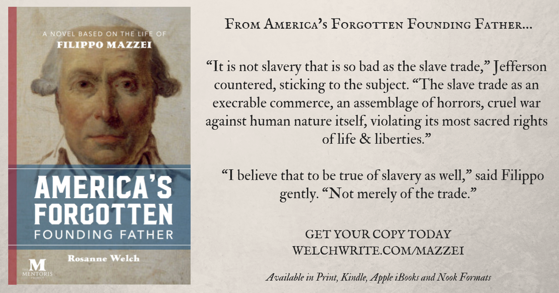
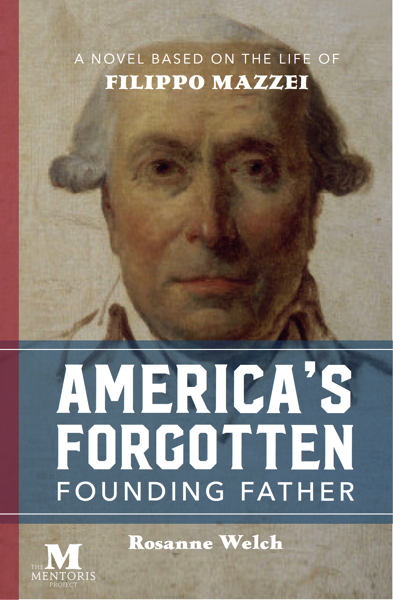
“It is not slavery that is so bad as the slave trade,” Jefferson countered, sticking to the subject. “The slave trade as an execrable commerce, an assemblage of horrors, cruel war against human nature itself, violating its most sacred rights of life & liberties.”
“I believe that to be true of slavery as well,” said Filippo gently. “Not merely of the trade.”
The Story of His Mission as Related in His Own Dispatches and Other Documents
INTRODUCTION
IN April, 1925, The New York Public Library acquired through purchase a collection of the papers of Philip Mazzei. Four additional pages of manu- script were purchased in 1927. The whole collection comprises twenty-seven items and includes Mazzei’s relation of his capture and detention by the British naval forces in 1779; eighteen dispatches sent by him, as Virginia’s agent in Europe (sixteen to Thomas Jefferson, Governor of Virginia, and two to Benjamin Harrison, who followed, as Governor, Thomas Nelson, Jr., Jefferson’s succes- sor) ; his “Representation,” or report of his conduct as agent; and six letters to John Page, prominent Virginian and successor to James Monroe as Governor. These manuscripts, with the exception of the letters to Page, which are largely on personal matters, are now set forth in the present publication.
Mazzei’s spelling, capitalization, and punctuation have been adhered to strictly in this printing of the manuscripts. When it seemed advisable, corrections of some of the less obvious errors have been made in the foot-notes.
Philip Mazzei was born at Poggio a Caiano, a small town near Florence, Tus- cany, on December 25, 1730. Little is known of his youth except that he studied medicine at the hospital of Santa Maria Nuova in Florence and was dismissed for some minor offence. Somewhat later, forced by the death of his father to earn his own livelihood, he went to Pisa to live with his cousins ; and began to earn money by medical practice among the people of that community. During this sojourn, Mazzei was urged by Dr. Salinas to accompany him and his wife to Smyrna, whence they had come. Accepting this invitation, he left Florence with them in August, 1752. From the time of his arrival at Constantinople in De- cember of that year, and throughout the next three years that he remained there, Mazzei devoted himself to the practice of medicine — a profession which placed him in contact with many influential men.
Children were her life, and God’s messenger Mother Frances X. Cabrini dedicated her entire life to caring for poor Italian immigrants who sought refuge in the slums of New York City in the early 1890s.
A devout champion of education and proper health care for the poverty-stricken, Cabrini forged a path of survival for young children by building schools, orphanages, and hospitals—not only in the United States, but also throughout Europe and Central and South America. With an acumen for business and a desire to help, Mother Cabrini chiseled away at a problem others refused to see.
Years after her death, Mother Cabrini was named Patron Saint of Immigrants because of her unwavering work for those who needed her.
His greatest accomplishment came after his greatest disappointment.
One of the founding fathers of the Renaissance, Filippo Brunelleschi was more than an Italian designer. Brunelleschi made his mark in architecture and construction.
In his early years, sculpting was Brunelleschi’s passion. But after being passed over for a major commission, he set his sights on architecture, and changed the landscape of Italy as it is known today.
Brunelleschi’s most prominent contribution, the dome of Cathedral of Santa Maria del Fiore, was the first of its kind, paving the way for bigger and more elaborate domes to come. His invention of machines to facilitate the construction of the dome allowed future structures to not only be imagined, but to be erected as well.
With his imagination, understanding of linear perspective, focus on geometric principles, and intellect for mathematics, Brunelleschi influenced the rise of modern science and architecture worldwide.
Date: Thursday, October 25, 2018 Time: 12:00pm – 1:00pm Location: Special Events Room 4829, Cal State Fullerton Pollack Library, 800 N State College Blvd, Fullerton, CA 92831 Campus: Building 15
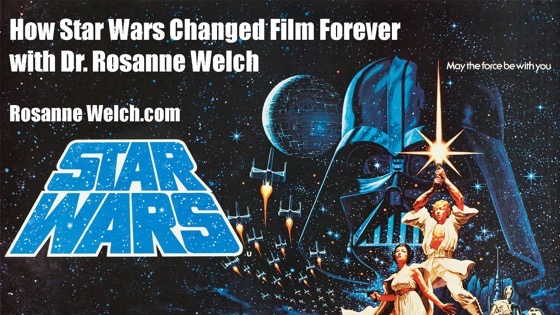
In her talk screenwriter and professor Rosanne Welch will discuss everything Star Wars from George Lucas to Leigh Brackett to Lawrence Kasdan. From Luke Skywalker to Han Solo to Lando Calrissian (both original and prequel versions) to Poe. From Leia Organa to Rey to Jyn Erso. From Jaws to the whole Star Wars franchise to Raiders of the Lost Ark in a look at how Star Wars changed films and fandom forever.


 and Follow