A box arrived today and it contained my first print copies of this collection of essays written by the original cohort of students in our first Stephens College MFA in Screenwriting which I edited and for which author Cari Beauchamp wrote a wonderful forward covering the life and influence of Frances Marion. — Rosanne
“These 23 essays cover a range of female screenwriters from the early years of film through the 1940s, women whose work helped create the unforgettable stories and characters beloved generations of audiences but whose names have been left out of most film histories. Not this one. This collection is dedicated to those women and written by a group of women grateful to stand on the shoulders of those who came before – as a beacon to those who will come after.”
* A portion of each sale from Amazon.com directly supports our blogs ** Many of these books may be available from your local library. Check it out! † Available from the LA Public Library
When two Monkees fans get together, magic always happens, as you’ll see when you read what Wendy Fawthrop of the Orange County Register thought of my last Monkees lecture, which was open to the public. — Rosanne
And after Rosanne Welch spoke recently to a gathering of Cal State Fullerton students and faculty, many of them were left also believing that the Monkees, the 1960s boy band, had a greater impact on television, music and pop culture than they had thought.
Illustrated with slides of the Monkees with Paul McCartney and Janis Joplin, on cereal boxes and in pop culture references long after their heyday, Welch’s talk laid out evidence that the group’s TV show made strong feminist statements and advanced such TV practices as characters addressing the audience, used today on such shows as “Modern Family” and “House of Cards.”
“They influenced so many of today’s modern-day performers and yet people keep forgetting about that,” said Welch.
To highlight the wonderful yet largely forgotten work of a collection of female screenwriters from the early years of Hollywood (and as a companion to the book, When Women Wrote Hollywood) we will be posting quick bits about the many films they wrote along with links to further information and clips from their works which are still accessible online. Take a few moments once or twice a week to become familiar with their names and their stories. I think you’ll be surprised at how much bold material these writers tackled at the birth of this new medium. — Rosanne Welch
Alice Guy-Blaché (July 1, 1873 – March 24, 1968) was a pioneer filmmaker, active from the late 19th century, and one of the first to make a narrative fiction film.[2] From 1896 to 1906 she was probably the only female filmmaker in the world. [3] She experimented with Gaumont’s Chronophone sound syncing system, color tinting, interracial casting, and special effects. She was a founder and artistic director of the Solax Studios in Flushing, New York, in 1908. In 1912 Solax invested $100,000 for a new studio in Fort Lee, New Jersey, the center of American filmmaking prior to the establishment of Hollywood. That same year she made the film A Fool and his Money, with a cast comprised only African-American actors. The film is now at the National Center for Film and Video Preservation at the American Film Institute.[4] — Wikipedia
* A portion of each sale from Amazon.com directly supports our blogs ** Many of these books may be available from your local library. Check it out! † Available from the LA Public Library
Finding some royals deeply intelligent and others deeply ignorant fed Filippo’s distaste of the act of royal succession and fueled his later interest in supporting the colonists in their overthrow of King George III. In the meantime, Filippo decided to go to Rome to face the Tribunal of the Inquisition himself, letters in hand, though he would be without a passport so if they chose to incarcerate him, he would be trapped.
While I only used a portion of my total research, there are a host of little tidbits of information on this amazing man which I wanted to share here. — Rosanne.
The Jefferson Library is a gateway to information on Thomas Jefferson’s life, times, and legacy. To this end, the library collects comprehensively, including books, journal and newspaper articles, ephemera, unpublished research, websites, microforms, audio-visuals, photographs, and digital full-text files. In addition to all materials about Thomas Jefferson and Monticello, we acquire materials on colonial and early federal periods, revolutionary America and Atlantic history, worldwide religions and philosophy, and European arts and culture. Topics of particular interest include wine and cuisine, slavery and natural rights, science and exploration, the University of Virginia, Jefferson descendants, and the legacy of Jefferson’s actions and ideas.
The Filippo Mazzei Archive, courtesy of Sister Margherita Marchione, MPF. This collection includes comprehensive manuscript facsimiles of this Italian Founding Father; also included are the expansive research files of Sister Margherita. Hundreds of publications are included uncatalogued by other libraries.
* A portion of each sale from Amazon.com directly supports our blogs ** Many of these books may be available from your local library. Check it out! † Available from the LA Public Library
A fun site to check out is the Writers Guild Foundation Blog where they highlight some of the wonderful scripts in their catalog.
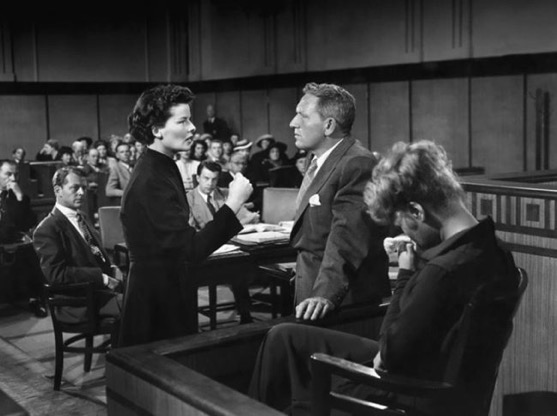
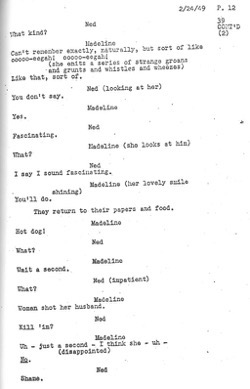
The link below takes you to a fun post about writers who created great chemistry on the page where the blogger excerpts a few pages from 1949’s Adams’s Rib, written by husband-and-wife writing team Ruth Gordon and Garson Kanin.
Lauren Bacall gives Humphrey Bogart some side eye and he grins. Billy Crystal and Meg Ryanargue about orgasms at Katz’s deli. Yammering Paul Newman talks a mostly silent Robert Redford’s ear off in the wild west in the late 1800s. Basically, two characters come together as partners on screen and if we’re lucky, their interactions and friction produce this happy spellbinding effect.
We call it chemistry, but often in the business of creating movies and television we treat it like it’s magic… as if it’s elusive and very difficult to conjure and we shouldn’t talk about it too loudly because we don’t want to squelch the enchantment.
To highlight the wonderful yet largely forgotten work of a collection of female screenwriters from the early years of Hollywood (and as a companion to the book, When Women Wrote Hollywood) we will be posting quick bits about the many films they wrote along with links to further information and clips from their works which are still accessible online. Take a few moments once or twice a week to become familiar with their names and their stories. I think you’ll be surprised at how much bold material these writers tackled at the birth of this new medium. — Rosanne Welch
When Women Wrote Hollywood – 5 in a series – The New York Hat (1912), Wr: Anita Loos, Dirs: D. W. Griffith
The New York Hat (1912) is a short silent film directed by D. W. Griffith from a screenplay by Anita Loos, and starring Mary Pickford, Lionel Barrymore, and Lillian Gish.
The New York Hat is one of the most notable of the Biograph Studios short films and is perhaps the best known example of Pickford’s early work, and an example of Anita Loos’s witty writing. The film was made by Biograph when it and many other early U.S. movie studios were based in Fort Lee, New Jersey at the beginning of the 20th century.[1][2][3]
Mollie Goodhue leads a cheerless, impoverished life, largely because of her stern, miserly father. Mrs. Goodhue is mortally ill, but before dying, she gives the minister, Preacher Bolton, some money with which to buy her daughter the “finery” her father always forbade her.
Mollie is delighted when the minister presents her with a fashionable New York hat she has been longing for, but village gossips misinterpret the minister’s intentions and spread malicious rumors. Mollie becomes a social pariah, and her father tears up the beloved hat in a rage.
All ends well, however, after the minister produces a letter from Mollie’s mother about the money she left the minister to spend on Mollie. Soon afterwards, he proposes to Mollie, who accepts his offer of marriage.— Wikipedia
* A portion of each sale from Amazon.com directly supports our blogs ** Many of these books may be available from your local library. Check it out! † Available from the LA Public Library
Rosanne Welch, PhD, Author of Why The Monkees Matter, presents “How The Monkees Changed Television” at a Cal State Fullerton Lunch Lecture on May 8, 2018.
In this talk, she shows how The Monkees, and specifically their presence on television, set the stage for large changes to come in the late 1960s.
Transcript
In the book world, not only have I don the Monkees book, but I’ve done — in our library here — the Women in American History. It’s a four-volume encyclopedia series — I think they have an ebook version of it here — that I just put out last year, as well, which is really interesting because we cover women in history and popular culture and often you don’t blend those,. So our little tagline was you’ll meet Lady Bird Johnson and Lady Gaga all in the same book. So That;s Cool. My most recent one is a novel on Filippo Mazzei who was the man who owned the plantation next door to Thomas Jefferson. he was an Italian immigrant and he wrote the words “All Men Are Created Equal” in a pamphlet and Thomas Jefferson liked it and you know where it appeared later. He’s a pretty cool guy. I liked him. So that’s what I do. I’m also on the book review board for the Journal of Screenwriting and, as I just noted, Written By Magazine.
Rosanne Welch, PhD is a writer, producer and university professor with credits that include Beverly Hills 90210, Picket Fences, Touched by an Angel and ABC NEWS/Nightline. Other books include Why The Monkees Matter: Teenagers, Television and American Pop Culture (McFarland, 2017) and Women in American History: A Social, Political, and Cultural Encyclopedia and Document Collection (ABC-CLIO, 2017), named to the 2018 Outstanding References Sources List, by the Reference and User Services Association (RUSA), a division of the American Library Association. Welch has also published chapters in Torchwood Declassified: Investigating Mainstream Cult Television (I.B.Tauris) and The American Civil War on Film and TV: Blue and Gray in Black and White and Color (Lexington Books, 2018) and essays in Doctor Who and Race: An Anthology and Outside In Makes it So, and Outside in Boldly Goes (both edited by Robert Smith). By day she teaches courses on the history of screenwriting and on television writing for the Stephens College MFA in Screenwriting programs. Her talk “The Importance of Having a Female Voice in the Room” at the 2016 TEDxCPP is available on YouTube.






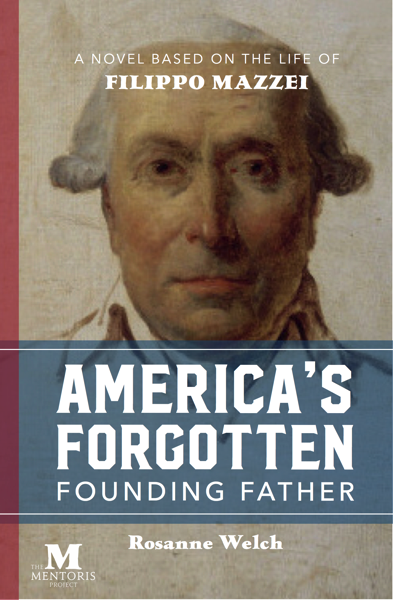
 Jefferson Library Collections including The Filippo Mazzei Archive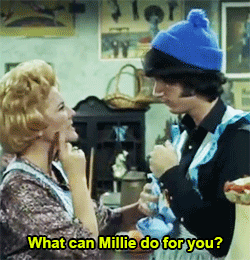



![05 Books by Dr. Rosanne Welch from How The Monkees Changed Television [Video] (0:52)](https://rosannewelch.com/wp-content/uploads/2018/06/monkees-tv-05-books.jpeg)