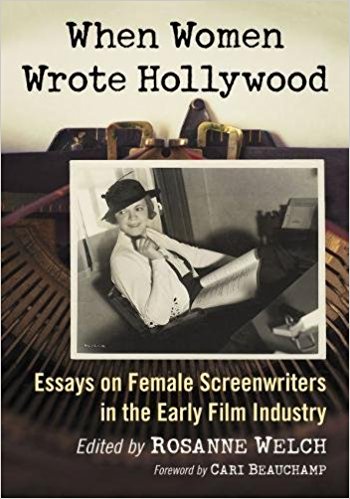
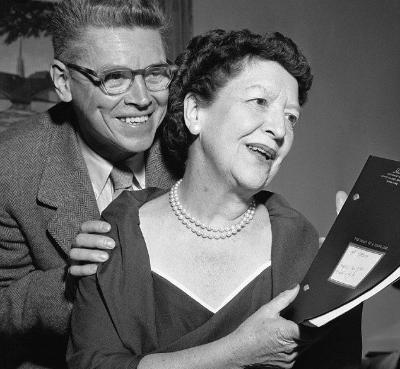
Many of today’s screenwriters have come from the world of education so it could be said they are following the path laid out by Ethel Doherty in the 1920s and 30s. Born in Los Angeles in 1899 Doherty and the film industry grew up together. Her parents moved back and forth between Los Angeles and Arizona, so Doherty majored in history and graduated from Arizona State Normal School with plans to be a high school teacher.
Back in Los Angeles she spent two summers at the University of Southern California (USC) and a third one at University of California. Her interest in the film industry meshed with Louise Long, a friend she met at USC, but like many aspiring screenwriters, even today, they needed to pay their bills so both women became high school teachers by day and collaborated on screenplays by night.
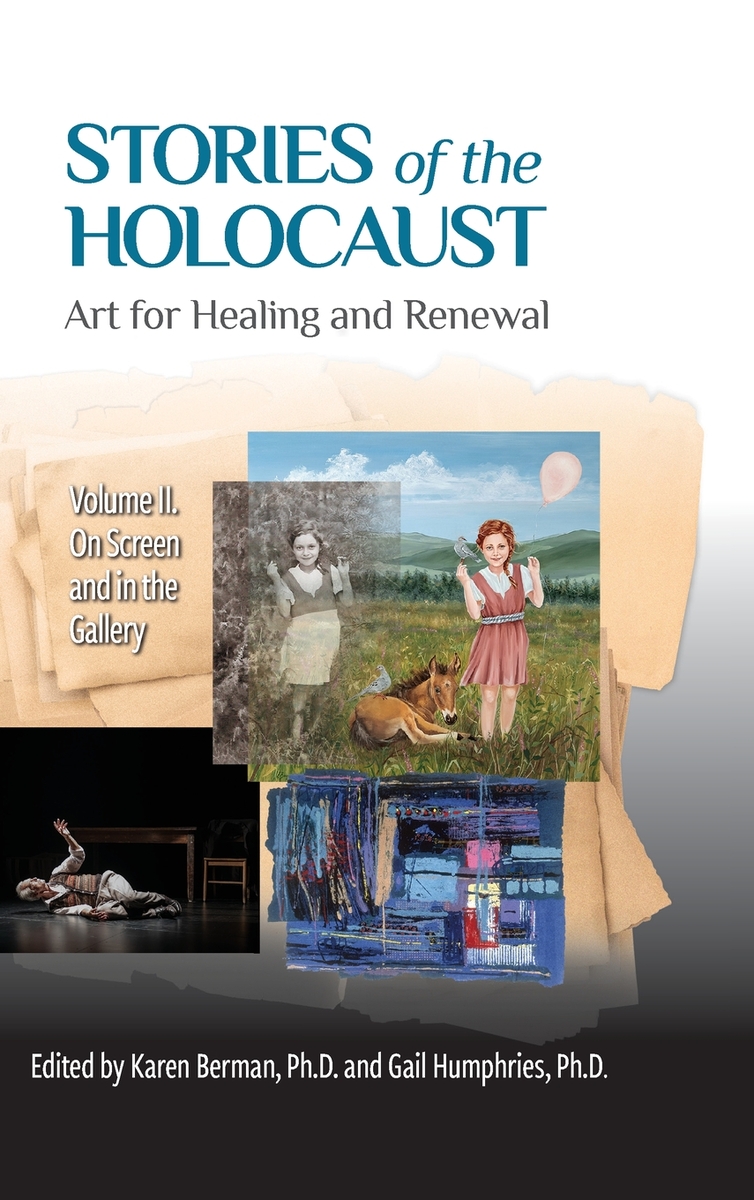
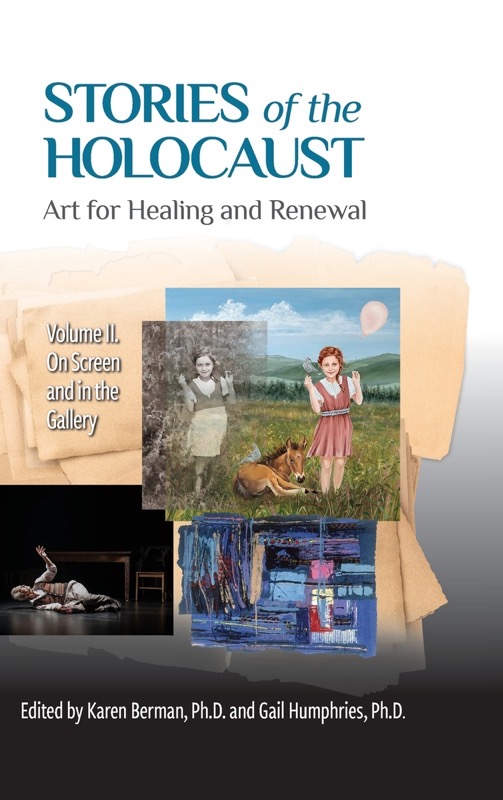
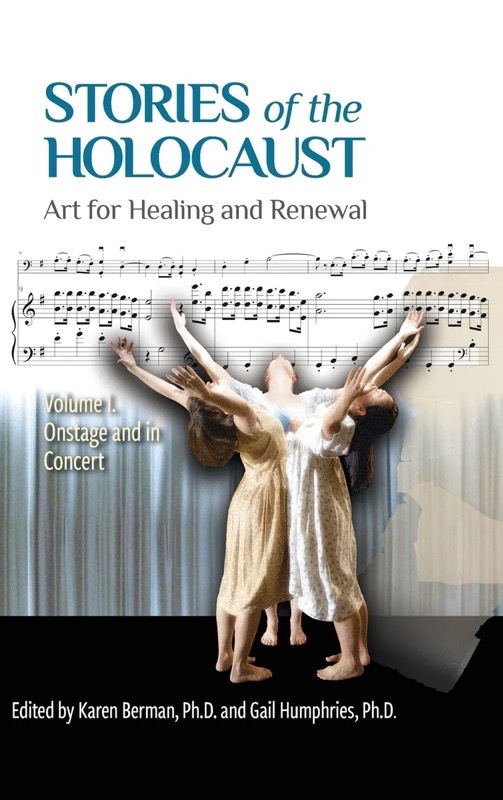
This week, this review of the books came out last week. I felt quite honored that out of over 20+ chapters, the Kirkus Reviewer chose to mention mine:
“Dr. Rosanne Welch, executive director of the MFA program at Stephens College in Columbia, Missouri, offers a scholarly exploration of cinematic and theatrical representations of Anne Frank.”
Our MFA candidates and alums know that I have researched Goodrich and Hackett extensively, so this was a great example of how we can continue sharing the knowledge we have gained in our research. Being able to publish that research in this book series made me very proud and brought me many new colleagues, and that momentum continues!
In honor of Valentine’s Day it’s time to celebrate a female screenwriter who managed to take bubble-gum parts for actresses and give them more gumption, gravitas, and giggles inside the light musical genre films she was assigned.
Born in New York City in 1909, Dorothy Kingsley could be called a nepo-baby as her mother Alma Hanlon became a silent film star a few years later. Hanlon acted for 4 years from 19150-1919. By then she had left her husband Walter J. Kingsley (press agent to Florenz Ziegfeld), married again and moved young Dorothy to Michigan.
Eventually, Kingsley found her way back into the industry but this time by moving herself and her 3 children to Los Angeles where radio was king. There she met Constance Bennett who like her mother had been a big silent film star in the 1920s but now hosted a radio show. Bennett began buying Kingsley’s jokes for her monologues which lead to a place on the writing staff of the The Edgar Bergen Show.
Though born in 1894 in Washington, D.C., the family business was theatre, not the politics of President Grover Cleveland’s administration. With an actor for a father – Henry Dupree Sinclair – the future Ruth Sinclair would also begin her career on the stage before turning to film, where she wrote for silent stars such as Lillian Gish, Greta Garbo, and Joan Crawford.
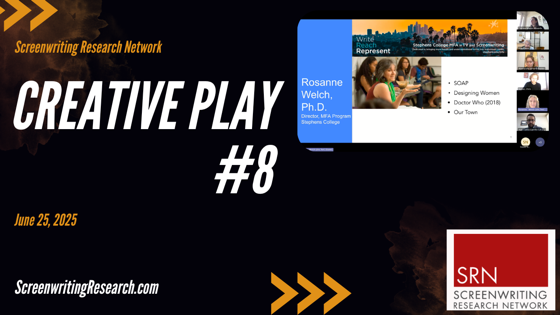
I had the chance to introduce the attendees to some wonderfully emotional monologues written by a few highly accomplished female television writers, from Susan Harris (on SOAP) to Linda Bloodworth Thomason (on Designing Women) to Maxine Alderton, who wrote a great monologue for the Jodie Whitaker Doctor in her episode “The Haunting of Villa Diadoti”. (Doing a bit of history by showing monologues from TV shows from the 1970s and 80s is one of my goals in our MFA – along with celebrating female screenwriters).
Then I introduced an exercise in writing monologues that involves Thornton Wilder’s Our Town as an inspiration. A few of the attendees shared what they wrote so we could all learn more about how the specificity we bring from our own lives makes our work more universal.
Thanks to Leslie Kreiner for inviting me to do a presentation on Monologues to a conference last year, which created the seed of this exercise. Thanks to Chris for the invitation to share it – and to all the attendees for… attending. Special thanks to those who shared what they wrote to help others see if this is an exercise they would like to incorporate into their teaching.
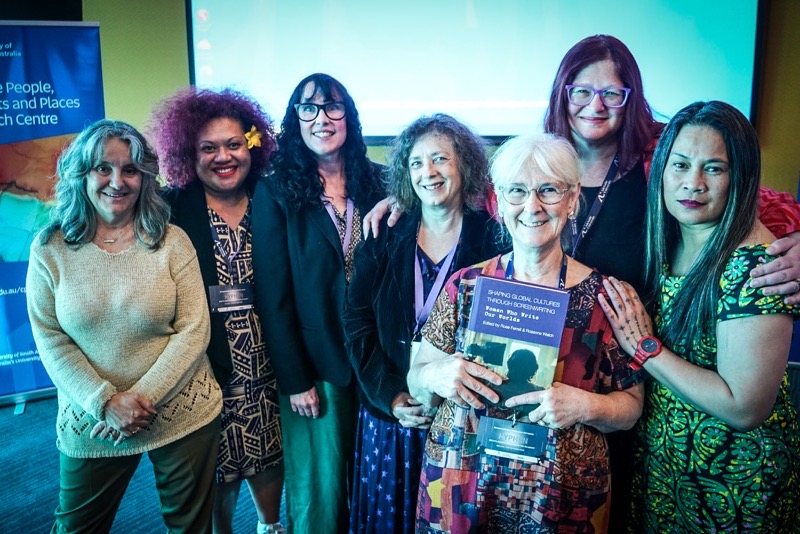
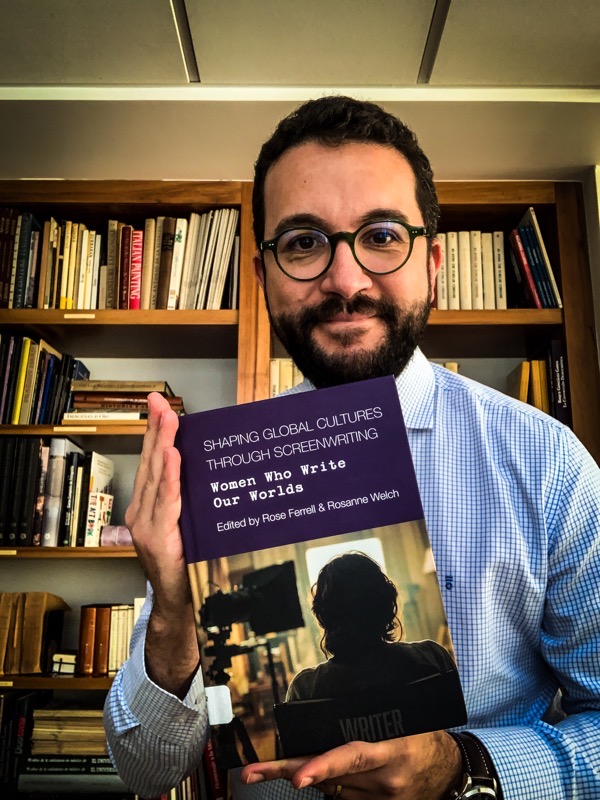
I was happy to discuss the inspiration for the book, which came from a conversation Rose and I had during a conference. That’s one of the best things about gathering for conferences – the casual conversations that create new collaborations.
I was also happy to discuss the way we arranged the book in “Worlds” because continents are the easiest classification. I give a quick thumbnail of one chapter in each of those Worlds to highlight what type of social or legal advocacy the screenwriter in discussion addressed. It was lovely to be reminded of all the interesting stories told by the writers of each chapter and to appreciate the cultural diversity of storytelling around the world that Intellect made possible by publishing the book.
Chapters cover a spectrum of storytelling from artists offering a window into how women around the world use the screen to advocate for social or legal change. For example, the Samoan performance artist Angela Tiatia, known for her 2014 work, ‘Walking the Wall.” Tiatia displays her Malu Tatau tattoo, which symbolizes the preservation and documentation of cultural practice and identity in online spaces.
One chapter focuses on a junior Pacific Islander lawyer who created a music video calling on the International Court of Justice to issue an advisory opinion on climate change, a matter of concern as rising sea levels threaten the homes and histories of island communities. Other readings in the book examine the film “Kajillionaire” by Miranda July as a platform for imagining queer utopias, the transformative power of the female gaze in the Italian documentary “Trial for Rape,” and the frequently ignored creative roles and contributions that women make behind the scenes of the beloved children’s television show “Bluey.”
It was a pleasure to make this presentation for my colleagues. I hope you enjoy it, too.
In the Silent Era, before the existence of the Hays Code (and largely a cause for it), many female screenwriters wrote heroines who flouted the brazen sexual freedom of the new century, a specialty of Josephine “Jo” Lovett. Born in October 1877 in San Francisco Lovett would spend some time as a lead actress on the Broadway stage before moving to Los Angeles to both act and write what were called scenarios for the bulk of her career.
Born on April 25, 1899 in St. Louis, Missouri to Alice Kern and Robert M. Yost, Dorothy moved to Los Angeles to work in the burgeoning film industry and clearly succeeded in that goal. By the time she died in 1967 Yost had written over 80 films and achieved what many other writers did not – thriving in both Silent Films and into the Sound Era. Interestingly, it was her foray into film that brought her journalist brother Robert Yost into the film industry after she found her footing there. Her first screenwriting credit came in 1920, his in 1935 after some years on the staff of local newspapers, as publicity director for Fox West Coast Studios and finally head of the scenario department for Fox.






![Rosanne presents “Creative Play #8: Emotional Monologues Written By A Few Accomplished Female Television Writers” – Screenwriting Research Network [Video]](https://rosannewelch.com/wp-content/uploads/2026/01/rn-conversations-creative-play-8-1-1200x675.png)
![Rosanne Presents on Shaping Global Cultures Through Screenwriting – Stephens College [Video]](https://rosannewelch.com/wp-content/uploads/2025/12/rmw-sgc-book-cover-2.jpg)