“A Man Of Action Saving Liberty: A Novel Based On The Life Of Giuseppe Garibaldi” – 39 in a series

“If only more men understood, as you do, the value of having women in their ranks. In the military, in politics, in all seats of power,” Manuela mused. She had dedicated the end of her life to the fight for women’s rights to property, position and safety from abuse.

“I can only imagine how far we might have gone if I could have made my Anita the true general she deserved to be,” Giuseppe said.

“It is too late for Anita,” Manuela said. “But not for her daughters. Or granddaughters. Or great granddaughters if you work toward such a goal with as much passion as you bring to the goal of unity.”

Get your copy of A Man Of Action Saving Liberty Today!

From The Journal Of Screenwriting V5 Issue 1: Writing with images: The Film-Photo-Essay, the Left Bank Group and the pensive moment by Andrew Taylor

Highlighting the articles in the past editions of the Journal of Screenwriting, of which I am the Book Reviews Editor. Hopefully these abstracts will entice you to did a little deeper into the history and future of screenwriting. — Rosanne


Writing with images: The Film-Photo-Essay, the Left Bank Group and the pensive moment by Andrew Taylor

This article is focused on the film-photo-essay form. The first part of the article is a narrative account of my experiments ‘writing with images’ in the early and mid-2000s, using (the then) new digital tools to make film-photo-essays. My account reflects on how the change from analogue to digital affected my approach to photography, film-making and writing with images. I then look at the case study of Siberia (2009), an illustrated script that was written following my experimentation with the film-photo-essay form. The second part of this article is a more general enquiry into the film-photo-essay form and work that combines cinema and photography. I discuss the contemporary interest in work that falls on a spectrum between photography and cinema; often referred to as ‘still/moving’. I then focus on the ‘Left Bank Group’, whose work often combined cinema, photography and the literary and philosophical essay. Examples from the ‘cine-writing’ of Alain Resnais, Agnes Varda and Chris Marker highlight how Raymond Bellour’s idea of the ‘pensive moment’ is apt in relation to their work. I argue that still/moving forms allow more space for audience interaction and emotional response than conventional narrative cinema; and in a world saturated with information and cluttered with images, there is an important place for new pensive hybrid art forms.

This article is focused on the film-photo-essay form. The first part of the article is a narrative account of my experiments ‘writing with images’ in the early and mid-2000s, using (the then) new digital tools to make film-photo-essays. My account reflects on how the change from analogue to digital affected my approach to photography, film-making and writing with images. I then look at the case study of Siberia (2009), an illustrated script that was written following my experimentation with the film-photo-essay form. The second part of this article is a more general enquiry into the film-photo-essay form and work that combines cinema and photography. I discuss the contemporary interest in work that falls on a spectrum between photography and cinema; often referred to as ‘still/moving’. I then focus on the ‘Left Bank Group’, whose work often combined cinema, photography and the literary and philosophical essay. Examples from the ‘cine-writing’ of Alain Resnais, Agnes Varda and Chris Marker highlight how Raymond Bellour’s idea of the ‘pensive moment’ is apt in relation to their work. I argue that still/moving forms allow more space for audience interaction and emotional response than conventional narrative cinema; and in a world saturated with information and cluttered with images, there is an important place for new pensive hybrid art forms.


Journal of Screenwriting Cover

The Journal of Screenwriting is an international double-blind peer-reviewed journal that is published three times a year. The journal highlights current academic and professional thinking about the screenplay and intends to promote, stimulate and bring together current research and contemporary debates around the screenplay whilst encouraging groundbreaking research in an international arena. The journal is discursive, critical, rigorous and engages with issues in a dynamic and developing field, linking academic theory to screenwriting practice. 

Get your copy and subscription to the Journal of Screenwriting Today!


* A portion of each sale from Amazon.com directly supports our blogs
** Many of these books may be available from your local library. Check it out!

The Civil War On Film – 34 in a series – “…purports to be a history of the gangs of New York…”

The Civil War On Film - 34 in a series -

Judging the truth of the history portrayed on screen begins by judging the truth of the history portrayed in the original source material. While Asbury’s book is shelved with non-fiction and purports to be a history of the gangs of New York, the subtitle admits it is “An Informal History of the Underworld.” On top of that, unlike other films adapted from books, which work hard to remain loyal to the text, when Scorsese thought about making Gangs he admitted being more interested in being loyal to the town than its residents.

Movies profiled in this book:

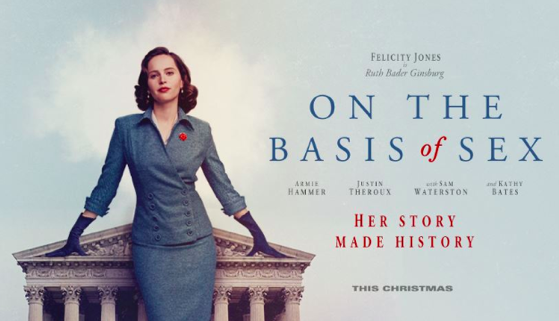
“On The Basis Of Sex” and Justice Ruth Bader Ginsberg’s Harvard Classmates

Working on a chapter about the film On the Basis of Sex which is a biopic based on the early life and career of Supreme Court associate Justice Ruth Bader Ginsburg I came across this podcast that researched the other 8 women who were part of her Harvard Law School class of 1956. 

If you’ve seen the film (and you should because it’s good!) or read much about the Justice you’ll have heard the story of how the Dean of the law school invited them along with some male students to his house for dinner.  Then he asked each of the women in the class to stand up and explain why she’s at Harvard, taking the place of a man. 

Ugh! 

We all know Ginsburg’s career was such a skyrocket that it put that jerk in his place – but then some journalists thought about researching those other 8 women to see how their careers went – and they started a podcast about the women’s lives. 

I love finds like this!

Read more about Justice Ruth Bader Ginsberg in the book series I am editing — Women Making History from ABC-CLIO.


Ruth Bader Ginsburg: A Life in American History (Women Making History) by Nancy Hendriks

Ruth Bader Ginsburg: A Life in American History explores Ginsburg’s path to holding the highest position in the judicial branch of U.S. government as a Supreme Court justice for almost three decades. Readers will learn about the choices, challenges, and triumphs that this remarkable American has lived through, and about the values that shape the United States.=

Ginsburg, sometimes referred to as The Notorious RBG or RBG was a professor of law, a member of the American Civil Liberties Union, an advocate for women’s rights, and more, before her tenure as Supreme Court justice. She has weighed in on decisions, such as Bush v. Gore (2000); King v. Burwell (2015); and Masterpiece Cakeshop v. Colorado Civil Rights Commission (2018), that continue to guide lawmaking and politics. Ginsburg’s crossover to stardom was unprecedented, though perhaps not surprising. Where some Americans see the Supreme Court as a decrepit institution, others see Ginsburg as an embodiment of the timeless principles on which America was founded.

“A Man Of Action Saving Liberty: A Novel Based On The Life Of Giuseppe Garibaldi” – 38 in a series

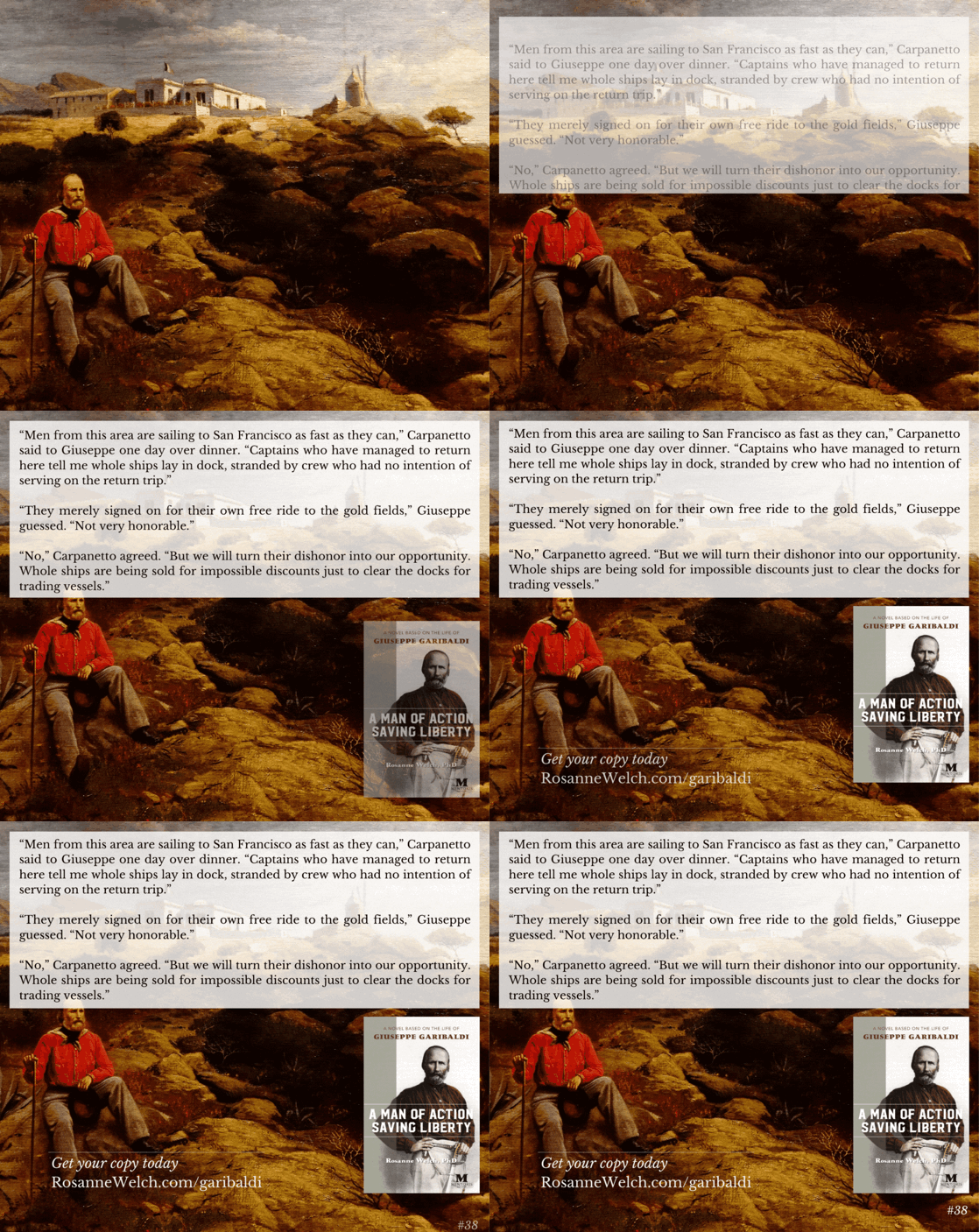
“Men from this area are sailing to San Francisco as fast as they can,” Carpanetto said to Giuseppe one day over dinner. “Captains who have managed to return here tell me whole ships lay in dock, stranded by crew who had no intention of serving on the return trip.”

 “They merely signed on for their own free ride to the gold fields,” Giuseppe guessed. “Not very honorable.”

“No,” Carpanetto agreed. “But we will turn their dishonor into our opportunity. Whole ships are being sold for impossible discounts just to clear the docks for trading vessels.”

Get your copy of A Man Of Action Saving Liberty Today!

From The Journal Of Screenwriting V5 Issue 1: Screenwriting and emotional rhythm by Ian David

Highlighting the articles in the past editions of the Journal of Screenwriting, of which I am the Book Reviews Editor. Hopefully these abstracts will entice you to did a little deeper into the history and future of screenwriting. — Rosanne


Screenwriting and emotional rhythm by Ian David

Recent advances in neuroscience have begun to unravel the part played by emotion in decision-making and creativity. All storytellers rely on emotion, but the screenwriter, conveying the essential narrative and technical information required to make a film, carries a unique burden. Screenplays must act as a bridge from the author to the audience, describing the narrative’s capacity to evoke emotion through action and image. In discussing a screenplay, the narrative is usually assessed in terms of its characters, plot, subplots, theme, dialogue, tone, style, etc. Yet, emotion, the quality that determines the screenplay’s (and ultimately the film’s) overall effect, is often poorly understood. This paper proposes Emotional Rhythm – that subliminal sequence of emotions underpinning all the dramatic components – as a means of evaluating the screenplay’s potency as it relates to the construction of the narrative.

From The Journal Of Screenwriting V5 Issue 1: Screenwriting and emotional rhythm by Ian David


Journal of Screenwriting Cover

The Journal of Screenwriting is an international double-blind peer-reviewed journal that is published three times a year. The journal highlights current academic and professional thinking about the screenplay and intends to promote, stimulate and bring together current research and contemporary debates around the screenplay whilst encouraging groundbreaking research in an international arena. The journal is discursive, critical, rigorous and engages with issues in a dynamic and developing field, linking academic theory to screenwriting practice. 

Get your copy and subscription to the Journal of Screenwriting Today!


* A portion of each sale from Amazon.com directly supports our blogs
** Many of these books may be available from your local library. Check it out!

The Civil War On Film – 33 in a series – “…the conflict that arose in Kansas in the seven years before the Civil War known as “Bleeding Kansas.”

The Civil War On Film - 33 in a series -

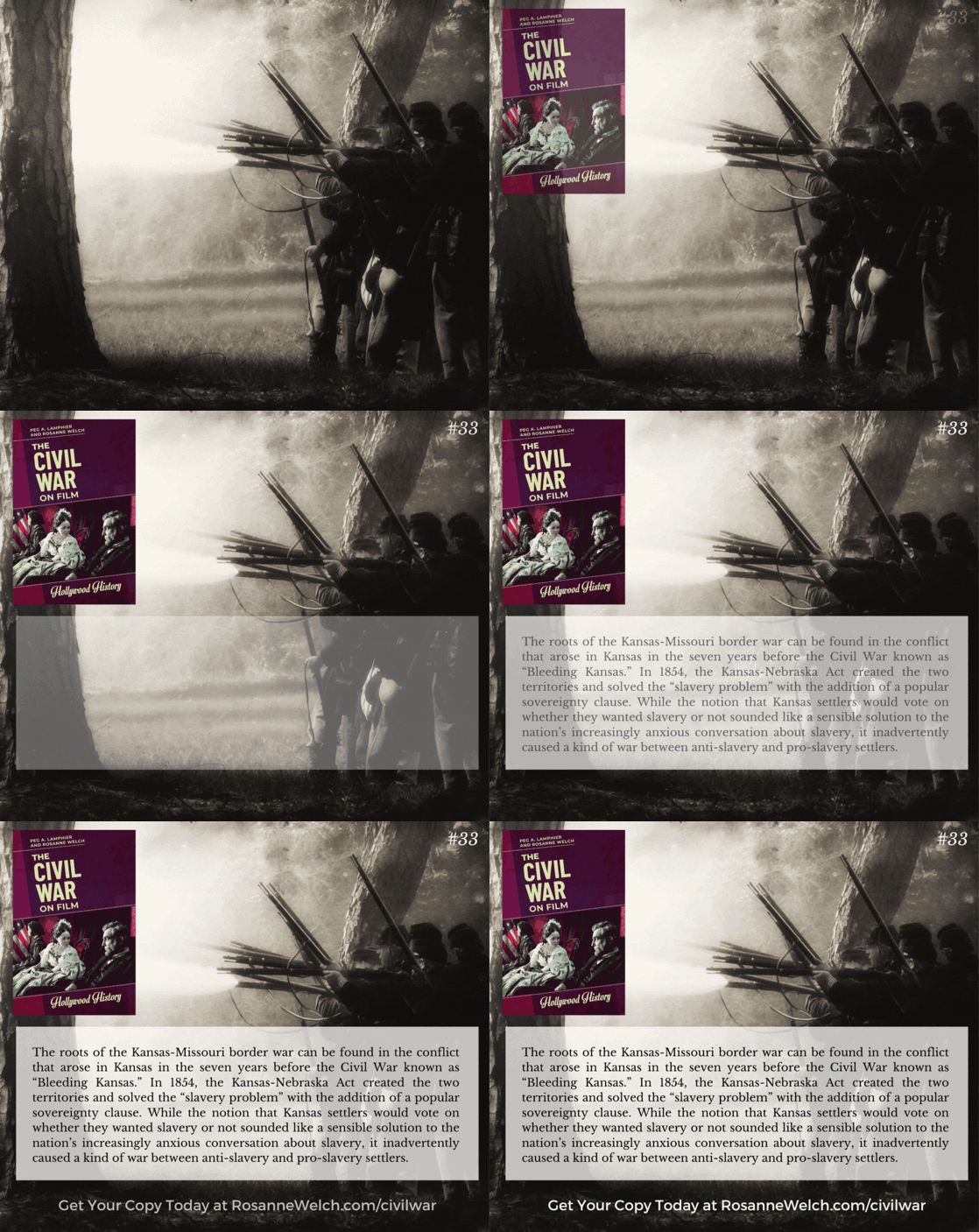
The roots of the Kansas-Missouri border war can be found in the conflict that arose in Kansas in the seven years before the Civil War known as “Bleeding Kansas.” In 1854, the Kansas-Nebraska Act created the two territories and solved the “slavery problem” with the addition of a popular sovereignty clause. While the notion that Kansas settlers would vote on whether they wanted slavery or not sounded like a sensible solution to the nation’s increasingly anxious conversation about slavery, it inadvertently caused a kind of war between anti-slavery and pro-slavery settlers.

Movies profiled in this book:

“A Man Of Action Saving Liberty: A Novel Based On The Life Of Giuseppe Garibaldi” – 37 in a series

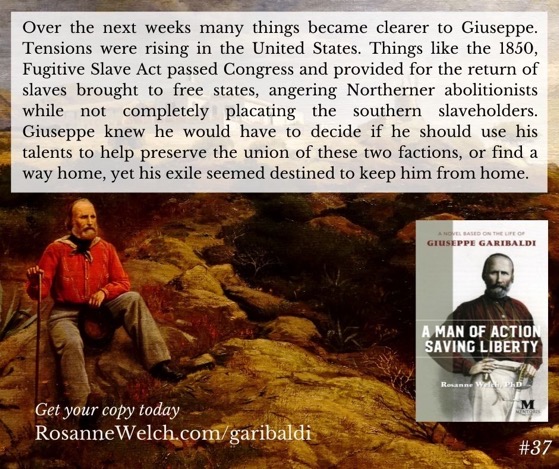
Over the next weeks many things became clearer to Giuseppe. Tensions were rising in the United States. Things like the 1850, Fugitive Slave Act passed Congress and provided for the return of slaves brought to free states, angering Northerner abolitionists while not completely placating the southern slaveholders. Giuseppe knew he would have to decide if he should use his talents to help preserve the union of these two factions, or find a way home, yet his exile seemed destined to keep him from home.

Get your copy of A Man Of Action Saving Liberty Today!

From The Journal Of Screenwriting V5 Issue 1: Where are you from? Place as a form of scripting in independent cinema by J. J. Murphy

Highlighting the articles in the past editions of the Journal of Screenwriting, of which I am the Book Reviews Editor. Hopefully these abstracts will entice you to did a little deeper into the history and future of screenwriting. — Rosanne


Where are you from? Place as a form of scripting in independent cinema by J. J. Murphy
 
Large-budget Hollywood studio productions generally prefer a high level of fabrication in creating a film’s setting, either through the building of sets or through special effects, because it gives the production team greater control. Yet that’s often been less true of indie films historically. For a variety of reasons, the setting or location of independent films often becomes a central part of the scripting of a film. It is obviously cheaper to use what already exists in reality rather than to attempt to create a location through set design or art direction. Beyond issues of budget, however, my interest here is in exploring how ‘place’ can actually function as a key element in the scripting process, especially one that is rooted in visual storytelling, by taking into account the myriad ways that a film’s setting can contribute to and enhance the narrative beyond the use of generic, decorative or touristic locations. Using examples drawn from independent cinema, the article argues that place can have an intrinsic, integrative, stylistic, structural, conceptual and thematic function.

From The Journal Of Screenwriting V5 Issue 1: Where are you from? Place as a form of scripting in independent cinema by J. J. Murphy


Journal of Screenwriting Cover

The Journal of Screenwriting is an international double-blind peer-reviewed journal that is published three times a year. The journal highlights current academic and professional thinking about the screenplay and intends to promote, stimulate and bring together current research and contemporary debates around the screenplay whilst encouraging groundbreaking research in an international arena. The journal is discursive, critical, rigorous and engages with issues in a dynamic and developing field, linking academic theory to screenwriting practice. 

Get your copy and subscription to the Journal of Screenwriting Today!


* A portion of each sale from Amazon.com directly supports our blogs
** Many of these books may be available from your local library. Check it out!

The Civil War On Film – 32 in a series – “…because it was insufficiently sympathetic to the Confederate point of view.”

The Civil War On Film - 32 in a series -

Predictably, some Civil War movie fans didn’t like Andersonville because it was insufficiently sympathetic to the Confederate point of view. Neo-Confederate viewers, who surely expected a different film from Georgian Ted Turner, pointed out Confederate soldiers in Union prison camps suffered as greatly as Union soldiers in Andersonville. On the whole though, Andersonville fairs well with Civil War movie fans who enjoy (or at least tolerate) a Northern point of view.

Movies profiled in this book: