Listen to the latest “How I Wrote That” Podcast with Screenwriter/Producer Tara Hernandez of The Big Bang Theory [Audio]

Listen to the latest How I Wrote That Podcast with Tera Hernandez of The Big Bang Theory [Audio]

Listen to the latest How I Wrote That Podcast with Tera Hernandez of The Big Bang Theory [Audio]

Subscribe to the Podcast with iTunes | TuneIn

Listen to this episode

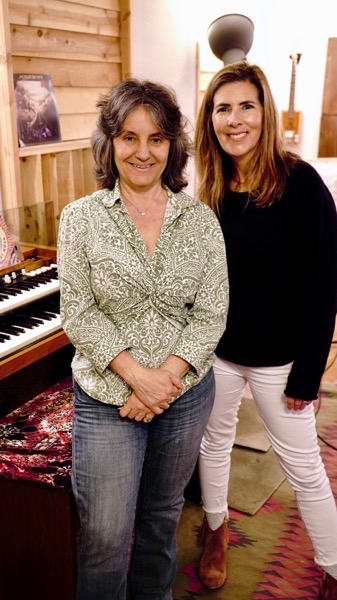
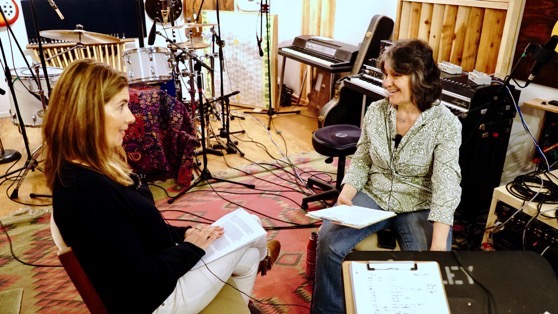
Tara Hernandez started working on The Big Bang Theory as an assistant to the executive producer in season 4, and became a staff writer in the middle of season 5. From there she rose in the ranks to be a co-executive producer, helping to craft the series finale before moving to work on the show’s spin-off Young Sheldon.

The key to pitching sitcoms – there’s the event and then there’s the story.  The event is the thing that happens but the story is her emotional realization that comes from the event… So for my first story that sold on Big Bang Theory was about the time Bernadette was getting married and Amy was going overboard so the girls decide to go dress shopping without Amy.  That was the event that happened and then, because she was so devastated, Sheldon had to step up as a boyfriend and comfort her and it lead to their first cuddle. – Tara Hernandez


Drs. Rosanne Welch and Sarah Clark discuss “Success Story” on the Zilch Podcast’s Monkees 101 Series [Audio]

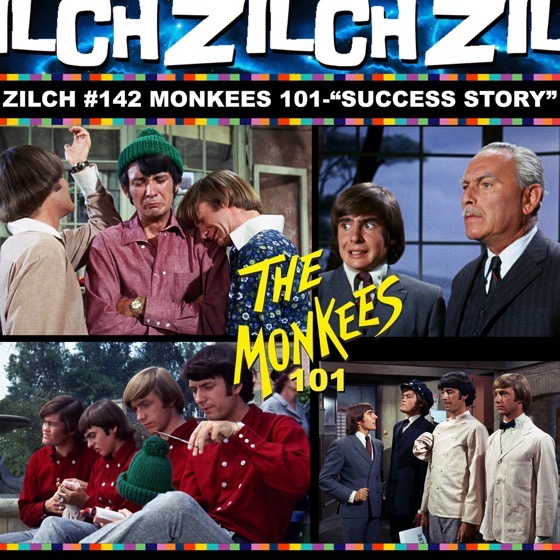
Zilch just posted another of the Monkees 101 segments I so enjoy recording with my co-host and fellow Doctor – Sarah Clark – as we critically study each episode of the show chronologically.

In this episode we take apart one of our favorites – Success Story – which involved Davy’s grandfather visiting Los Angeles and discovering that he had not yet become successful, so it was time to return to England and the real world. It brings a pang to most Monkees – and all Davy’s fans – because the goodbye scene enacted all those years ago became the clip all the newscasters chose to use when Davy Jones died in real life, and therefore became the first one to leave the group. 

It’s always fun to look at the times in which a piece of media was made, how that affected the way the story was digested then – and how changes across time affect the way the story is seen in concurrent generations. The Monkees is quite a rich show for the kind of sociological slicing Sarah and I give it each episode.

Hope you enjoy listening!
 

Drs. Rosanne Welch and Sarah Clark discuss

Zilch is back! “SUCCESS STORY”-Monkees news and Mailbag. MONKEES 101 looks at the episode “Success Story” and the times around it,

Listen to this episode


Want to learn more about The Monkees? Buy Why The Monkees Matter: Teenagers, Television and American Pop Culture


A hit television show about a fictitious rock band, The Monkees (1966-1968) earned two Emmys–Outstanding Comedy Series and Outstanding Directorial Acheivement in Comedy.

Capitalizing on the show’s success, the actual band formed by the actors, at their peak, sold more albums than The Beatles and The Rolling Stones combined, and set the stage for other musical TV characters from The Partridge Family to Hannah Montana. In the late 1980s, the Monkees began a series of reunion tours that continued into their 50th anniversary.

This book tells the story of The Monkees and how the show changed television, introducing a new generation to the fourth-wall-breaking slapstick created by Laurel and Hardy and the Marx Brothers.

Its creators contributed to the innovative film and television of 1970s with projects like Bob & Carol & Ted & Alice, The Mary Tyler Moore Show, Laugh-In and Welcome Back, Kotter. Immense profits from the show, its music and its merchandising funded the producers’ move into films such as Head, Easy Riderand Five Easy Pieces.

McFarland (Direct from Publisher) | Amazon | Kindle Edition | Nook Edition

Want to use “Why The Monkees Matter” in your classroom?

Order Examination Copies, Library and Campus Bookstore orders directly from McFarland

McFarland Company logo

17 Tressie Souders from “When Women Wrote Hollywood” with Dr. Rosanne Welch [Video] (49 seconds)

Part of the California State University, Fullerton Faculty Noon Time Talks at the Pollak Library.

Watch this entire presentation

17 Tressie Souders from


Transcript:

The hardest thing to do now — we’re having trouble reviving some of these female names but it is far more worse reviving African-American female names because these folks have had no paperwork left about them and even the men they worked with haven’t been cataloged in a way that we can look to them for information. Tressi Souders, we only have through newspaper accounts of films of hers that were opening in African-American neighborhoods. So we can see advertisements that she had product but the product doesn’t exist. You can’t find it even on — most of the women I’m gonna mention, the Caucasian women — the European women — and you could find some of their movies on YouTube because stuff has been kept in the Library of Congress. Sadly some has been saved because of men it’s connected to but at least it’s been saved. These women, none of their work exists anymore and that’s one of the most depressing things.

Dr. Rosanne Welch discusses the women in her new book “When Women Wrote Hollywood” which covers female screenwriters from the Silents through the early 1940s when women wrote over 50% of films and Frances Marion was the highest paid screenwriter (male or female) and the first to win 2 Oscars.  Yet, she fails to appear in film history books, which continue to regurgitate the myth that male directors did it all – even though it’s been proven that the only profitable movies Cecil B. de Mille ever directed were all written by Jeannie Macpherson film ever won for Best Picture was written by Robert E. Sherwood (who people have heard of, mostly due to his connection to Dorothy Parker) and Joan Harrison.


Buy a signed copy of when Women Wrote Hollywood

…or via Amazon…

Paperback Edition | Kindle Edition | Google Play Edition

* A portion of each sale from Amazon.com directly supports our blogs
** Many of these books may be available from your local library. Check it out!
† Available from the LA Public Library

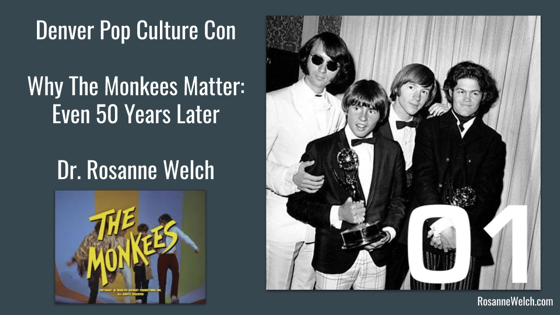
02 Rosanne’s Writing History from “Why The Monkees Matter: Even 50 Years Later – Dr. Rosanne Welch [Video] (1 minute)

Enjoy This Clip? Watch this entire presentation!

From Denver Pop Culture Con 2019.

Wherever you go, you find Monkees fans and the Denver Popular Culture Con was no different.  Amid rooms full of caped crusaders and cosplay creations, I was initially not sure how many folks would attend a talk on a TV show from the 1960s – but happily I was met by a nice, engaged audience for my talk on Why the Monkees Matter  – and afterward they bought books!  What more could an author ask for?

Rosanne's Writing History from


Transcript

First thing is a little bit of who I am. On television I wrote for Touched By An Angel, Beverly Hills 90210, and Picket Fences and ABC’s News Nightline. When I decided to get into academia and start writing first of all the Monkees book obviously but then I’ve written a lot of stuff about women in history, women in popular culture, very interested in that and you’ll be hopefully interested in finding out but there is some things to be said about feminism on The Monkees in the 60s which nobody would have expected until I studied it. I also do book reviews for the Journal of Screenwriting. I’m their book review editor and I work on Written By magazine on the editorial board. That’s a magazine for members of the Writers Guild. So my deep focus is generally — words matter — writers matter — and women writers matter and we’re gonna find out that on The Monkees, there was the first female television writer who didn’t need a male partner in order to be have job which is sounds a little crazy to us today but was true back in the day.


Buy Why The Monkees Matter: Teenagers, Television and American Pop Culture

A hit television show about a fictitious rock band, The Monkees (1966-1968) earned two Emmys–Outstanding Comedy Series and Outstanding Directorial Acheivement in Comedy.

Capitalizing on the show’s success, the actual band formed by the actors, at their peak, sold more albums than The Beatles and The Rolling Stones combined, and set the stage for other musical TV characters from The Partridge Family to Hannah Montana. In the late 1980s, the Monkees began a series of reunion tours that continued into their 50th anniversary.

This book tells the story of The Monkees and how the show changed television, introducing a new generation to the fourth-wall-breaking slapstick created by Laurel and Hardy and the Marx Brothers.

Its creators contributed to the innovative film and television of 1970s with projects like Bob & Carol & Ted & Alice, The Mary Tyler Moore Show, Laugh-In and Welcome Back, Kotter. Immense profits from the show, its music and its merchandising funded the producers’ move into films such as Head, Easy Riderand Five Easy Pieces.

McFarland (Direct from Publisher) | Amazon | Kindle Edition | Nook Edition

Want to use “Why The Monkees Matter” in your classroom?

Order Examination Copies, Library and Campus Bookstore orders directly from McFarland

McFarland Company logo

Mentoris Project Podcast: Grace Notes: A Novel Based on the Life of Henry Mancini with Author, Stacia Raymond [Audio]

My latest podcast with my fellow Mentoris authors is now available on the Mentoris Web Site. Give it a listen and Subscribe for More! — Rosanne

Mentoris Project Podcast: Grace Notes: A Novel Based on the Life of Henry Mancini with Author, Stacia Raymond [Audio]

Mentoris Project Podcast: Grace Notes: A Novel Based on the Life of Henry Mancini with Author, Stacia Raymond [Audio]

Grace Notes: A Novel Based on the Life of Henry Mancini with Author, Stacia Raymond

Hosted by Dr. Rosanne Welch

Listen Now

Subscribe Via iTunes | Google Play | TuneIn | RSS


Today’s guest is Stacia Raymond, author of Grace Notes: A Novel Based on the Life of Henry Mancini

With a legacy that resonates today in the work of contemporary film composers, the magnanimous Henry Mancini left an indelible mark on the culture. Over the course of a life cut short, Mancini helped liberate a concentration camp at the end of WWII, created some of the most iconic film and television themes ever written, and unseated the Beatles from the number one spot at the apex of rock and roll.


About the Author

Stacia Raymond is a freelance writer and editor based in Southern California. With more than fifteen years of experience in the film and television industry, Raymond has built a body of work that includes fiction, non-fiction, and ghostwriting for clients in the fields of music, film, and technology. Raymond’s television writing has been produced by CBS, Paramount, and Lifetime, and she has developed projects with Showtime and ABC Family. In 2013, she was awarded a Fellowship with the Puglia Film Commission as part of a program to bring more production to the Southern Italian region.

Mentoris Project Podcast: Grace Notes: A Novel Based on the Life of Henry Mancini with Author, Stacia Raymond

Mentoris Project Podcast: Grace Notes: A Novel Based on the Life of Henry Mancini with Author, Stacia Raymond

Follow @mentorisproject on Instagram

Visit the Mentoris Project for more!


Also from the Mentoris Project

Want to use these books in your classroom? Contact the Mentoris Project!`

16 Sarah Y. Mason from “When Women Wrote Hollywood” with Dr. Rosanne Welch [Video] (1 minute 15 seconds)

Part of the California State University, Fullerton Faculty Noon Time Talks at the Pollak Library.

Watch this entire presentation

16 Sarah Y. Mason from


Transcript:

Sarah Mason had a similar thing happen to her. Sarah Mason worked together with her husband Victor Hermann, They got the first Oscar for adaptation. It was for Little Women which of course has been done and done and done over again. They also worked on Stella Dallas and many films in the early period. Again, Victor Herrmann left writing to become a director and he ended up directing the Marx Brothers so he’s a little he appears in a few more film histories. She disappears out of the film histories though she’s got an Oscar to her name and Victor, who outlived his wife, gave an oral history where he said he did most of the writing when they were a team. The problem is if you look at her IMDB list of movies she wrote before marrying him and after he left the team to become a director, she has about 64 films. He alone has written four. So who’s the writer in that team right? it’s not who he says it was unless that’s all you ever read. So Sarah disappears from history, right? I’ve actually met her grandson and interviewed him. He had no idea that that’s what his grandmother did. All he remembers is she really liked Shakespeare and she made him remember whole quotes from Shakespeare before he could go out and play. He had to recite sections of Shakespeare. So don’t tell me she doesn’t have the heart of a writer right? .

Dr. Rosanne Welch discusses the women in her new book “When Women Wrote Hollywood” which covers female screenwriters from the Silents through the early 1940s when women wrote over 50% of films and Frances Marion was the highest paid screenwriter (male or female) and the first to win 2 Oscars.  Yet, she fails to appear in film history books, which continue to regurgitate the myth that male directors did it all – even though it’s been proven that the only profitable movies Cecil B. de Mille ever directed were all written by Jeannie Macpherson film ever won for Best Picture was written by Robert E. Sherwood (who people have heard of, mostly due to his connection to Dorothy Parker) and Joan Harrison.


Buy a signed copy of when Women Wrote Hollywood

…or via Amazon…

Paperback Edition | Kindle Edition | Google Play Edition

* A portion of each sale from Amazon.com directly supports our blogs
** Many of these books may be available from your local library. Check it out!
† Available from the LA Public Library

15 Who Tells Your Story? from “When Women Wrote Hollywood” with Dr. Rosanne Welch [Video] (44 seconds)

Part of the California State University, Fullerton Faculty Noon Time Talks at the Pollak Library.

Watch this entire presentation

15 Who Tells Your Story? from


Transcript:

Sadly she died early in 1948. He lived another 15 years and when he did an oral history and did interviews about his work, when they brought her up, because the good a good historian would look at the names on the things and ask him — he would say “Oh Jeanne. She wasn’t such a good writer but you know I kept her around because she needed that money. — immediately writing her out of the history of the business she had helped to found right? So this is what happens. This is how women fall out of history so easily. We interview the guys and the guys want you to remember how brilliant they are right and that’s really sad. “Who lives? Who dies?” It matters who tells your story. You have to be in charge of your own story.

Dr. Rosanne Welch discusses the women in her new book “When Women Wrote Hollywood” which covers female screenwriters from the Silents through the early 1940s when women wrote over 50% of films and Frances Marion was the highest paid screenwriter (male or female) and the first to win 2 Oscars.  Yet, she fails to appear in film history books, which continue to regurgitate the myth that male directors did it all – even though it’s been proven that the only profitable movies Cecil B. de Mille ever directed were all written by Jeannie Macpherson film ever won for Best Picture was written by Robert E. Sherwood (who people have heard of, mostly due to his connection to Dorothy Parker) and Joan Harrison.


Buy a signed copy of when Women Wrote Hollywood

…or via Amazon…

Paperback Edition | Kindle Edition | Google Play Edition

* A portion of each sale from Amazon.com directly supports our blogs
** Many of these books may be available from your local library. Check it out!
† Available from the LA Public Library

Producer/Screenwriter Cindy Chupack on the “How I Wrote That” Podcast from the Stephens MFA in TV and Screenwriting Program [Podcast]

Producer/Screenwriter Cindy Chupack on the

Subscribe to the How I Wrote That Podcast

Producer/Screenwriter Cindy Chupack on the “How I Wrote That” Podcast from the Stephens MFA in TV and Screenwriting Program [Podcast]

Producer/Screenwriter Cindy Chupack on the

Listen to this episode

Cindy Chupack has won two Emmys and three Golden Globes as TV writer/producer whose credits include “Sex and the City,” “Better Things,” “Divorce,” “Modern Family,” “Everybody Loves Raymond,” and most recently Showtime’s darkly comic hour “I’m Dying Up Here.” She is the author of two comic memoirs: the New York Times bestseller The Between Boyfriends Book: A Collection of Cautiously Hopeful Essays, and The Longest Date: Life as a Wife. Last year she directed her first episode of television for “I’m Dying Up Here,” and her first feature, OTHERHOOD, starring Angela Bassett, Patricia Arquette, and Felicity Huffman. OTHERHOOD is a comedy Chupack co-wrote that premiered this week in select theaters and on Netflix.

It feels very paint by numbers so it seems so easy – but it’s not.
As soon as I get good and comfortable I want to take a risk. To challenge myself. 

-Cindy Chupack

01 Introduction From “Why The Monkees Matter: Even 50 Years Later” with Dr. Rosanne Welch – Denver Pop Culture Con 2019 [Video] (1 Minute)

Enjoy This Clip? Watch this entire presentation!

From Denver Pop Culture Con 2019.

Wherever you go, you find Monkees fans and the Denver Popular Culture Con was no different.  Amid rooms full of caped crusaders and cosplay creations, I was initially not sure how many folks would attend a talk on a TV show from the 1960s – but happily I was met by a nice, engaged audience for my talk on Why the Monkees Matter  – and afterward they bought books!  What more could an author ask for?

01 Introduction From


Buy Why The Monkees Matter: Teenagers, Television and American Pop Culture

A hit television show about a fictitious rock band, The Monkees (1966-1968) earned two Emmys–Outstanding Comedy Series and Outstanding Directorial Acheivement in Comedy.

Capitalizing on the show’s success, the actual band formed by the actors, at their peak, sold more albums than The Beatles and The Rolling Stones combined, and set the stage for other musical TV characters from The Partridge Family to Hannah Montana. In the late 1980s, the Monkees began a series of reunion tours that continued into their 50th anniversary.

This book tells the story of The Monkees and how the show changed television, introducing a new generation to the fourth-wall-breaking slapstick created by Laurel and Hardy and the Marx Brothers.

Its creators contributed to the innovative film and television of 1970s with projects like Bob & Carol & Ted & Alice, The Mary Tyler Moore Show, Laugh-In and Welcome Back, Kotter. Immense profits from the show, its music and its merchandising funded the producers’ move into films such as Head, Easy Riderand Five Easy Pieces.

McFarland (Direct from Publisher) | Amazon | Kindle Edition | Nook Edition

Want to use “Why The Monkees Matter” in your classroom?

Order Examination Copies, Library and Campus Bookstore orders directly from McFarland

McFarland Company logo

14 Quimby and MacPherson from “When Women Wrote Hollywood” with Dr. Rosanne Welch [Video] (1 minute 2 seconds)

Part of the California State University, Fullerton Faculty Noon Time Talks at the Pollak Library.

Watch this entire presentation

14 Quimby and MacPherson from


Transcript:

Some people recognize or have heard if you know anything about aviation history, Harriet Quimby was the first pilot — female pilot — licensed in the United States. To pay for her flying lessons she wrote screenplays for the Biograph Company. So there was a new world. A new place to make money and women were jumping in that world if it was possible. So I always thought was pretty cool. Jeanie MacPherson is probably one of my favorite early film screenwriters and she is the perfect example of how women get left behind. Everybody who does film history has heard about Cecil B. DeMille over and over and over again. Brilliant. Brilliant. Brilliant. If you look at his films, all the films he made, that made a profit, were written by Jeanie MacPherson. When they stopped working together, he never made a profitable film again. So are they Cecil B. DeMille films or are they Jeanie MacPherson films or are they Macpherson/DeMille films?

Dr. Rosanne Welch discusses the women in her new book “When Women Wrote Hollywood” which covers female screenwriters from the Silents through the early 1940s when women wrote over 50% of films and Frances Marion was the highest paid screenwriter (male or female) and the first to win 2 Oscars.  Yet, she fails to appear in film history books, which continue to regurgitate the myth that male directors did it all – even though it’s been proven that the only profitable movies Cecil B. de Mille ever directed were all written by Jeannie Macpherson film ever won for Best Picture was written by Robert E. Sherwood (who people have heard of, mostly due to his connection to Dorothy Parker) and Joan Harrison.


Buy a signed copy of when Women Wrote Hollywood

…or via Amazon…

Paperback Edition | Kindle Edition | Google Play Edition

* A portion of each sale from Amazon.com directly supports our blogs
** Many of these books may be available from your local library. Check it out!
† Available from the LA Public Library