A classic resource on feminist theory, Feminist Thought offers a clear, comprehensive, and incisive introduction to the major traditions of feminist theory, from liberal feminism, radical feminism, and Marxist and socialist feminism to care-focused feminism, psychoanalytic feminism, and ecofeminism. The fifth edition has been thoroughly revised, and now includes a new chapter on Third Wave and Third Space Feminism. Also added to this edition are significantly expanded discussions on women of color feminisms, psychoanalytic and care feminisms, as well as new examinations of queer theory, LGBTQ and trans feminism.Learning tools like end-of-chapter discussion questions and the bibliography make Feminist Thought an essential resource for students and thinkers who want to understand the theoretical origins and complexities of contemporary feminist debates. — Amazon
* A portion of each sale from Amazon.com directly supports our blogs ** Many of these books may be available from your local library. Check it out! † Available from the LA Public Library
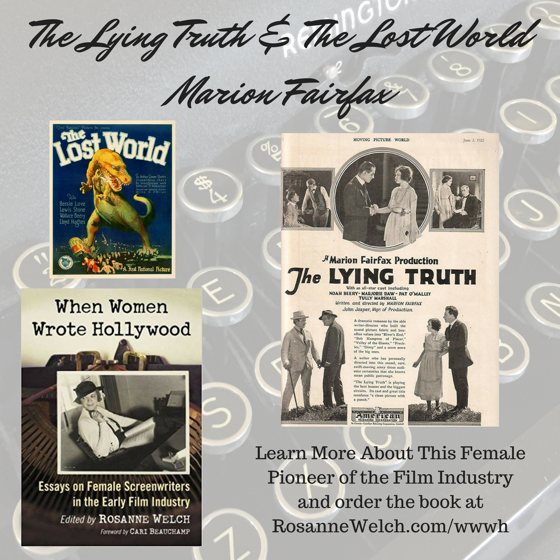
To highlight the wonderful yet largely forgotten work of a collection of female screenwriters from the early years of Hollywood (and as a companion to the book, When Women Wrote Hollywood) we will be posting quick bits about the many films they wrote along with links to further information and clips from their works which are still accessible online. Take a few moments once or twice a week to become familiar with their names and their stories. I think you’ll be surprised at how much bold material these writers tackled at the birth of this new medium. — Rosanne Welch
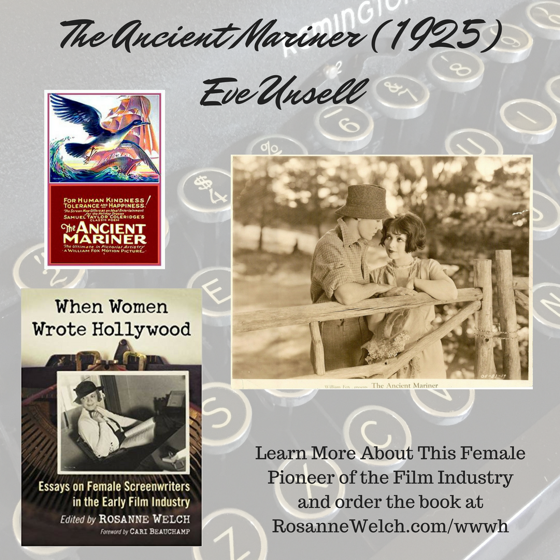
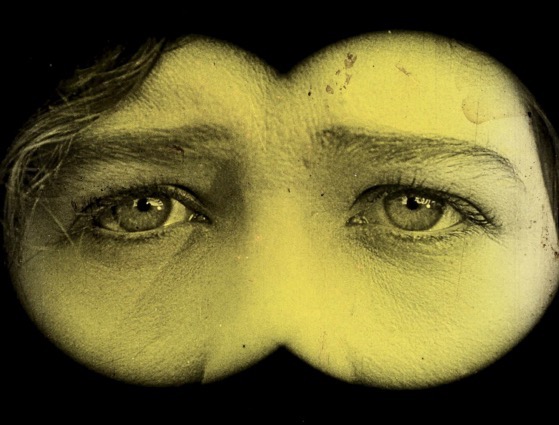
The Ancient Mariner is a 1925 American fantasy-drama silent film based on the popular poem, The Rime of the Ancient by Samuel Taylor Coleridge, first published in 1798.[1] The film was directed by Henry Otto and Chester Bennett, and it was adapted for the screen by Eve Unsell. The film stars Clara Bow, Gladys Brockwell, Nigel De Brulier and was distributed by Fox Film Corporation. The film is presumed to be lost.[2][3]
The official plot synopsis, as provided by the Fox Film Corporation to the copyright registration office and then entered at the Library of Congress:[3][4]
Doris Matthews, a beautiful, innocent young girl, forsakes her sweetheart, Joel Barlowe, in favor of Victor Brant, a wealthy roué. On the night before they are to elope, an old sailor gives Brant a strange potion to drink and then unfolds before his eyes The Rime of the Ancient . Deeply touched by this story about the consequences of the wanton destruction of innocent beauty, Brant leaves without Doris. After some time, he returns and finds to his pained satisfaction that Doris, having overcome her infatuation for him, has again turned her tender attentions toward Joel.
* A portion of each sale from Amazon.com directly supports our blogs ** Many of these books may be available from your local library. Check it out! † Available from the LA Public Library
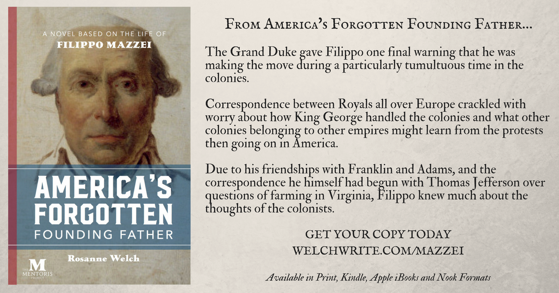
The Grand Duke gave Filippo one final warning that he was making the move during a particularly tumultuous time in the colonies.
Correspondence between Royals all over Europe crackled with worry about how King George handled the colonies and what other colonies belonging to other empires might learn from the protests then going on in America.
Due to his friendships with Franklin and Adams, and the correspondence he himself had begun with Thomas Jefferson over questions of farming in Virginia, Filippo knew much about the thoughts of the colonists.
To highlight the wonderful yet largely forgotten work of a collection of female screenwriters from the early years of Hollywood (and as a companion to the book, When Women Wrote Hollywood) we will be posting quick bits about the many films they wrote along with links to further information and clips from their works which are still accessible online. Take a few moments once or twice a week to become familiar with their names and their stories. I think you’ll be surprised at how much bold material these writers tackled at the birth of this new medium. — Rosanne Welch
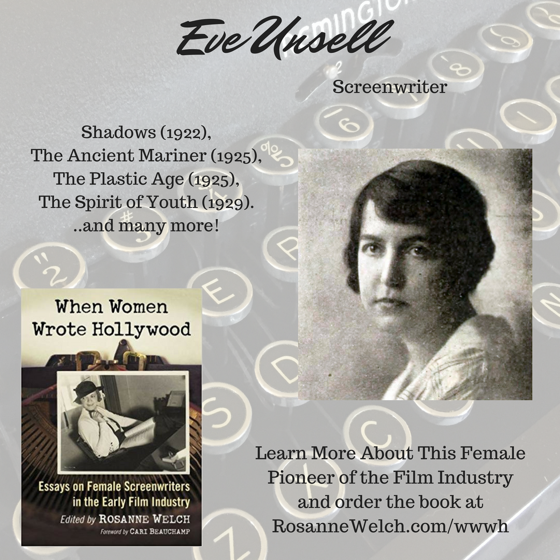
Eve Unsell (December 6, 1879[1] – July 6, 1937) was an American screenwriter. She wrote for 96 films between 1914 and 1933.[2] She was born in Chicago, Illinois, and died in Hollywood, California. Eve was an American scenarist who was known to also use the pseudonym Oliver W. Geoffreys as well as E.M. Unsell. Eve was married to a man named Lester Blankfield, but the year is disputed. Records list their marriage year as 1911, but it does not match up with other documentation. Eve Unsell was a professional in her career as a scenarist, overcoming many challenges along the way. Eve wrote for over 96 films in her lifetime, and edited over ten. Some of her most famous screen writes turned into productions include Shadows (1922), The Ancient Mariner (1925), The Plastic Age (1925), and The Spirit of Youth (1929). Although she was most famous for her work in scenario writing she can also be given credit as an adapter, company director, editor, play reader, screenwriter, theatre actress, and writer. She helped in the writing of many novels as long as editing many different pieces from literature to theatrical writing. — Wikipedia
* A portion of each sale from Amazon.com directly supports our blogs ** Many of these books may be available from your local library. Check it out! † Available from the LA Public Library
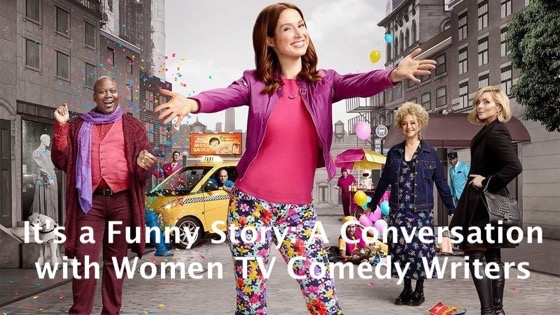
“We could all use a good laugh. Fortunately, we can all unwind with an abundance of outstanding television comedy shows that are available at the click of a button. But comedy isn’t just for the jokes anymore: an increasing number of shows tackle universal problems and surprisingly navigate us through our challenging world. And as writers rooms continue investing in diverse talent, the voices you hear from your television take on fresh perspectives.
Join The Writers Guild Foundation in partnership with Stephens College MFA in TV and Screenwriting for a discussion surrounding how women television comedy writers got their start, how they use their experiences to inform their work, and the challenges they face in the writers room.”
For her 5th Doctor Who lecture to the CPP community, Dr. Rosanne Welch discusses how society – and the show’s writing staff – prepared the audience for a major change in this 50-year franchise – the creation of the first Lady Doctor!
Transcript:
She really wants people, of course not, to be upset or worried about it. Which is important. Now, as far as I’m concerned when you think about gender, females have always been strong characters on Doctor Who. Going back to the early days and all these women have had really important jobs. From the very beginning, Susan, who was the first companion, his granddaughter, left because she wanted to rebuild the planet that she had seen destroyed. So she wanted to put her efforts into helping other people and using her talents for that. Right? She could have continued adventuring and having a party with her grandpa and all that meeting The Mayans, The Aztecs and what have you, but she wanted to do something more important and that’s a strength, right? I think that’s a woman who has active strength being shown. Then, as I mentioned, Agent Sara Kingdom. She switched sides. So she chose the good. So she’s a little bit like Darth Vader flipping at the end finally.
Rosanne Welch PhD teaches the History of Screenwriting and One-Hour Drama for the Stephens College MFA in Screenwriting.
Writing/producing credits include Beverly Hills 90210, Picket Fences, ABCNEWS: Nightline and Touched by an Angel. In 2016 she published the book Why The Monkees Matter: Teenagers, Television and American Pop; co-edited Women in American History: A Social, Political, and Cultural Encyclopedia; and placed “Transmitting Culture Transnationally Via the Characterization of Parents in Police Procedurals” in the New Review of Film and Television Studies. Essays appear in Torchwood Declassified: Investigating Mainstream Cult Television and Doctor Who and Race: An Anthology. Welch serves as Book Reviews editor for Journal of Screenwriting and on the Editorial Advisory Board for Written By magazine, the magazine of the Writers Guild.
While I only used a portion of my total research, there are a host of little tidbits of information on this amazing man which I wanted to share here. — Rosanne.
I came across his video was I was first doing my research for the book. It only makes sense that someone found Filippo as interesting as I had. Take a look! — Rosanne
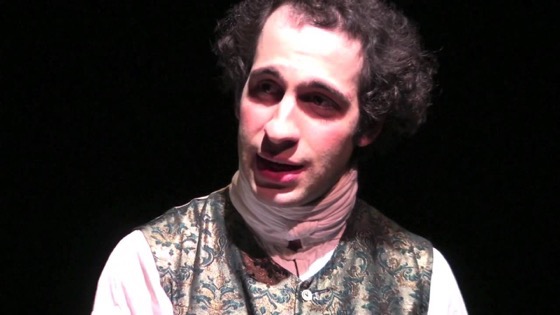
From the floor of Congress, Mazzei discusses fraternity, the pursuit of happiness, and the year 2011.
From “Zealous Whig” Written and performed by Paul Manganello Sound design, lighting design, videography and graphic design: Colin Fulton Original music: Marc LeMay Dramatic consultant: Neal Kelley
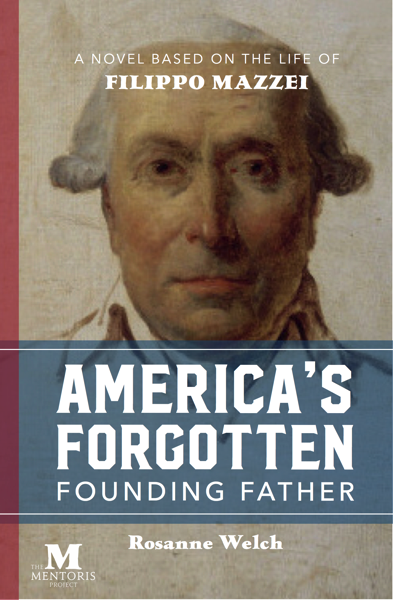
“Zealous Whig” unearths the true story of America’s Italian founding father. Filippo Mazzei came to America in 1773 after meeting Benjamin Franklin in London. He became a close friend, collaborator, and next-door neighbor to Thomas Jefferson, and contributed to the Declaration of Independence. Mazzei returned to Europe in 1783 expecting a US consular post, but was disappointed. He died in obscurity in Pisa in 1816.
The article concerns “Pioneers: First Women Filmmakers,” a wonderful series that opens Friday in New York City at BAM (Brooklyn Academy of Music) which is being presented with Kino Lorber and the Library of Congress.
“There are tear-splashed melodramas like Alice Guy Blaché’s “The Ocean Waif” (1916), but also slapstick comedies like Mabel Normand’s “Caught in a Cabaret,” starring Charlie Chaplin (1914), and Lois Weber and Phillips Smalley’s thriller “Suspense” (1913). The stories take on love and war as well as poverty (Ida May Park’s 1918 “Bread”); birth control (Weber’s 1916 “Where Are My Children?”); and prostitution (Dorothy Davenport and Walter Lang’s 1925 “The Red Kimona”). One must-see is Marion E. Wong’s “Curse of Quon Gwon: When the Far East Mingles With the West” (1916), thought to be the first feature by a Chinese-American filmmaker. (A chunk is missing but it’s still worth watching.)”
Even if you don’t live in New York to attend the series, you can read all about it – and these marvelous women and their movie-making careers – here:
In the Wild West days of early filmmaking—before Hollywood hardened into an assembly-line behemoth and boys’ club—talented women worked regularly as writers, producers, and directors, instrumental in shaping the very language of cinema as we know it. Nevertheless, figures like Alice Guy Blaché and Lois Weber are known today primarily by aficionados, and artists like Nell Shipman, Grace Cunard, and Marion E. Wong remain woefully obscure. Bringing together dozens of essential new restorations, this series spotlights the daring, innovative, and trailblazing work of the first female filmmakers and restores their centrality to the creation of cinema itself.
* A portion of each sale from Amazon.com directly supports our blogs ** Many of these books may be available from your local library. Check it out! † Available from the LA Public Library
To highlight the wonderful yet largely forgotten work of a collection of female screenwriters from the early years of Hollywood (and as a companion to the book, When Women Wrote Hollywood) we will be posting quick bits about the many films they wrote along with links to further information and clips from their works which are still accessible online. Take a few moments once or twice a week to become familiar with their names and their stories. I think you’ll be surprised at how much bold material these writers tackled at the birth of this new medium. — Rosanne Welch
Marion Fairfax (October 24, 1875 – October 2, 1970) was an American screenwriter and playwright. Born as Marion Neiswanger in Richmond, Virginia, After she graduated from Chicago’s South Division High School, she enrolled in Emerson College in Boston, Massachusetts. She was married to actor Tully Marshallfor forty-three years. Fairfax worked as a company director, director, editor, editorial director, playwright, producer, screenwriter and theatre actress.
Fairfax first started her career as a stage actress, just like many other women did in that era. By 1901 she was appearing on Broadway and soon after that her own plays started appearing on Broadway. Before she went into pictures she was known for being one of the most distinguished stage authors in the United States, writing Broadway hits such as The Builders (1907), The Chaperon (1908), The Talker (1912), A Modern Girl (1914), In 1915 The Lasky Feature Play Company entered into a contract with Fairfax. This opportunity gave Fairfax the chance to work under William C. DeMille who is known as the author for many successful plays such as “The Warrens of Virginia” and “The Woman.” The success of Fairfax comes through wide knowledge of dramatic values, not only from an author’s perspective but also from that of the artist.[1] — Wikipedia
* A portion of each sale from Amazon.com directly supports our blogs ** Many of these books may be available from your local library. Check it out! † Available from the LA Public Library




![21 Strong Female Companions In The Past from Gender Diversity in the Who-niverse [Video] (0:51)](https://rosannewelch.com/wp-content/uploads/2018/07/gender-dw-21-strong-women.jpeg)

 To highlight the wonderful yet largely forgotten work of a collection of female screenwriters from the early years of Hollywood (and as a companion to the book,