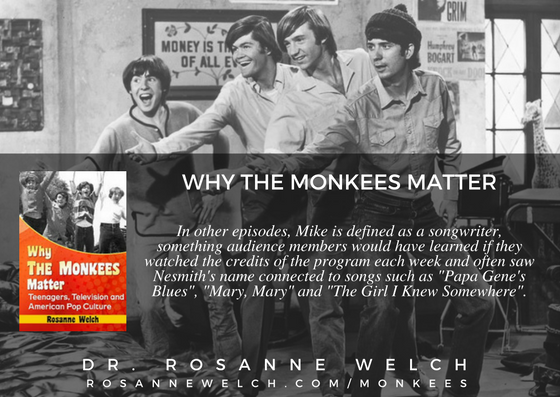
In other episodes, Mike is defined as a songwriter, something audience members would have learned if they watched the credits of the program each week and often saw Nesmith’s name connected to songs such as “Papa Gene’s Blues”, “Mary, Mary” and “The Girl I Knew Somewhere”.
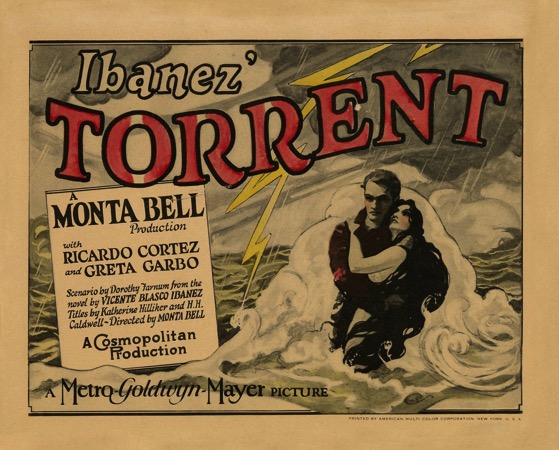
Torrent was the first American film starring Swedish actress Greta Garbo.[6] The film also starred Ricardo Cortez as the son of a domineering mother, played by Martha Mattox.
The title refers to a flood that occurs in the small town where most of the action takes place, which draws the two romantic leading characters closer together. — Wikipedia
Learn More About Greta Garbo with these books
††
* A portion of each sale from Amazon.com directly supports our blogs ** Many of these books may be available from your local library. Check it out! † Available at the LA Public Library
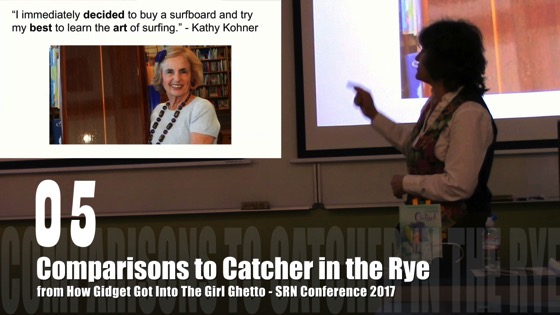
So, we’ll start with the real woman. This is the real woman in the modern day. She’s still alive. She works in — she works as a Maitre D of a restaurant in Malibu and she’s still known as the “Real Gidget.” That’s kind of her — everyone in Hollywood is a bit of a celebrity so you can go that restaurant and meet the “Real Gidget” and have dinner. It is pretty funny. She also did a documentary a few years ago about her life that traveled the festival circuit. She’s trying to bring back the real story out of all the Hollywood glitz and glamour. So that’s Kathy Kohner and this was said about the book in the introduction and which I found very interesting. This is what connected me to it, that when it came out there was a thought that this was essentially a female Catcher in the Rye. Catcher in the Rye being the JD Salinger book that every high school student in America is still made to read and I don’t understand. It’s about a kid who decided whether or not to go to a hooker and I’m not really sure why that’s the most important book for teenagers to read.
“How Gidget Got Into the Girl Ghetto by Accident (and How We Can Get Her Out of it): Demoting Gidget: The Little Girl with Big Ideas from Edgy Coming of Age Novel to Babe on the Beach Genre Film via Choices made in the Adaptation Process.”
It’ a long title, as I joke up front, but covers the process of adapting the true life story of Kathy Kohner (nicknamed ‘Gidget’ by the group of male surfers who she spent the summers with in Malibu in the 1950s) into the film and television series that are better remembered than the novel. The novel had been well-received upon publication, even compared to A Catcher in the Rye, but has mistakenly been relegated to the ‘girl ghetto’ of films. Some of the adaptations turned the focus away from the coming of age story of a young woman who gained respect for her talent at a male craft – surfing – and instead turned the focus far too much on Kathy being boy crazy.
Along the way I found interesting comparisons between how female writers treated the main character while adapting the novel and how male writers treated the character.
Dr. Rosanne Welch teaches the History of Screenwriting and One-Hour Drama for the Stephens College MFA in Screenwriting.
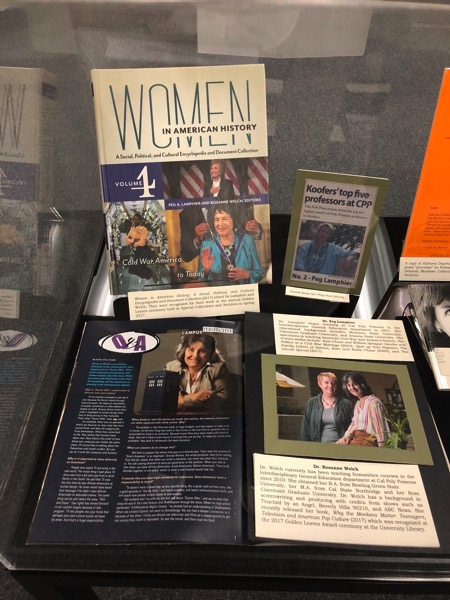
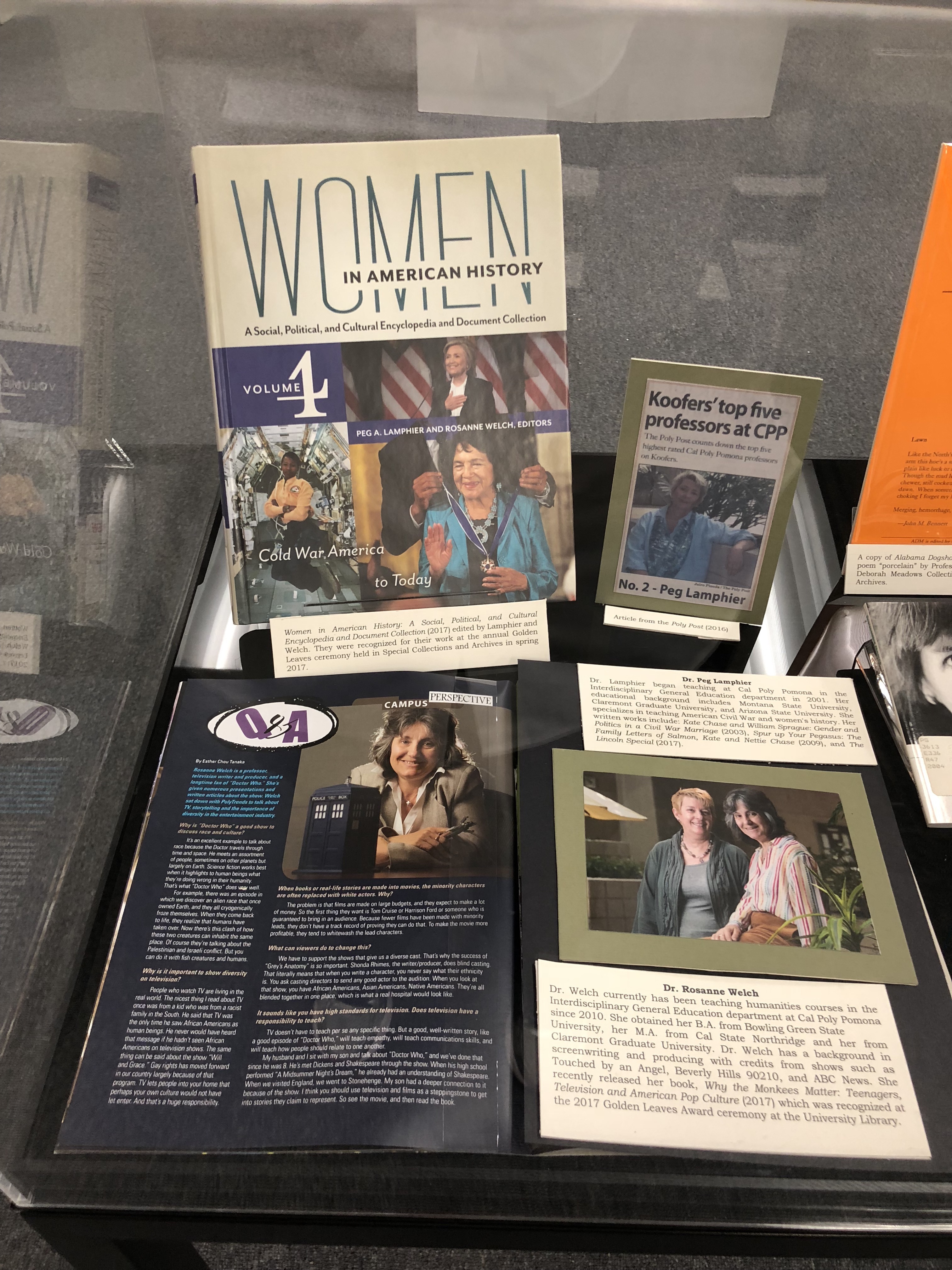
Writing/producing credits include Beverly Hills 90210, Picket Fences, ABCNEWS: Nightline and Touched by an Angel. In 2016 she published the book Why The Monkees Matter: Teenagers, Television and American Pop; co-edited Women in American History: A Social, Political, and Cultural Encyclopedia; and placed “Transmitting Culture Transnationally Via the Characterization of Parents in Police Procedurals” in the New Review of Film and Television Studies. Essays appear in Torchwood Declassified: Investigating Mainstream Cult Television and Doctor Who and Race: An Anthology. Welch serves as Book Reviews editor for Journal of Screenwriting and on the Editorial Advisory Board for Written By magazine, the magazine of the Writers Guild.
The Screenwriting Research Network is a research group consisting of scholars, reflective practitioners and practice-based researchers interested in research on screenwriting. The aim is to rethink the screenplay in relation to its histories, theories, values and creative practices.
Runs Thursday, January 18, 2018 to Sunday, July 15, 2018 Central Library, History and Genealogy Department, LL4
From Lucy to ALF, from game shows to talk shows, from local news to the made-for-TV movie, The Industry In Our Backyard: Television Production In Los Angeles 1940s-1980s showcases four decades in the life of the medium that dominated American culture, yet for Angelenos, was just another part of daily life. The images displayed in the exhibit were largely taken by photographers from the Herald Examiner and the Valley Times newspapers, who were granted exclusive access to back lots, sound stages and location shoots around town for their TV sections. These photos, which have not been seen in as many as sixty-five years when they first ran in the papers, provide rare glimpses of the earliest L.A. stations, the crews at work and the stars in action.
The exhibit runs from January 18 through July 15, 2018, along with a series of presentations given by television industry professionals and archivists.
Exhibit sponsored by Photo Friends, a nonprofit organization that supports the Los Angeles Public Library’s Photo Collection/History & Genealogy Department at Central Library.
The other thing we argue about at the Writers Guild all the time is that we have this business where we have a credit that’s always “A Film By” the director. If he is a writer/director, fine. Ok, but if there’s nothing of that than why does he get this credit and why don’t the writers get that credit and we can’t get rid of that because the Director Guild will not get rid of it. Makes me nuts. Makes me nuts. Makes me nuts. But it’s true.
So this perpetually puts it in the audience’s and the student’s mind that this is the person to credit for that movie and it is not true. Same thing, obviously we know all these wonderful movies by Spike Lee. In the beginning, yes, he did write and direct “She’s Gotta Have It” but he did Malcolm X with Arnold Pearl. We don’t remember Arnold Pearl and he did Chi-Raq with Kevin Willmott and of course, he adapted that from Aristophanes and Lysistrata. So, let’s remember that there were other writers involve but they’re still only A Spike Lee Joint. That’s the only credit that’s given above the title and that’s something that we’re fighting against in our classes.
Runs Thursday, January 18, 2018 to Sunday, July 15, 2018 Central Library, History and Genealogy Department, LL4
From Lucy to ALF, from game shows to talk shows, from local news to the made-for-TV movie, The Industry In Our Backyard: Television Production In Los Angeles 1940s-1980s showcases four decades in the life of the medium that dominated American culture, yet for Angelenos, was just another part of daily life. The images displayed in the exhibit were largely taken by photographers from the Herald Examiner and the Valley Times newspapers, who were granted exclusive access to back lots, sound stages and location shoots around town for their TV sections. These photos, which have not been seen in as many as sixty-five years when they first ran in the papers, provide rare glimpses of the earliest L.A. stations, the crews at work and the stars in action.
The exhibit runs from January 18 through July 15, 2018, along with a series of presentations given by television industry professionals and archivists.
Exhibit sponsored by Photo Friends, a nonprofit organization that supports the Los Angeles Public Library’s Photo Collection/History & Genealogy Department at Central Library.
Whether it was due to his being older (than Dolenz and Jones but not Tork), or due to his being tall, or because he was already a father in real life, Mike did provide the father figure from the start. The program provided the fantasy of a father-knows-best-less house, but because of Mike they had a father.