38 More On International TV Shows and the US from Why Researching Screenwriters Has Always Mattered [Video] (1 minute 18 seconds)

Watch this entire presentation
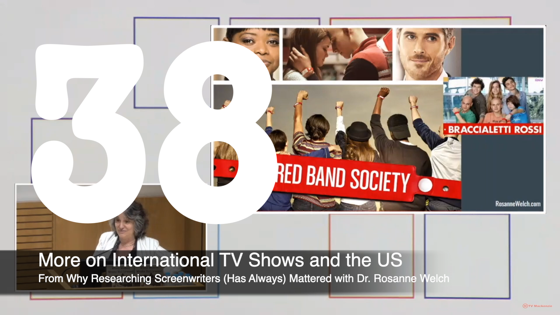
39 More On International TV Shows and the US from Why Researching Screenwriters Has Always Mattered [Video] (1 minute 18 seconds)

Subscribe to Rosanne’s Channel and receive notice of each new video!


Transcript:

They had to have the United States version, so they remade the TV show. They called it the Red Band Society and they didn’t understand the culture of Italy. The show In Italy is all about hope and has a little magical realism to it because one of the children is in a coma but he narrates the story because he watches his friends become friends and grow and have hope that they will be cured someday and in the United States we didn’t get that which is very sad. The show was actually canceled after six episodes because they focused on the grown-ups who were the doctors and the nurses. They thought the story had to be “we’re gonna find that cure because that’s what we do we save the world.” That wasn’t the story at all. They did. They ruined the story right and because we don’t — we think nice people are boring, the nurse is the meanest woman I have ever met and these children are dying of terminal diseases and she’s being mean to them and they thought that that was very edgy. That’s the big word I hate in the United States right now — edgy, We need edgy programming. How many people can we kill in the next five minutes? So we ruined this lovely program right but at least, through Netflix, I can watch the Italian version with subtitles.

Watch this entire presentation

A Note About This Presentation

A clip from my keynote speech at the 10th Screenwriters´(hi)Stories Seminar for the interdisciplinary Graduation Program in “Education, Art, and History of Culture”, in Mackenzie Presbyterian University, at São Paulo, SP, Brazil, focused on the topic “Why Researching Screenwriters (has Always) Mattered.” I was especially pleased with the passion these young scholars have toward screenwriting and it’s importance in transmitting culture across the man-made borders of our world.

To understand the world we have to understand its stories and to understand the world’s stories we must understand the world’s storytellers. A century ago and longer those people would have been the novelists of any particular country but since the invention of film, the storytellers who reach the most people with their ideas and their lessons have been the screenwriters. My teaching philosophy is that: Words matter, Writers matter, and Women writers matte, r so women writers are my focus because they have been the far less researched and yet they are over half the population. We cannot tell the stories of the people until we know what stories the mothers have passed down to their children. Those are the stories that last. Now is the time to research screenwriters of all cultures and the stories they tell because people are finally recognizing the work of writers and appreciating how their favorite stories took shape on the page long before they were cast, or filmed, or edited. But also because streaming services make the stories of many cultures now available to a much wider world than ever before.

Many thanks to Glaucia Davino for the invitation.


* A portion of each sale from Amazon.com directly supports our blogs
** Many of these books may be available from your local library. Check it out!
† Available from the LA Public Library

35 Subtitles Are No Longer Scary from Why Researching Screenwriters Has Always Mattered [Video] (1 minute 5 seconds)

Watch this entire presentation

35 Subtitles Are No Longer Scary from Why Researching Screenwriters Has Always Mattered [Video] (1 minute 5 seconds)

Subscribe to Rosanne’s Channel and receive notice of each new video!


Transcript:

Previously in the United States, the only way we could see a movie from Brazil would be if it won an Oscar or if it was nominated for an Oscar right and these are the only films that had wide release in the United States before Netflix because you would have to go to a theater. You would have to be the kind of person who liked to see international films, who were willing to read subtitles. I noticed — my son is 21 — and I notice in his generation there is more of a comfort with reading subtitles. He watches, because of Netflix, a lot of Japanese anime — a lot of movies from around the world — he doesn’t mind. About 10 years ago, before Netflix. if I assigned an international movie — and I would often assign some Italian films to my film students — they would complain because reading the screen was boring. Now it’s become more acceptable so that we have this opportunity. So until Netflix, this was the only way that in the United States we would have been exposed to any of these films except Kiss of the Spider Woman because that was a co-production between Brazil and the United States so it won some Oscars and we knew about it.

Watch this entire presentation

A Note About This Presentation

A clip from my keynote speech at the 10th Screenwriters´(hi)Stories Seminar for the interdisciplinary Graduation Program in “Education, Art, and History of Culture”, in Mackenzie Presbyterian University, at São Paulo, SP, Brazil, focused on the topic “Why Researching Screenwriters (has Always) Mattered.” I was especially pleased with the passion these young scholars have toward screenwriting and it’s importance in transmitting culture across the man-made borders of our world.

To understand the world we have to understand its stories and to understand the world’s stories we must understand the world’s storytellers. A century ago and longer those people would have been the novelists of any particular country but since the invention of film, the storytellers who reach the most people with their ideas and their lessons have been the screenwriters. My teaching philosophy is that: Words matter, Writers matter, and Women writers matte, r so women writers are my focus because they have been the far less researched and yet they are over half the population. We cannot tell the stories of the people until we know what stories the mothers have passed down to their children. Those are the stories that last. Now is the time to research screenwriters of all cultures and the stories they tell because people are finally recognizing the work of writers and appreciating how their favorite stories took shape on the page long before they were cast, or filmed, or edited. But also because streaming services make the stories of many cultures now available to a much wider world than ever before.

Many thanks to Glaucia Davino for the invitation.


* A portion of each sale from Amazon.com directly supports our blogs
** Many of these books may be available from your local library. Check it out!
† Available from the LA Public Library

Reel Sisters Virtual Film Festival and Lecture Series 2020 – Dr. Rosanne Welch and Dawn Comer Jefferson Analyze The Script, Joe & The Shawl [Video] (1 hour 42 minutes)

As one of the sponsors of the Reel Sisters of the Diaspora Film Festival the Stephens College MFA in TV and Screenwriting was pleased to host a live panel at their 2020 virtual film festival discussing the 10 minute short Joe and the Shawl. 

Described as the story of “an adorable tow truck driver who really digs Kelli, a fellow North Carolinian, when he meets her as he changes her dead car battery. But Joe’s interest takes a sharp right turn when he learns that Kelli is a Muslim” the film raised questions of identity, representation and religious freedom.

For the panel, Executive Director Rosanne Welch and mentor/instructor Dawn Comer Jefferson provided a breakdown of the script followed by moderating questions from the audience. Guests included Nicole Ballivian (writer-director), Deonna Kelli Sayed, from whose blog post the script was adapted, and actors Jill Galbraith and Travis Lincoln Cox. — Rosanne

Reel Sisters & Stephens College Host Script Analysis for Joe & The Shawl from African Voices/Reel Sisters on Vimeo.


Reel Sisters Virtual Film Festival and Lecture Series 2020 - Dr. Rosanne Welch and Dawn Comer Jefferson Analyze The Script, Joe & The Shawl [Video] (1 hour 42 minutes)