In Memoriam: D.C. Fontana and How William Shatner’s Chest Inspired one (or more) Female Television Writers to Succeed in the Boys Club of Hollywood

In fond memory of D.C Fontana, who died yesterday at the age of 80, I am reposting this homage I wrote for the Mindful(l) Media podcast in 2015. She will be greatly missed. – Rosanne


In Memoriam: D.C. Fontana, Star Trek & Women via Mindful(l) Media

How William Shatner’s Chest Inspired one (or more) Female Television Writers to Succeed in the Boys Club of Hollywood

As a child I didn’t come to Star Trek for the fantasy or for the fun futuristic optimism or even for the glory of the gadgetry of the tricorders and communicators. I came for William Shatner’s chest. Glimpsed quickly one day while changing channels, my pre-adolescent hormones screeched to a halt as I sat transfixed. That tight Star Fleet uniform shirt truly rippled across his chest, which seemed to strain to be released. We didn’t ‘flip’ in those pre-remote days. We sat in front of the set and manually spun the dial like the combination lock on our high school lockers, which brought us in to much closer contact with the (sometimes still black and white) pictures flashing upon our (compared to modern day frightfully small) screens. I don’t even remember which episode it was that first placed his pecs in front of me, but this obsession with Shatner’s chest focused me so much so that I never cared for the writers’ propensity for finding ways for his co-star to flaunt his own brand of sexuality. Forcing the unfeeling Mr. Spock to feel never moved me at all, so in second, third and fourth runs I never found “This Side of Paradise” much to my liking. In the epic mash up between Sexy Shatner and Sexy Spock, Shatner always won. But being a budding television writer even as a ten year old, I recognized in the idea the need to offer the actor a way out of the rigid character description enforced upon him by his creator.
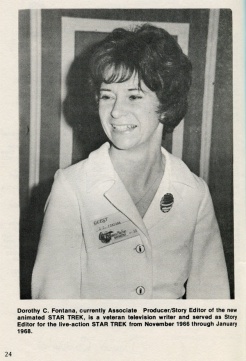
Fontana 1970sViewed now from the perspective of a fifty-year old female television writer and scholar, no longer merely a fan, I find the episode fascinating for what it says about the history of women writers — and the female characters they create — in television. In those days of heady chest-worshipping I didn’t know that the D. C. in D. C. Fontana stood for Dorothy Catherine. When I later learned that information from reading The Making of Star Trek, I took her success as a beacon for my own journey, as did many other future female television writers I came to meet throughout my career. While countless books have been written about the influence of the program on science fiction and on television in general, what I came to learn was the influence Star Trek wielded on bringing women into the industry — and how their participation changes the way female characters are portrayed.

Because of Fontana, future writers of future Trek franchises invited other female writers to pitch ideas so that, to my great joy twenty years after I stumbled upon the original Trek, I found myself in the offices of Star Trek: The Next Generation pitching ideas for stories involving what was still largely a boys club of characters. Sure, they had accepted two women into their continuing cast — both in ‘soft’ occupations as ship’s counselor and medical doctor and still under the command of Captain Picard. But the franchise had proved a stepping stone for a variety of female writers I admired (including Jane Espenson and Melinda M. Snodgrass) and I was excited to be among them. I never sold a story to that iteration of the show, but I kept watching — and kept noticing — that written by women, female characters were (and sadly are still) often more developed (in ways other than their chest measurements).

In “Paradise” that is true of what actress Nichelle Nichols is given to do as our cast regular female, Lt. Nyota Uhura (whose first name I never knew until the writing of this essay) and what Jill Ireland is given to do as the guest character, Spock’s former girlfriend, Leila (who in the tradition of sex objects was never provided a last name). Normally confined to dialogue discussing ‘hailing frequencies’ and only seen taking orders from Captain Kirk, in “Paradise” Uhura commits mutiny against her captain. He has to state for the Captain’s log that, “Lt. Uhura has effectively sabotaged all communications.” While all the male starship members also commit mutiny, Uhura is given one-on-one screen time with the lead actor to do so. Likewise, while Leila seems at first to only be demonstrating that the most perfect, porcelain-faced blonde can even be sexy in overalls, she was also spouting Thoreau (as in Henry David) and his brand of 19th century Transcendentalist philosophy to Spock — and to the audience. For a show airing at the height of the hippie movement, Leila served as a mouthpiece for their dream of peaceful co-existence, one not yet shared by other generations. In several online interviews Fontana has chosen Leila as one of her favorite characters, so we know much of what Leila says comes from Fontana’s own philosophies.

Of course, in the end television was then (and still is now) a man’s world so Uhura’s and Leila’s interests are eventually subsumed by Kirk’s desire to prove, “Man stagnates if he has no ambition, no desire to be more than he is.” This philosophy discounts ‘woman’ as part of ‘man’ and makes the female-gendered idea of creating peace and happiness submissive to the more male dominant idea of success defined by changing the world around him. Why is a love of nature, as evidenced in Spock’s line: “I have seen a dragon… but I’ve never stopped to look at clouds before, or rainbows” less of an ambition for man? Even the American Founding Fathers cared more for the land and its beauty than these final frontier founders seem to do as they travel the galaxy. Why is the existence of this previous girlfriend and the chance to hear “I love you” from a formerly feeling-less alien male, less of an ambition of (wo)man?
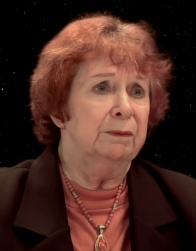
Fontana 2012Despite her straining to include her voice in this world, the male producer(s) still stamped their voice on the final product that became “This Side of Paradise”. Over the course of my career, I came to learn that Fontana shared that experience with many of the female writers who followed her, each one planting just enough seeds or dropping just enough breadcrumbs of her own opinion onto the fields of male creation for the rest of us ‘chick writers’ to follow. Where as a child I saw “This Side of Paradise” as an epic battle between sexy male leads, as an adult I see it as the continued battle for the hearts and minds of the audience waged by writers of different genders. It is a fight that several other sisters have carried on through the decades and one I’m willing to declare has been won by a relative newcomer to the scene, Shonda Rhimes. Through the creation of her own new frontier in Grey’s Anatomy, Rhimes provides male and female audiences alike with an all-inclusive world entirely conceived in a female mind. What do both the male and female doctors of Seattle Grace Hospital hope to provide their patients everyday? As Rodenberry provided a masculine ‘trek’ for man into the final frontier, the feminine goal Rhimes provides her characters is right there in the title of the hospital, ‘grace’. (And thanks to D. C. Fontana, Shonda chose to use her first name in her credits.)

All this musing makes me wonder how many young female writers are now coming to their careers because of a love of the way Patrick Dempsey’s chest ripples under his uniform shirt?

15 Two Steps Forward, One Step Back from “Why The Monkees Matter: Even 50 Years Later [Video] (49 seconds)

Enjoy This Clip? Watch this entire presentation and Buy Why The Monkees Matter: Teenagers, Television and American Pop Culture

From Denver Pop Culture Con 2019.

Wherever you go, you find Monkees fans and the Denver Popular Culture Con was no different.  Amid rooms full of caped crusaders and cosplay creations, I was initially not sure how many folks would attend a talk on a TV show from the 1960s – but happily I was met by a nice, engaged audience for my talk on Why the Monkees Matter  – and afterward they bought books!  What more could an author ask for?

15 Two Steps Forward, One Step Back from

Subscribe to Rosanne’s Channel and receive notice of each new video!


Transcript

In this episode, it works because they’re showing us a girl rock band, which was a little odd at the time. There were individual female singer-songwriters but we didn’t have of course a giant female rock band. The only bummer about this episode — kind of a throwback — is when the two groups figure the way to win this contest, of course, is to combine since they’re four girls and four boys. All of a sudden the four girls who played their own instruments in their own band are are go-go dancers than the boy’s band. So, you know, two steps forward, one step back. It happens, you know, it happens but I’m impressed with the women that I found on the show. I really didn’t expect that in a way that I could do a whole nother talk on The Big Bang Theory and what happened to the women on that show who all started out as neuro-scientists and then became just nuts about Sheldon, which is fine, but yeah, that’s a whole nother story.


Buy Why The Monkees Matter: Teenagers, Television and American Pop Culture

A hit television show about a fictitious rock band, The Monkees (1966-1968) earned two Emmys–Outstanding Comedy Series and Outstanding Directorial Acheivement in Comedy.

Capitalizing on the show’s success, the actual band formed by the actors, at their peak, sold more albums than The Beatles and The Rolling Stones combined, and set the stage for other musical TV characters from The Partridge Family to Hannah Montana. In the late 1980s, the Monkees began a series of reunion tours that continued into their 50th anniversary.

This book tells the story of The Monkees and how the show changed television, introducing a new generation to the fourth-wall-breaking slapstick created by Laurel and Hardy and the Marx Brothers.

Its creators contributed to the innovative film and television of 1970s with projects like Bob & Carol & Ted & Alice, The Mary Tyler Moore Show, Laugh-In and Welcome Back, Kotter. Immense profits from the show, its music and its merchandising funded the producers’ move into films such as Head, Easy Riderand Five Easy Pieces.

McFarland (Direct from Publisher) | Amazon | Kindle Edition | Nook Edition

Want to use “Why The Monkees Matter” in your classroom?

Order Examination Copies, Library and Campus Bookstore orders directly from McFarland

McFarland Company logo

Listen To The Podcast: Location as Character: The Craft of Writing Place Panel Panel at The Writers Guild Foundation [Audio]

Follow Rosanne on Instagram!

Listen To The Podcast: Location as Character: The Craft of Writing Place Panel Panel at The Writers Guild Foundation [Audio]

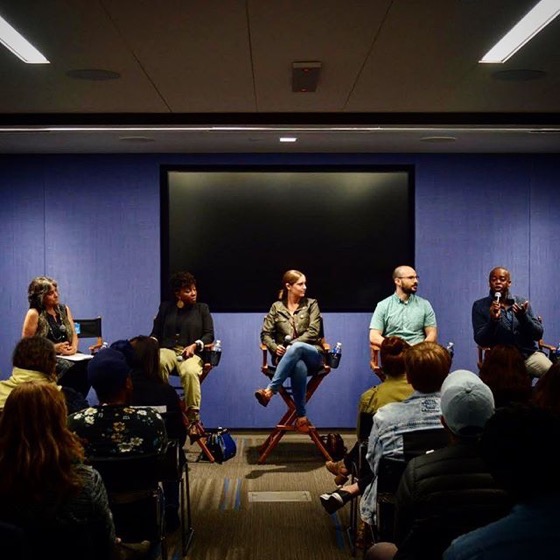
I really enjoyed being invited to moderate this Writers Guild Foundation panel co-hosted by Columbia Collge of Chicago’s Semester in LA program.

In honor of the co-host we chose to have a conversation about “Location as Character” – and for a kid from Cleveland, believe me, I know how much the place you come from infuses who you are – and how important it is for writers to properly portray the effect of location on the many characters who populate their programs. 

I was joined by a great collection of panelists from shows ranging from Queen Sugar to On Becoming a God in Central Florida to The Chi and Young Sheldon. Listen in when you have some time!

Listen to this podcast

Location as Character: The Craft of Writing Place Panel via Instagram

From @writersguildf – Writers Guild Foundation

We team up with @ColumbiaChi to talk about how locations inform and impact characters on TV with @qu33nofdrama, @SparksAnthony, Matt Lutsky, @RosanneWelch and Connor Kilpatrick.


* A portion of each sale from Amazon.com directly supports our blogs
** Many of these books may be available from your local library. Check it out!

14 Brains, Brawn, And The Monkees from “Why The Monkees Matter: Even 50 Years Later [Video] (55 seconds)

Enjoy This Clip? Watch this entire presentation and Buy Why The Monkees Matter: Teenagers, Television and American Pop Culture

From Denver Pop Culture Con 2019.

Wherever you go, you find Monkees fans and the Denver Popular Culture Con was no different.  Amid rooms full of caped crusaders and cosplay creations, I was initially not sure how many folks would attend a talk on a TV show from the 1960s – but happily I was met by a nice, engaged audience for my talk on Why the Monkees Matter  – and afterward they bought books!  What more could an author ask for?

14 Brains, Brawn, And The Monkees from

Subscribe to Rosanne’s Channel and receive notice of each new video!


Transcript

In this episode , poor Micky wants to go out with this girl and she falls for a big, beefy guy for a while, so he’s trying to get stronger. He’s trying do everything to make her like him. He doesn’t want her because she’s blond and pretty. He wants her because she’s beautiful and brilliant. That’s what makes her an attractive girl to him. That’s the really nice message for young girls right? And in the end the girl dumps him because she meets the boy on the beach who reads Proust and she thinks, “I want a man with a mind.” So only if Micky had done some reading but I think that’s like a creative message and then this episode “Some Like It Lukewarm” is very famous obviously it’s a riff on “Some Like It Hot” but they do a rock band contest and it turns out you have to be a co-ed band. So, of course, Davey has to dress a drag. We find out that the girl band — actually the girl is also dressed as a boy in order to compete. This is actually Dean Martin’s daughter, Deanna Martin, guest starred on the show and became good friends with Davy Jones for many years.


Buy Why The Monkees Matter: Teenagers, Television and American Pop Culture

A hit television show about a fictitious rock band, The Monkees (1966-1968) earned two Emmys–Outstanding Comedy Series and Outstanding Directorial Acheivement in Comedy.

Capitalizing on the show’s success, the actual band formed by the actors, at their peak, sold more albums than The Beatles and The Rolling Stones combined, and set the stage for other musical TV characters from The Partridge Family to Hannah Montana. In the late 1980s, the Monkees began a series of reunion tours that continued into their 50th anniversary.

This book tells the story of The Monkees and how the show changed television, introducing a new generation to the fourth-wall-breaking slapstick created by Laurel and Hardy and the Marx Brothers.

Its creators contributed to the innovative film and television of 1970s with projects like Bob & Carol & Ted & Alice, The Mary Tyler Moore Show, Laugh-In and Welcome Back, Kotter. Immense profits from the show, its music and its merchandising funded the producers’ move into films such as Head, Easy Riderand Five Easy Pieces.

McFarland (Direct from Publisher) | Amazon | Kindle Edition | Nook Edition

Want to use “Why The Monkees Matter” in your classroom?

Order Examination Copies, Library and Campus Bookstore orders directly from McFarland

McFarland Company logo

13 More On Women And The Monkees from “Why The Monkees Matter: Even 50 Years Later [Video] (1 minute)

Enjoy This Clip? Watch this entire presentation and Buy Why The Monkees Matter: Teenagers, Television and American Pop Culture

From Denver Pop Culture Con 2019.

Wherever you go, you find Monkees fans and the Denver Popular Culture Con was no different.  Amid rooms full of caped crusaders and cosplay creations, I was initially not sure how many folks would attend a talk on a TV show from the 1960s – but happily I was met by a nice, engaged audience for my talk on Why the Monkees Matter  – and afterward they bought books!  What more could an author ask for?

13 More On Women And The Monkees from

Subscribe to Rosanne’s Channel and receive notice of each new video!


Transcript

Every girl on the show that we meet — they have a job Jill is in the pilot. She works at the record store. She has a job. She sells records. She understands what the new music is. She’s working with the band trying to get them more attention. She’s a girl of substance. I had no idea. I really thought they’d all be cheerleaders and they’d be bubble heads and I’d be upset. April in The Monkees Get Out More Dirt is — who’s the actress? Julie Newmar from we mostly know from Catwoman from the original Batman. In this episode, all four boys fall for her but what they learn is the way to a woman’s heart is through her mind. So each of them takes on — one learns ballet, one learns classical music, one learns painting. They learn all learn something intellectual to impress her. It’s not about “Look at me. I’m hot. You should like me.” I think that’s adorable. I mean it’s all done in farce and cuteness but underneath it could easily have been cheerleaders — not to insult any cheerleaders in the world but we don’t do them well in the media. We make them out to be not very smart.


Buy Why The Monkees Matter: Teenagers, Television and American Pop Culture

A hit television show about a fictitious rock band, The Monkees (1966-1968) earned two Emmys–Outstanding Comedy Series and Outstanding Directorial Acheivement in Comedy.

Capitalizing on the show’s success, the actual band formed by the actors, at their peak, sold more albums than The Beatles and The Rolling Stones combined, and set the stage for other musical TV characters from The Partridge Family to Hannah Montana. In the late 1980s, the Monkees began a series of reunion tours that continued into their 50th anniversary.

This book tells the story of The Monkees and how the show changed television, introducing a new generation to the fourth-wall-breaking slapstick created by Laurel and Hardy and the Marx Brothers.

Its creators contributed to the innovative film and television of 1970s with projects like Bob & Carol & Ted & Alice, The Mary Tyler Moore Show, Laugh-In and Welcome Back, Kotter. Immense profits from the show, its music and its merchandising funded the producers’ move into films such as Head, Easy Riderand Five Easy Pieces.

McFarland (Direct from Publisher) | Amazon | Kindle Edition | Nook Edition

Want to use “Why The Monkees Matter” in your classroom?

Order Examination Copies, Library and Campus Bookstore orders directly from McFarland

McFarland Company logo

New Stephens College MFA in TV and Screenwriting One Sheet – Please Post and Share!

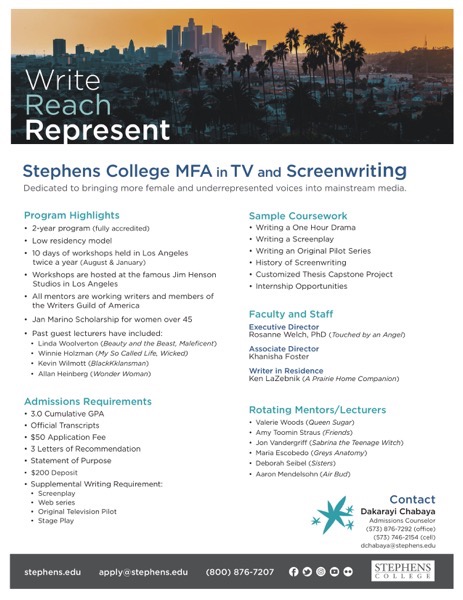
Here is our latest one sheet for the Stephens College MFA in TV and Screenwriting Program.

Applications are now open, so please share this flyer with our interested friends, family and students!

New Stephens College MFA in TV and Screenwriting One Sheet - Please Pos and Share!

Download a PDF Version – New Stephens College MFA in TV and Screenwriting One Sheet

Like Stephens College MFA in TV and Screenwriting on Facebook

Presenting “When Women Write Horror” Talk

Follow Rosanne on Instagram!

Presenting “When Women Write Horror” Talk

Presenting “When Women Write Horror” Talk

Cal Poly Pomona University Library

Watch the complete presentation


* A portion of each sale from Amazon.com directly supports our blogs
** Many of these books may be available from your local library. Check it out!

12 Women And The Monkees from “Why The Monkees Matter: Even 50 Years Later [Video] (1 minute 3 seconds)

Enjoy This Clip? Watch this entire presentation and Buy Why The Monkees Matter: Teenagers, Television and American Pop Culture

From Denver Pop Culture Con 2019.

Wherever you go, you find Monkees fans and the Denver Popular Culture Con was no different.  Amid rooms full of caped crusaders and cosplay creations, I was initially not sure how many folks would attend a talk on a TV show from the 1960s – but happily I was met by a nice, engaged audience for my talk on Why the Monkees Matter  – and afterward they bought books!  What more could an author ask for?

12 Women And The Monkees from

Subscribe to Rosanne’s Channel and receive notice of each new video!


Transcript

So let’s think about after 1966. How these people affected the world. The messages they put in the show shocked me in some ways. I recognized the politics. I kind of expected it. I vaguely remembered it. I was afraid going back to study the show being someone who studies feminist things it was going to be really annoying when it comes to girls and I’d be really embarrassed and I wouldn’t want to like the show anymore and then I noticed that every single female that they ever dated in 58 episodes was a woman of substance. Now granted she’s the Princess of Harmonica so we can giggle at that but a moment in the episode Davey says “Can’t you stay here with me?” — the dream of every American girl — and she says “No. I have to return to my country. I have responsibilities. I have a job to do.” I can’t just fall for a cute boy and quit which is a huge statement for a little 6 & 7 year old girl to be listening to. You mean I should be about something? But I really think that a lot of the seeds certainly of my feminism came from this period.


Buy Why The Monkees Matter: Teenagers, Television and American Pop Culture

A hit television show about a fictitious rock band, The Monkees (1966-1968) earned two Emmys–Outstanding Comedy Series and Outstanding Directorial Acheivement in Comedy.

Capitalizing on the show’s success, the actual band formed by the actors, at their peak, sold more albums than The Beatles and The Rolling Stones combined, and set the stage for other musical TV characters from The Partridge Family to Hannah Montana. In the late 1980s, the Monkees began a series of reunion tours that continued into their 50th anniversary.

This book tells the story of The Monkees and how the show changed television, introducing a new generation to the fourth-wall-breaking slapstick created by Laurel and Hardy and the Marx Brothers.

Its creators contributed to the innovative film and television of 1970s with projects like Bob & Carol & Ted & Alice, The Mary Tyler Moore Show, Laugh-In and Welcome Back, Kotter. Immense profits from the show, its music and its merchandising funded the producers’ move into films such as Head, Easy Riderand Five Easy Pieces.

McFarland (Direct from Publisher) | Amazon | Kindle Edition | Nook Edition

Want to use “Why The Monkees Matter” in your classroom?

Order Examination Copies, Library and Campus Bookstore orders directly from McFarland

McFarland Company logo

#FemaleFilmmakerFriday 01: Ava DuVernay

Its #femalefilmmakerfriday and this week we’re featuring a writer, producer, director who embodies all the values of the Stephens College MFA in TV and Screenwriting program: Ava DuVernay! (IMDB)

#FemaleFilmmakerFriday 01: Ava DuVernay

DuVernay is a writer, producer, director and distributor of independent film.

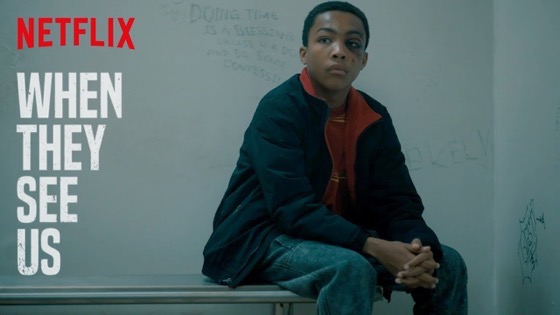
Winner of the Emmy, BAFTA and Peabody Awards, Academy award nominee Ava DuVernay is a writer, director, producer and film distributor. Her directorial work includes the historical drama SELMA, the criminal justice documentary 13TH and Disney’s A WRINKLE IN TIME, which made her the highest grossing black woman director in American box office history. Based on the infamous case of The Central Park Five, her next project is entitled WHEN THEY SEE US and will be released worldwide on Netflix in May 2019. Currently, she is overseeing production on her critically-acclaimed TV series QUEEN SUGAR, her new CBS limited series THE RED LINE and her upcoming OWN series CHERISH THE DAY. Winner of the 2012 Sundance Film Festival’s Best Director Prize for her micro-budget film MIDDLE OF NOWHERE, DuVernay amplifies the work of people of color and women of all kinds through her non-profit film collective ARRAY, named one of Fast Company’s Most Innovative Companies. DuVernay sits on the advisory board of the Academy of Television Arts and Sciences, and chairs the Prada Diversity Council. She is based in Los Angeles, California.

#FemaleFilmmakerFriday 01: Ava DuVernay


Follow and Like the Stephens College MFA in TV and Screenwriting

After the DTLA Film Festival Panel via Instagram

Follow Rosanne on Instagram!

After the DTLA Film Festival Panel

After the DTLA Film Festival Panel via Instagram

Moderating panels at local film festivals is a good way to highlight the great work of mentors like Maria Escobedo and to meet new possible mentors for MFA program like Peruvian filmmaker Donna Bonilla Wheeler. Here we are chatting after a panel on how Writers Can avoid implicit bias in their work at the DTLA film Festival in Los Angeles.