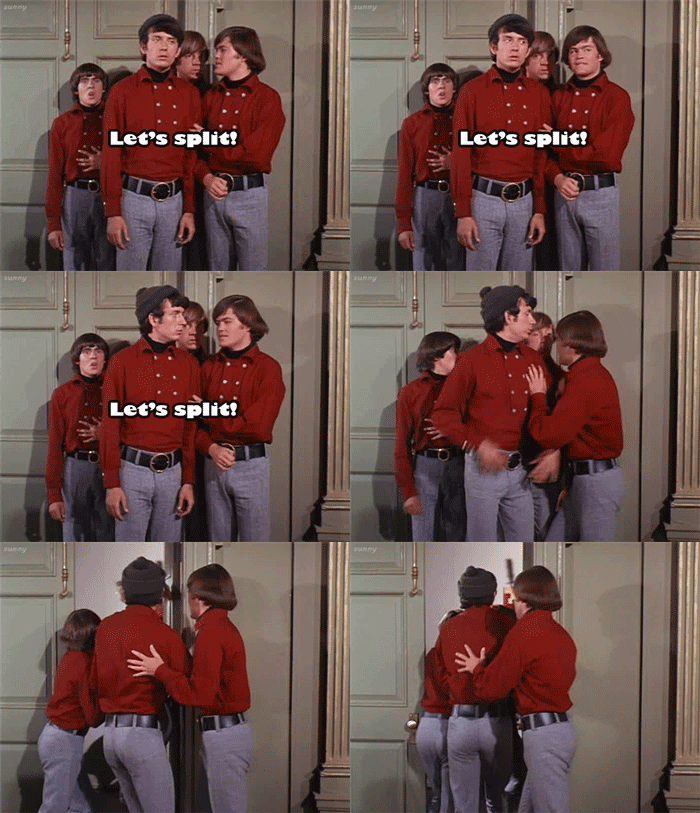
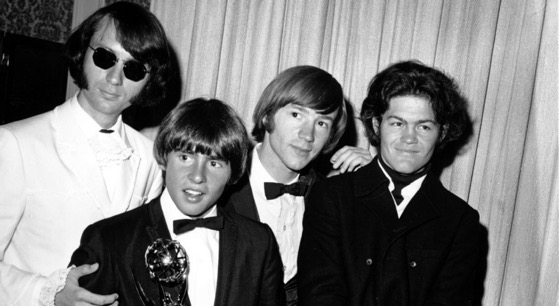
Okay, I’ll admit it. They’re not the “Fab Four.” In fact, they are best known for being the “Prefab Four.” Still, that amusing — if somewhat misleading — moniker should in no way deter The Monkees from gaining enshrinement in the Rock and Roll Hall of Fame in Cleveland, Ohio. For the 1960s pop music quartet of Michael Nesmith, Peter Tork, Micky Dolenz and the late Davy Jones, who created such chart-topping hits as “I’m a Believer,” “Daydream Believer” and “Last Train to Clarksville,” deserve to be on the scenic shores of Lake Erie as much as any of this year’s inductees.
* A portion of each sale from Amazon.com directly supports our blogs ** Many of these books may be available from your local library. Check it out! † Available from the LA Public Library
Rosanne Welch, PhD, Author of Why The Monkees Matter, presents “How The Monkees Changed Television” at a Cal State Fullerton Lunch Lecture on May 8, 2018.
In this talk, she shows how The Monkees, and specifically their presence on television, set the stage for large changes to come in the late 1960s.
Transcript
In this case, we are looking at Princess Bettina of Harmonica. She’s the first character that we meet — the first female in the pilot episode — take that back — the first episode that aired. The Pilot was not the first episode that aired because they felt it was too different from what the show became. So this was about the 6th one that was filmed and it became the first one on the air. So here it’s called Royal Flush and Princess Bettina comes to the United States and it turns out her guardian is trying to kill her because at the stroke of her 18th birthday she takes over the kingdom and he doesn’t get to be in charge anymore. So, of course, Davy saves her life on the beach from drowning in a little bikini thing, but at the end of the episode he asks her to stay with him here in the United States and she says no because I have responsibilities for the welfare of my people.
Rosanne Welch, PhD is a writer, producer and university professor with credits that include Beverly Hills 90210, Picket Fences, Touched by an Angel and ABC NEWS/Nightline. Other books include Why The Monkees Matter: Teenagers, Television and American Pop Culture (McFarland, 2017) and Women in American History: A Social, Political, and Cultural Encyclopedia and Document Collection (ABC-CLIO, 2017), named to the 2018 Outstanding References Sources List, by the Reference and User Services Association (RUSA), a division of the American Library Association. Welch has also published chapters in Torchwood Declassified: Investigating Mainstream Cult Television (I.B.Tauris) and The American Civil War on Film and TV: Blue and Gray in Black and White and Color (Lexington Books, 2018) and essays in Doctor Who and Race: An Anthology and Outside In Makes it So, and Outside in Boldly Goes (both edited by Robert Smith). By day she teaches courses on the history of screenwriting and on television writing for the Stephens College MFA in Screenwriting programs. Her talk “The Importance of Having a Female Voice in the Room” at the 2016 TEDxCPP is available on YouTube.
For her 5th Doctor Who lecture to the CPP community, Dr. Rosanne Welch discusses how society – and the show’s writing staff – prepared the audience for a major change in this 50-year franchise – the creation of the first Lady Doctor!
Transcript:
Then we have Rose who came into the new Doctor Who with Christopher Eccleston and stayed threw David and Rose is a interesting character because she looks like she’s not that smart — she’s a shop girl, she really can’t keep a job etc — but she always steps up to the plate when necessary. She’s always able to take care of The Doctor when he can’t and that’s a pretty powerful job if you want. And then we come to Martha — who some people think The Doctor didn’t treat very nicely because she was the girl after the girl he loved because he fell in love with Rose and then the new girlfriend shows up. But she’s not meant to be a girlfriend. Right? She’s meant to be a companion. Except that then she fell for him, which is always a bad thing. Don’t fall for a guy after the last relationship, but I think you can find that that shows us strength too. First of all, one of the best storylines was for a whole year she walked the Earth to tell people about The Doctor in order to save his life. It is a pretty cool episode, right? So that’s one thing, She essentially saves his life. That’s a strength.
Rosanne Welch PhD teaches the History of Screenwriting and One-Hour Drama for the Stephens College MFA in Screenwriting.
Writing/producing credits include Beverly Hills 90210, Picket Fences, ABCNEWS: Nightline and Touched by an Angel. In 2016 she published the book Why The Monkees Matter: Teenagers, Television and American Pop; co-edited Women in American History: A Social, Political, and Cultural Encyclopedia; and placed “Transmitting Culture Transnationally Via the Characterization of Parents in Police Procedurals” in the New Review of Film and Television Studies. Essays appear in Torchwood Declassified: Investigating Mainstream Cult Television and Doctor Who and Race: An Anthology. Welch serves as Book Reviews editor for Journal of Screenwriting and on the Editorial Advisory Board for Written By magazine, the magazine of the Writers Guild.
It’s not quite the loss of a Beatle. But it’s obviously up there in pop culture significance, considering how TV and other media played up Wednesday’s news of the death of Davy Jones, star of TV touchstone The Monkees and the top-selling rock band of the same name.
Some will scoff — The Monkees were a manufactured group, their ’60s show looks silly, et al. But Davy Jones’ death seemed to strike a chord in baby boomers — and even in younger culture vultures, who still hear Monkees tunes like “Daydream Believer” on oldies radio, on movie soundtracks, or as background sound in public places.
Maybe it’s because The Monkees stand for a particular pop culture moment, at a confluence of events, trends and fault lines. The show’s 1966-68 TV run essentially defines the morph of what we’ll call the Mad Men ’60s — on-the-surface simple, sunny, neat — into the Vietnam-era, with all of its messy, moody, culture-shift conflicts.
* A portion of each sale from Amazon.com directly supports our blogs ** Many of these books may be available from your local library. Check it out! † Available from the LA Public Library
Rosanne Welch, PhD, Author of Why The Monkees Matter, presents “How The Monkees Changed Television” at a Cal State Fullerton Lunch Lecture on May 8, 2018.
In this talk, she shows how The Monkees, and specifically their presence on television, set the stage for large changes to come in the late 1960s.
Transcript
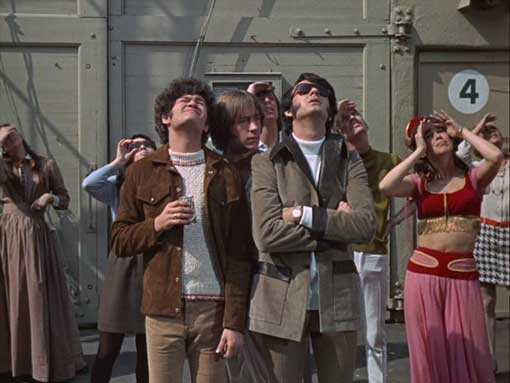
When I think about feminism, gender, and sexuality — again, I watched all the episodes again — and the impression, when I was a kid, was every episode was about Davy falling in love with someone. Turned out that wasn’t true. Turns out the other boys fell in love too, but even more so there were lots of different genres. If you think about TV. Sometimes they did a horror episode. Sometimes they did an entire music video for the whole half an hour — running through the streets of Paris. Sometimes they did a rom-com which was Davy or someone falling in love. Sometimes they did an old West show. So they introduced students and children to lots of different kinds of genres which I think was pretty fun too.
Rosanne Welch, PhD is a writer, producer and university professor with credits that include Beverly Hills 90210, Picket Fences, Touched by an Angel and ABC NEWS/Nightline. Other books include Why The Monkees Matter: Teenagers, Television and American Pop Culture (McFarland, 2017) and Women in American History: A Social, Political, and Cultural Encyclopedia and Document Collection (ABC-CLIO, 2017), named to the 2018 Outstanding References Sources List, by the Reference and User Services Association (RUSA), a division of the American Library Association. Welch has also published chapters in Torchwood Declassified: Investigating Mainstream Cult Television (I.B.Tauris) and The American Civil War on Film and TV: Blue and Gray in Black and White and Color (Lexington Books, 2018) and essays in Doctor Who and Race: An Anthology and Outside In Makes it So, and Outside in Boldly Goes (both edited by Robert Smith). By day she teaches courses on the history of screenwriting and on television writing for the Stephens College MFA in Screenwriting programs. Her talk “The Importance of Having a Female Voice in the Room” at the 2016 TEDxCPP is available on YouTube.
For her 5th Doctor Who lecture to the CPP community, Dr. Rosanne Welch discusses how society – and the show’s writing staff – prepared the audience for a major change in this 50-year franchise – the creation of the first Lady Doctor!
Transcript:
Then we had Nyssa who I really enjoyed. Nyssa came in with the Peter Davison era with Teegan — who’s alright. Teegan has her moments. But Nyssa is an alien, super intelligent from her alien race and at the end of her time with The Doctor — thy end up on a planet where there’s a leper colony and nobody is taking care of these people and rather than — again — continuing to travel with The Doctor she chooses to stay and be a caregiver to these people. She’s a doctor so she can take care of them and imagines that she will find a cure for this if she stays behind and he’s like “well maybe this will never be cured” and she’s like “it won’t ever be cured if no one tries.” So she’s willing to give it that time which I think is a beautiful strength being evidenced by a female character. Not that hard.
Rosanne Welch PhD teaches the History of Screenwriting and One-Hour Drama for the Stephens College MFA in Screenwriting.
Writing/producing credits include Beverly Hills 90210, Picket Fences, ABCNEWS: Nightline and Touched by an Angel. In 2016 she published the book Why The Monkees Matter: Teenagers, Television and American Pop; co-edited Women in American History: A Social, Political, and Cultural Encyclopedia; and placed “Transmitting Culture Transnationally Via the Characterization of Parents in Police Procedurals” in the New Review of Film and Television Studies. Essays appear in Torchwood Declassified: Investigating Mainstream Cult Television and Doctor Who and Race: An Anthology. Welch serves as Book Reviews editor for Journal of Screenwriting and on the Editorial Advisory Board for Written By magazine, the magazine of the Writers Guild.
Wikipedia: “Dolenz, Jones, Boyce & Hart starred in their own 1976 TV special called The Great Golden Hits of the Monkees Show, which appeared in syndication. It featured a medley of other Boyce and Hart songs, as well as the songs they had produced for the Monkees. Strangely, it did not include any songs from their new album.”


![14 Women With A Sense Of Duty from How The Monkees Changed Television [Video] (0:53)](https://rosannewelch.com/wp-content/uploads/2018/08/monkees-tv-14-women-duty.jpeg)
![25 Rose and Martha Jones from Gender Diversity in the Who-niverse [Video] (0:57)](https://rosannewelch.com/wp-content/uploads/2018/08/gender-dw-25-rose-martha.jpeg)
![13 More Than Just a Rom-Com from How The Monkees Changed Television [Video] (0:40)](https://rosannewelch.com/wp-content/uploads/2018/08/monkees-tv-13-rom-com.jpeg)

![24 Nyssa from Gender Diversity in the Who-niverse [Video] (0:42)](https://rosannewelch.com/wp-content/uploads/2018/08/gender-dw-24-nyssa.jpeg)
![More on the Monkees: Dolenz, Jones, Boyce & Hart ~ 1976 TV Special (Part 1) [Video]](https://rosannewelch.com/wp-content/uploads/2018/08/dolenz-jones.jpg)