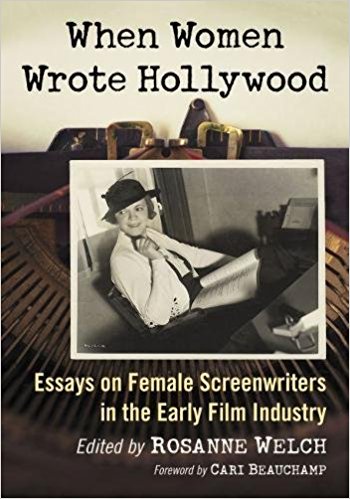
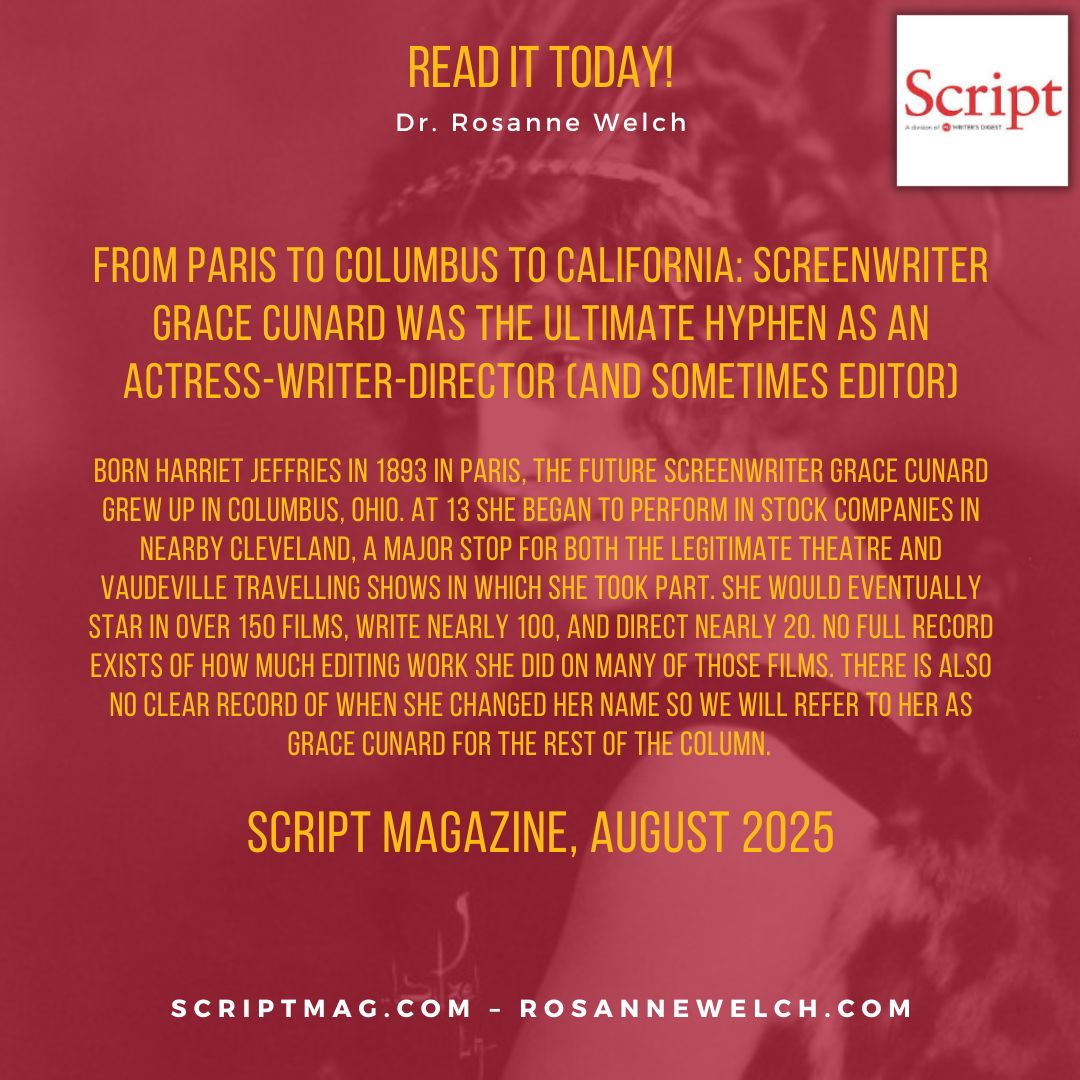
In the Silent Era, before the existence of the Hays Code (and largely a cause for it), many female screenwriters wrote heroines who flouted the brazen sexual freedom of the new century, a specialty of Josephine “Jo” Lovett. Born in October 1877 in San Francisco Lovett would spend some time as a lead actress on the Broadway stage before moving to Los Angeles to both act and write what were called scenarios for the bulk of her career.
Born on April 25, 1899 in St. Louis, Missouri to Alice Kern and Robert M. Yost, Dorothy moved to Los Angeles to work in the burgeoning film industry and clearly succeeded in that goal. By the time she died in 1967 Yost had written over 80 films and achieved what many other writers did not – thriving in both Silent Films and into the Sound Era. Interestingly, it was her foray into film that brought her journalist brother Robert Yost into the film industry after she found her footing there. Her first screenwriting credit came in 1920, his in 1935 after some years on the staff of local newspapers, as publicity director for Fox West Coast Studios and finally head of the scenario department for Fox.
It’s the story of Pippa Latour, the last surviving female radio operator who was parachuted into occupied France to travel from hidden radio to hidden radio, sending back information to help the Allies land in Normandy on D-Day. She wasn’t going to tell her story until her sons convinced her it would help people understand those times and the ultimate sacrifice many other radio operators made.
As a Doctor Who fan it was cool to see Noor Inayat Khan mentioned as she appeared as a historic figure in the Jodie Whittaker era in “Spyfall, Part 2”, the 2nd episode of series 12. I mention Noor, in a lecture I’ve given about all the feminism show runner Chris Chibnall put into that era, including having the Doctor meet a strong collection of historic females: “She is Wise and Unafraid: Writing the 1st Female Doctor and a Diverse Universe for her to Protect”:
In September 1944 Noor was executed at the Dachau concentration camp along with fellow agents Yolande Beekman, Madeleine Damerment and Eliane Plewman – all women who had volunteered for these deeply dangerous missions. Reading books about female heroes is a great way to spend a rainy day – and find some more amazing stories that ought to be adapted into films or included in our other writing as often as possible!
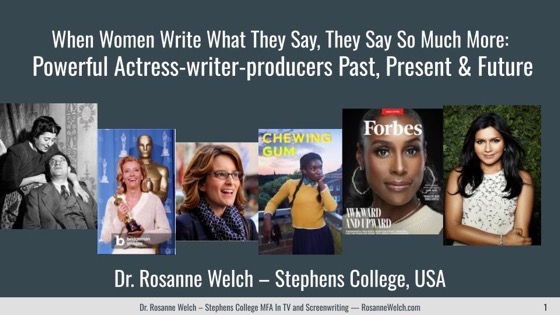
“When Women Write What They Say, They Say So Much More: Powerful Actress-writer-producers Past, Present & Future”.
It covers writers like Emma Thompson, who adapted Jane Austen’s Sense and Sensibility, in which she starred as Eleanor, and Gertrude Berg, creator, writer, and star of The Goldbergs, and then everyone from Tina Fey to Issa Rae, to Mindy Kaling to Lena Waithe. This presentation discusses the way women writing their own characters, dialogue, and worlds into existence impacts the audience, the industry, and the way women are seen in society.
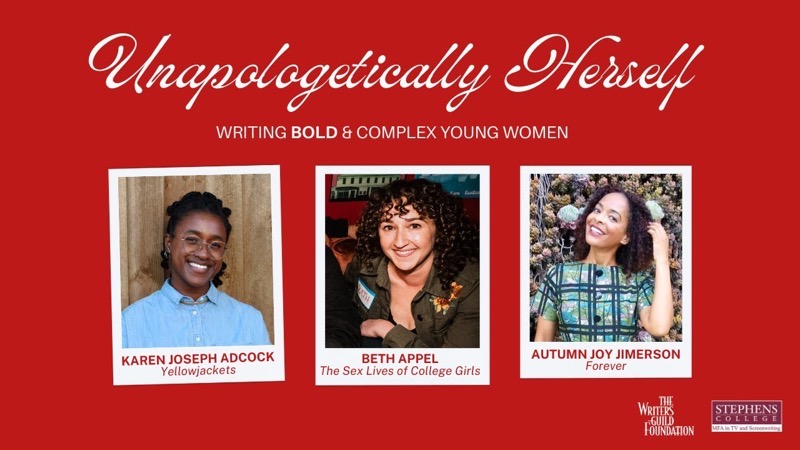
Now available to stream is our latest panel, “Unapologetically Herself: Writing Bold and Complex Young Women”. I always try to include one of our MFA alums who have gained spots on TV shows so this one has Alexandra Fernandez who has been on the writing staff of Station 19. Other panelists for this event were Karen Joseph Adcock (Yellowjackets), Beth Appel (The Sex Lives of College Girls), and Stephens alum!!, and Autumn Joy Jimerson (Forever).
Several past WGA panels have included such screenwriters as Marta Kauffman (Creator and Executive Producer of Grace and Frankie), Lucia Aniello (Co-Creator, Executive Producer, and Director of Hacks), Meg DeLoatch (Executive Producer of The Neighborhood and Family Reunion),Joan Rater (A Small Light); and Nia Vardalos (My Big Fat Greek Wedding – and sequels). You can check those out here on our Stephens College MFA in TV and Screenwriting website.
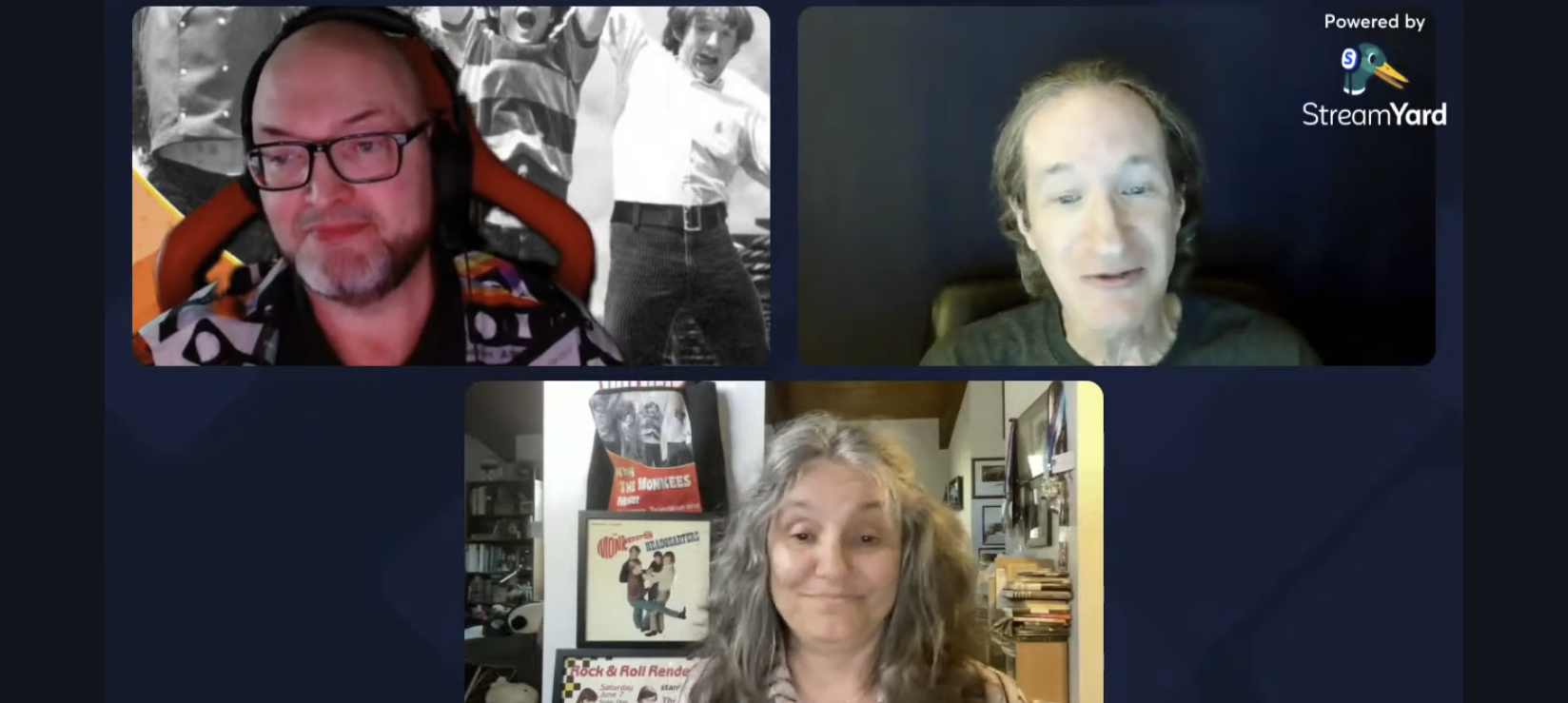
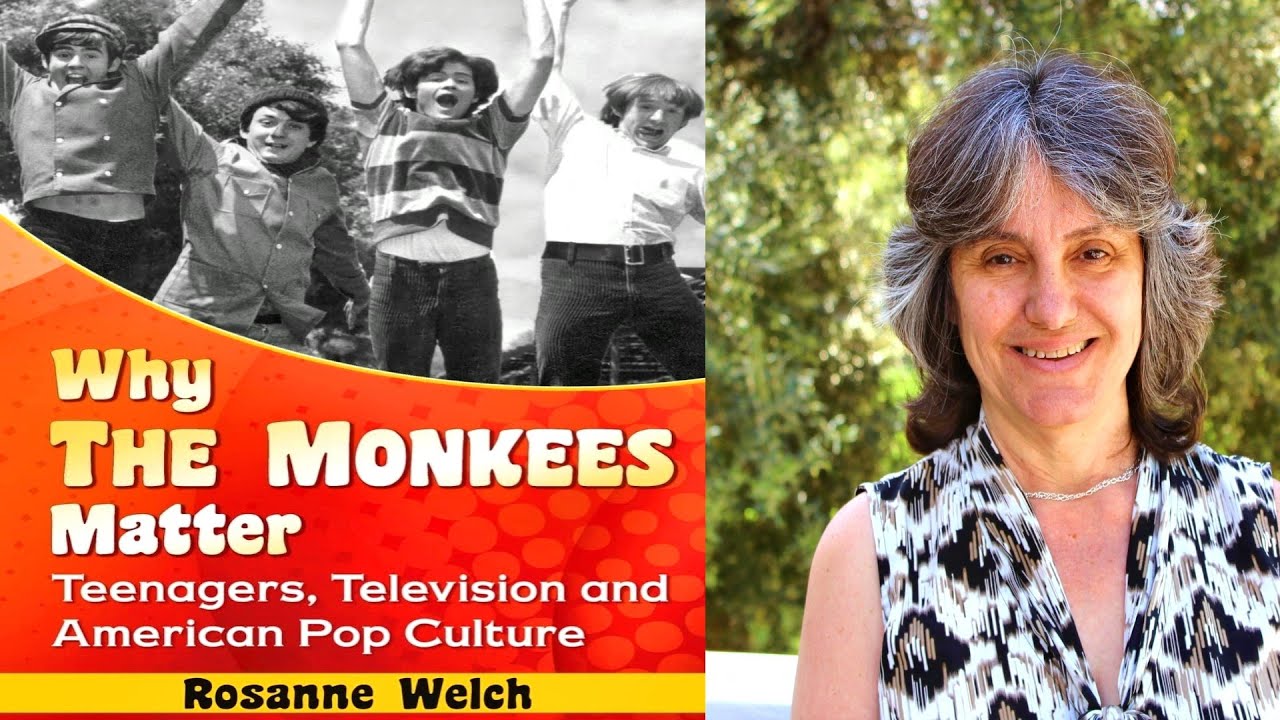
I had a great conversation about Why The Monkees Matter with the two hosts of “Johnny D’s Rock n Roll PhD”. Often, I speak with people who know the music more than the show – or the show more than the music. Here, both hosts had strong knowledge about both, and then we found out he shared the same top 1 songs as our favs.
Watch the video to learn about the many things the TV show taught us about friendship, going against authority and the patriarchy, and living a life full of passion for art above all things commerce – with lots of hidden nods toward the counter culture of the day (like rescuing a giant marijuana plant from misuse by supervillains who would corrupt its powerful fumes for evil). Yeah, they did a whole show about that!