Did you know there was an Italian Heritage Month? And that it is October?
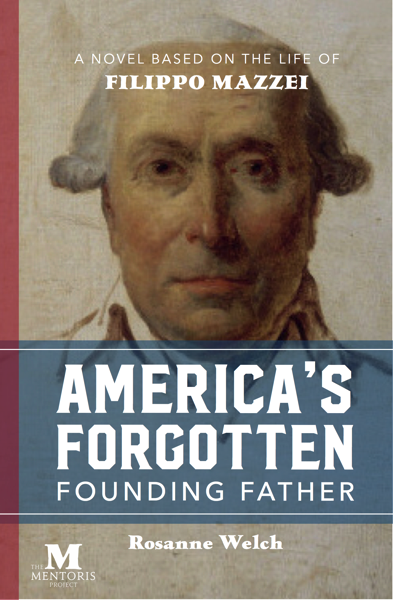
It was declared in 1989 so stay tuned to some fun things I’ll be posting this month to celebrate the contributions Italians have made to America since the days even before the country was founded (which you can learn about in my book “America’s Forgotten Founding Father: Filippo Mazzei”.
ITALIAN GENEALOGY: DISCOVERING YOUR ANCESTRAL RECORDS IN ITALY & THE USA – ITALIAN CULTURAL INSTITUTE (OCT. 14, 2017)
Taking place at the Italian Cultural Institute (IIC) this two-day workshop offers practical methods for researching documents relevant to families that emigrated from Southern Italy to the U.S. No knowledge of Italian is needed. Event recognized by the Consulate General of Italy in Los Angeles. Two sessions, $90 (non-member) / $85 (IIC members). Info and registration at (310) 824-7408 or classes.iicla@esteri.it.
Today’s Stephens College newsletter has a great piece about the Los Angeles launch party for When Women Wrote Hollywood with details about our upcoming launch at the Skylar Bookstore in Columbia, Missouri during the Citizen Jane Film Festival. — Rosanne
Book launch party on Aug. 11 in L.A. Pictured (L-to-R): Sarah Phillips ’17 M.F.A., Khanisha Foster ’17 M.F.A. (with her daughter), Lauren Smith ’17 M.F.A., Laura Kirk ’17 M.F.A., Amelia Phillips ’17 M.F.A., Julie Berkobien ’17 M.F.A., Toni Anita Hull ’04 B.F.A., ’17 M.F.A. and Dr. Rosanne Welch, book editor/Stephens professor.
Stephens College’s M.F.A. program now proudly boasts “When Women Wrote Hollywood,” a book of essays that focuses on the lives of female screenwriters of Golden Age Hollywood. The book, which published in July, is written by members of the inaugural graduating class of the Stephens M.F.A. in TV and Screenwriting. In the collection of 23 essays, Stephens Class of 2017 alumni write about female writers like Anita Loos, Adela Rogers St. Johns, and Gene Gauntier, whose work helped create unforgettable stories and characters beloved by audiences — but whose names are excluded from most film histories.“The mission of our M.F.A. program matched the mission of this book brilliantly — to increase the number of female screenwriters and female-centric stories told in Hollywood,” said Dr. Rosanne Welch, the book’s editor, and a Stephens assistant professor. She said her students used the essays as a way of thanking the earlier pioneering female writers who came before them.“When I introduce our Screenwriting History course, I remind students that we stand on the shoulders of those who came before us,” said Welch, a veteran television writer and scholar of screenwriting history. “Students are shocked at how many of these women were left out of most history books and are passionate about researching them for their final projects. When I read this first batch of essays, I knew they were worthy of publication.”The book is available on Amazon. It can also be purchased during Stephens’ Alumnae Leaders Weekend (Nov. 2-3) at the coinciding Citizen Jane Film Festival. In addition, a book launch event with local contributors will be held from 1-3 p.m. on Nov. 3 at Skylark Bookstore in downtown Columbia. Books can be purchased and signed by the authors.
“In an interview with Pamela Green the director of the soon to be released documentary Be Natural, a film that takes the exploration of Alice Guy Blaché’s life and career to new depths, Green shared, “Anytime you mention early cinema, she has to be mentioned. If you talk about Hollywood before Hollywood, she has to be mentioned. If you talk about an artist and an entrepreneur at the time, she has to be mentioned.””
The Nature and Genius of Alice Guy Blaché Khanisha Foster
* A portion of each sale from Amazon.com directly supports our blogs ** Many of these books may be available from your local library. Check it out! † Available from the LA Public Library
To highlight the wonderful yet largely forgotten work of a collection of female screenwriters from the early years of Hollywood (and as a companion to the book, When Women Wrote Hollywood) we will be posting quick bits about the many films they wrote along with links to further information and clips from their works which are still accessible online. Take a few moments once or twice a week to become familiar with their names and their stories. I think you’ll be surprised at how much bold material these writers tackled at the birth of this new medium. — Rosanne Welch
The Grand Passion is a 1918 American silent western film directed by Ida May Park and starring Lon Chaney.[1] It is not known whether the film currently survives.[1]
As described in a film magazine,[2] Dick Evans (Stowell), boss of Powderville, decides to start a newspaper and support it through coerced advertising from the businesses in the town. He hires Jack Ripley (Mulhall), a New York newspaperman, to be its editor. Viola (Phillips), niece of Paul Argos (Chaney), arrives on the same train as Ripley. Forming a relationship with her, Evans decides to clean up the town. In the meantime, Viola has been kidnapped and hidden in a roadhouse on the other side of the tracks. Evans and Ripley rescue her but incur the enmity of the denizens of the district. They attack the newspaper office and, in the face of defeat, Evans orders Ripley to escape with Viola. When she discovers that Evans is missing, she returns to the burning town and discovers him wounded. She declares her love and indications are that he will survive to claim it. — Wikipedia
* A portion of each sale from Amazon.com directly supports our blogs ** Many of these books may be available from your local library. Check it out! † Available from the LA Public Library
Rosanne Welch, PhD, Author of Why The Monkees Matter, presents “How The Monkees Changed Television” at a Cal State Fullerton Lunch Lecture on May 8, 2018.
In this talk, she shows how The Monkees, and specifically their presence on television, set the stage for large changes to come in the late 1960s.
Transcript
…And then there’s an episode called “99 Pound Weakling” where Micky falls in love with a girl and look how he defines her. It’s about her intelligence. Two words about how smart she is. Only one word about how pretty she is. So it’s her smarts that makes him want her and go through all this trouble to try and get muscles and whatnot and it’s cute, but never did they want a girl just because she was pretty and I thought that was particularly unexpected in an era when — in The Big Bang Theory which is having its 250th episode this week, which is lovely. It really is all about who’s going to have sex with who next week. Right? I mean that’ what the show devolved to in terms of their personal relationships and this did not. Now, I have to grant you that, back in the day, they couldn’t discuss that on television, but they didn’t even go to a point where it was about getting a beautiful girl. it was about getting a smart girl. So that strikes me as very cool.
Rosanne Welch, PhD is a writer, producer and university professor with credits that include Beverly Hills 90210, Picket Fences, Touched by an Angel and ABC NEWS/Nightline. Other books include Why The Monkees Matter: Teenagers, Television and American Pop Culture (McFarland, 2017) and Women in American History: A Social, Political, and Cultural Encyclopedia and Document Collection (ABC-CLIO, 2017), named to the 2018 Outstanding References Sources List, by the Reference and User Services Association (RUSA), a division of the American Library Association. Welch has also published chapters in Torchwood Declassified: Investigating Mainstream Cult Television (I.B.Tauris) and The American Civil War on Film and TV: Blue and Gray in Black and White and Color (Lexington Books, 2018) and essays in Doctor Who and Race: An Anthology and Outside In Makes it So, and Outside in Boldly Goes (both edited by Robert Smith). By day she teaches courses on the history of screenwriting and on television writing for the Stephens College MFA in Screenwriting programs. Her talk “The Importance of Having a Female Voice in the Room” at the 2016 TEDxCPP is available on YouTube.
To highlight the wonderful yet largely forgotten work of a collection of female screenwriters from the early years of Hollywood (and as a companion to the book, When Women Wrote Hollywood) we will be posting quick bits about the many films they wrote along with links to further information and clips from their works which are still accessible online. Take a few moments once or twice a week to become familiar with their names and their stories. I think you’ll be surprised at how much bold material these writers tackled at the birth of this new medium. — Rosanne Welch
Ida May Park (December 28, 1879 – June 13, 1954)[1] was an American screenwriter and film director of the silent era, in the early 20th century. She wrote for more than 50 films between 1914 and 1930, and directed 14 films between 1917 and 1920.[2] She was born and died in Los Angeles, California. She was married to film director and producer Joseph De Grasse, with whom she was regularly teamed at Universal.[3]
Park got her start in the entertainment industry as a stage actress when she was fifteen years old. During her time in the theatre she met her future husband, Joseph De Grasse, also an actor. When Pathé hired De Grasse in 1909, Park was also hired as a writer. Together they were hired by Universal.[4]
The first screenplay that she wrote was titled A Gypsy Romance which was developed into a short scenario by director Wallace Reid. Reid also directed the next scenario that she wrote, The Man Within.[2] Park then started to work with De Grasse who directed the next several pieces that she wrote. The two worked on multiple shorts and scenarios together over several years. Their first joint project was the short Her Bounty (1914), and their first feature-length film was Father and The Boys (1915). Most of the titles that the two worked on together were for Universal’s Bluebird label.[5] Park made her solo directorial debut in 1917 when she directed The Flashlight[6] starring Universal’s top dramatic actress Dorothy Phillips;[4] after this picture, she and DeGrasse took turns directing Bluebird projects featuring Phillips.[6] She went on to direct 13 more films, many of which were deemed “women’s features”.[7] — Wikipedia
* A portion of each sale from Amazon.com directly supports our blogs ** Many of these books may be available from your local library. Check it out! † Available from the LA Public Library
While the workers cleared the area intended for the main house, Filippo chose the name Colle, in honor of the area in Tuscany where he was born, Colle di Val d’Elsa. The men lived on Mulberry Row and Filippo stayed on as a guest at Monticello while the workers built his home.
All the video and audio you see here on the blog and Facebook is also available directly to your computer, tablet or phone automatically when you subscribe for free!
Never miss another talk or clip as I teach and speak around the neighborhood and around the world!
For her 5th Doctor Who lecture to the CPP community, Dr. Rosanne Welch discusses how society – and the show’s writing staff – prepared the audience for a major change in this 50-year franchise – the creation of the first Lady Doctor!
Transcript:
Then finally we ended with the Peter Capaldi era — we ended with Bil Potts, who had the strength — probably spoilers. If you don’t watch the show — you have to watch the show. She ends up being converted into a Cyberman, but she doesn’t — she’s the only person to have that happen to her who doesn’t lose her own humanity. She knows who she is and that isn’t supposed to happen when you’re converted right? Then you/re just a talking robot and nobody cares. So that’s how strong she is. She maintains her humanity in the face of that. So, we’ve had a ton of strong women. A ton of strong women across the years. Busting that gender stereotype that women need to be saved. On Doctor Who mostly women are helping save the day and save him.
Rosanne Welch PhD teaches the History of Screenwriting and One-Hour Drama for the Stephens College MFA in Screenwriting.
Writing/producing credits include Beverly Hills 90210, Picket Fences, ABCNEWS: Nightline and Touched by an Angel. In 2016 she published the book Why The Monkees Matter: Teenagers, Television and American Pop; co-edited Women in American History: A Social, Political, and Cultural Encyclopedia; and placed “Transmitting Culture Transnationally Via the Characterization of Parents in Police Procedurals” in the New Review of Film and Television Studies. Essays appear in Torchwood Declassified: Investigating Mainstream Cult Television and Doctor Who and Race: An Anthology. Welch serves as Book Reviews editor for Journal of Screenwriting and on the Editorial Advisory Board for Written By magazine, the magazine of the Writers Guild.
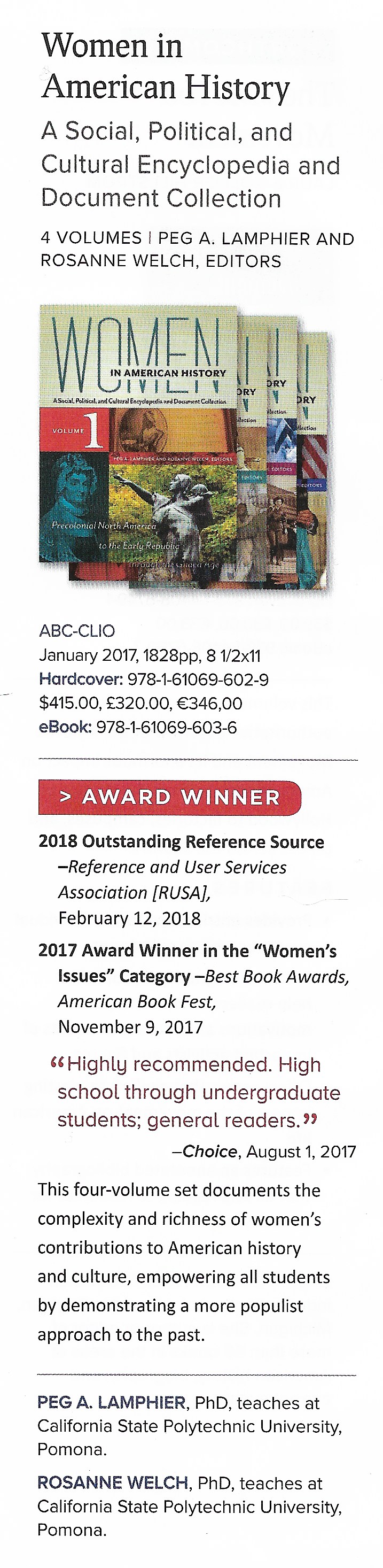
I’m not one for printed catalogs much these days (to save trees if nothing else) but it was fun when the new ABC-Clio catalog appeared in my mailbox. That’s because it lists the Women in American History: A Social, Political, and Cultural Encyclopedia and Document Collection that I co-edited with Peg Lamphier in this catalog. More importantly, it has the happy “Award Winning” banner on its page thanks to our 4 volume set being gamed to the 2018 Outstanding References Sources List, by the Reference and User Services Association (RUSA), a division of the American Library Association.
Nice to have the right to use the phrase ‘Award-Winning” about my own work.






![18 All About Intelligence from How The Monkees Changed Television [Video] (0:48)](https://rosannewelch.com/wp-content/uploads/2018/09/monkees-tv-18-intelligence.jpeg)




![29 Bill Potts and Women Saving The Doctor from Gender Diversity in the Who-niverse [Video] (0:42)](https://rosannewelch.com/wp-content/uploads/2018/09/gender-dw-29-bill-potts-women.jpeg)