Why The Monkees Matter: Teenagers, Television and American Pop Culture

On Screenwriting and Media with Dr. Rosanne Welch
Writing, Film, Television and More!
It was lovely to read another supportive review of Why The Monkees Matter – this one by Derham Groves writing for The Journal of American Culture. Happily, I had the pleasure of meeting with Derham when he was in Los Angeles for a conference. We shared a lovely dinner at the Hollywood/Highland complex while he told me the plans for a Monkees 50th anniversary of their concert tour of Australia at his home base, the Melbourne University library. If you live in Melbourne, check it out. — Rosanne
The publication of Why The Monkees Matter: Teenagers, Television, and American Pop Culture by Rosanne Welch happily coincided with the fiftieth anniversary of The Monkees—both the TV show and the pop group. In response to casting calls in The Hollywood Reporter and Daily Variety in 1965, American performers Mike Nesmith (b. 1942), Peter Tork (b. 1942), and Micky Dolenz (b. 1945) and English performer Davy Jones (1945-2012) were plucked from the 400 hopefuls who answered the ads to play the four members of a fictitious, struggling, garage band in a new teen comedy TV series, both to be called The Monkees. While Nesmith and Tork were unknown to the general public, Dolenz (as Mickey Braddock) had starred as “Corky” in the TV series Circus Boy (19561958), and Jones had played “The Artful Dodger” in the original Broadway production (1963) of the musical Oliver! The Monkees TV series ran from 1966 to 1968, while The Monkees pop group broke up in 1971, then reformed again in 1989.
Many critics and historians who have discussed The Monkees in the past have focused mostly on the group’s music, whereas Welch focuses mostly on the TV series. However, it is almost impossible to separate one from the other. The way in which The Monkees was formed standard for the cast of a TV show but seen by many as “inauthentic” for the members of a band—casts doubts about the musicianship of Nesmith, Tork, Dolenz, and Jones (unfairly, both Welch and I agree). When The Monkees toured Australia in 1968 (I was twelve years old and remember it very well), a TV reporter in Brisbane impertinently asked Jones: “When do you think you might break up and try something like music?” Jones responded by throwing a glass of water in the reporter’s face, to which he retaliated by doing likewise to Jones. (The Canberra Times, 23 September 1968).
Welch was right not to get bogged down too much by the controversy over the merit of The Monkees’ music, which is surely “old hat” anyway. Firstly, at least three of the group’s hits “I’m a Believer” (1966), “Last Train to Clarksville” (1966), and “Daydream Believer” (1967)—are widely recognized nowadays as “standards” of the era. Secondly, the two manifestations of The Monkees have both stood the test of time: the TV show has endured thanks initially to reruns, then to DVD, and now to YouTube; while the pop group’s three surviving members continue to perform into their seventies, most recently in 2016 to celebrate their fiftieth anniversary.
The four actor—musicians were hired to essentially play caricatures of themselves on The Monkees. This was underpinned by the decision to use their own given names on the show, that is, “Mike,” “Peter,” “Micky,” and “Davy.” As such, The Monkees were following a tradition established by some of America’s greatest comedians, including Jack Benny, Burns and Allen, Laurel and Hardy, Lucille Ball, and The Three Stooges. But The Beatles had the greatest effect on The Monkees. The English pop group influenced The Monkees’ zoomorphic name and the cute misspelling of “monkeys”; the group’s gender and size and particular mix of personalities; and the group’s zany antics on the TV show, which were modeled on those of The Beatles in their hit films, A Hard Day’s Night (1964) and Help! (1965). Coincidentally, Davy Jones and the Broadway cast of Oliver! performed on The Ed Sullivan Show on the same night in 1964 as The Beatles did. “I watched The Beatles from the side of the stage,” Jones recalled. “I saw the girls going crazy, and I said to myself, ‘This is it, I want a piece of that'” (Los Angeles Times, 1 March 2012).
Each chapter of Why The Monkees Matter looks at a different aspect of the TV series, such as its contribution to American counterculture in the 1960s; how feminism, gender, and sexuality were played out on the show; the role the scriptwriters played in making The Monkees a success; how the personalities of “Mike,” “Peter,” “Micky,” and “Davy” evolved over the course of the TV series’ two seasons and fifty-eight episodes and so on. But a constant theme throughout Welch’s book is metatextuality on The Monkees, that is, the two levels of dialogue that were going on one between the actor—musicians on the set and the other between the actor—musicians and the TV audience. While this was nothing new on television (Jack Benny and George Burns, mentioned above, both often interrupted the action to directly speak to or look at the TV audience), The Monkees introduced metatextuality to a new generation and, what is more, did it in fresh new ways, such as including outtakes at the end of the shows. While this is regularly done nowadays, it was rather “shocking” in 1966—and certainly very “hip.”
—Derham Groves, University of Melbourne
Why The Monkees Matter: Teenagers, Television and American Pop Culture
McFarland (Direct from Publisher) | Amazon | Kindle Edition | Nook Edition
** Buy “Why The Monkees Matter” Today **
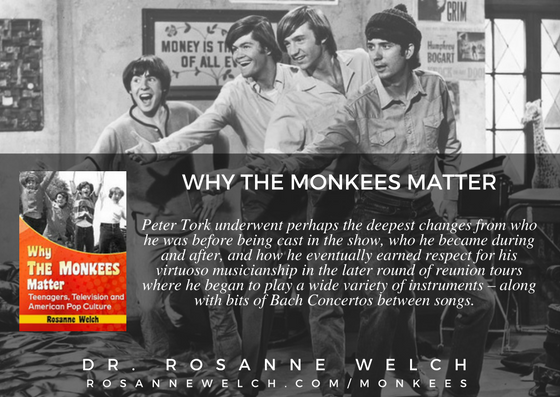
Peter Tork underwent perhaps the deepest changes from who he was before being cast in the show, who he became during and after, and how he eventually earned respect for his virtuoso musicianship in the later round of reunion tours where he began to play a wide variety of instruments – along with bits of Bach Concertos between songs.
from Why The Monkees Matter by Dr. Rosanne Welch — Buy your Copy today!
Why The Monkees Matter: Teenagers, Television and American Pop Culture
McFarland (Direct from Publisher) | Amazon | Kindle Edition | Nook Edition
A History of Screenwriting 50 – How To Write Photoplays by John Emerson and Anita Loos – 1920
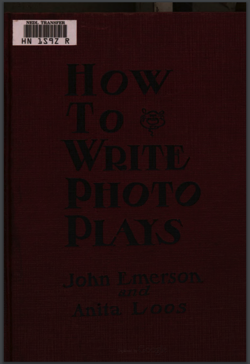
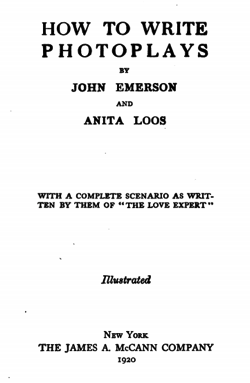
Maybe the first book written about screenwriting, How To Write Photoplays is co-written by one of the most important screenwriters of the silent era, Anita Loos. She wrote the novel “Gentlemen Prefer Blondes” and much much more.
You can read the entire book online or as a downloadable PDF.
Learn More About Anita Loos with these books


* A portion of each sale from Amazon.com directly supports our blogs
** Many of these books may be available from your local library. Check it out!
† Available at the LA Public Library

Watch this entire presentation
Transcript:
So I am talking about Gidget. So we’re at the SRN Conference and we’re very excited about that and because we’re talking about fact and fiction, that’s why I cam to this. My title is very long. I laugh about that. So, it’s “How Gidget Got Into the Girl Ghetto” and I’m sorry to use that word, but it is a negative word in the United States, but I like the alliteration of the words and I think it is a real problem because you’ll see, of course, the film began — the adaptation began as a film starring Sandra Dee and as far as Americans are concerned, Sandra Dee is kind of a bubble gum, cutesy pie, blonde WITH NO real serious — nothing but the superficiality of her being cute and a babe on the beach, right and so that is what I was thinking about when I thought about doing this and it came to me that it’s TV that gave Gidget her her groove back so I should have shrunk the title but it was too late for the publication.
At this year’s 10th Annual Screenwriting Research Network Conference at Otago University in Dunedin, New Zealand I presented…
“How Gidget Got Into the Girl Ghetto by Accident (and How We Can Get Her Out of it): Demoting Gidget: The Little Girl with Big Ideas from Edgy Coming of Age Novel to Babe on the Beach Genre Film via Choices made in the Adaptation Process.”
It’ a long title, as I joke up front, but covers the process of adapting the true life story of Kathy Kohner (nicknamed ‘Gidget’ by the group of male surfers who she spent the summers with in Malibu in the 1950s) into the film and television series that are better remembered than the novel. The novel had been well-received upon publication, even compared to A Catcher in the Rye, but has mistakenly been relegated to the ‘girl ghetto’ of films. Some of the adaptations turned the focus away from the coming of age story of a young woman who gained respect for her talent at a male craft – surfing – and instead turned the focus far too much on Kathy being boy crazy.
Along the way I found interesting comparisons between how female writers treated the main character while adapting the novel and how male writers treated the character.
Dr. Rosanne Welch
Dr. Rosanne Welch teaches the History of Screenwriting and One-Hour Drama for the Stephens College MFA in Screenwriting.
Writing/producing credits include Beverly Hills 90210, Picket Fences, ABCNEWS: Nightline and Touched by an Angel. In 2016 she published the book Why The Monkees Matter: Teenagers, Television and American Pop; co-edited Women in American History: A Social, Political, and Cultural Encyclopedia; and placed “Transmitting Culture Transnationally Via the Characterization of Parents in Police Procedurals” in the New Review of Film and Television Studies. Essays appear in Torchwood Declassified: Investigating Mainstream Cult Television and Doctor Who and Race: An Anthology. Welch serves as Book Reviews editor for Journal of Screenwriting and on the Editorial Advisory Board for Written By magazine, the magazine of the Writers Guild.
Watch Dr. Welch’s talk “The Importance of Having a Female Voice in the Room” at the 2016 TEDxCPP.

The Screenwriting Research Network is a research group consisting of scholars, reflective practitioners and practice-based researchers interested in research on screenwriting. The aim is to rethink the screenplay in relation to its histories, theories, values and creative practices.
Podcast: Play in new window | Download
Subscribe: RSS
** Buy “Why The Monkees Matter” Today **

Long after new episodes involving that character ceased to exist, Jones continued to exist in the most intimate space of their home – their bedroom. When asked what she dreams about, Tony Award-winning composer and pop diva Cyndi Lauper told the Daily Mail, “What or who do you dream about? I have vivid dreams – from banal to crazy. One time I was married to Davy Jones of The Monkees. Go figure!”
from Why The Monkees Matter by Dr. Rosanne Welch — Buy your Copy today!
Why The Monkees Matter: Teenagers, Television and American Pop Culture
McFarland (Direct from Publisher) | Amazon | Kindle Edition | Nook Edition
01 Introduction from How Gidget Got Into the Girl Ghetto – Dr. Rosanne Welch – SRN Conference 2017 ![How Gidget Got Into the Girl Ghetto - Dr. Rosanne Welch - SRN Conference 2017 [Video] (23 mins)](https://rosannewelch.com/wp-content/uploads/2017/10/gidget-srn.png)
Watch this entire presentation
Transcript:
Hi everybody! It’s so wonderful to have you here. I’m going to be talking about a book and a film and a television series and I think the trajectory from serious to bubblegum back to slightly serious is what’s interesting to me and it’s all about the adaptation of something and how the true person’s story can get lost along the way and I believe TV allows a chance to tell longer stories — you can tell a hundred hours in the life of a person instead of two hours and so I think we’re going to end up discovering that TV was the better place for this story to house itself.
At this year’s 10th Annual Screenwriting Research Network Conference at Otago University in Dunedin, New Zealand I presented…
“How Gidget Got Into the Girl Ghetto by Accident (and How We Can Get Her Out of it): Demoting Gidget: The Little Girl with Big Ideas from Edgy Coming of Age Novel to Babe on the Beach Genre Film via Choices made in the Adaptation Process.”
It’ a long title, as I joke up front, but covers the process of adapting the true life story of Kathy Kohner (nicknamed ‘Gidget’ by the group of male surfers who she spent the summers with in Malibu in the 1950s) into the film and television series that are better remembered than the novel. The novel had been well-received upon publication, even compared to A Catcher in the Rye, but has mistakenly been relegated to the ‘girl ghetto’ of films. Some of the adaptations turned the focus away from the coming of age story of a young woman who gained respect for her talent at a male craft – surfing – and instead turned the focus far too much on Kathy being boy crazy.
Along the way I found interesting comparisons between how female writers treated the main character while adapting the novel and how male writers treated the character.
Dr. Rosanne Welch
Dr. Rosanne Welch teaches the History of Screenwriting and One-Hour Drama for the Stephens College MFA in Screenwriting.
Writing/producing credits include Beverly Hills 90210, Picket Fences, ABCNEWS: Nightline and Touched by an Angel. In 2016 she published the book Why The Monkees Matter: Teenagers, Television and American Pop; co-edited Women in American History: A Social, Political, and Cultural Encyclopedia; and placed “Transmitting Culture Transnationally Via the Characterization of Parents in Police Procedurals” in the New Review of Film and Television Studies. Essays appear in Torchwood Declassified: Investigating Mainstream Cult Television and Doctor Who and Race: An Anthology. Welch serves as Book Reviews editor for Journal of Screenwriting and on the Editorial Advisory Board for Written By magazine, the magazine of the Writers Guild.
Watch Dr. Welch’s talk “The Importance of Having a Female Voice in the Room” at the 2016 TEDxCPP.
The Screenwriting Research Network is a research group consisting of scholars, reflective practitioners and practice-based researchers interested in research on screenwriting. The aim is to rethink the screenplay in relation to its histories, theories, values and creative practices.
Podcast: Play in new window | Download
Subscribe: RSS
Rosanne Welch talks about “Why The Monkees Matter” with Jean Hopkins Power
Watch this entire presentation (45 mins)
Jean Powergirl takes the host reigns and welcomes her guest Rosanne Welch, PhD to the show! They’ll be discussing Roseanne’s book, “Why The Monkees Matter: Teenagers, Television and American Pop Culture.”

Transcript:
Just this last year, in honor of their 50th Anniversary, they put out a 50th Anniversary album which has been a pretty good seller. It’s called ‘Good Times” and there are some marvelous songs on there. They got a series of young, modern-day, songwriters. Guys from big groups that we all know about from winning Grammys and they got them to write songs for The Monkees and they play really well. Hearing their harmonies and, of course, they did a tour and I went to a couple of the concerts and it was beautiful to see them play in public again and to see how the fans really have supported them all these years and they give fans a show that they paid for. It’s pretty long and they play all the hits which sometimes you go see somebody and they play new music. Jean: I want the hits. Rosanne: That’s what I’m paying for. So they respect their audience and they always did and I think that’s why they’ve had such longevity in that way. Jean: All right, now Rosanne has so many things to say and we’re running out of time here, but I want you to tell everyone how they can learn more about you, learn more about your books and just start rambling off all the ways to find Dr. Rosanne Welch. Rosanne. Obviously like everybody I have a blog that’s RosanneWelch.com. Jean: No “E” in Rosanne by the way. Rosanne: No my name is spelled ROSANNE and Welch is WELCH. So RosanneWelch.com is my blog. Of course, if you Google it you’ll find it all.I have a YouTube channel. Ido lectures on The Monkees which I’ve recorded but I also do lectures on Doctor Who and several other things that I’ve done for my classes so they’re kind of all available there. Both 20 or 30-minute lectures and little kid of 2-minute snippets that give you a sense of what it’s about. Those are on my YouTube Channel. I have a Facebook Page for the book. It’s Called “Why The Monkees Matter.” So that’s the Facebook Page. I tend to continue to post things that have to do with the television show and the history. I post things I’ve found in my research whether they’re clips from YouTube or whether they are articles that I’ve read and connections like that. I like to kind of keep people in touch and then there’s a marvelous podcast called Zilch: A Monkees Podcast. I have nothing to do with that except I’ve guested on it a couple of times, but it is a great place to learn more about The Monkees and I am doing a guest bit in an upcoming episode. We had a lovely roundtable where we discussed how the actors guest starred in other shows pre and post The Monkees and what that did for their careers and also about the… Rosanne: So, yes, they are still out there touring and I think it’s really fabulous that they’re still bringing this positive message. The other reason they were so popular is there were a lot of negative things going on in the 60’s but their music was very popular and it was very uplifting and that’s also something — I say, as I look at their various careers and how they grew and changed eventually Davy Jones was opening at Disneyland special events they had there but when The Monkees first came out they would have been too controversial with the long hair for Disneyland — they say the joke several times on the show, if you have long hair you can’t get into Disneyland. They wouldn’t let you in. Jean: It’s not even that long people. We’re talking Beatles Mop Tops here. Rosanne: It’s an interesting look American culture and how we’ve grown over the years. Jean: Right. Well, I love talking about this. I could talk about it all day. I love things about Hollywood but this book is fascinating. If you want to nerd out Monkees, on vintage TV, on producing, directing, counterculture. This is the book for you. Why The Monkees Matter: Teenagers, Television and American Pop Culture by my friend, Dr. Rosanne Welch. Get this book. It’s super awesome and thank you again, Rosanne, for coming on. Rosanne: Oh it’s been great. Are you kidding? Jean: And sorry for the previous audio situation. Bye!
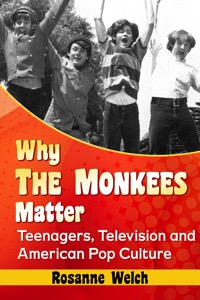
A hit television show about a fictitious rock band, The Monkees (1966-1968) earned two Emmys–Outstanding Comedy Series and Outstanding Directorial Achievement in Comedy. Capitalizing on the show’s success, the actual band formed by the actors, at their peak, sold more albums than The Beatles and The Rolling Stones combined and set the stage for other musical TV characters from The Partridge Family to Hannah Montana. In the late 1980s, the Monkees began a series of reunion tours that continued into their 50th anniversary.
This book tells the story of The Monkees and how the show changed television, introducing a new generation to the fourth-wall-breaking slapstick created by Laurel and Hardy and the Marx Brothers. Its creators contributed to the innovative film and television of 1970s with projects like Bob & Carol & Ted & Alice, The Mary Tyler Moore Show, Laugh-In and Welcome Back, Kotter. Immense profits from the show, its music and its merchandising funded the producers’ move into films such as Head, Easy Rider and Five Easy Pieces.
Rosanne Welch, PhD has written for television (Touched by an Angel, Picket Fences) and print (Three Ring Circus: How Real Couples Balance Marriage, Work and Kids and The Encyclopedia of Women in Aviation and Space). In the documentary world she has written and produced Bill Clinton and the Boys Nation Class of 1963 for ABC NEWS/Nightline and consulted on PBS’s A Prince Among Slaves, the story of a prince from West Africa who was enslaved in the 1780s, freed by order of President John Quincy Adams in the 1820s and returned to his homeland.
Podcast: Play in new window | Download
Subscribe: RSS