10 Fuller and Italian Reunification from Concord Days: Margaret Fuller in Italy [Video]

In researching and writing my book on Giuseppe and Anita Garibaldi and the unification of Italy (A Man Of Action Saving Liberty: A Novel Based On The Life Of Giuseppe Garibaldi)  I re-discovered the first American female war correspondent – Margaret Fuller — who I had first met in a college course on the Transcendentalists. I was once again fascinated by a life lived purposefully.

Then I found Tammy Rose’s podcast on the Transcendentalists – Concord Days – and was delighted when she asked me to guest for a discussion of Fuller’s work in Italy as both a journalist – and a nurse. — Rosanne

10 Fuller and Italian Reunification from Concord Days: Margaret Fuller in Italy [Video]

Watch this entire presentation

Concord Days sends love to Margaret Fuller on the anniversary of her death in 1850.

The conversation focuses on Margaret’s exciting days in ITALY!

Dr. Rosanne Welch takes us through her adventures and enthusiastically reminds us what she was like when she was living her best life!

Transcript:

Rosanne: My joke, I have Sicilian relatives that I visited and they always say, “Come there if you’re traveling in Europe because you see Greek ruins and Roman ruins” and you know mosques everybody, everybody invaded Sicily and took over at some point. So it’s like the whole world, in a nutshell, and my cousin’s actually a teacher of Sicilian literature and language and there are dictionaries that’ll give you the entire Italian language translated into Sicilian and it’s that much — that different.

Tammy: Love it.

Rosanne: Exactly and so what’s happening is is Margaret has read and heard about Mazzini, Giuseppe Manzini and he was a group called Young Italy and they wanted to create a union right? Which is what we did among all our various territories right? All our you know we became a union. So it was like getting a chance to live through our revolution to experience another country doing it.

Tammy: Wow yeah

Rosanne: …and I think that’s what drew her.

Tammy: Exactly because you’re seeing history like creating itself.

Rosanne: Exactly meeting the founders.

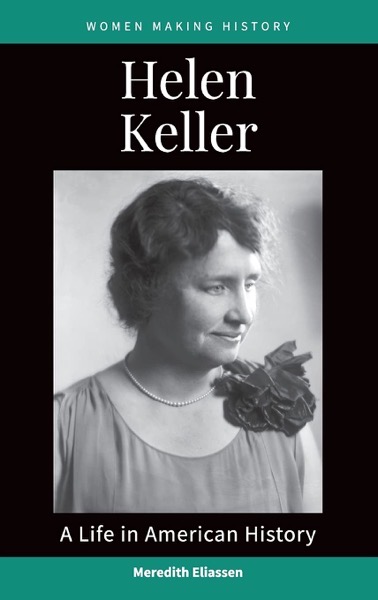
New Book: Helen Keller: A Life in American History (Women Making History) Series by Meredith Eliassen, Edited by Dr. Rosanne Welch and Dr. Peg Lamphier

New Book: Helen Keller: A Life in American History (Women Making History) Series by Meredith Eliassen, Edited by Dr. Rosanne Welch and Dr. Peg Lamphier

New Book: Helen Keller: A Life in American History (Women Making History) Series by Meredith Eliassen, Edited by Dr. Rosanne Welch and Dr. Peg Lamphier

On the heels of Book #3 I’m proud to present Book #4 of the Women Making History Series that I am co-editing with my colleague Peg Lamphier. 

We want to congratulate author Meredith Eliassen for all her hard work on bringing the life of Helen Keller to modern readers in a very modern way.  We can’t wait to see the rest of the books in our series come to publication. 

The Keller book is the last of this first batch while the others are still (as planned) in the writing stage. They include Sally Ride, Eleanor Roosevelt, Ida B. Wells, and Delores Huerta.

Talk about a wonderful line up of women who made history.  It was so, sooo, sooooo hard to find under 100 women worthy of this project – and then we had to find the authors to bring them to life.  That second part was easier since we had such a wealth of women writer friends to turn to.  Read on!

New Book: Helen Keller: A Life in American History (Women Making History) Series by Meredith Eliassen, Edited by Dr. Rosanne Welch and Dr. Peg Lamphier

Helen Keller: A Life in American History explores Keller’s life, career as a lobbyist, and experiences as a deaf-blind woman within the context of her relationship with teacher-guardian-promoter Anne Sullivan Macy and overarching social history. The book tells the dual story of a pair struggling with respective disabilities and financial hardship and the oppressive societal expectations set for women during Keller’s lifetime. This narrative is perhaps the most comprehensive study of Helen Keller’s role in the development of support services specifically related to the deaf-blind, as delineated as different from the blind.

Readers will learn about Keller’s challenges and choices as well as how her public image often eclipsed her personal desires to live independently. Keller’s deaf-blindness and hard-earned but limited speech did not define her as a human being as she explored the world of ideas and wove those ideas into her writing, lobbying for funds for the American Federation for the Blind and working with disabled activists and supporters to bring about practical help during times of tremendous societal change.

09 Why Italy? from Concord Days: Margaret Fuller in Italy [Video]

In researching and writing my book on Giuseppe and Anita Garibaldi and the unification of Italy (A Man Of Action Saving Liberty: A Novel Based On The Life Of Giuseppe Garibaldi)  I re-discovered the first American female war correspondent – Margaret Fuller — who I had first met in a college course on the Transcendentalists. I was once again fascinated by a life lived purposefully.

Then I found Tammy Rose’s podcast on the Transcendentalists – Concord Days – and was delighted when she asked me to guest for a discussion of Fuller’s work in Italy as both a journalist – and a nurse. — Rosanne

09 Why Italy? from Concord Days: Margaret Fuller in Italy

Watch this entire presentation

Concord Days sends love to Margaret Fuller on the anniversary of her death in 1850.

The conversation focuses on Margaret’s exciting days in ITALY!

Dr. Rosanne Welch takes us through her adventures and enthusiastically reminds us what she was like when she was living her best life!

Transcript:

Tammy: Why does she go to Italy? What is going on and what is she excited about?

Rosanne: You know Italy — we forget because we had our founding right but in Italy, they were a scattering of different city-states basically up until we’re talking the 1860s is when this finally gets settled and it’s in the 1830s that this roiling begins. We should be all one country. Remember the roman empire. We owned the whole world. Now we can’t even own this little boot that’s part of us

Tammy: Right and Italy was all these like little like city-states and it wasn’t really the Italy that we know today.

Rosane: Austria owned some parts of it right and France owned some parts of it. Sicily was its own country. It was not part of Italy.

From The Journal Of Screenwriting V5 Issue 3: The continuing story: Experiments with serial narrative in 1960s prime-time television by Caryn Murphy

Highlighting the articles in the past editions of the Journal of Screenwriting, of which I am the Book Reviews Editor. Hopefully these abstracts will entice you to did a little deeper into the history and future of screenwriting. — Rosanne


The continuing story: Experiments with serial narrative in 1960s prime-time television by Caryn Murphy
 
This article examines innovations in prime-time narratives in US prime-time television in the 1960s, using archival evidence to trace the goals, concerns and conflicts of screenwriters and producers on series including The Defenders (CBS, 1961-65), The Fugitive (ABC, 1963-67), Peyton Place (ABC, 1964-69), and Dr. Kildare (NBC, 1961-66). During this decade, television writers and producers innovated in response to outside concerns regarding the content of popular episodic programmes, and as a method of encouraging audience engagement and habit viewership. Historical evidence demonstrates that prime-time writers specifically sought to make a distinction between prime-time continuing narratives and those that aired during the daytime hours, in order to elevate what they considered to be a new form of television storytelling.

From The Journal Of Screenwriting V5 Issue 3: The continuing story: Experiments with serial narrative in 1960s prime-time television by Caryn Murphy


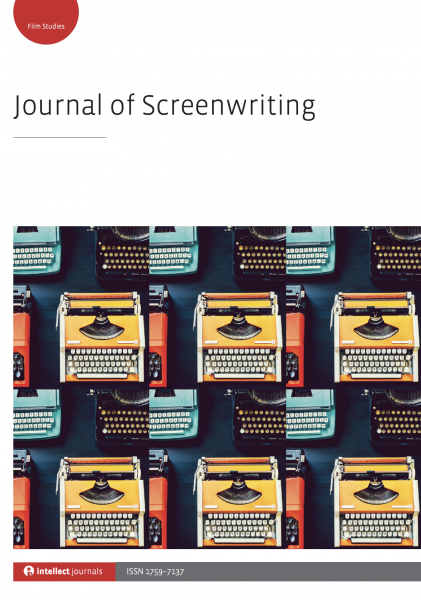
Journal of Screenwriting Cover

The Journal of Screenwriting is an international double-blind peer-reviewed journal that is published three times a year. The journal highlights current academic and professional thinking about the screenplay and intends to promote, stimulate and bring together current research and contemporary debates around the screenplay whilst encouraging groundbreaking research in an international arena. The journal is discursive, critical, rigorous and engages with issues in a dynamic and developing field, linking academic theory to screenwriting practice. 

Get your copy and subscription to the Journal of Screenwriting Today!


* A portion of each sale from Amazon.com directly supports our blogs
** Many of these books may be available from your local library. Check it out!

From The Journal Of Screenwriting V5 Issue 3: Unspoken Desires: Lore as case study on shadow narrative by Margot Nash

Highlighting the articles in the past editions of the Journal of Screenwriting, of which I am the Book Reviews Editor. Hopefully these abstracts will entice you to did a little deeper into the history and future of screenwriting. — Rosanne


Unspoken Desires: Lore as case study on shadow narrative by Margot Nash

This article explores the concept of a shadow narrative lying under the surface of the main film narrative through a case study of the 2012 film Lore. The film is based on the second story in Rachel Seiffert’s book The Dark Room. It was adapted for the screen by British screenwriter Robin Mukherjee and Australian director and screenwriter Cate Shortland. I will search for the structure of this narrative through an analysis of key emotional scenes, moments or spectral traces when the unspoken desires of the protagonist, Lore, surface and take form, when subtext becomes text and nothing is ever the same again. Using film analyst Paul Gulino’s argument that most narrative films consist of eight major sequences, each between eight and fifteen minutes, I will break the film into eight sequences and then identify one key emotional scene in each sequence. I will then analyse the eight key scenes and discuss the development of Lore’s shadow or unspoken narrative of desire. Some of these key scenes re-imagine or extend narrative moments from the book, but most are new, created by the screenwriters in order to make visible the invisible transformation of character and to heighten themes introduced in the first story in the book and brought to a resolution in the third.

From The Journal Of Screenwriting V5 Issue 3: Unspoken Desires: Lore as case study on shadow narrative by Margot Nash


Journal of Screenwriting Cover

The Journal of Screenwriting is an international double-blind peer-reviewed journal that is published three times a year. The journal highlights current academic and professional thinking about the screenplay and intends to promote, stimulate and bring together current research and contemporary debates around the screenplay whilst encouraging groundbreaking research in an international arena. The journal is discursive, critical, rigorous and engages with issues in a dynamic and developing field, linking academic theory to screenwriting practice. 

Get your copy and subscription to the Journal of Screenwriting Today!


* A portion of each sale from Amazon.com directly supports our blogs
** Many of these books may be available from your local library. Check it out!

08 Smart Women and Transcendentalism from Concord Days: Margaret Fuller in Italy [Video]

In researching and writing my book on Giuseppe and Anita Garibaldi and the unification of Italy (A Man Of Action Saving Liberty: A Novel Based On The Life Of Giuseppe Garibaldi)  I re-discovered the first American female war correspondent – Margaret Fuller — who I had first met in a college course on the Transcendentalists. I was once again fascinated by a life lived purposefully.

Then I found Tammy Rose’s podcast on the Transcendentalists – Concord Days – and was delighted when she asked me to guest for a discussion of Fuller’s work in Italy as both a journalist – and a nurse. — Rosanne

08 Smart Women and Transcendentalism from Concord Days: Margaret Fuller in Italy [Video]

Watch this entire presentation

Concord Days sends love to Margaret Fuller on the anniversary of her death in 1850.

The conversation focuses on Margaret’s exciting days in ITALY!

Dr. Rosanne Welch takes us through her adventures and enthusiastically reminds us what she was like when she was living her best life!

Transcript:

It’s such an interesting thing because they — they spouted ideas about equality but it’s a different thing to have the intellectual idea that women should be and then here’s like — you use the word intimidated — and I think that is the perfect description because imagine like well I said it could happen but I didn’t know I’d run into someone who’s going to challenge my — I’m the smart guy in the room — like you get that right? You can — you can see how that would have, it would have shocked them and maybe their own wives had that capacity but weren’t given the ability to show it off.

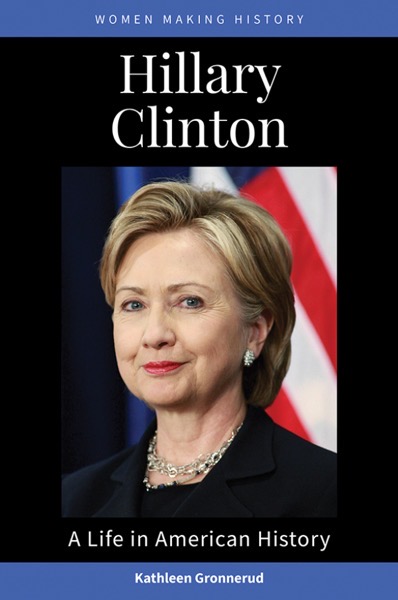
New Book: Hillary Clinton: A Life in American History (Women Making History) by Kathleen Gronnerud, Edited by Drs. Rosanne Welch and Peg Lamphier

Before you’ve even had time to finish reading the Gloria Steinem book it’s time to share the news about the publication of Book #3 in the Women Making History series that I’m co-editing with my colleague Dr. Peg Lamphier. 

In this one author Kathleen Gronnerud covers the life of Hillary Clinton – everything from her work on education at the First Lady of Arkansas to her work on  healthcare reform as First Lady to the country – to her own entrance into politics.  

New Book: Hillary Clinton: A Life in American History (Women Making History) by Kathleen Gronnerud, Edited by Drs. Rosanne Welch and Peg Lamphier


Or ask at your local bookstore.  It’s always time to learn more about the brilliant women we chose to cover in this series!

While numerous volumes have been written about Hillary Clinton, many authors have devoted entire books to just one aspect of Clinton’s public or private life. Yet few, if any, single volumes have provided a comprehensive look at her life in public service from an objective, scholarly viewpoint.

Designed both for students doing research and general readers wanting to know more about Clinton’s life and career, this book not only offers an overview of her education, family, career, and political views, but also provides historical context to her choices, accomplishments, and defeats. The volume’s chapters present a chronological telling of her life story thus far including key experiences, influences, and the development of her political views. The volume also includes photographs and short sidebars, which help to tie Clinton’s personal experiences to the contemporaneous culture of the nation. A lengthy bibliography provides assistance to readers interested in further research or reading.

Drs. Rosanne Welch and Sarah Clark discuss The Monkees “One Man Shy” episode on the Zilch Podcast’s Monkees 101 Series 

Drs. Rosanne Welch and Sarah Clark discuss The Monkees “One Man Shy” episode on the Zilch Podcast’s Monkees 101 Series 

Even though my book is now 5 years old, I’m still always happy for any excuse to talk about The Monkees TV show – and my Monkees 101 co-host gives me that opportunity once a month as we work our way through each episode (mostly) chronologically.  We cover the news of the day when each episode aired, the Top 5 on the Billboard Charts (which often includes a Monkees tune), and all the meta things about the production (from the writing to the casting choices choices to the props and sound departments).  It’s quite a fun way for 2 lady doctors (the Phd kind) who found each other online over our Monkee-fandom can spend our time.

Drs. Rosanne Welch and Sarah Clark discuss The Monkees “One Man Shy” episode on the Zilch Podcast's Monkees 101 Series 

It’s time for Monkees 101! Tim Powers and Sarah Clark host the show and talk Monkees current events in 2021, then Sarah and Rosanne talk “One Man Shy”, which aired Dec 5th 1966. Bashful Peter tries to win the heart of lovely debutante Valerie Cartwright (Lisa James) while dealing with her haughty boyfriend Ronnie Farnsworth (George Furth).

Songs: “I’m a Believer”, “You Just May Be the One” (original version)
1967 reruns: “I’m a Believer” was replaced with “Forget That Girl.”
Saturday mornings: “I’m a Believer” was replaced with “If I Knew.” 

Listen to this episode


Want to learn more about The Monkees? Buy Why The Monkees Matter: Teenagers, Television and American Pop Culture


A hit television show about a fictitious rock band, The Monkees (1966-1968) earned two Emmys–Outstanding Comedy Series and Outstanding Directorial Acheivement in Comedy.

Capitalizing on the show’s success, the actual band formed by the actors, at their peak, sold more albums than The Beatles and The Rolling Stones combined, and set the stage for other musical TV characters from The Partridge Family to Hannah Montana. In the late 1980s, the Monkees began a series of reunion tours that continued into their 50th anniversary.

This book tells the story of The Monkees and how the show changed television, introducing a new generation to the fourth-wall-breaking slapstick created by Laurel and Hardy and the Marx Brothers.

Its creators contributed to the innovative film and television of 1970s with projects like Bob & Carol & Ted & Alice, The Mary Tyler Moore Show, Laugh-In and Welcome Back, Kotter. Immense profits from the show, its music and its merchandising funded the producers’ move into films such as Head, Easy Riderand Five Easy Pieces.

McFarland (Direct from Publisher) | Amazon | Kindle Edition | Nook Edition

Want to use “Why The Monkees Matter” in your classroom?

Order Examination Copies, Library and Campus Bookstore orders directly from McFarland

McFarland Company logo

From The Journal Of Screenwriting V5 Issue 3: That was then this is now …  The Canyons – with Paul, Bret, James and Lindsay by Alex Munt

Highlighting the articles in the past editions of the Journal of Screenwriting, of which I am the Book Reviews Editor. Hopefully these abstracts will entice you to did a little deeper into the history and future of screenwriting. — Rosanne


That was then this is now …  The Canyons – with Paul, Bret, James and Lindsay by Alex Munt
 
New Hollywood, from the late 1960s to early 1980s, was marked by an innovation in film business (production, marketing, audience) together with an opening up of film form. Today, some 50 years later, film culture is again in flux with new models of funding, production and distribution for the digital age. The impact of these developments on screenwriting is (necessarily) speculative at this stage. The focus of this article is on screenwriter/director Paul Schrader, a jump-cut from Taxi Driver (1976) to The Canyons (2013) – his experiment in ‘post-theatrical cinema’ with novelist/screenwriter Bret Easton Ellis. The film was written for microbudget and crowdfunded on the Kickstarter platform. It assembles the notorious cast of porn star James Deen and celebrity maelstrom Lindsay Lohan. The Canyons rolled out with an aggressive online marketing strategy and innovative ‘day and date’ distribution model with an eye to video on demand. Larry Gross has described the film as belonging to ‘this cultural moment’. In this analysis of The Canyons I ask: What does it mean to conceive, and write, a screenplay for the present, for ‘now’? How does screenplay development and creative collaboration differ in a crowdfunded/microbudget environment? How does the film interact with new forms, and aesthetics, appropriate to this ‘cultural moment’? In the final part of the article I attempt to situate the film within a wider narrative framework via Schrader’s diagnosis of ‘narrative exhaustion’, Douglas Rushkoff’s theory of ‘present shock’ and Ellis’ rumination on the American ‘post-empire’ condition.

From The Journal Of Screenwriting V5 Issue 3: That was then this is now …  The Canyons – with Paul, Bret, James and Lindsay by Alex Munt


Journal of Screenwriting Cover

The Journal of Screenwriting is an international double-blind peer-reviewed journal that is published three times a year. The journal highlights current academic and professional thinking about the screenplay and intends to promote, stimulate and bring together current research and contemporary debates around the screenplay whilst encouraging groundbreaking research in an international arena. The journal is discursive, critical, rigorous and engages with issues in a dynamic and developing field, linking academic theory to screenwriting practice. 

Get your copy and subscription to the Journal of Screenwriting Today!


* A portion of each sale from Amazon.com directly supports our blogs
** Many of these books may be available from your local library. Check it out!

07 Emerson and “The Dial” from Concord Days: Margaret Fuller in Italy [Video]

In researching and writing my book on Giuseppe and Anita Garibaldi and the unification of Italy (A Man Of Action Saving Liberty: A Novel Based On The Life Of Giuseppe Garibaldi)  I re-discovered the first American female war correspondent – Margaret Fuller — who I had first met in a college course on the Transcendentalists. I was once again fascinated by a life lived purposefully.

Then I found Tammy Rose’s podcast on the Transcendentalists – Concord Days – and was delighted when she asked me to guest for a discussion of Fuller’s work in Italy as both a journalist – and a nurse. — Rosanne

07 Emerson and

Watch this entire presentation

Concord Days sends love to Margaret Fuller on the anniversary of her death in 1850.

The conversation focuses on Margaret’s exciting days in ITALY!

Dr. Rosanne Welch takes us through her adventures and enthusiastically reminds us what she was like when she was living her best life!

Transcript:

Tammy: When it comes to the transcendentalist one of the big things is also The Dial right? That’s the biggest magazine. That’s the thing that sort of cements the idea of the transcendentalists and all these writers get published there and Emerson had asked her to be the main editor and he said that he was going to pay her and then he never ended up paying her.

Rosanne: Exactly. She didn’t even get a free place a cabin on his land to live

Tammy: Right right like his friend you know uh but I and and you know he would always put her up in his house whenever she wanted to come visit concord. She had an open invitation but you know his wife Lidian didn’t necessarily appreciate it and it wasn’t the best of relationships. So I and I feel like Margaret was never really maybe comfortable in the Concord world because they the guys here just didn’t understand how to deal with her.

Rosanne: Nor did the women right because you have to imagine they were probably — had they had some education — they knew they could do more but weren’t allowed to and then here’s this woman who’s getting to so there’s going to be this under you know layer of kind of jealousy but I don’t want to be jealous but I want that but I can’t have it.