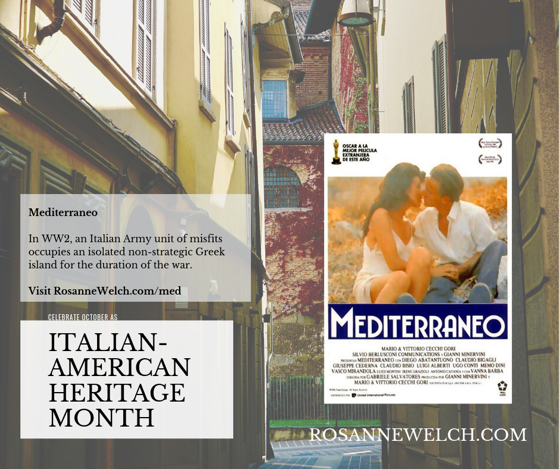


In WW2, an Italian Army unit of misfits occupies an isolated non-strategic Greek island for the duration of the war.
Also from the Mentoris Project


Want to use these books in your classroom? Contact the Mentoris Project!`
On Screenwriting and Media with Dr. Rosanne Welch
Writing, Film, Television and More!
In WW2, an Italian Army unit of misfits occupies an isolated non-strategic Greek island for the duration of the war.
Also from the Mentoris Project
Want to use these books in your classroom? Contact the Mentoris Project!`

Hailed around the world as one of the greatest movies ever made, the Academy Award-winning Bicycle Thieves, directed by Vittorio De Sica, defined an era in cinema. In poverty-stricken postwar Rome, a man is on his first day of a new job that offers hope of salvation for his desperate family when his bicycle, which he needs for work, is stolen.
Also from the Mentoris Project
Want to use these books in your classroom? Contact the Mentoris Project!`

When an open-minded Jewish librarian and his son become victims of the Holocaust, he uses a perfect mixture of will, humor, and imagination to protect his son from the dangers around their camp.
Also from the Mentoris Project
Want to use these books in your classroom? Contact the Mentoris Project!`
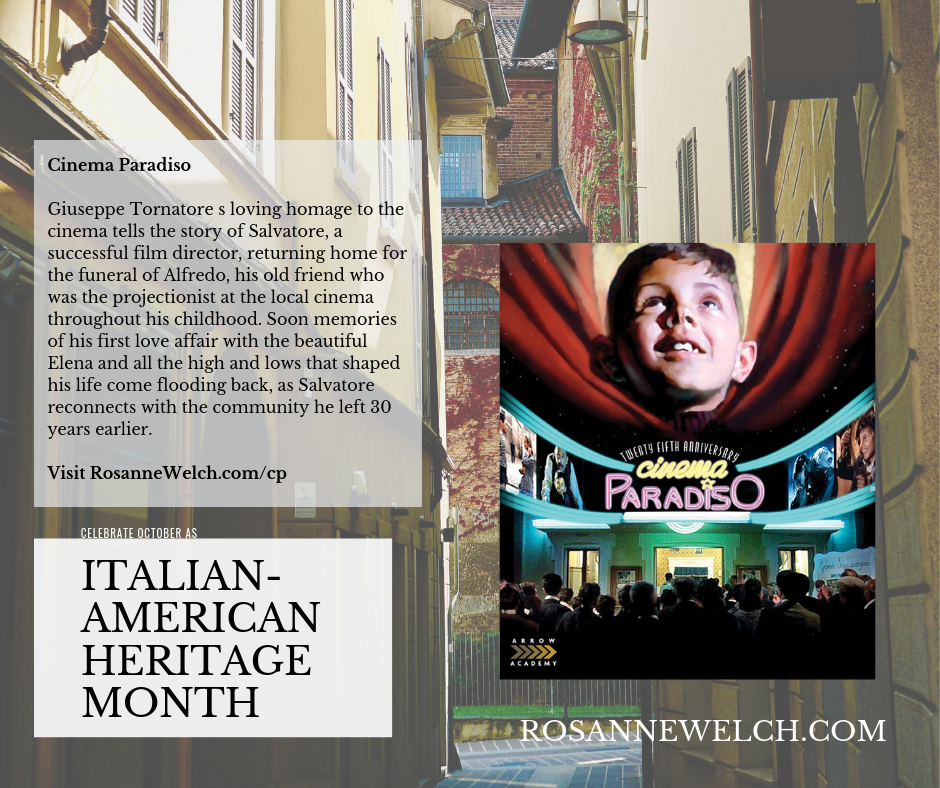
A CELEBRATION OF YOUTH, FRIENDSHIP, AND THE EVERLASTING MAGIC OF THE MOVIES
A winner of awards across the world including Best Foreign Language Film Oscar, five BAFTA Awards including Best Actor, Original Screenplay and Score, the Grand Prize of the Jury at the Cannes Film Festival and many more.
Giuseppe Tornatore s loving homage to the cinema tells the story of Salvatore, a successful film director, returning home for the funeral of Alfredo, his old friend who was the projectionist at the local cinema throughout his childhood. Soon memories of his first love affair with the beautiful Elena and all the high and lows that shaped his life come flooding back, as Salvatore reconnects with the community he left 30 years earlier.
Also from the Mentoris Project
Want to use these books in your classroom? Contact the Mentoris Project!`

“The Lost World was an adaptation of Arthur Conan Doyle’s famous dinosaur novel, and the film itself did the story justice. Fairfax both wrote the adaptation and directed the editing.
After the massive success of The Lost World, which broke records, Fairfax was more in demand than ever.”
Silent Screenwriter, Producer and Director: Marion Fairfax
Sarah Phillips
Buy a signed copy of when Women Write Hollywood
Paperback Edition | Kindle Edition | Google Play Edition
* A portion of each sale from Amazon.com directly supports our blogs
** Many of these books may be available from your local library. Check it out!
† Available from the LA Public Library
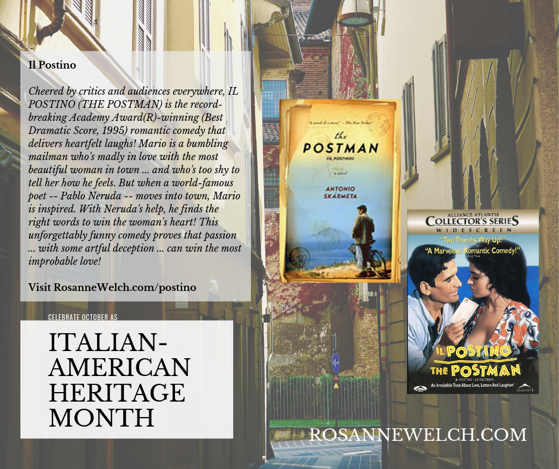
Cheered by critics and audiences everywhere, IL POSTINO (THE POSTMAN) is the record-breaking Academy Award(R)-winning (Best Dramatic Score, 1995) romantic comedy that delivers heartfelt laughs! Mario is a bumbling mailman who’s madly in love with the most beautiful woman in town … and who’s too shy to tell her how he feels. But when a world-famous poet — Pablo Neruda — moves into town, Mario is inspired. With Neruda’s help, he finds the right words to win the woman’s heart! This unforgettably funny comedy proves that passion … with some artful deception … can win the most improbable love!
Also from the Mentoris Project
Want to use these books in your classroom? Contact the Mentoris Project!`
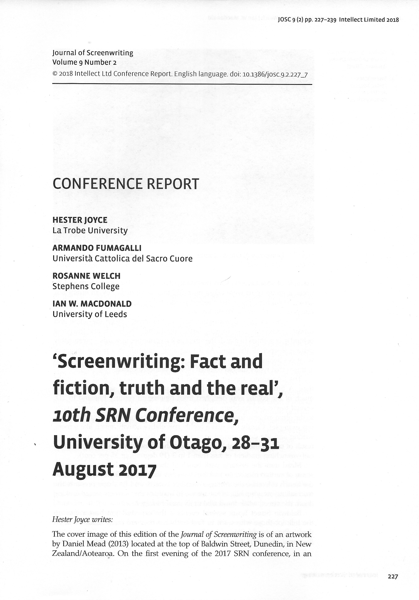
It’s always fun when a new issue of the Journal of Screenwriting arrives in my mailbox, but this one’s pleasing on several fronts.
First, in my capacity as Book Reviews Editor, I’m able to publish several of my now-graduated students, often for the first time.
In this issue I am also the co-author of an article extolling the marvelously successful conference held at Otago University in 2017.
Also, two of the articles come from that conference – one by my friend Carmen Sofia Brenes (Chairperson, full professor of poetics and screenwriting at the School of Communication of Universidad de los Andes) is about the 2016 film Jackie, about the life of American icon Jackie Kennedy, written by an American, Noah Oppenheim, and directed by Chilean Pablo Lorrain.
The second article is (not so jokingly) “10 Ways to f#ck up Your Female Characters” by two New Zealand female producers, Fiona Samuel and Kathryn Burnett. I’ve already talked about that one with many an MFA student.
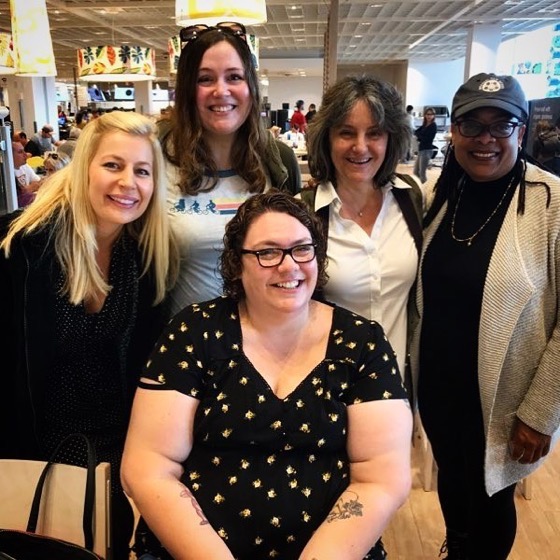
Stephens College MFA in TV and Screenwriting Mini Alumni Meetup
I had such a fun catch up lunch with 2017 Stephens MFA alums and Val yesterday at, of all places, IKEA because alum Amy Banks was in town to attend an all day workshop at the Disney Studios for writers with First Nation backgrounds (in their continued work to provide diversity on their channel).
Amy set it up with me and fellow mentor, Val Woods. Then alums Julie Berkobien and Lauren Smith were also free to drop by. I loved hearing about the various work they were all doing and how their MFAs both helped them get hired and, more importantly, helped them excel in their new positions! It also served as an accidental reunion of several writers of our When Women Wrote Hollywood book of essays, which we will be launching to the Columbia, Missouri community in just a few weeks, during the Citizen Jane Film Festival!

“Frederica Sagor Maas moved to Hollywood in 1924 and as was true for many young women, those who were considered good looking were pushed towards being seen on screen. Being the strong willed woman that she was, Mass decided she still wanted to be a writer.”
The Best Revenge Is Outliving Them All: The life and heartbreak of Frederica Sagor Maas
Mikayla Daniels
Buy a signed copy of when Women Write Hollywood
Paperback Edition | Kindle Edition | Google Play Edition
* A portion of each sale from Amazon.com directly supports our blogs
** Many of these books may be available from your local library. Check it out!
† Available from the LA Public Library
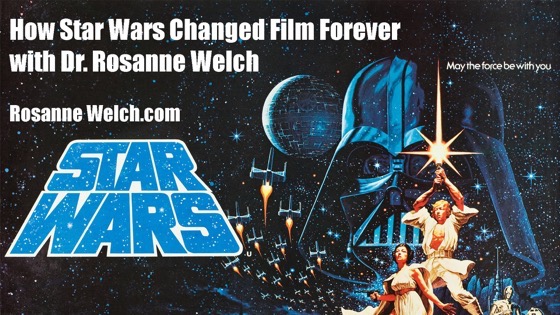
Date: Thursday, October 25, 2018
Time: 12:00pm – 1:00pm
Location: Special Events Room 4829, Cal State Fullerton Pollack Library, 800 N State College Blvd, Fullerton, CA 92831
Campus: Building 15
In her talk screenwriter and professor Rosanne Welch will discuss everything Star Wars from George Lucas to Leigh Brackett to Lawrence Kasdan. From Luke Skywalker to Han Solo to Lando Calrissian (both original and prequel versions) to Poe. From Leia Organa to Rey to Jyn Erso. From Jaws to the whole Star Wars franchise to Raiders of the Lost Ark in a look at how Star Wars changed films and fandom forever.
 and Follow