Power-Up with Powergirl welcomes Dr. Rosanne Welch – Friday, February 17, 2017 @ 10am PST

Update 20170126: Due to a cold, I have had to reschedule this interview. Note new date below.

I’ll be recording a podcast this Friday with Jean Power this Friday, February 17, 2017 at 10am PST/1pm EST.

You can listen live and even phone in your own questions.  Join Us! — Rosanne

Listen Live via BlogTalkRadio

Call in your questions at (347) 857-2052 


Show Description

Today Jean Powergirl takes the host reigns and welcomes her guest Rosanne Welch, PhD to the show! They’ll be discussing Roseanne’s book, “Why The Monkees Matter: Teenagers, Television and American Pop Culture.”
A hit television show about a fictitious rock band, The Monkees (1966-1968) earned two Emmys–Outstanding Comedy Series and Outstanding Directorial Achievement in Comedy. Capitalizing on the show’s success, the actual band formed by the actors, at their peak, sold more albums than The Beatles and The Rolling Stones combined and set the stage for other musical TV characters from The Partridge Family to Hannah Montana. In the late 1980s, the Monkees began a series of reunion tours that continued into their 50th anniversary.

This book tells the story of The Monkees and how the show changed television, introducing a new generation to the fourth-wall-breaking slapstick created by Laurel and Hardy and the Marx Brothers. Its creators contributed to the innovative film and television of 1970s with projects like Bob & Carol & Ted & Alice, The Mary Tyler Moore Show, Laugh-In and Welcome Back, Kotter. Immense profits from the show, its music and its merchandising funded the producers’ move into films such as Head, Easy Rider and Five Easy Pieces.

Rosanne Welch, PhD has written for television (Touched by an Angel, Picket Fences) and print (Three Ring Circus: How Real Couples Balance Marriage, Work and Kids and The Encyclopedia of Women in Aviation and Space). In the documentary world she has written and produced Bill Clinton and the Boys Nation Class of 1963 for ABC NEWS/Nightline and consulted on PBS’s A Prince Among Slaves, the story of a prince from West Africa who was enslaved in the 1780s, freed by order of President John Quincy Adams in the 1820s and returned to his homeland.

From The Research Vault: Monkees Romp 1967 Behind The Scenes

Yet another research resource for Why The Monkees Matter

From The Research Vault: Monkees Romp 1967 Behind The Scenes

This silent footage from behind the scenes of a real beachside Monkee romp highlights how they were working with the crew of the show – imagine being the new teen idols on hand among a bunch of cameramen, prop men and other crafts people who had had long careers. The balance actors have to strike to make sure everyone’s happy on the set and not jealous. It was easier then since actors weren’t making the outrageous money they tend to make today – but still stars were stars.

Someone laid “Saturday’s Child” over this assorted footage – some from the romp, some from behind the scenes of filming the romp – and then, for fun, at 2:48 Micky begins singing the show’s theme song in Italian.  


Why The Monkees Matter: Teenagers, Television and American Pop Culture

Order Your Copy Now!

Previously in Out of Research Vault:

Real Life and The Monkees from 1960’s TV Censorship and The Monkees [Video] (0:47)

Watch this entire presentation

Real Life and The Monkees from 1960's TV Censorship and The Monkees


“1960s TV Censorship and The Monkees” gives a brief overview of where censorship standards were in the era – and how The Monkees pushed the envelope with its mentions of the Vietnam War – and Sunset Strip riots – and even with the outrageous storytelling behind “Frodis Caper”, the episode that celebrated the saving of an alien plant that very closely resembled a marijuana plant…  

Writer Treva Silverman said the staff got away with such jokes because the network executives were just old enough not to understand any of the references.
Presented at Stephens College MFA in Screenwriting classes on Friday, August 5, 2016

Transcript:

The other thing they did that was fascinating was that at the end of several episodes they would take the last minute and interview the actual actors, “hey, what’s going on in your life? How are things?” And the actors talked about being part of demonstrations, going to anti-war events. They talked about what it was like to be a hippy, do be disrespected. How men with long hair were treated badly and not respected in public and how they felt about that. Going to restaurants which wouldn’t let them in. I mean look at Peter Tork’s hair. Nowadays that doesn’t look that long at all, but in the time this was really, really…So this ending episode interview was a fascinating thing they got away with doing. They talked about a lot of stuff — the Sunset Curfew Riots — I’m going to show you a clip from that. And they would just sit on the back lot like that — the back set — and have these little interviews. And they got away with it.


Buy “Why The Monkees Matter” Today!

 Why The Monkees Matter: Teenagers, Television and American Pop Culture


McFarland (Direct from Publisher) | Amazon | Kindle Edition | Nook Edition


About Dr. Rosanne Welch

Dr. Rosanne Welch is a professor in the Low Residency MFA in Screenwriting Program from Stephens College, California State University, Fullerton, Mount San Antonio Community College and Cal Poly Pomona.  In 2007, she graduated with her Ph.D. in 20th Century U.S./Film History from Claremont Graduate University.  She graduated with her M.A. in 20th Century United States History from California State University, Northridge in 2004.

Welch is also a television writer/producer with credits for Beverly Hills 90210 , CBS’s Emmy winning Picket Fences and Touched By An Angel . She also writes and hosts her own podcasts on 3rdPass.media, her first one titled “Mindful(I) Media with Dr. Rosanne Welch.”

Three Ring Circus: How Real Couples Balance Marriage, Work and Kids and The Encyclopedia of Women in Aviation and Space are two books she has written. Los Angeles Times and the Journal of Screenwriting hold some of her published articles.

Dr. Rosanne Welch Web Site and Blog

Follow Dr. Welch on Twitter

Dr. Rosanne Welch on YouTube

Quotes from “Why The Monkees Matter” by Dr. Rosanne Welch – 47 in a series – The Old Folks At Home

** Buy “Why The Monkees Matter” Today **

Quotes from

Perhaps the minority the audience least expected to see on the show, the elderly, fared best in that each time an elderly character appeared the Monkees actively worked to keep that character from being exploited by a middle-aged villain. It was as if the two ends of the generational spectrum needed each other to survive the generation gap.  

from Why The Monkees Mattered by Dr. Rosanne Welch —  Buy your Copy today!

 Why The Monkees Matter: Teenagers, Television and American Pop Culture


McFarland (Direct from Publisher) | Amazon | Kindle Edition | Nook Edition

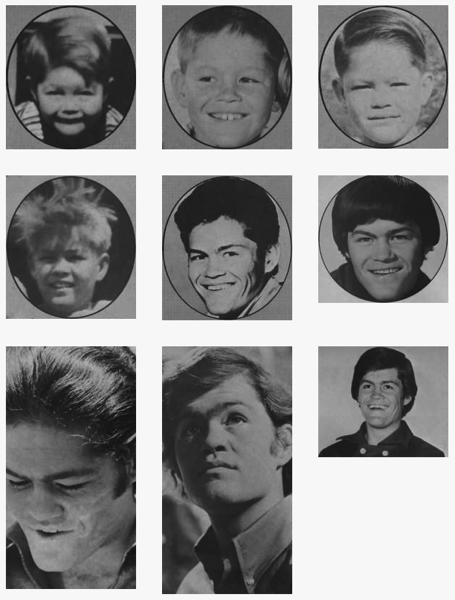
From The Research Vault: Micky’s Many Hairstyles. Tiger Beat Magazine, 12–15, Benner, Ralph. (1968, January)

Yet another research resource for Why The Monkees Matter

Micky’s Many Hairstyles. Tiger Beat Magazine, 12–15, Benner, Ralph. (1968, January)

Micky hairstyles

Long hair was in, then long, long hair was out, then short-long hair was in and all the while controversies raged on about what type of hairstyle looked best—on boys and girls. This didn’t apply to the entertainers alone. Teenage hairstyles are a constant battle since now long, long hair on girls is the thing and at the same time Twiggy has made short, short hair very popular. What are you to do?The only solution for you or your friends or even for the entertainers who are constantly seen by the public is to wear your hair according to what you think looks best. This is what Micky Dolenz did and what did he run into but a rash of protests from fans. This hardly seems fair.

[…]

Read the entire article on Sunshine Factory


Why The Monkees Matter: Teenagers, Television and American Pop Culture

Order Your Copy Now!

Previously in Out of Research Vault:

The Devil, Peter Tork and The Monkees from 1960’s TV Censorship and The Monkees [Video] (0:53)

Watch this entire presentation

The Devil, Peter Tork and The Monkees from 1960's TV Censorship and The Monkees


“1960s TV Censorship and The Monkees” gives a brief overview of where censorship standards were in the era – and how The Monkees pushed the envelope with its mentions of the Vietnam War – and Sunset Strip riots – and even with the outrageous storytelling behind “Frodis Caper”, the episode that celebrated the saving of an alien plant that very closely resembled a marijuana plant…  

Writer Treva Silverman said the staff got away with such jokes because the network executives were just old enough not to understand any of the references.
Presented at Stephens College MFA in Screenwriting classes on Friday, August 5, 2016

Transcript:

Another episode that they have, that I like a lot is called “The Devil and Peter Tork.” It’s written by Gardener, Caruso and Kaufman. This is the Devil and Dr. Faustus and all those other versions of that story. Peter Tork wants the talent of playing the harp, because he is in love with the harp and so he sells his soul to the Devil to get that talent, but he doesn’t even understand who the devil is because he loves everybody and he’s all about peace. But eventually, the Devil shows up to take that soul and the boys won’t let him. They have a little dance sequence where they imagine what Hell might be like and theirs a lot of girls who look like Playboy bunnies. I’m not sure how we get away with that. And the whole point of it is, there’s a lovely little scene I’ll show you a clip of — they start talking about “Maybe Hell won’t be that bad.” but they bleep them every time they say the word “Hell” and eventually — well, I’ll show you that in a minute, Micky Dolenz looks at the audience and says something very funny – “You know what’s even more scary? You can’t say <cuckoo> on television.”


Buy “Why The Monkees Matter” Today!

 Why The Monkees Matter: Teenagers, Television and American Pop Culture


McFarland (Direct from Publisher) | Amazon | Kindle Edition | Nook Edition


About Dr. Rosanne Welch

Dr. Rosanne Welch is a professor in the Low Residency MFA in Screenwriting Program from Stephens College, California State University, Fullerton, Mount San Antonio Community College and Cal Poly Pomona.  In 2007, she graduated with her Ph.D. in 20th Century U.S./Film History from Claremont Graduate University.  She graduated with her M.A. in 20th Century United States History from California State University, Northridge in 2004.

Welch is also a television writer/producer with credits for Beverly Hills 90210 , CBS’s Emmy winning Picket Fences and Touched By An Angel . She also writes and hosts her own podcasts on 3rdPass.media, her first one titled “Mindful(I) Media with Dr. Rosanne Welch.”

Three Ring Circus: How Real Couples Balance Marriage, Work and Kids and The Encyclopedia of Women in Aviation and Space are two books she has written. Los Angeles Times and the Journal of Screenwriting hold some of her published articles.

Dr. Rosanne Welch Web Site and Blog

Follow Dr. Welch on Twitter

Dr. Rosanne Welch on YouTube

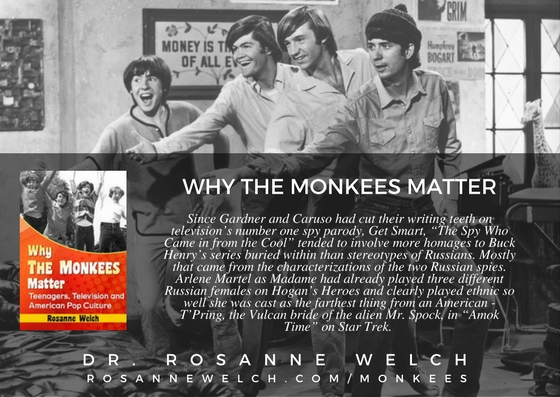
Quotes from “Why The Monkees Matter” by Dr. Rosanne Welch – 46 in a series – The Spy Who Came In From The Cool

** Buy “Why The Monkees Matter” Today **

Quotes from

Since Gardner and Caruso had cut their writing teeth on television’s number one spy parody, Get Smart, “The Spy Who Came in from the Cool” tended to involve more homages to Buck Henry’s series buried within than stereotypes of Russians. Mostly that came from the characterizations of the two Russian spies. Arlene Martel as Madame had already played three different Russian females on Hogan’s Heroes and clearly played ethnic so well she was cast as the farthest thing from an American – T’Pring, the Vulcan bride of the alien Mr. Spock, in “Amok Time” on Star Trek. 

from Why The Monkees Mattered by Dr. Rosanne Welch —  Buy your Copy today!

 Why The Monkees Matter: Teenagers, Television and American Pop Culture


McFarland (Direct from Publisher) | Amazon | Kindle Edition | Nook Edition

From The Research Vault: Musical influences, the mysteries of songwriting and God.

Yet another research resource for Why The Monkees Matter

Musical influences, the mysteries of songwriting and God
Barrett, Joel. (2014, March 6). Musical influences, the mysteries of songwriting and God.  

JB: What were some of your earlier influences musically?

RS: My first favorite song was “Daydream Believer,” the Monkees’ version. How’s that for guilty pleasure? I loved that song when I was 8 or 9 years old and I still love it. Of course, there was Dylan, we always had Dylan in the house all the time. We had Gilbert and Sullivan. We had the Beatles. Kingston Trio, Pete Seeger. For me, it was mostly the Monkees and the Beatles. Shortly thereafter, the Allman Brothers, and then shortly thereafter Genesis and then shortly thereafter Bruce Springsteen, which caused a horrible riff between me and my ‘art rock-prog’ friends. They couldn’t understand Springsteen. The early stuff really is probably Dylan and the Beatles.

JB: When did you know that music could really be your career?

RS: It was in Hartford, Conn., right after my first record came out. I still had some doubts if this could happen as an actual career. I went to a gig at WWUH and afterwards I sold $325 worth of CDs, which to me at that time was a ridiculous amount of money. After the gig they said this is the money for your CDs. I just not could believe that they’d give me $325 for 22 CDs. I thought it was the greatest thing that ever happened. Right then and there, a little switch went off in my head, “aha. I like this.”

JB: If you weren’t a singer-songwriter, what would you be?

RS: An editor.

Read this entire article


Why The Monkees Matter: Teenagers, Television and American Pop Culture

Order Your Copy Now!

Previously in Out of Research Vault:

Quotes from “Why The Monkees Matter” by Dr. Rosanne Welch – 45 in a series – Native American Portrayals

** Buy “Why The Monkees Matter” Today **

Quotes from

Perhaps due to the attention drawn by the Red Power Movement during the run of The Monkees, Native Americans tended to fare better than Americans of Asian descent.  Perhaps the fact that Dolenz self-identified as part Native American on his mother’s side had an effect. Perhaps the writers were looking to move beyond the Tonto/Lone Ranger dynamic. Or perhaps the writers and actors found a connection between Native Americans and the emerging ideology of the hippie movement. 

from Why The Monkees Mattered by Dr. Rosanne Welch —  Buy your Copy today!

 Why The Monkees Matter: Teenagers, Television and American Pop Culture


McFarland (Direct from Publisher) | Amazon | Kindle Edition | Nook Edition

From The Research Vault: THE MONKEES – Clive James Talks Back interview (ITV), 4th March 1997

Yet another research resource for Why The Monkees Matter

THE MONKEES – Clive James Talks Back interview (ITV), 4th March 1997

From The Research Vault: THE MONKEES - Clive James Talks Back interview (ITV), 4th March 1997

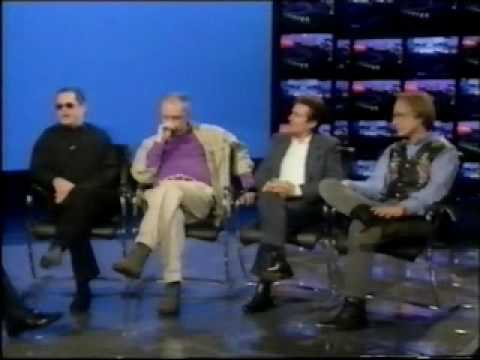
This 1997 interview clip involves all four actor/musicians on the Clive James program out of the UK.  They discuss the Justus tour, their history, and the 30th anniversary special that aired that year.  James (or his editors) are  good at giving each their individual moment during the interview.  James defines the show as “their old but always new” series – which is a compliment and shows how James understood the show and its importance.  It’s always interesting to compare the questions asked by American interviewers and those from other countries. — Rosanne


Why The Monkees Matter: Teenagers, Television and American Pop Culture

Order Your Copy Now!

Previously in Out of Research Vault: